Tag

nonprofit

Circle Up Indy’s 5th Annual Peace Festival raises awareness about ongoing needs in disadvantaged neighborhoods

By Feature

by Shari Finnell, editor/writer

James C. Wilson, CEO and founder of the nonprofit organization Circle Up Indy, vividly recalls the day he was interviewed by a TV journalist for a story about his volunteerism in Martindale-Brightwood — an Eastside Indianapolis neighborhood plagued by poverty and high unemployment rates.

At the time, Wilson, who grew up in the neighborhood, was astonished that many of his neighbors were calling out to him during the taping … asking him to be a spokesperson on their behalf. “Tell them about the sidewalks! Politicians don’t care about us!,” Wilson said, recalling some of the pleas directed at him.

Those voices stuck with him, prompting him to step beyond his volunteerism to launch Circle Up Indy in 2014. The organization is focused on advocating for initiatives to transform impoverished neighborhoods in Indianapolis and surrounding counties, including Martindale-Brightwood.

Circle Up Indy also hosts an annual festival that is designed to raise awareness and intentionally discuss and address socio-economic disadvantages many black and minority families experience and to increase community accountability across the city, according to an organization statement.

Due to COVID-19, the festival was cancelled in 2020, Wilson said, but the 5th Annual Peace Festival is on for this year. It is scheduled for July 10, from noon to 7 p.m., at Frederick Douglass Park on the Park’s 100th Anniversary. Because of the late start in determining whether the festival would go on as scheduled, Wilson and his team are still seeking commitments for vendors and partners.

Wilson, who also has a podcast through a WISH-TV partnership, acknowledges that he sometimes feels overwhelmed with his role in transforming his childhood neighborhood and others like it. He said he feels a responsibility to advocate for transformation, which, in all too many cases, seems to be a slow process.

“I’m honored but I’m terrified. I just want to help people,” Wilson said. “There’s a lot of pressure on me to change things but at times it seems we’re barely pushing the needle. I’m watching friends and family die.”

Wilson, who spent most of his formative years — since the age of 10 — in and out of prison, has first-hand knowledge of the challenges facing some of the youth and families in troubled neighborhoods. “I never had a father teach me how to be a man. The streets taught me what I thought it meant to be a man,” he said.

During his last stint in prison, the trajectory of Wilson’s life took a turn for the better. He met several older inmates who saw his untapped potential. “These brothers taught me so much about life,” he said. “They kept reiterating, ‘they can take your body, but they can’t take your mind.’”

When Wilson was released after serving eight years of a 10-year prison term on a robbery conviction, he thought about those invaluable lessons and attended Ivy Tech, where he became active in volunteerism, including serving as student body president, regularly participating in Lilly Global Day of Service, and serving as president of Collegiate 100, an affiliate of 100 Black Men of Indianapolis.

It was then that his community work caught the attention of a television station, which led to that unforgettable exchange with his neighbors. “After that interview, I didn’t know what to do about all the issues going on in my community … no resources, no jobs, no housing opportunities, lack of quality education,” Wilson said. “They feel snubbed because they don’t see development in their community.”

He considered what he could do to encourage an investment of resources in the community to change outcomes, including health-related programs to address mental health and addiction.

Through Circle Up Indy, he has seen progress but not as much as he had hoped for seven years ago. He is encouraged that an increasing number of individuals representing various organizations have taken the time to visit the Martindale-Brightwood neighborhood, including executive leaders from Central Indiana Community Foundation, Lilly Endowment, Inc., and Community Health Network, a major sponsor of the 5th Annual Peace Festival.

He noted major milestones such as the opening of a 15,000-square-foot library in 2020 and the Kipp Indy Legacy High, a high school that was founded in 2019.

Wilson noted that housing is a major issue in the community. “Education is always a concern but it’s offset when you have housing issues,” he said. “No one feels comfortable in school if their home situation is not stable.”

Earlier this year, the city of Indianapolis announced that $3.5 million would be invested in the Martindale-Brightwood neighborhood as part of the Lift Indy program. Under the initiative, at least 10 low-income households will have the opportunity for homeownership through career coaching and home repair.

Wilson said he is hopeful that more changes are coming for Martindale-Brightwood through a strategic, comprehensive plan that takes into account the root causes of the problems in the neighborhood — not just the data.

“It’s just the beginning,” Wilson said. “It takes a community. Not just me. It takes all of us.”

About the 5th Annual Peace Festival

The event, which takes place on July 10, from noon to 7 p.m., at Frederick Douglass Park, offers a wide range of information and resources staffed by local organizations who will help the community focus on addressing untreated trauma, slow economic development, and community accountability through effective programs, resources, employment, entrepreneurial development, and educational opportunities.

The Community Health Network Pavilion (Healthcare Zone), staffed by Community Health Network physicians, nurses, and volunteers, will provide attendees with blood pressure checks, free COVID-19 vaccines, mental health education, and other health-related wellness education.

The festival also will feature carnival games, drawings, prizes, kid zone activities, animal attraction, food and live entertainment.

Circle Up Indy is inviting vendors, exhibitors and volunteers to register to participate. Vendors can register here, exhibitors can register here and volunteers can register here.

Addressing Indianapolis’ food desert challenges

By Feature

by Shari Finnell, editor/writer, Not for Profit News

For many Indianapolis residents, the ritual of getting dinner on the table throughout the week may involve a combination of trips to the grocery store, takeout and delivery from a few favorite restaurants or, as an increasingly popular option, meal kit delivery subscriptions.

Those options are rarely available for at least 208,000 people living in Indianapolis neighborhoods that fall into the category of food deserts, according to “Getting Groceries,” a report published by SAVI in 2019. The report, which tracked the number of people who live in low-income areas with no grocery stores and healthy food options easily accessible by public transportation, revealed a 10 percent increase from 2016 to 2019 — just one year before the COVID-19 pandemic, an event that likely further exacerbated food access challenges.

With grocery retailers closing, as in the case of Marsh in 2017, and others opening or expanding in non-food desert areas of the city, corporations, nonprofits and government leaders have announced plans in recent months to fill the gap.

One of the most recent developments is a proposed14,000-square-foot grocery store near 38th Street and Sheridan Avenue — a location that has been designated as a food desert. Cook Medical, Inc., based in Bloomington, Ind., announced it is collaborating with numerous nonprofit organizations and neighborhood leaders to prepare for the opening of Indy Fresh Market in 2022. The partners include Goodwill of Central & Southern Indiana, The Indianapolis Foundation, IMPACT Central Indiana, Martin University, the State of Indiana, City of Indianapolis, and the United Northeast Community Development Corporation.

In another recent development, the state of Indiana approved a pilot project that would provide $600,000 to an individual or entity opening a grocery store in a low-income area “where access to resources for food is limited in a consolidated city.” The money is to be used specifically for providing training and acquiring equipment for a store being opened by people who already have private funding to build or rent a building.

Also, Local Initiative Support Corporation (LISC) and the Anthem Foundation are issuing a series of grants — totaling $2.45 million — under Equitable Food Systems in Indianapolis Neighborhoods, an initiative to increase food access and food security in food deserts. Those applying for the grants may offer a range of options, from community kitchens to urban gardens, grocery stores or mobile markets. 

Ultimately, these latest developments in Central Indiana can make a significant impact in health outcomes for people who currently live in food deserts, said Unai Miguel Andres, a GIS and data analyst for The Polis Center, which launched the SAVI project.

“Having a grocery store will allow you to make more health-conscious choices,” Miguel Andres says. “Living in areas that are lower income can deprive you of healthy food access, which can lead to serious health consequences such as obesity and diabetes. The assumption is that they will be able to improve their health outcomes because of the ease of being able to access healthy foods.”

Miguel Andres also said that it is important to understand the distinction between food insecurity and food access.

“Food access, in general, has gotten worse with Marsh closing (throughout the city) and Kroger closing in economically deprived areas where there’s nothing else,” he said. “That’s the access part. During the pandemic, from an economic point of view, many people lost their jobs and joined those classified as low-income.”

As a result, this new group of people are considered food insecure, Miguel Andres added. “Whether you have the means to access healthy food options, you’re facing food insecurity. The grocery store may be right in front of your house, but you may not be able to afford to shop there,” he said.

Under the Cook Medical partnership, the manufacturer will build the store and IMPACT Central Indiana will provide start-up capital. Two entrepreneurs, Michael McFarland and Marckus Williams, who are from the neighborhood will oversee the day-to-day operations, according to Cook Medical. McFarland and Williams will undergo training at Martin University, which offers business administration degrees. As part of the plan, the entrepreneurs will eventually take over ownership of the grocery store as part of a lease-to-own model.

“Food deserts exist throughout our state,” said Pete Yonkman, president of Cook Medical and Cook Group in a press release. “They are in our cities and in our rural communities. And we know that more than a quarter of Black Hoosiers live in a food desert. The challenges around food insecurity exacerbates already present health inequalities that can impact many generations to come. Michael and Marckus started with an idea to invest in this community and we, along with the many other partners, are excited to support them in this journey.”

Yonkman also said that the project could serve as a model that could be replicated by other partnerships. “With the support of Martin University to provide an educational curriculum for grocery store operations, our hope is that this project can serve as a model that can be replicated in other neighborhoods and communities,” he said “We’re focused on creating a sustainable business model that supports community ownership and continued education so Northeast Indy can reach its full potential.”

Miguel Andres anticipates that partnerships among various entities and individuals are likely to continue as the benefits of healthy food access are increasingly realized. “Nonprofits, hospital and health systems, and community organizations are coming together to open stores in underserved areas because they know there are benefits — healthwise — in providing these resources,” he said.

Professionals working or volunteering for nonprofits share how they gained new insights through alternative law program

By Sponsor Insight

by Rebecca Trimpe, writer/editor, IU Robert H. McKinney School of Law

Many professionals working and volunteering in not-for-profit organizations find it invaluable to gain knowledge of the law and how it intersects with their entity’s efforts. You don’t need a law degree to gain that skill set. Leaders at many Central Indiana nonprofits, who are graduates of or current students in the Master of Jurisprudence (M.J.) program at IU Robert H. McKinney School of Law, shared their insights into how the program has helped them in their positions.

Aura Day, who is on track to graduate in May 2021, volunteers through Families First on the crisis and suicide prevention hotline as a crisis intervention specialist. Day said she is gratified by the immediate impact the organization has on people’s lives.

“Everyone needs support and assistance during different points in their lifetime and being able to support others is not only self-rewarding but it inspires others in many ways,” Day said. “Some people need to hear it’s OK to accept assistance. I believe we aren’t supposed to do life solo. It’s really a way we can start seeing how a small gesture grows into a making a huge impact to our neighbors.” Day said the flexibility of the M.J. program held a lot of appeal because she was able to tailor the coursework to align with her specific interests and to choose from day, evening, or a combination of class times to fit into her schedule.

Arun Murali serves as President of the Board of Directors for Lawrence Township School Foundation and is on the Board of Directors for the Ronald McDonald House of Central Indiana. The 2017 M.J. graduate was drawn to IU McKinney from a desire to learn more about the legal processes that affected his business and to potentially position himself for future board member roles. Murali is passionate about not-for-profits that help people in need and in particular ones that focus on children’s needs. “I think this is an important time for non-profits in the history of the world,” Murali said. “I believe when most people hear ‘non-profit,’ they hear ‘please donate money.’ And while that is an important part of the dynamic there is so much more to it, like organizational leadership, financial management, marketing, volunteering, and more.”

Eddie Rivers, a 2017 M.J. graduate, has worked as a guardian ad litem for more than 20 years and has served many child advocacy organizations. Rivers currently is the chief development officer at Kid’s Voice of Indiana, after serving as its chief executive officer for 15 years. While he already had the skill set needed to work at the organization, Rivers wanted to understand law so that he could better manage the team of lawyers he supervised. “I ran a law firm with only managerial skills and a big heart,” Rivers said. The M.J. program allowed him to focus his coursework on child and family law so he could better understand what the lawyers he worked with were up against in their work at Kids’ Voice.

Melody Schulz took part in Leadership Johnson County (LJC) and, after completing the M.J. program in 2019, she was asked to join the organization’s board of trustees, where she serves as a member of the Alumni Relations Committee. Schulz, a 2017 M.J. graduate, said that the program taught her to think differently and helped strengthen her analytical skills, which she uses to help monitor LJCs’ finances, programs, and performance.

Maureen Shiel is on track to graduate in May 2021 and is IU McKinney’s first M.J./M.A. in Philanthropic Studies at the IUPUI Lilly Family School of Philanthropy. She serves on the board of directors for Impact 100 Indy and serves as the assistant treasurer and vice chair of a grants committee. “I am passionate about non-profit work because I value peace for the human race and our planet,” Shiel said. “I hope to contribute to transformational change in the Indianapolis community and around the world. An M.J. supports my work by enhancing my operational knowledge and ability to manage partnerships with the public sector.”

To learn more about how the M.J. program at IU McKinney, visit the law school’s website.

Rebecca Trimpe is the former editor and publisher of Indiana Lawyer. She also served as managing editor of what was then the Daily Ledger in Noblesville. Trimpe, who has a degree in political science and journalism from Indiana University, writes and edits for the I.U. Robert H. McKinney School of Law’s website, as well as print publications.

Can we end homelessness in Indianapolis?: We may be getting closer

By Feature

Community leaders announce plans to build 96 more permanent housing solutions as part of a comprehensive plan to end and prevent homelessness by 2024

by Shari Finnell, editor/writer, Charitable Advisors

The road to homelessness can be complex — with individuals and families experiencing varying factors that can lead to them living on the street, in parks or in vehicles, as outlined in Evicted: Poverty and Profit in the American City. In the Pulitzer Prize-winning book, sociologist Matthew Desmond provides a rare look into the lives of several individuals who failed to avoid homelessness in Milwaukee.

After years of analyzing the homeless population in Indianapolis, city officials and community leaders realize they still don’t have all the answers — but are hopeful that a comprehensive approach that includes a continuum of care, hundreds of new supportive permanent housing units and rental assistance can put them on the path to ending homelessness by 2024, said Chelsea Haring-Cozzi, the executive director of the Coalition for Homelessness Prevention and Intervention.

While many cities have traditionally focused on short- to medium-term solutions that focus on stabilizing housing within a 12- to 24-month time period, the Indianapolis Continuum of Care (CoC), a coalition of public and private organizations and individuals, has shifted the focus on more permanent solutions for homeless people in Indianapolis, Haring-Cozzi said.

As part of that plan, the CoC recently announced plans to build 96 permanent housing solutions with a $37 million grant awarded by the state of Indiana. The Indiana Housing and Community Development Authority (IHCDA) has chosen three supportive housing developments in Indianapolis for this year’s round of Low-Income Housing Tax Credits (LIHTC). The three local developments will create 96 new units of permanent supportive housing for individuals experiencing homelessness in Indianapolis.

The projects include:

  • Hanna Commons, 2800-2910 E. Hanna Ave., Indianapolis, Ind., 46227. Awarded $1.2 million annually for 10 years to provide 50 supportive housing units for individuals experiencing homelessness.
  • St. Lucas Lofts, 2810 E. New York St., Indianapolis, Ind., 46201. Awarded $1.08 million annually for 10 years to provide 50 affordable housing units for youth experiencing homelessness.
  • Compass on Washington Street, 1033 East Washington St., Indianapolis, Ind., 46202, awarded $1.2 million annually for 10 years and $900,000 in Housing Trust Funds to develop 36 supportive housing units for individuals experiencing homelessness.

Construction on all three housing developments is expected to start later this year with an anticipated completion date by the end of 2022. All three developments qualify for Indianapolis Housing Authority vouchers. These projects bring the city of Indianapolis and the CoC closer to its goal of developing 500 new supportive housing units by 2024. Currently, there are 360 supportive housing units under development in the city.

The plan is also focused on preventing homelessness. Haring-Cozzi noted that the pandemic, as of yet, has not contributed to a noticeable uptick in the number of homeless people in Indianapolis as some people had feared.

“When counts were analyzed in January 2021, compared to last January, Indianapolis didn’t see much of a change,” she said. “Even before COVID, Indianapolis was among the few communities nationwide that wasn’t seeing the same type of uptick in homelessness.”

However, the impact of COVID-19 may still need to be realized, she said. The next few months may reveal how if there will be any sustainable fallout caused by the pandemic. “We’re hopeful eviction moratoriums have curbed the impact of the loss of housing and the loss of income, along with people getting rental assistance,” she said.

Una iglesia local transforma un vecindario desatendido del Este mediante un plan estratégico de desarrollo económico

By Espanol

La Eastern Star Church anuncia el comienzo de la construcción de una instalación de 60,000 pies cuadrados, que forma parte de la segunda fase de su ROCK Initiative

por Shari Finnell, editora/escritora, Not for Profit Newsletter

(To read in English, click here) Translated by LUNA Language Services

Cuando se compara la habitabilidad de un vecindario, es fácil dejarse llevar por las cifras: el índice de criminalidad, las puntuaciones de las escuelas, el valor de las viviendas, las vías peatonales… o las millas hasta la tienda de comestibles más cercana. Es probable que los cazadores de casas comparen cuidadosamente estas calificaciones, sabiendo que pueden repercutir en la calidad de vida de una familia después de la mudanza.

Sin embargo, muchos residentes de algunas de las comunidades más empobrecidas de la ciudad no pueden tomar ese tipo de decisiones. Con un número importante de personas con recursos económicos limitados, mudarse no es una opción.

Jeffrey A. Johnson, Sr., conoce muy de cerca uno de esos vecindarios: la comunidad de Arlington Woods, situada en el código postal 46218, una zona que se ha visto asolada por los altos índices de delincuencia, las elevadas tasas de desempleo, los altos índices de abandono escolar y, más recientemente, un gran número de contagios por COVID-19.

Johnson, que creció en este barrio antes de ir a la universidad, regresó a los 24 años para convertirse en el pastor de la Eastern Star Church (ESC), que tiene tres sedes, incluida la principal en el 5750 E. 30th St., en el corazón de la comunidad 46218.

Bajo el liderazgo de Johnson durante 33 años, la iglesia invirtió continuamente en la comunidad a través de una despensa de alimentos, viviendas asequibles, inversiones financieras en las escuelas locales, ferias de salud, voluntariado, tutoría y otros programas. En 2017, Johnson se unió a los miembros de la ESC para anunciar el lanzamiento de The ROCK Initiative, un plan más completo para invertir en la comunidad. The ROCK Initiative se basa en cuatro pilares: vivienda asequible, comunidad fuerte, educación de calidad y seguridad financiera.

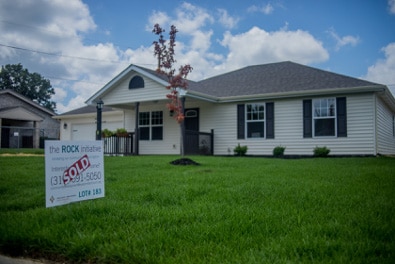
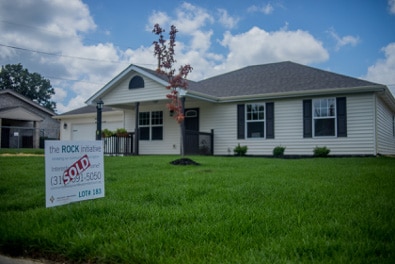
Como parte de la fase I, la iglesia renovó y construyó viviendas unifamiliares, creó un jardín urbano y construyó un complejo multiuso con 25 unidades de apartamentos y espacios comerciales ocupados por una cooperativa de crédito, una tienda de comestibles y proveedores de servicios sociales. La iniciativa recibió el apoyo de numerosos socios de la comunidad, como INHP, Habitat for Humanity, The Mind Trust, Financial Health Federal Credit Union, Community Health y Eskenazi Health.

Hoy anunció otra fase importante en el cumplimiento de su visión de una comunidad transformada: el desarrollo del Centro Comunitario ROCK para niños y jóvenes, y una instalación de 60,000 pies cuadrados que proporcionará a los estudiantes un entorno seguro para estudiar, aprender nuevas habilidades y participar en actividades recreativas y de desarrollo.

Tihesha Henderson, directora de la Sankofa School of Success, antes IPS School 99, dijo que la inversión en los jóvenes del área 46218 será duradera. “A lo largo de los años, la comunidad ha cambiado mucho”, afirmó Henderson, quien también creció en la comunidad. “Muy rápidamente pasó de ser una zona de clase media a una zona improvisada”.

La comunidad, con una población que en su gran mayoría es afroamericana, ha estado desempleada y extremadamente desatendida por mucho tiempo, añadió Henderson.

“No solo hay muchos traumas y mucha pobreza, sino que vemos muchos problemas de salud mental en esta comunidad”, comentó. “También es un desierto cuando se trata de negocios como bancos, tiendas de comestibles y apoyo a la salud mental de nuestras familias. No hay muchos lugares a los que nuestras familias pueden acudir para conseguir un empleo”, dijo. “Así que, cuando se tienen en cuenta todas esas cosas, sabemos que las necesidades de nuestros estudiantes van a ser grandes”.

The ROCK Initiative se ha mostrado prometedora y ha llenado de esperanza a los residentes de esta área, declaró Henderson. “Depende de nosotros eliminar los sistemas de opresión que afectan todos los días a nuestros niños de color, y podemos hacerlo a través de la equidad y los recursos en nuestro vecindario”.

Local church transforms neglected Eastside neighborhood through strategic economic development plan

By Feature

Eastern Star Church announces the groundbreaking of a 60,000-square-foot facility — part of Phase II of its ROCK Initiative

by Shari Finnell, editor/writer, Not for Profit Newsletter

(Para leer en español, haga clic aquí) Translated by LUNA Language Services

When comparing the livability of a neighborhood, it’s easy to quickly get caught up in numbers — crime rate, school scores, home values, walkability scores … or miles to the nearest grocery store. House hunters are likely to carefully compare these ratings, knowing that it can impact the quality of their family’s lives after a move.

However, many residents in some of the city’s most impoverished communities can’t make those types of choices. With a significant number challenged by limited financial resources, moving isn’t an option.

Jeffrey A. Johnson, Sr., is intimately familiar with one of those neighborhoods — the Arlington Woods community, which is located in the 46218 ZIP code — an area that has been blighted by high crime rates, high rates of unemployment, high student dropout rates and, more recently, high rates of COVID-19 infection.

Johnson, who grew up in this neighborhood before going off to college, returned at the age of 24 to become the pastor of Eastern Star Church (ESC), which has three campuses, including its Main Campus at 5750 E. 30th St., in the heart of the 46218 community. Under Johnson’s 33-year leadership, the church continually invested in the community through a food pantry, affordable apartment housing, and financial investments in local schools, health fairs, volunteering, mentoring and other programs.

In 2017, Johnson joined members of ESC in announcing the launch of The ROCK Initiative, a more comprehensive plan for investing in the community. The ROCK Initiative is built on four pillars — affordable housing, strong community, quality education and financial security.

As part of Phase I, the church renovated and built single-family homes, developed an urban garden, and constructed a multi-use complex with 25 apartment units and retail space occupied by a credit union, a grocery store and social service providers. The initiative received support from numerous community partners, including INHP, Habitat for Humanity, The Mind Trust, Financial Health Federal Credit Union, Community Health, and Eskenazi Health.

Today, it announced another major phase in accomplishing its vision for a transformed community — the development of the ROCK Children and Youth Center (RCYC), a 60,000-square-foot facility that will provide students a safe environment to study, learn new skills, and engage in recreational and developmental activities.

During a groundbreaking ceremony, Johnson said The ROCK Initiative was launched to address inequities in the Eastside neighborhood.

“For too long, in this particular area, resources have not come through. We have had to deal with an economic desert, a food desert, an employment desert, and a quality education desert … which is one of the reasons, as led by God, we decided to start the ROCK Initiative,” Johnson said. “The ROCK Initiative allows us to partner up and collaborate with neighborhood, businesses, government and those who have a heart for community to make a difference. And the ROCK Children and Youth Center will help us continue our vision for a strong, safe and vibrant community so that all of our children are able grow and develop in a way God that intended them to.”

Jeff Bennett, Deputy Mayor of Community Development, told those gathered at the groundbreaking that the center represents a much-needed addition for the Eastside neighborhood, which he described as “one of the city’s most under-appreciated and under-recognized areas.”

“When we talk about community development in Indianapolis, it’s important that we recognize the work of our congregations,” said Bennett, citing the church’s investment in the neighborhood. “Eastern Star has led the way for more than 100 years. You recognized and fulfilled critical needs in affordable housing, banking and credit, food access and educational opportunities.”

Brandon Brown, CEO of The Mind Trust, which supported the opening of Rooted School Indianapolis, a high school located on the church’s main campus on East 30th Street, said that the ROCK Initiative can serve as a model for transforming neighborhoods. “With its comprehensive approach to education — with a pre-K to grade 12 continuum as one of the four major pillars, The ROCK Initiative can serve as a model of what’s possible when we think of a multi-faceted approach to uplift a community with education at the core.

“I believe that we will come back in 10 years and see this as a model of racial equity and social justice for our entire city that will serve as a shining example of what’s possible when we come together,” Brown added.

Tihesha Henderson, the Head of School at Sankofa School of Success, formerly IPS School 99, said the investment in youth in the 46218 area will be long lasting. “Over the years, the community has changed greatly,” said Henderson, who also grew up in the community. “It went from a middle-class area to an improvised area very quickly.”

The community, with an overwhelmingly African American population, has been largely unemployed and grossly underserved, Henderson added.

“Not only is there high trauma and high poverty, we see a lot of mental health issues in this community,” she said. “It’s also a desert when it comes to businesses like banks, grocery stores, and mental health support for our families. There are not a lot of places that our families can go to be employed,” she said. “So, when you factor in all of those things, we know that the needs of our students are going to be great.”

The ROCK Initiative has shown promise in giving the residents of this area hope, Henderson said. “It’s up to us to eliminate the systems of oppression that affect our black and brown kids every day, and we can do that through equity and resources in our neighborhood.”

Herramientas para agilizar la filantropía en 2021: Prepara las bases para el éxito de la recaudación de fondos

By Espanol

(To read in English, click here) Translated by LUNA Language Services

Por Angela E. White, ejecutiva de recaudación de fondos certificada (Certified Fund Raising Executive, CFRE), consultora sénior y directora ejecutiva (Chief Executive Officer, CEO), Johnson, Grossnickle and Associates

Desde marzo de 2020, nuestro lema en JGA ha sido “la generosidad no se ha perdido”. Hemos perdido muchas cosas en nuestras vidas por la pandemia, pero la generosidad no es una de ellas. Los donantes no han dejado de compartir sus dones de tiempo, talento y valores. Hemos sido testigos de esta generosidad para apoyar las campañas, días de donaciones y operaciones en curso, así como un compromiso continuo con el voluntariado; aunque el formato ha cambiado a un mundo virtual.

¿Qué significa esto para el 2021? Mientras esperas seguir cultivando el apoyo filantrópico para su misión de 2021, ¿qué harías para preparar las bases para continuar con la generosidad?

En un blog reciente, publicado por la Escuela de Filantropía Familiar Lilly de la Universidad de Indiana, se pueden encontrar 10 consejos para recaudar fondos en 2021. Entre estos consejos se encuentran buscar nuevas formas de colaborar, crear una comunidad virtual, involucrar a todos sus donantes y, mi favorito, acoger el optimismo. También enfatizan la importancia de seguir recaudando fondos. Como se indica en el artículo, “tu causa sigue siendo digna. Tu trabajo sigue siendo impactante. Aquellos con quienes trabajas todavía tienen necesidades”.

En JGA, incluiríamos las siguientes medidas como maneras clave de agilizar sus objetivos en 2021 y estimular la generosidad para tu organización:

  1. Crea planes a corto plazo para generar un impacto a largo plazo. ¿Tus estrategias institucionales e iniciativas de desarrollo se adaptan a tu entorno cambiante? ¿Has revisado tu plan estratégico actual en virtud de las lecciones aprendidas debido a la pandemia? Tómate el tiempo ahora para asegurarte de que los planes que orientan tu organización y tu operación de desarrollo sean relevantes en este nuevo entorno y apoyen tu plan estratégico.
  2. Concéntrate en tus mejores prospectos e involucra a nuevos donantes. ¿Has recalibrado tus carteras de donantes para 2021? ¿Estás logrando captar nuevos prospectos en un mundo virtual o híbrido? Optimiza tus carteras para que tu equipo se concentre en los prospectos adecuados para recaudar más dinero para tu misión. Debido a los cambios de personal, muchas organizaciones también deberán crear un plan para incorporar nuevos oficiales de desarrollo o carteras de transición. Las organizaciones sin fines de lucro que consiguieron nuevos donantes a partir de iniciativas especiales de recaudación de fondos para la pandemia en 2020, deben crear planes para administrar estas relaciones y retener su apoyo continuo en el futuro.
  3. Recopila información estratégica para tomar decisiones informadas. ¿Estás pensando en crear un servicio nuevo, plan de comunicación o metodología de recaudación de fondos para este año? Primero debes involucrar a tus integrantes y recopilar la información crítica necesaria antes de tomar estas decisiones y lanzar una empresa nueva. Involucra a tus grupos de participantes actuales y potenciales en un proceso de recopilación de información de múltiples etapas. Los datos que recibas durante esta etapa de contribución crucial pueden ayudarte a tomar decisiones informadas y evitar errores costosos.
  4. Concéntrate en optimizar los datos de tus donantes. ¿Los recursos de tu personal están alineados para involucrar a tus mejores prospectos en el inicio del proceso? Los datos optimizados de los prospectos pueden ayudarte a segmentar mejor tu base de donantes y concentrar tus esfuerzos en aquellos prospectos con más probabilidades de hacer una donación a corto plazo. Cuando combinas los datos basados en la capacidad y en el compromiso con herramientas como Acuity®, obtienes información capaz de identificar rápidamente a tus mejores prospectos.

JGA está aquí para ayudarte a evaluar tu preparación en una o más de estas áreas y a acelerar tus objetivos para 2021. Incluso hemos reunido paquetes de servicios especiales que se pueden implementar rápidamente y con una ganancia de inversión alta para ayudar.

¡Por un gran año!

Tools to Fast Track Philanthropy in 2021: Set the Stage for Fundraising Success

By Sponsor Insight

(Para leer en español, haga clic aquí) Translated by LUNA Language Services

By Angela E. White, CFRE, Senior Consultant and CEO, Johnson, Grossnickle and Associates

Since March 2020, our motto at JGA has been “generosity is not cancelled.” So many things in our lives have been cancelled due to the pandemic, but generosity is not one of them. Donors have not stopped sharing their gifts of time, talent, and treasure. We have seen this generosity in support of campaigns, days of giving, and ongoing operations, as well as a continued commitment to volunteerism – although the format has changed in a virtual world.

What does this mean for 2021? As you look toward continuing to raise philanthropic support for your mission in 2021, what will you do to set the stage for generosity to continue?

A recent blog posted by the Indiana University Lilly Family School of Philanthropy offers 10 Tips for Fundraisers in 2021. Among these tips are finding new ways to collaborate, creating community virtually, engaging all of your donors, and – my personal favorite – embracing optimism. They also stress the importance of continuing to fundraise. As stated in the article, “your cause is still worthy. Your work is still impactful. Those you serve are still in need.”

At JGA, we would add the following steps as key ways to fast track your goals in 2021 and spur generosity for your organization:

  1. Create short-term plans for long-term impact. Are your institutional strategies and development initiatives tailored to your changing environment? Have you revised your current strategic plan in light of lessons learned from the pandemic? Take time now to ensure the plans that guide your organization and your development operation are relevant in this new environment and support your strategic plan.
  2. Focus on your best prospects and engage new donors. Have you recalibrated your donor portfolios for 2021? Are you successfully engaging new prospects in a virtual and/or hybrid world? Optimize your portfolios so your team is focused on the right prospects to raise more money for your mission. Many organizations will also need to create a plan to on-board new development officers and/or transition portfolios as a result of staffing changes. Nonprofits that acquired new donors from special pandemic fundraising initiatives in 2020 need to create plans to steward these relationships and retain their ongoing support in the future.
  3. Gather strategic intelligence to inform decision making. Are you contemplating the creation of a new service, communications plan, or fundraising methodology this year? You should first engage your constituents and gather the critical information needed prior to making these decisions and launching a new venture. Engage your current and prospective constituency groups in a multi-pronged information-gathering process. Data you receive during this crucial input stage can inform your decision making and avoid costly missteps.
  4. Focus on streamlining your donor data. Are your staff resources aligned to engage your best prospects early in the process? Streamlined prospect data can help you better segment your donor base and focus your efforts on those prospects most likely to make a gift in the short term. When you combine data based both on capacity and engagement using tools like Acuity® you get actionable intelligence that identifies your best prospects quickly.

JGA is here to help you assess your readiness in one or more of these areas and assist you in fast tracking your goals for 2021. We’ve even put together special service packages that can be implemented quickly and with a high return on investment to help.

Here’s to a great year!

7 key considerations for analyzing the impact of COVID-19 on nonprofit financial reporting

By Sponsor Insight

by Sarah Gregory, CPA, CFE, director, Alerding CPA Group

With COVID-19 having an unprecedented impact on the operations of nonprofit organizations, it’s critical, as a nonprofit leader, financial/accounting professional, auditor or board member, to consider the impact it may have on your year-end financial reporting for 2020.

As your team closes out its financial records for 2020, make sure you take into account the following key accounting and auditing considerations prior to your financial reporting engagement:

  1. Determine options for remote auditing. While access to records may be limited, auditors will still need to gain access to certain records. Ensure that your financial team takes the necessary steps to accommodate remote auditing. Prepare for this type of engagement by reviewing various remote options beforehand.
  2. Assess existing internal controls and segregation of duties over financial reporting. It’s likely they may have been impacted during the year due to staff absences or reductions.
  3. Analyze your organization’s risk for fraud. Your vulnerability to fraud risk may be heightened as a result of the current environment for added incentive or pressure to perpetrate fraud, opportunity to commit fraud, and rationalization to justify a fraudulent action. Examples of risks could include:
  • Fictious revenue – creating incentives and opportunities to record revenue that is fictious. An example could be an individual who inflates their sales since their compensation is directly tied to meeting sales targets.
  • Improper timing of revenue and expenses – improperly recording revenue and/or expenses in a period in which the revenue was not earned or delaying the expense to a later period in which the services were not performed.
  • Federal relief program applications – increased pressure to apply for Paycheck Protection Program funds, including forgiveness due to economic downturn.

4. Prepare for variances in auditing inventory. With COVID-19 disrupting operations, inventory observations may need to be postponed, conducted remotely or performed under different circumstances than prior years.

5. Account for additional disclosures. Be prepared to account for significant financial impacts related to COVID-19. They may require you to include additional disclosures within your financial statements and potential evaluation of going concern issues related to the organizations ability to continue indefinitely and being profitable.

6. Account for delayed ASU. Accounting Standard Update (ASU) 2020-05, Revenue from Contacts with Customers (Topic 606) and Leases (Topic 842): Effective Date for Certain Entities, allowed organizations to delay the effective date these ASU’s for one year. If your organization did not early adopt as of your most recent fiscal year end, you will be required to adopt these ASU 2014-09, Revenue from Contracts with Customers (Topic 606) in the current year. ASU 2016-02, Leases (Topic 842) will be effective for fiscal years beginning after December 15, 2021 and interim periods within fiscal years beginning after December 15, 2022.

7. Identify delayed payments and waived fees. If your organization received relief from creditors and lessors in the form of delayed payments, waived fees, or adjusted amortization schedules, you will need to ensure you are correctly accounting for these modifications or extinguishment of liabilities.

The impact of COVID-19 will continue to be felt for years to come. As you close out your financial records and prepare for your financial reporting services, make sure you include these considerations as part of your process.

Roadmap to unity: How Indiana State Museum and Historic Site’s board prevailed in achieving compliance among its Friends groups

By Feature

Board members and volunteers at 11 historic sites navigate a year-long journey to reach a model of collaboration

by Shari Finnell, editor, Not for Profit News

(Para leer en español, haga clic aquí) Translated by LUNA Language Services

When volunteers are providing an invaluable service to a nonprofit, it can be challenging to tell them that they have it all wrong in some critical areas — especially when they’ve been operating in that mode for years or, in some cases, decades.

That was the dilemma facing the Indiana State Museum and Historic Sites’ board of directors following a March 6, 2019, meeting in which its past board president, Greg Pemberton, an attorney, outlined the need to update a Memorandum of Understanding (MOU) Plan for the Friends groups connected to its network of 11 historic sites across the state of Indiana.

“Many of these groups have kept the state at arm’s length for several years, and some are untrusting when both the Friends groups and the Indiana State Museum and Historic Sites (ISMHS) organization both have the same goal,” Pemberton said during the 2019 meeting, before leading a board discussion on numerous areas of concern:

  • Friends groups cannot operate independently of the overall museum system. However, many had been acting independently for decades, developing their own branding for their websites and marketing collateral; operating board-related activities for their respective sites; and, in some cases, identifying themselves as separate 501(c)3 organizations.
  • Some of the groups had been inconsistently reporting tax information to the state, which is required under law.
  • Each group had been operating under outdated MOUs, which were drafted before the museum system became a quasi-state agency in 2011. All of these MOUs would need to be updated to align with legal requirements outlined by the attorney general’s office. The new guidelines would dictate that all funding and donations from the 12-network system, including the Indiana State Museum in Indianapolis, must come from one unified fund.
Cathy Ferree, ISM President and CEO

The board members seemed optimistic that many of these issues could be quickly addressed with new Community Partner Guidelines, and a series of discussions with its five Friends groups. By the end of the board meeting, Cathy Ferree, ISMHS president and CEO, and Kate Brownlee, then ISM chief development officer, had agreed to meet with ISMHS regional directors and friends’ board of directors over a two-month period. The ultimate goal was to have the Friends groups operating under the new guidelines by July 1, 2019.

Encountering resistance along the way

As it turns out, shifting to the new agreement wasn’t a straightforward proposition.

Overwhelmingly, the Friends groups’ response to operating under the new guidelines was, “Why do we want to change things?,” recalled Andrew Briggs, who has been an ISM board member for about 1o years.

“A lot of these groups had been set up years ago,” said Briggs, a banker from Geneva., Ind., who also serves as the chairman of the Indiana Bankers Association. “They didn’t have a structure that was conducive to a quasi-government entity. They sort of did things their own way — ‘under our umbrella and tax ID number.’”

According to P. Garrett Adams, President/Board Chair for the T.C. Steele State Historic Site Friends group, the site in Nashville, Ind., had been operating independently for nearly 30 years. The members of the volunteer organization had developed close ties with the site staff and community, actively recruiting volunteers, raising funds for capital improvements and seeking grants to support enhancements, including a recreation of Steele’s studio wagon, and the purchase of AV equipment and golf carts for visitors.

When that model of operations was threatened to be disrupted, members of the Friends group feared that their long-term relationship with the site and its staff also would be impacted, said Adams, who is a pharmaceutical project manager for Eli Lilly & Co. “We were not as concerned about losing autonomy,” he recalled. “We needed a better understanding of the impact on members and membership benefits. The larger focus was on seeking to understand what it meant for our relationship to the site.”

Because of those types of concerns, at least one Friends group appealed to its local legislators to block the implementation of the new MOU among the historic sites, Ferree recalled. “It was complicated,” she said. “Change is difficult for people. Many of them were confused; they didn’t understand why the rules had suddenly changed.”

Many of the complexities had preceded this particular governance issue. Nearly nine years prior, the Indiana State Museum and Historic Sites undertook the steps to become a quasi-state organization, operating as a state agency and a nonprofit organization. In the face of declining financial support in state dollars, the new structure gave them the ability to apply for grants and invest in fundraising initiatives.

However, it was all new territory. “We needed to raise our own dollars in a way we had not done before. Currently, 75 percent of the organization is funded by the state and 25 percent we raise ourselves,” Ferree said.

Also, before that time, Friends groups had operated as independent 501c3 organizations, Ferree pointed out. Since the statute governing quasi-governmental entities dictated a change in the way they operated, it demanded a shift in the museum’s long-term relationships with its Friends organizations.

Another layer of complexity dated back to 2009, when then Indiana Gov. Mitch Daniels announced a plan to merge the Indiana State Museum and 11 historic sites under one new agency. Many of the Friends group members had been actively involved in their respective sites long before any of these decisions came to fruition.

“We needed to recalibrate our relationships,” Ferree said. “The collaboration had been there, but they had been able to operate more independently. It’s not bad or good. We just needed to be sure we were on the same page; there were things we still needed to do to become a full quasi-governmental organization.

“It was a difficult process,” Ferree added. “It really took a lot of conversation and listening and understanding for us to make this shift. And it’s an even more complex proposition when you’re working with different groups that each have their own culture and needs.”

Board members invest in an intensive endeavor to reach resolution

Although there was strong resistance to the new agreement, the board and staff knew they couldn’t back down, Briggs said. “We wanted to make sure everything was right, and it was time to bring everything in line to match up with IRS codes,” he said. “We had all these different groups doing their own thing. We didn’t want to take the risk of not reporting something correctly. That would put all of us at risk.”

With Ferree and Brownlee encountering significant pushback as employees of the Indiana State Museum and Historic Sites, several board members, including Briggs, embraced the challenge of reaching out to the Friends groups in what would turn out to be a series of meetings and conversations throughout 2020.

Board member Nancy Jordan said it was imperative that the board stepped in to resolve the conflict. “The board has ultimate responsibility to ensure this quasi-government agency is delivering on our mission and meeting the duties of care,” said Jordan, who is a senior vice president at Lincoln Financial Group. “We also wanted to hear first-hand the needs, thoughts and concerns of all these supporting groups. Their voice is critical to our collective success.”

William A. Browne, Jr., ISMHS board president, said it was especially important to recognize the value of the Friends group while, at the same time, being direct about the need for change.

“The Friends groups have had the good goal of taking care of these historic sites but they were not all operating under the same rules,” explained Browne, who also is principal/president of Ratio Architects, LLC. “We have to report every single dollar the sites and museum generates so we can file taxes appropriately. That became an issue over the years because each of the Friends group was operating in a free-form manner, if you will. It’s not the kind of structure that needed to be put in place for a quasi government.”

As board members started meeting with various Friends groups, they understood that the original timeline wouldn’t suffice to achieve true collaboration.

“We started to wade into this, and realized that people were very emotionally attached and we were stirring things up because we were asking them to operate differently,” Browne said. “Some people took exception with that. We had to figure out a strategy because, in the end, we knew it would be nothing but a positive thing for us.”

A focus on listening and collaboration

According to Ferree, the board’s commitment to drawing Friends group members, community leaders, and local legislators into difficult conversations was key to achieving true collaboration.

“The board members went above and beyond, traveling throughout the state, spending a lot of time talking to people and sorting things through,” she said. “They took extended time to move the institution forward in a complicated situation. They brought very different skills to the table, rallying around each other’s strengths.”

As a result of the meetings, the teams established the community partner guidelines, and set up quarterly meetings — to begin in mid-March — and attended by Ferree, board members, and other ISMHS staff. The agenda is set by site staff and the meetings will be run by site managers and regional directors. The meetings are open to anyone in the community, and will provide increased transparency at all levels, Ferree said.

“We realized that we needed to formalize the communications in a way that held us accountable to the Friends’ groups,” she said. “If we were going to ask them to help us do things systemwide, we need to be transparent.”

Jordan said the resulting collaborative approach resulted in a win-win outcome. “A great intangible benefit has been the opportunity to bring the Friends/supporting groups together to learn from each other,” she said.

Browne said the key to any successful partnership lies in the ability to communicate and connect. “With the right framework for that communication to be able to occur, you can bridge a lot of gaps and issues,” he said. “Just setting up a communications strategy is really critical to having a successful relationship and dialogue across distance.”

As a result of that collaborative approach spearheaded by the ISMHS board, the Friends groups are overall pleased with the outcome, Adams said. “We were able to get to a very good place,” he said. “The board did very well in bringing everyone together, talking through ideas, concerns and questions. It worked out very well. We are all now looking through a common lens, and we’re excited about things moving forward and the future of our collaboration.”