Monthly Archives

November 2018

A OneAmerica® survey may help participants understand their personal financial picture

By Sponsor Insight

Best channels to help employees understand their retirement picture

By Melissa Musial, marketing research and data manager, OneAmerica  

As a nationally known record-keeper interested in aiding employers with their employee-retirement-plan objectives, the question of whether retirement plan participants have ample education on financial fundamentals ─ and whether increased education on these topics is needed ─ is foremost on our minds at OneAmerica.®

By financial fundamentals, I mean basic budgeting, credit scores and monitoring and debt management; all cornerstones of personal finance and topics that are instrumental to an effective financial wellness curriculum.

Without ample education, adults are often on their own to understand and navigate the delicate balance of paying off owed debt, living the life they want to live, and setting enough money aside to prosper after their work life is completed.

OneAmerica takes the pulse of participants  frequently, and in 2017-18, it conducted its largest-ever survey of retirement plan participants, including those who work with tax-exempt organizations like yours.

The poll of more than 12,000 respondents[1] showed that participants report the highest knowledge levels on the topics of budgeting, credit and debt monitoring and management (95 percent) which is great news, as it indicates educational efforts focused on these topics are influencing audiences.

But the poll also shows that more than 60 percent of respondents lack knowledge on basic investing, retirement plan features, insurance planning and withdrawal strategies at retirement. Additionally, more than one quarter of survey respondents indicate they are only knowledgeable on two or fewer of nine financial wellness topics ranging from budgeting to college planning to personal taxes and that those who are less knowledgeable are more open to receiving education.

Given these results, there is clearly an opportunity for education that OneAmerica encourages plan sponsors (or the human resources professional at your organization) to embrace, because insight is only good when action follows. The company believes it is important to continue to provide education on topics of budgeting, credit and debt monitoring and management, as survey participants did not appear to be applying their reported knowledge.

Equally as important in an effective financial wellness curriculum is including education on those topics that participants report lower knowledge about and that are often a barrier to full-plan participation — for example, investing and retirement plan features.

While the industry is making it easier for participants to begin preparing for retirement with the use of automatic plan features, without education on investment fundamentals or retirement plan specifics, participants may be under preparing or feel that the automatic features are enough to prepare them for a successful retirement.

Tailoring education for pre-retirees regarding to withdrawal strategies is also critical. Without education on withdrawal strategies, those near or at retirement may continue to work due to a lack of knowledge on how to begin the de-accumulation stage. (To de-accumulate is to take the wealth you’ve acquired during your working years and begin to spend it to fund your lifestyle in retirement.)

This could provide additional concerns for plan sponsors – such as increased benefit costs and struggles to bring in new talent due to lack of attrition.

The survey also provided a very clear direction of participant educational preferences. When asked how they like to receive financial wellness education, 65 percent of respondents indicated that having online resources sent to them was their preferred delivery channel.

Additionally, the OneAmerica survey inquired about the value that participants place on educational resources and found:

  • Web-based tools such as webinars, videos and podcasts were reported the most valuable resource by 42 percent of survey respondents, favored as much by men as women and across all three age ranges, but resonating the strongest among those aged 35 and over, as well as those with higher household income.
  • ‘Real-time chat’ tallies in second, at 15 percent, which resonates more strongly with the 18-to-34 demographic (at 21 percent).
  • More traditional methods – direct mail flyers/postcards (13 percent) and posters and flyers at work (four percent) – rank fourth and sixth respectively.

The survey results clearly show a shift in education trends. Traditional communication channels such as print and posted items in the workplace have less value to participants. Plan sponsors should embrace those mediums that participants prefer when selecting education deliverables, and when creating their retirement plan’s participant education and communication goals.

This survey was the third conducted by OneAmerica in five years, and the insights will be used (as has been done in the past) to assist retirement plan sponsors and HR professionals to work with participants to improve their financial wellness and overcome retirement planning hurdles.

Do you want to know more about the OneAmerica Survey? Download a free infographic and whitepaper at www.oneamerica.com/RSsurvey


Melissa Musial is a 20-year veteran of the retirement industry and currently serves as the Marketing Research and Data Manager at OneAmerica, where she focuses on using data, analytics, industry trends to meet people where they are at in their retirement journey. She was recently named by LIMRA as one of the 10 Rising Stars of Marketing and Communications under 40 in the financial services industry. 


OneAmerica is the marketing name for the companies of OneAmerica. Products issued and underwritten by American United Life Insurance Company® (AUL), a OneAmerica company. Administrative and recordkeeping services provided by McCready and Keene, Inc. or OneAmerica Retirement Services LLC, companies of OneAmerica which are not broker/dealers or investment advisors. Provided content is for overview and informational purposes only and is not intended and should not be relied upon as individualized tax, legal, fiduciary, or investment advice.

# # #

About OneAmerica

A national leader in the insurance and financial services marketplace for more than 140 years, the companies of OneAmerica help customers build and protect their financial futures. OneAmerica offers a variety of products and services to serve the financial needs of their policyholders and customers. These products include retirement plan products and recordkeeping services, individual life insurance, annuities, asset-based long-term care solutions and employee benefit plan products. Products are issued and underwritten by the companies of OneAmerica and distributed through a nationwide network of employees, agents, brokers and other sources who are committed to providing value to our customers. To learn more about our products, services and the companies of OneAmerica, visit OneAmerica.com/companies.                                                                                                                                                                

[1] From Aug. 25, 2017 to Jan. 31, 2018, more than 12,200 OneAmerica retirement plan participants responded to an online poll, sharing their thoughts on financial wellness, education and resource preferences, and potential roadblocks to retirement.
 

Nonprofits and corporations working collaboratively

By Sponsor Insight

By Abby Rolland, communications projects manager and Genevieve Shaker, Ph.D., associate professor of philanthropic studies, IU Lilly Family School of Philanthropy

Last year, corporations gave over $20.7 billion to nonprofits, an increase of eight percent since the year before (Giving USA 2018).Through gifts of cash and in-kind materials made through corporate-giving programs, as well as grants and gifts by corporate foundations and volunteering opportunities, corporations and their employees continue to engage in philanthropy. The idea of linking a corporation’s philanthropy with its business interests, often referred to as strategic philanthropy, began to take hold in U.S. companies during the 1980s.

There are tremendous opportunities for nonprofits and corporations to work together. They both need each other to be successful – nonprofits need donors, volunteers, and board members from the business community, while corporations need nonprofits as vehicles to partner with to give back to the community.

Corporation employees also benefit from opportunities for collaboration between nonprofits and corporations.

“Being involved with nonprofit organizations and their developments encourages corporate employees to be more innovative, creative, and increase personal growth,” said Casey Ruschman, products and services manager for Indiana, Ohio, and Kentucky at Duke Energy Corporation and a current graduate student at the Lilly Family School of Philanthropy.

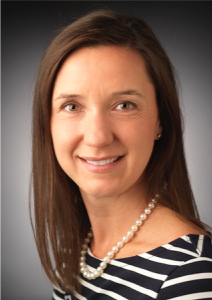
Ruschman had a successful nine-year career in the accounting and finance department at Duke Energy in Cincinnati, Ohio when she reached a personal crossroads – stay in that department or work more with the community. When a position managing the Duke Energy Foundation opened, Ruschman saw the perfect opportunity to continue working for the company, while also engaging with communities in Ohio and Kentucky.

During her four years leading the foundation, Ruschman realized that she needed formal education about the philanthropic sector.

“I discovered that in order to do my job to the best of my ability, I needed more tools and better strategies on giving.” Those thoughts, as well as conversations with her boss, led Ruschman to look into online programs in philanthropy and nonprofit management. “This school and its graduate program really stood out to me,” she explained.

Ruschman’s commitment to furthering her education to enhance her knowledge of philanthropy led to her nomination for and acceptance of the Cincinnati Business Courier’s ’Forty under 40’ award.

“I want to be in a career that gives back to the community, and the Lilly Family School of Philanthropy helps practitioners be innovators and leaders who create positive and lasting change.”

Through her time as the Duke Energy Foundation manager, her current role managing the company’s low-income energy efficiency programs in three states, and her service on several nonprofit boards in Cincinnati, Ruschman has worked with nonprofits in multiple different capacities.

“There are many ways for nonprofits to engage and partner with corporations,” she said. Ruschman encourages nonprofits to look into various corporate giving and volunteering programs at corporations in their respective communities.

Key to making a strong first impression is doing your homework.

  • Look into grants, scholarships, or in-kind product delivery that matches the nonprofit’s programs and goals with the corporation’s interests in the community.

“Research various ways that corporations directly give money to nonprofits,” Ruschman said.

  • Determine whether a company has an employee volunteer program.

“We have an internal program where we can see volunteering opportunities in the Greater Cincinnati area. Employees are then able to sign up for these various opportunities during their free time,” she said. “If I’m passionate about a cause, I can get a group of coworkers together and form a volunteer event at a local nonprofit. It’s a great way for employees to participate in established volunteering events or start their own,” she explained.

  • Research matching gift programs.

“Matching gift opportunities provide ways for nonprofits to leverage more dollars. The Duke Energy Foundation will match $1 for $1 up to $5,000 per year for each employee donation to any nonprofit organization,” she said.

  • Research and then ask corporations about other ways they and their employees can give back to the community.

“My company has a program that allows me to track my nonprofit board service or volunteer hours in an internal system where those hours equate to dollars. Then, I receive up to $2,000 a year for volunteer work that I can give back to any nonprofit,” she explained.

“Corporations in the U.S. have a large role in philanthropy. For example, Duke Energy works in seven states, and the Duke Energy Foundation annually provides over $30 million in charitable giving. The company strongly promotes community involvement and giving back,” she said.

“Giving back to local communities gives corporations as a whole a way to create a more positive workplace environment, boost employee engagement, garner positive media coverage, and attract and retain investors.”

Are company employees more likely to participate in philanthropic activities if the corporation promotes charitable giving? Genevieve Shaker, Ph.D., associate professor of philanthropic studies, researches and analyzes workplace-giving campaigns and has found that to be the case.

A research study conducted by Shaker, Dr. Robert Christensen, and Jonathan Bergdoll (2017) found that employer-matching programs encourage giving by employees.

“When employers matched donations, workers appeared more likely to give and to give more money to a cause. About eight percent more people said they donated when they worked for companies that offer this benefit, compared to employees of companies that don’t,” Shaker and colleagues wrote.

“It’s clear that employees at corporations want to give back in some capacity,” she added. “It’s important for nonprofits to ask about these opportunities with their donors, and for corporations to make clear with their employees that user-friendly matching gift opportunities exist,” she finished.

Ruschman agrees, and she encourages nonprofits to focus on mission when discussing matching gifts and other corporative giving and volunteering opportunities with companies.

“Nonprofits that are clear about their mission and their impact in the community are ones that stand out to us. They understand the needs of the community and have concrete solutions, and they partner with other nonprofits, community leaders, government, corporations, and volunteers to achieve their mission,” Ruschman explained.


Ruschman’s advice for nonprofits when working with a corporation 

  • It’s critical for nonprofits to research a corporation’s giving strategies before making contact in order to understand if they are eligible to secure funding. Make a list of the nonprofit’s community partners, philanthropic support, financials, and other volunteering opportunities.
  • Create a plan focused on a program or project that would match the corporation’s ideals and outcomes. The nonprofit should have two or three ideas on ways the corporation can support its work.
  • Meet with the corporation staff person via phone or in-person to discuss the potential relationship.

For Ruschman, her desire to give back has resulted in a career that merged her two passions of business and community service.

“Being a worker and citizen that cares about giving back plays an important role in the culture of a company. I am fortunate to work for a company that is committed to community and service. Personally, my career will always focus on helping people and giving back to better society,” she said.


Abby Rolland is communications project manager for the Indiana University Lilly Family School of Philanthropy at IUPUI and a current student in the master’s degree program.


Genevieve G. Shaker, Ph.D. is associate professor of philanthropic studies at the Indiana University Lilly Family School of Philanthropy at IUPUI. Her research focuses on fundraising, higher education advancement, philanthropy in the workplace, and philanthropy, public good, and faculty work. She is associate editor of the journal Philanthropy & Education.

Helping young people reach their potential

By Feature, Programming

By Lynn Sygiel, editor, Charitable Advisors

Today’s young people are tomorrow’s _______.  It’s a common expression and you can fill in the blank many different ways. It’s an inescapable fact that young people eventually grow up and turn into something.

Today’s adults, as every generation does, hope that transition is a positive one and one that will make the world a better place.

It’s also an accepted premise that many young people need a little help along the way and many nonprofits (and for-profits) are there to lend a hand.

According to the Minneapolis-based National Alliance for Secondary Education and Transition: “Youth development is a process that prepares a young person to meet the challenges of adolescence and adulthood and achieve his or her full potential. Youth development is promoted through activities and experiences that help youth develop social, ethical, emotional, physical, and cognitive competencies.”

In other words, how do you turn young people into successful adults?

Five years ago, an index to measure the youth development in multiple countries was created for the British Commonwealth. The purpose of the Youth Development Index (YDI) is to be able to compare five key areas for young people: education, health, employment, civic participation and political participation.

And as part of this effort, young people were asked for their opinions on the subject. For Eva Maria from New Zealand, youth development “is when, as a young person, you can believe in a future. A real future.”

Clearly, senior staff at Boys & Girls Clubs in Indianapolis would agree with Eva’s assessment. While there have been substantial changes in professionalizing the youth worker field since 1893 when the local club was first established, several things have remained constant.

First and foremost, young people come to the clubs to build relationships. For Maggie Lewis, the organization’s president since May, and LeeAnn Harris, who is senior director of club operations, this focus has been critical to the nonprofit’s longevity.

Research shows that a key factor to promote resilience in youth is the consistent presence of a single caring adult. Harris said that every survey of the views of the clubs’ young people reveals exactly that.

“It’s never, ever been about a program. The number one reason that they come in our doors everyday is because of our staff and the relationships that staff form with young people,” said Harris who has worked for the nonprofit since 1989.

“No matter how appealing technology becomes or how integral it becomes to young people’s success or their day-to-day interactions, no matter whether it’s moving young people toward the workforce or just trying to help them get their homework done, whether it’s a kid who only comes to eat or somebody who comes because they want to be on the robotics group, the only way we successfully serve any of their needs is to have that positive adult mentor relationship,” said Harris.

According to research compiled in the early 1990s by the late psychologist Norman Garmezy that single factor has a significant impact on children living in poverty. But the Boys & Girls Clubs believes it is also about adapting to the needs of young people.

In May, for example, the nonprofit added a new program at its Finish Line Boys & Girls Club on Indianapolis’ Far Eastside. The Pivot Re-engagement Center is a program for 16- to 24-year-olds and is a partnership of the club, Community Alliance of the Far Eastside (CAFE) and other local organizations. Partnering with EmployIndy, the strategy is to move young people toward employment or other options.

About two-thirds of the young people that are served at the club are not in school and are not employed.

Both Harris and Lewis are advocates for young people and think that sometimes adults tend to write them off as lost causes.

“I think we’ve proven time and again, but even recently through our re-engagement center that young people just want opportunities to be successful,” said Harris. “We’ve not had any problems or incidents there.”

She said that the goal for the program that started in May was to register 100 young people, but it’s at 700 and counting.

“These young people have had some bumps along the way and so they’ve come to us to get a better direction and to make the best of themselves,” said Lewis.

It circles back to believing in a future, and according to Harris, that starts in elementary school.

“We’ve seen that even with the school-aged young people that we serve. It’s amazing how, if you’ve never had an opportunity to create a vision for your future outside of what you see in your own community or even if you do have an opportunity to have that vision, hope itself can be knocked out of you before you ever turn 16. We see that all the time, and that’s our job to give them opportunity,” said Harris.

The nonprofit recently received a grant from Finish Line Youth Foundation that matches school-aged young people with employment opportunities at Finish Line stores. It also has a similar grant through Boys & Girls Clubs of America with GAP and Old Navy to support workforce development.

Again it’s about adapting. For several years, at clubs nationally and locally, there was a downturn of the number of teens participating. Many teens were looking for work opportunities. Boys & Girls Clubs saw this as a good way to address the needs of the population it serves and is helping them become a ready workforce.

Another thing that has changed in Indiana is there is now a career path for youth workers. Across the state, there are now education programs, which include certificates, associate degrees and higher education programs to certify and educate youth practitioners.

This year, Indiana is piloting an online program with the Child and Youth Care Certification Board (CYCCB), which is based in Texas. Practitioners in Indiana are able to use an online form to submit applications for Child and Youth Care (CYC) certification.

Practitioners can complete all required paperwork and submit documentation electronically. Over 300 Indiana practitioners, pursuing certification this year, are expected to use the online system, according to Jeananne Reich who is managing the program for Indiana. So far this year, nearly 200 were awarded the certification. Harris estimates that 75 percent of Boys & Girls Club Indiana’s staff are certified.

Lewis said over the 125 years, the facilities have changed from places to swim and play sports to places to obtain basic needs.

“Today, youngsters come to our clubs for basic needs. I cannot stress enough that they are coming for basic needs,” she said.  According to Lewis, poverty is the number one issue where the clubs are located. Annually, the nonprofit serves nearly 7,000 kids at its five facility-based clubs and five school-based sites.

Over half of club members’ households have an income of $25,000 or less, but families are asked to pay $15 for a young person to attend for the school year.  Over 75 percent of the young people are eligible for free or reduced lunch. Last year, it served nearly 300,000 meals and snacks, making it the second largest provider of Second Helpings meals.

In 2001, area schools began hosting after-school clubs. Although those programs are smaller, they are effective, according to Harris, since transportation is not an issue, making attendance more frequent. At these locations it is easier to establish relationships with a child’s teacher. In the city, the loss of community schools makes it more challenging. A given facility can have kids attending 50 different schools.

“There’s been great research done that proves the obvious that the more often a kid attends, the greater the impact you’re able to have. So although it’s a smaller number of kids, we know we have increased impact there because kids are with us almost every day,” said Harris. Second Helpings dinner meals are provided at the school locations, too.

Currently, there are five school sites. Two in IPS — School #44 and Jonathan Jennings — and three in Warren Township — Liberty Park, Raymond Park Middle School and Pleasant Run School. Earlier this year, three school sites closed when a 21st Center Community Learning Center Grant distributed by the Indiana Department of Education was not awarded. Students from George S. Buck (#94) were directed to the new Finish Line Club, which opened in 2016.

Harris and Lewis agree that although the adjectives describing the mission have changed, the basic mission has remained the same. It’s always been about helping young people reach their full potential.

“The part of our mission statement that I think speaks most to youth development is the part that says that we help young people reach their full potential. There are a lot of phrases before and after that — about productive, caring, responsible citizens through this program and that program — but it’s always been helping young people reach their full potential,” said Harris.

After serving as president of the nonprofit, Lewis, who is an elected member and former president of the Indianapolis City-County Council, said that if she were talking to her fellow council members, she would say, “Our youth are banking on us to get this right. They are looking to us for guidance and direction. And while there are a lot of other things happening in our community that take our attention and take our time away, they still need adults to guide and direct them.”