Monthly Archives

July 2018

Why a strong HR department improves your nonprofit

By Sponsor Insight

By Mike Harrington, president, The Synergy Companies

A business changes as it grows. What once was a one- or two-person shop hires more talent as new roles are created to meet daily demands. Capital rises, office space expands, and business goals are set higher and higher. Throughout it all, there is one area that can make all the difference and yet is often relegated to a lower priority. A strong HR department improves your business and has become a focus for successful organizations across America.

Alleviates unproductive multitasking

Consider an organization that doesn’t have a true HR department. There are still HR-related activities that must be completed by somebody. After all, who processes the payroll? When an employee has a problem, whom do they report it to? Who is conducting onboarding, processing hiring paperwork, or running trainings?

Despite being unrelated to an organization’s core business, HR responsibilities add up quickly for even the smallest of companies.

When a specific department doesn’t exist to carry out this function, a member of the management team often shoulders the responsibility. Unfortunately, that typically means spending the time he or she doesn’t have and turns the focus away from business strategy to “deal” with HR duties that he or she may not have much knowledge about.

While some may get by with multitasking in this fashion because, as a smaller organization, doesn’t feel as though there are HR activities daily, it results in a compromise of HR’s ability to add to and improve the nonprofit.

Dedicated, expert HR professionals create a strong HR department because their focus is solely on human resources. While some days like payday may see a flurry of HR activity, other “slower” HR days are the times this department can focus on improving the workforce, environment and culture. Abstaining from implementing a true HR department prohibits a company from reaching its full potential.

Minimizes risk and liability

Each passing day seems to produce a new law or regulation that organizations like yours must comply with. Even the smallest nonprofits have to address complex legislation, making sure they remain in compliance with applicable rules. A strong HR department is an organization’s leader in these efforts. There are payroll, tax law, employment law, benefits administration, disability, hiring, firing and training considerations among a number of others that must be appropriately taken care of. While some of it may feel like bureaucratic paperwork, that doesn’t change the fact that one false move can cause significant issues.

Consider just one piece of this in the topic of harassment and discrimination, a hot-button issue surrounding today’s workplace. When an organization has robust training for all employees in these areas, their liabilities are greatly reduced. The workforce understands exactly what constitutes a violation and how to respond if they witness one. Management knows precisely what to do if they are presented with a claim. Instances of harassment and discrimination can drop sharply. Even if they do occur, when an organization follows all the right steps in addressing and reporting them, they clear themselves of a great deal of liability.

When nearly 20 percent of U.S. adults have been sexually harassed at work, taking the right measures is key. The legal implications are similar for several other areas and, to be addressed appropriately, require a strong HR department.

Improves Employee Engagement and Retention

HR is the internal face of your organization. When the department operates at subpar levels, or if someone without HR expertise is trying to run these activities on the side, it deteriorates the employee experience and negatively affects culture. If employees encounter HR disorganization and confusion, or if they have to wait weeks for answers to common HR questions, it will lower their engagement.

At a time when 87 percent of organizations cite culture and engagement as a top challenge, it’s clear that employees depend on a strong HR resource. When they have a question or concern, they need to know who to go to and expect rapid resolution. Above all, they must be able to trust their HR person. If the onboarding experience is streamlined, paperwork is void of mistakes, and company trainings are professional and helpful, that trust is built. When HR thrives, your employees thrive as well, and that can make all the difference in keeping them happy.

Why a strong HR department improves your business

While the need for a strong HR department is clear, there’s no sugarcoating the fact it can be a difficult and costly overhaul process. For small nonprofits in particular, the cost of hiring HR employees may be prohibitive. Those in this position often find that a PEO like Synergy is an effective and affordable answer. In fact, businesses that partner with a PEO grow 7-9 percent faster and are 50 percent less likely to go out of business. At the end of the day, whether through a PEO or on your own, your HR department will determine just how far your business will succeed.


Mike Harrington is the president of The Synergy Companies. Joining the organization in 1995, Harrington has held several leadership roles within the company working to ensure its effective delivery of human resource and PEO services. Prior to joining Synergy, he spent five years with Safeguard Business Systems in direct sales and sales training and support. Harrington holds a BS degree in marketing from Eastern Illinois University.

When you’re looking for HR expertise that can provide a boost to your company, look no further. Synergy is here for you.


Never a more paramount time to connect young professionals in Indianapolis

By Feature, Leadership

By Caitie Deranek Stewart, board member, YNPNIndy and YNPN National

[content_box box_type=”normal”]

Conference special

For Not-for-profit News’ readers, YNPNIndy and YNPN National invite you to join us at the conference. Register with the code (CApromo18) to receive a $35 registration discount.

[/content_box]

The nonprofit sector in Indy faces some pretty monumental challenges: homelessness is on the rise, the opioid epidemic is hitting our community hard and the school violence seen in other places is now happening in our own backyard.

As professionals passionate about creating safe, healthy communities for our clients, our neighbors and ourselves, it’s easy to be disheartened or to want to keep our heads down.

At the Young Nonprofit Professionals Network (YNPN) — we know you are working tirelessly every day to create a more just and equitable world, putting in long hours and then volunteering in your free time. You’re driven and ambitious. You aren’t just talking about making a better tomorrow — you’re working every day to shape the world we all live in.

But do you feel like you need a shot in the arm? Something to inspire and motivate you to keep going?

Two years ago, I was lucky enough to attend YNPN’s 2016 National Conference and experience the potential benefits of the conference.

Amassing the top nonprofit talent from across the country in one room allowed me to see that this was going to be a different experience from any other conference I had ever attended. This was my shot in the arm. Looking around the room, I felt excitement circulating through the air. People from across the country were ENGAGED—sharing tips, tricks, and experiences on our space. Community was created in a flash.

More importantly, a kinetic energy — the kind needed to change the nonprofit sector — was being transferred before my eyes. Even while discussing difficult subjects like inequality and how to make careers in the nonprofit sector fulfilling and sustainable, attendees were building connections. Between learning concrete skills they could apply right away, young people with a passion to change the world were being inspired to lead.

And now you have the opportunity to get a similar energizing experience. This summer, YNPNIndy is leading efforts to bring this incredible experience to Indianapolis. Our theme this year is Change in Action: Equity and Advocacy for Self, Sector, and Society.

There has never been a more paramount time for young nonprofit professionals to be equipped to take action on behalf of themselves and others in the workplace and help to make ALL SPACES fair and diverse. In Indianapolis and across the country, examples of the impact of inequality are rampant. Building awareness and skills to make this change possible is essential to making the world a better place, and this conference can make that possible.

For that reason, it’s important that you attend, to get exposure to new ideas and tools that will help you be your own best advocate, as well as continue advocating for marginalized communities and (most important) impact the systems you influence with REAL CHANGE.

Here’s a glimpse of the inspiration we have planned and you won’t have to travel (For the full schedule go to: http://conference.ynpn.org/schedule). You’ll hear from incredible speakers nationally and from across Central Indiana including:

  • Kimberly Peeler-Allen, our keynote speaker, who has been working at the intersection of race, gender and politics for almost 20 years. Peeler-Allen is the co-founder of Higher Heights, a national organization building the political power and leadership of Black women from the voting booth to elected office.
  • Yolanda Caldera-Durant, director of programs at Fund the People, will lead a workshop about how to invest in the nonprofit sector’s most valuable resource: its people. Caldera-Durant runs a campaign to increase awareness about the deficit of investment in nonprofit professionals who represent 11 percent of the U.S. workforce. She brings years of experience in grantmaking from the Connecticut Health Foundation, Annie E. Casey Foundation and Fairfield County Community Foundation.
  • Matthew Feltrop, executive director of The Patachou Foundation, fighting to end childhood hunger, food insecurity and low food access in Indianapolis. According to Feltrop, it is unacceptable that that Indianapolis—often called the breadbasket of America—is still facing a debilitating hunger problem.
  • Michael Twyman, professor at the Indiana University Lilly Family School of Philanthropy, will lead a workshop exploring the origins of race, racial ideologies, and the politics of racial classifications in the context of American history.

For Not-for-profit News’ readers, YNPNIndy and YNPN National invites you to join us at the conference and register with the code (CApromo18) to receive a $35 registration discount. It’s time to take unified action to make our world better. Attending #ynpn18 is the first step.

Sign up today at conference.ynpn.org! Also, follow us on all social media @YNPNIndy for updates leading up to the conference.


Editor’s note: this guest article was written by Caitie Deranek Stewart. She is the associate director of development at the IU School of Medicine. Prior to joining the IU School of Medicine in the fall of 2014, Deranek Stewart was the donor relations specialist at the IU Lilly Family School of Philanthropy. She is an active volunteer with a number of initiatives and joined the board of the YNPNindy chapter and the YNPN National Board in 2015.

Charitable Class: What is it and how can you ensure you are serving one?

By Uncategorized

By Zachary S. Kester, Executive Director and Robert Miller, Program Officer, Charitable Allies

Still unclear and fretting over whether your charity serves a charitable class?  

Do not worry, you are not alone in this concern.

It is a common issue among nonprofit organizations and identifying a charitable class is paramount for those seeking to qualify as a 501(c)(3) organization. Some organizations may worry that its targeted population is simply too small. Others may not fully understand the IRS’s ostensibly rigid requirements.

Yet, sometimes ensuring that a charitable class is being served can morph into a difficult and burdensome exercise. However, by knowing the following key concepts of nonprofit law regarding serving a charitable class and adopting a few ways to ensure compliance, a tax-exempt nonprofit organization can avoid most, if not all risk, associated with this area of nonprofit operation.

Definition of charitable class 

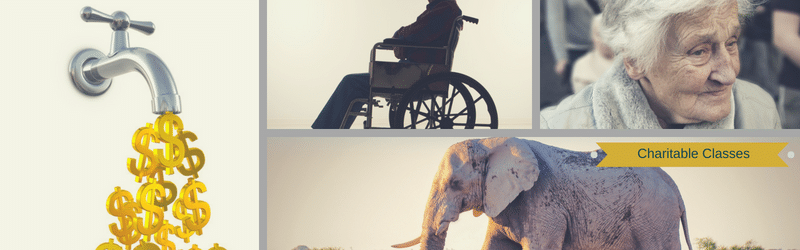
Generally, a charitable class is the group of people or other defined group, such as the homeless or indigent population, endangered animals, or wildlife habitats, that can properly receive assistance or programming from charitable organizations.

In this context, properly means that the class being served by the organization needs goods, services, or funds provided in a way that fits within a charitable purpose as laid out in the Internal Revenue Code § 501(c)(3), i.e. “for religious, charitable, scientific, testing for public safety, literary, or educational purposes, or to foster national or international amateur sports competition … or for the prevention of cruelty to children or animals.”

According to the IRS, a charitable class must be sufficiently large or indefinite so that aiding them benefits the whole community. Members of a charitable class can range from a person deemed indigent and in need of public housing to a prisoner or parolee needing rehabilitation services to a person suffering from a recent disaster and is need of temporary food, water, and shelter to endangered animals. Additionally, other potential charitable classes include, veterans, elderly individuals, physically or mentally handicapped, talented and/or gifted individuals, families of people killed in the line of duty, the poor, the distressed, and even other charitable organizations. In the end, you must ensure that you are serving a “charitable class” or you will not be given tax-exempt status under 501(c)(3).

Further, a charitable class may include a group of members not inherently considered a charitable class. Take for instance a for-profit business. For-profit businesses rarely constitute a charitable class. However, given the fact that a business may suffer just as much as an individual during a natural disaster, the IRS has typically allowed businesses to be included as members of a charitable class. This means that during a declared disaster or even in the wake of a terrorist act, the IRS may approve tax exemption for nonprofit organizations organized and operated to combat community deterioration, deeming the benefit to the business as incidental.

In order for a charitable class to be sufficiently large, tax-exempt organizations need to serve a large enough class to prove to the IRS that the entire community is benefiting from their activities, either directly or indirectly.

Similarly, tax-exempt organizations organized under 501(c)(3) are not permitted to serve only one individual or even a small, defined group of individuals. For example, an organization organized as the Jane Doe College Fund or the Children of John Doe’s College Fund operated to provide scholarships to Jane Doe and the children of John Doe, respectively, would not be given tax-exempt status as a defined charitable classes of such small sizes are not sufficiently large.

However, as mentioned above, being sufficiently large is not the only way to create a charitable class that meets the IRS’s requirements. To that end, the IRS does not require a charitable organization or nonprofit to determine every possible individual to lump into these groups. In fact, as mentioned above, the IRS specifically allows indefinite groups of individuals, where the number of individuals who may benefit from the charity or nonprofit has yet to be realized. This exception is understandable for a number of reasons, including the fact that the IRS has seemed to recognize that a new charity may only serve a small number of individuals before it is able to secure the necessary support to expand its services.

For example, the widows or widowers of firefighters killed in a given geographic area while discharging his or her duties would constitute a charitable class, even if the number of potential beneficiaries is undetermined. In fact, in some cases, the class might only include one person and the charitable class will be deemed sufficient so long as the potential class is indefinite. This can be accomplished in this specific scenario simply by organizing your nonprofit so as to support all widows or widowers of firefighters killed in the line of duty in a specific area. Therefore, even if there is only one widow or widower at the time the organization is organized, the class can still get larger and encompass more people.

To simplify, an organization created and operated solely for the benefit of one person would generally not qualify for tax-exemption as a charitable organization or nonprofit organization. Conversely, an organization organized and operated to benefit a large group or an indefinite group would qualify. 

Ensuring your organization’s compliance 

As difficult as it may seem it some instances, the IRS does require nonprofit organization’s to retain proof that it is serving members of a charitable class. In order to ensure that you are complaint with the rules surrounding charitable classes, the following practices have been identified as being able to provide such proof.

First, using in-take sheets to register the recipients and record their demographics is a good start. These demographics should include the basic information about age, sex, etc. along with any specific information your organization would need to prove that it is serving those within the charitable class it was organized to serve. For example, if your organization is supposed to be serving the poor, then part of the in-take sheet should include a request for documents that contain information about the recipient’s income, like a check stub, tax forms, etc.

Other information that should be received from the recipients of your organization’s services include identification documents, such as a driver’s license, state ID, Social Security card, birth certificate, passport, etc. Many grantors or donors require collection of this documentation too. Also, be sure to keep the information collected highly secure to avoid any privacy violations.

Lastly, these in-take sheets should include a sworn affidavit or affirmation attesting to the veracity of material information provided. In some cases, much of this information cannot be provided by the intended recipients due to their inability to access them, because the documents have been lost, or any number of other plausible reasons. Therefore, as insurance, your organization should also include a document that the individual can sign that states they do not have the necessary documentation and affirm that they meet the necessary requirements to receive the services being offered.

In the end, your organization needs to be aware that the IRS does require organizations to retain sufficient evidence that they are serving a charitable class. A simple assertion that a charitable class is being served is insufficient. Thankfully, there are a number of ways to prove this and the above examples are just some of the ways that have been identified to provide the IRS with the necessary information. 

Conclusion

A charitable class must be sufficiently large or indefinite so that aiding them provides a benefit for the community as a whole. Additionally, a charitable class must be made up of individuals, organizations, animals, etc. that are eligible to receive assistance from nonprofit organizations due to their connection with one of the permissible charitable purposes. This may seem like a relatively easy step in creating a non-profit, but failing to ensure that your organization serves a charitable class can cause your organization to lose its tax-exempt status or be denied tax-exempt status in the first place.

Even once you receive your tax-exempt status, you cannot relax and forget about the concept of the charitable class. You must ensure that you can prove to the IRS that the recipients of your organization’s services would qualify to be members of a charitable class.

Overall, the concept of a charitable class is an often forgotten or overlooked aspect of operating a tax-exempt non-profit organization. However, if your organization follows the guidance and tips provided above, then your organization should be able to avoid risking its tax-exempt status due to something that is relatively easy to prevent by ensuring compliance with the requirements of serving a charitable class.


Attorney Zac Kester provides generalist and strategic nonprofit legal and consulting services. He holds a Master of Laws, a post-law school advanced degree, in which he studied the unique needs of tax-exempt nonprofit organizations. His legal and consulting career has focused on nonprofit organizations.

With highly experienced legal and training personnel, Charitable Allies provides all manner of legal and educational services for boards, officers, management and staff of myriad charities throughout the sector. From basic one-time questions about a single matter to training for boards and officers to complex reorganization or merger of activities, Charitable Allies is your go-to cost-effective provider of legal services to nonprofit organizations.

Contact Zac Kester, executive director, at 317-333-6065 or zkester@charitableallies.org with any questions.


Voices from the field: lessons on collaboration

By Governance

By Lynn Sygiel, editor, Charitable Advisors

Partnership, collaboration and merger are terms often bandied around in the nonprofit world. And while the concept of collaboration isn’t new, it has become a hot topic as a way to reduce duplication, increase coordination and contribute to collective impact.

According to a 2014 Bridgespan survey of nonprofits and funders, the overwhelming majority of nonprofit and foundation CEO respondents had taken part in one or more forms of collaboration. The survey found that 91 percent of CEOs have engaged in one of four common forms — associations, joint programs, shared support functions and mergers.

While nonprofits reported the most activity in the less integrated forms, 55 percent of foundations wanted to see more mergers, and 76 percent of nonprofits wanted to see more shared support functions.

In early May, Charitable Advisors partnered with Charitable Allies to host a forum. Six local nonprofit leaders took part and shared experiences and the lessons learned for an audience of nonprofit professionals.

The panelists were: Stephen McCaffrey, president and CEO at Mental Health America of Indiana; David Westenberger, CEO of Indiana Youth Services Association; Jim Morris, president and CEO at Greater Indy Habitat for Humanity; Kendra Belden, operations director, Lutherwood Residential; Janice Hicks-Slaughter, director of partnerships and outreach at the School of Education and Exercise Science, Marian University; and Kim Donaghue, senior consultant, Newgrange Consulting.

As the director of agency services at United Way of Central Center Indiana for over 12 years before her retirement in December, one of Donaghue’s primary functions was building capacity, and in this role she facilitated six or seven mergers. There was one merger she deemed perfect.

“It was an excellent agency that did wonderful work, they were smart in looking far ahead. They weren’t in financial trouble at the time, but they knew that they weren’t sustainable. Instead of waiting until they were in trouble, they decided to be proactive and began looking around at what their options were,” Donaghue said.

Most difficult, according to Donaghue, was identifying potential partners.

“Truthfully they had already identified three possible partners. They really only looked at options that were culturally and mission-appropriate,” she said.

With United Way’s financial help, the agency hired a consultant to help exam its options, and later help pay for merger legal fees.

She thinks the reason this one was successful was because the two nonprofits had complementary programs, and the agency looking to merge had programs that the other didn’t have. In addition, the partnering agency was not only able to hire the entire staff, but hired the former executive director as its development director.

“It was the most perfect marriage, I’ve ever seen,” Donoghue said. “They also absorbed some board members.”

Critical, too, were the separate meetings the consultant convened with the nonprofit’s executives and board members, giving both the chance to talk candidly and think objectively.

“It’s hard work and you need people to think big picture and from their professional selves perspective more than the personal.”

Donaghue believes most funders are receptive to support an agency exploring combinations, but are not as receptive to organizations that are failing and looking for any lifeline.

“From a funder’s perspective, we like to see an agency being proactive about its situation and really look at itself and see what they have to offer another organization,” she said. “If an agency is in dire financial straits, let’s face it, it’s going to be real tough to find a merger partner. There are not going to be a lot of agencies out there that are going to want to absorb someone in financial trouble.”

Not all consolidations are successful. Morris, who became the president of the Greater Indy Habitat for Humanity in 2011, shared an anecdote to illustrate when a conversation can take an unexpected turn.

Over the course of a year, two area Indiana Habitat affiliates discussed merging, and had all but signed the agreement. In the 11th hour, Morris received a call offering a deviation from the original plan. Rather than merging, it wanted to hand over the retail operation to Indianapolis, and keep its executive director at the helm of the local Habitat affiliate. For Morris and his board, this would have been a money-losing proposition.

“It was kind of frustrating. I really struggled with when there is an opportunity to meet a greater demand, and we have an opportunity to be more effective and efficient, but I understand that the humanness of who we are,” said Morris. In the end, the affiliate exec didn’t want to lose her position.

Ultimately, the panelists agreed, relationships are the foundation of successful collaborations.

Belden said a partnership between Community Health Network and Lutherwood Child and Family Services in 2013 led to establishing a relationship with an organization with a specific expertise.

Lutherwood, a locked secure treatment facility for youth who are placed there through the courts, through DCS and probation, has therapists and doctors on staff. The center’s staff witnessed new challenges for some of the residents: They were survivors of human trafficking. To the extent they could help, the Department of Child Services was involved, but didn’t have the expertise to offer programs for these girls.

The facility’s CEO had worked with Megan Jessup, the COO of Ascent 121, a program that provides long-term trauma recovery for teen survivors of trafficking. What if Ascent 121 could provide the much-needed programming and lend its expertise to the situation? The Impact Program, which provides residential care for teen survivors ages 12-18, was designed and Lutherwood entered into a contractual partnership with the Carmel-based organization to deliver this service.

“It goes back to relationships that we already had. Communication was a whole lot easier because we knew her, she knew us,” said Belden.

That relationship allowed open communication and to reach a consensus about programming which has continued. There are weekly partner meetings with both staffs. As an example, Belden shared how Ascent 121’s close working relationship with the FBI affects the center’s work. When there is a pending FBI raid, Ascent 121 communicates with Lutherwood’s staff and the facility’s staff can be ready to house additional residents.

Hicks-Slaughter is not new to mergers.

In 2002, she experienced her first with the merger of Big Brothers and Big Sisters. At the time only about five Big Brothers and Big Sisters chapters nationwide were still separate, and she was the executive director of Big Sisters. After 18 months of meetings, the organizations were blended, and she became COO of the newly formed local chapter.

Her second merger was the Hook’s Discovery and Learning Center with Marian University. The science-based program was a good fit for Marian, and its programming was integrated in the school’s outreach work with schools. And to round out Hicks-Slaughter’s trifecta, she had a role in the Ruth Lilly Health Education Center merger with Marian University in 2014.

At the time, the Ruth Lilly Center noticed trends in declining school field trips, and anticipating a reduction in revenues, the CEO of the center began meeting with different entities to identify possible collaborations. Marian University was one of those places.

“It started out as a meeting to just kind of talk, and after so over so many meetings, many lunches, many conversations, it was decided that there was such a mission cohesiveness, it should come together. Key was that the trustees of Marian and the board members of Ruth Lilly Health Education Center came together in agreement because the case for this was strong.

“We were also incredibly fortunate to be able to make that case to a major funder who provided a merger grant. It was a three-year grant that helped us the staff move out of that facility and transfer all of its programming to an outreach format that emanates out of Marian. I’m now responsible for outreach, and partnership development at Marian but I’m also the director of the Ruth Lilly Health Education Center, and we continue to grow and get stronger,” said Hicks-Slaughter.

She said it was not an inexpensive venture to incorporate staff and ensure a stable presence. In addition, the grant allowed them to incorporate the “wow” factor into the outreach programming, incorporating virtual reality.

In Indiana, according to the secretary of state’s office, from 2007 through early 2015, 441 nonprofits filed for mergers. The previous year, there were 71 on the list, including the Ruth Lilly Health Education Center (RLHEC) with Marian University. Long-time nonprofits like the 25-year-old Ruth Lilly Health Education Center and Hook’s Discovery Center have been reinvented by joining with Marian to continue delivering services to schools through outreach programs.

Both Donaghue and Hicks-Slaughter reminded that it’s important to not let your donors be surprised. Communicate early and often so they know that the organization is being responsible.

Hicks-Slaughter said once the merger was finalized, they invited donors to a reception so they could see and hear from people who were in the new roles.

“They could hear about the future, not just that we merged, but this is why we merged and where we see ourselves heading. And that’s what they want to hear because they’re not all happy about it. Make sure that you communicate with them and continue,” she said.

The 2014 Bridgespan survey also found that CEOs said the more integrated forms — shared support functions and mergers – were more successful, claiming that joint programs failed 20 percent of the time. Often they felt pressure from funders to engage in some type of joint programing, but when the funding ended, so did the collaboration.

While shared support functions and mergers take more to implement in both effort and money, the outcome provided structure to achieve impact.

McCaffrey’s and Westenberger’s organizations are examples of support function partnerships.

McCaffrey oversees 12 subsidiary nonprofits as part of Mental Health America of Indiana. At the time McCaffrey arrived at the organization in 1991, there were several organizations that had spun off and were frail and fledgling.

“We made a strategic decision to say, ‘Why don’t we ask our spin-offs, if they’d like to come back?’”

The plan allowed subsidiaries to keep their boards and make decisions on programs and policies. As part of a larger group, they could benefit from the statewide group’s business expertise, but had to adhere to its accounting procedures, HR procedures, and be supervised by the parent organization’s staff.

“Sort of independent but sort of integrated,” said McCaffrey. “Eventually it became our strategic way of growing and being more secure financially ourselves. I think it’s been a good thing, and it allows us to expand our reach as an organization, with 12 or so many boards and a volunteer and staff reach that’s huge. It has provided lots of options for grants or funder applications,” he said.

Westenberger has had similar experiences, first with nine nonprofits that became one organization, Fountain for Youth in Columbus, and since 2012 as Indiana Youth Services Association (IYSA). His organization has responsibility for more than 30 client organizations that outsource their accounting and HR functions to IYSA. Besides member services, the organization operates its own programs and is now credentialing Indiana youth workers and building awareness of programs.

“Before these small nonprofits had a part-time bookkeeper who may have only had minimal training. Now, they had an outsourced CFO who is Ivy Leagued educated.

“It wasn’t even the value of the service and when you add the value of the service and what you can do with that money in the community, you’re at $1 million all of a sudden. Out of your $18 million, you’re spending collectively; you just added a $1 million in your social return. That’s the driver; not can I save $100 bucks a month on my outsourced accounting,” he said.

Donaghue reminded the group that it’s relationships in the community that afford you opportunities for partnerships. Begin with relationships in the community, then look to state associations and groups and even consultants who might work with a similar organizations and offer valuable connections.

“Again, I just think it’s relationships and keeping your head up for whatever opportunities are out there,” she said.