Tag

education

Harvard’s Free Online Social Science Courses: A Vital Resource for Nonprofit Leaders

By Feature

Charitable Advisors

In 2025, understanding the complexities of American democracy is more crucial than ever for nonprofit employees and leaders who strive to create meaningful change. To support these efforts, Harvard University is offering several of its social sciences courses online — completely free and accessible to the public.

Nonprofits play a pivotal role in shaping public policy, mobilizing communities, and advocating for social justice. Yet navigating the political landscape can be challenging without a clear understanding of how government works and the forces that influence it. Harvard’s free courses provide an invaluable opportunity for nonprofit professionals to deepen their knowledge in these areas.

The courses cover key topics including the dynamics of American politics, public policy development, and the intricate workings of the three branches of the U.S. federal government. They also explore how political actors and institutions influence the electorate and shift policy outcomes. This insight is essential for nonprofits seeking to advocate effectively and build strategic partnerships within government and civil society.

By engaging with these courses, nonprofit leaders can gain a more nuanced understanding of the political environment, helping them to craft stronger advocacy campaigns and elevate their organization’s impact. Moreover, the courses emphasize how individuals and organizations can use their voices to lead change, providing practical knowledge that nonprofit professionals can apply directly in their work.

Given the growing challenges facing democracy — from political polarization to declining public trust — these educational resources are a timely tool to empower nonprofit sectors nationwide. According to recent surveys, only 20% of Americans trust the federal government to do what is right most of the time, underscoring the need for informed and engaged leadership.

Harvard’s no-cost, open-access courses remove barriers to high-quality civic education, making it easier for nonprofits to build the capacity needed to thrive in today’s complex political climate.

For nonprofit professionals looking to strengthen their advocacy and leadership skills, these free Harvard courses offer a unique chance to learn from one of the world’s leading universities and drive meaningful, informed change.

Learn more and enroll at: https://pll.harvard.edu/subject/government

Let’s invest in digital technology for all, building a more equitable Central Indiana

By Sponsor Insight

In November, a coalition of organizations released the Central Indiana Digital Equity Plan, with the goal of cultivating digital equity for all in the region

By Gary Thompson, project specialist, United Way of Central Indiana

Growing up in Franklin, Indiana, I knew too many parents who had to drive their kids to the nearest fast food restaurant, public library, or coffee shop so their kids could use the free Wi-Fi to get their homework done on school-provided Chromebooks.

Some days, they just simply couldn’t do their homework, usually because their parents were either too tired or busy to drive them again.

Now, almost a decade and a half later, friends who became teachers in Indiana complain about the same barriers for students, except this time, schools have required e-learning days on top of that.
Times have changed, but support hasn’t.

Digital technology and the internet are part of our daily lives, but not everyone has access to these essential tools. Investment in digital technology is like all other infrastructure investments in the United States: The lucky or wealthy get it, and others are left out. Marginalized and disinvested communities continue to lack access.

That’s where the Central Indiana Digital Equity Plan comes in.

In November, a coalition of organizations in the region released the plan, with the goal of cultivating digital equity for all in Central Indiana. We want to ensure Hoosiers in our communities have access to digital technology resources, education and support.

In the plan, we outline four main goals: internet access for all; access to, and ownership of, digital devices; digital literacy; and advocacy for an equitable and supportive ecosystem.

As the state was developing Indiana’s first digital equity plan, we wanted to develop a strategy addressing the unique needs of our region. Our coalition of about a dozen people began meeting in fall 2023, and the plan is intended to guide digital equity efforts over the next five years in Boone, Hamilton, Hancock, Hendricks, Marion, Morgan and Putnam counties.

We worked with the Purdue Center for Regional Development to develop the plan, and current coalition members include CICOA, Easterseals Crossroads, Indianapolis Chamber of Commerce, Indianapolis Public Library, Invest Hamilton, Minority Moves Network, You Yes You! and United Way of Central Indiana.

Investing in digital technology for all will help people live the lives they are capable of living.

If we actually invest in digital technology, parents and teachers won’t have to worry about kids not having access to their homework. Students can excel, prosper and learn – without barriers. Seniors and others unable to make it to a doctor’s office can still get needed check-ups, medical advice and medication, without leaving their homes or requiring a family member to drive them to appointments. Whole communities can live and prosper in Indiana, while working remotely. Those in need can apply to assistance programs, without having to make burdensome trips to offices far away.

You don’t have to look further than neighboring Chattanooga, Tennessee, to see how much economic and social benefit there is to having access to the internet and the skills to maximize those benefits.
Since investing in internet infrastructure in 2010, Hamilton County, Tennessee, has seen a return on investment of roughly $3 billion. Not only that, but their network allows the community to provide free internet to low-income households with children and to be more resilient to a rapidly changing landscape of digital opportunities and adversities.

This is exactly what we want in our communities here in Indiana. Join us in being a champion for digital technology and ensuring our neighbors have access to this critical point of connection to everyday life.

Our current Central Indiana Digital Equity Coalition members mostly represent Marion County, but our goal is to collaborate with partners across the region, including more nonprofits, to discuss areas of need, seek funding and review proposals. We also see a role for corporate partners, who can help support and implement the work.

In the future, there will be a more formal process of joining the Central Indiana Digital Equity Coalition. For now, if you are interested in joining our efforts, contact me and my colleague Jonathan Jones, United Way’s Impact Senior Director jonathan.jones@uwci.org; gary.thompson@uwci.org.

Pitch Your Passion to Win a Four-Year Scholarship

By Sponsor Insight

High school seniors and IU Indianapolis students who want to change the world can compete for funding to study at the IU Lilly Family School of Philanthropy

INDIANAPOLIS—Two top winners of an upcoming Pitch Your Passion student competition will receive all-encompassing, four-year scholarships to the Indiana University Lilly Family School of Philanthropy at IU Indianapolis (IUI), the world’s first school dedicated solely to teaching and research about philanthropy.

Students selected as Thomasson Scholars will receive scholarships that provide up to four years of tuition and fees, room and board, and books, as well as support for a semester of study abroad. Other winners of the competition will receive partial scholarships.

Lilly Family School of Philanthropy students have a passion for making a difference in the lives of others, for community service, supporting a cause or meeting a need. The school’s Bachelor of Arts in Philanthropic Studies degree program equips students to make their passion their profession, while preparing them for a job and a career in the growing field of philanthropy, which has a tremendous need for new leaders.

“Our scholarship program is designed to attract talented, compassionate students to meaningful, fulfilling careers in philanthropy and nonprofit organizations,” said Amir Pasic, Ph.D., the Eugene R. Tempel Dean of the school. “Our graduates serve in change-making positions in nonprofits, corporations and government across the country and around the world. Their work changes lives and communities and influences education, social services, health, arts and culture, animals, the environment as well as many other endeavors that make a lasting difference.”

The Pitch Your Passion competition will be held March 8 at IUI; the deadline to apply is Feb. 23. During the competition, participating students will identify a current social, economic or cultural issue of concern to them. Together with other students who have similar interests, they will develop and present a group plan of action that describing how they would leverage resources to bring about a transformative change for the population impacted by the challenge the students selected. For example, previous presentations have addressed issues such as mental health, sexual abuse, homelessness, and the need for resources for new mothers.

In addition to the group presentations, students will be evaluated on their grades, extracurricular activities and interests, and academic and career goals, and on an individual interview with a committee of the school’s faculty and staff.

Competition applicants must:

  • Be a high school senior, a current IU Indianapolis undergraduate student (with fewer than 60 credits) or a transfer student
  • Be admitted to IUI
  • Plan to major in Philanthropic Studies

How to apply:

  1. Submit an application by Feb. 23, 2024
  2. Accept an invitation to the competition
  3. Present a group pitch
  4. Interview with the scholarship committee

For more information about the Pitch Your Passion competition, scholarships and other financial aid at the school, and the Bachelor’s Degree in Philanthropic Studies program, contact Pamela Clark at pamelac@iu.edu or 317-278-8927.

About the Indiana University Lilly Family School of Philanthropy
The Indiana University Lilly Family School of Philanthropy is dedicated to improving philanthropy to improve the world by training and empowering students and professionals to be innovators and leaders who create positive and lasting change. The school offers a comprehensive approach to philanthropy through its undergraduate, graduate, certificate and professional development programs, its research and international programs, and through The Fund Raising School, Lake Institute on Faith & Giving, Mays Family Institute on Diverse Philanthropy, Women’s Philanthropy Institute, and the Muslim Philanthropy Initiative. Follow us on X (formerly known as Twitter), LinkedIn, or Instagram and “Like” us on Facebook.

Impact United: United Way of Central Indiana launches interactive data tool

By Sponsor Insight

The new dashboard illustrates community need and the collective impact of United Way’s partners

By Margaret Matray, communications manager, United Way of Central Indiana

Data tells a story.

United Way of Central Indiana has long collected and analyzed data to understand the needs of the community and inform its decisions and strategies.

The data paints a picture of who in our community is living in or near poverty, what their greatest barriers are – and how organizations across the region are working to address those challenges.

Now, United Way is making that data available to the public for the first time. Launched this month, the Impact United Dashboard is an interactive data tool that illustrates community need and the response of United Way’s partners in Boone, Hamilton, Hancock, Hendricks, Marion, Morgan and Putnam counties.

“It’s our way of making sure that we are showing how we have been accountable to the community, to donors, to funders – to ensure we are lifting their impact but also (showing) how we’re trying to invest in communities where there are gaps in services,” said Denise Luster, United Way’s vice president of impact research and data analytics.

The dashboard provides snapshots of United Way and its partners’ work in key focus areas, including economic mobility, educational success, food, health, housing and transportation. Users can explore the data by focus area, dig into the demographics of those served and filter the data by county.

“This should be a tool that anyone can use to see some key highlights of what’s happening within their community, no matter where they’re located,” said Stephanie Fritz, United Way’s strategic research and analytics senior director.

The tool reflects the most recent data that’s available and is designed to be a “living dashboard” that will be updated as new data emerges, said Daniel Hedglin, United Way’s director of data insights and storytelling.

Throughout the dashboard, data that shows community need comes from national, state and local sources and The Polis Center’s SAVI program at IUPUI. Data showing impact comes from organizations, programs and community-based organizations that partner with, or receive funding from, United Way.

“This data comes from our partners in impact,” Fritz said. “It’s their work that they’re doing in the community.”

United Way’s reporting and analytics team – called the Strategic Information team – began talking about creating a public dashboard last year.

Community organizations that work with United Way report data to the nonprofit quarterly and biannually. A dashboard was a way to show them – and the community – what their collective impact looks like, said Purbasha Dasgupta, United Way’s research and evaluation senior manager.

“This is our collective footprint in the Central Indiana community,” said Dasgupta, who led the project.

The dashboard reflects the “immense collective efforts” of United Way’s partners to serve people in the community, Hedglin added.

According to the dashboard:

  • More than one in three Marion County households are in poverty or are considered ALICE, meaning they earn above the Federal Poverty Level but not enough to afford a basic household budget. (ALICE stands for Asset Limited, Income Constrained, Employed.)
  • About 29% of households that are in poverty or ALICE in United Way’s seven-county service area are families with children.
  • A racial wealth gap exists between white Hoosiers and communities of color. For every dollar earned by a white household in the region in 2019, Black or African American households earned 88 cents on average. Hispanic households earned 76 cents.

Through the dashboard, users can see how particular community needs are being addressed. For example, more than 63% of households that are in poverty or considered ALICE in the region are headed by single women. The data shows that more than half of adults receiving career counseling and coaching from United Way’s partners are from the same population. And 42% of childcare assistance services are provided to single female parents or caregivers.

“Through our various initiatives, we’re not only addressing the fact that we see there’s a need that’s particularly present in this one specific population, but our impact work was able to tie together to help move them … on a trajectory from poverty to ALICE, ALICE to stability,” Fritz said. “Our partners in impact are providing these services to address that.”

Whenever she talks about data, Luster points out that it’s more than numbers. Data represents real people living in our community. The dashboard can educate Hoosiers on where the need is and what can be done to meet those needs.

“The breadth and depth of the need is great, but there are also many organizations out there trying to help address that need,” Luster said.

To explore the data dashboard, visit uwci.org/impactunited.

Now may be the time to pursue student loan forgiveness, higher education

By Feature

Nonprofit INvestED

by Shari Finnell, editor/writer, Not-for-profit News

With tuition averaging $40,000 for private colleges and up to $28,000 at public colleges, the prospect of having student loan debt forgiven under federal government programs can be enticing. And with the pandemic moratorium for repaying federal student loan debt set to expire on May 1, questions on how to get some relief are steadily emerging.

You may be wondering, Am I eligible for student loan forgiveness? Is it worth the trouble of applying if I’ve been turned down before? Should I pursue a degree and work in public service — especially if I have a chance of my loans being canceled in the future?

And for those who are considering a degree at the undergraduate or graduate level, the rising costs of tuition — which is outpacing inflation by 28 percent in some cases, according to the National Center for Education Statistics — may act as a deterrent to starting the college application process.

These are the types of questions and situation that recently have been fielded by INvestEd, a nonprofit that helps Indiana residents discover avenues to pay for the expenses of a higher education, especially in the wake of the recent overhaul of the Public Service Loan Forgiveness (PSLF) program which erased an additional $6.2 billion in student loan debt, according to William Wozniak, vice president of marketing for the organization.

Wozniak said now is a good time for Indiana residents to be hopeful about qualifying for student loan forgiveness under the revised PSLF program, as well as the affordability of college — despite statistics that seem to indicate otherwise.

INvestEd, which has been providing students and their families with solutions for a college education for more than 40 years, said that people who may have been turned down for student loan forgiveness under PSLF for various reasons, including missed payments on loans or an employer being determined ineligible, Wozniak said.

Because of previous restrictions, the PSLF, which was introduced in 2007, only a small percentage of students had their loans forgiven, he added. The program was designed to incentivize more students to pursue careers in public service instead of positions in the more lucrative private sector. However, until recently, there hadn’t been any significant dent in the number of students who had loans forgiven under the program.

“Even if you were told you’re not eligible, now is the time to go back,” Wozniak said. “We can’t say in every case, you’re going to be in the clear and everything’s going to be OK but you can get advice on what you can do to still be on track to get your loan forgiven. The answer may have changed even if you were told a year ago that you were ineligible.”

Wozniak also said that many prospective students and their families often mistakenly assume that they don’t qualify for Federal Student Aid (FAFSA) because of their household income. And despite the headlines that point out that college tuition rates are soaring, the overall cost of attending college is declining because of an increase in the amount of grant assistance students can qualify for, he added.

Highlights of the revised PSLF

Under the PSLF, a person may be able to have their federal student loan debt canceled if they:

  • Work full-time for an eligible public service or non-profit employer
  • Enroll in an income-driven repayment plan
  • Make at least 120 monthly student loan payments. Some participants may have had their payments deemed ineligible. If this is the case, they can apply for a limited waiver for student loan forgiveness through the U.S. Department of Education. The deadline to apply for the waiver is Oct. 31. It’s important to submit an Employer Certification to the U.S. Department of Education each year, and with each change of employer.
  • For those who have FFEL, Perkins, or other federal student loans, consolidate your loans into a Direct Consolidation Loan to qualify for PSLF both in general and under the waiver. Before consolidating, confirm if the employer qualifies for the program.
  • Past periods of repayment will now count regardless of whether a person made a payment, made that payment on time, for the full amount due, on a qualifying repayment plan.
  • Periods of deferment or forbearance, and periods of default, continue to not qualify.

For more information about PSLF, go to the federal government site.

You can also contact INvestEd for a free consultation. INvestED consultants also can be reached at (317) 715-9007.

Common challenges facing students, loans and college tuition

In consulting with students and families, INvestED has come across numerous challenges they have faced in handling student loan debt, according to Wozniak. They include:

  • Using private loans with high interest rates. In some cases, families are paying interest rates of 10 percent or more for years, Wozniak pointed out. “There are some people who might have $40,000 or $50,000 debt on the federal side, but they might have as much as that or more in private loans,” he said. “And even if the federal government were to wipe away all the federal loans, if they didn’t do the private loans as well, people are still paying 10, 11 or 12 percent on loans, waiting for federal forgiveness that may or may not come.”
  • Unexpected changes in the PSLF eligibility rules. In some cases, even with adherence to the rules, students have encountered unexpected changes that made them ineligible for federal debt forgiveness.“ For years, we would talk to students and their families about making sure you’re current with your payments, and that your job is acceptable for the program so that you’re in position (for loan forgiveness),” Wozniak said. “Some people may have been working at an employer, and then in the seventh or eighth year of their employment, the employer was then deemed not acceptable. It wasn’t their fault. For whatever reason the department made that ruling.” If this has happened to you in the past, Wozniak said, recent revisions to PSLF could make you eligible for the program once again.
  • Missed loan payments. Under PSLF restrictions, students were considered ineligible for the program if they missed loan payments. Those rules have been relaxed, according to Wozniak. “When we get to the pandemic, there was a realization that almost nobody was getting anything forgiven,” he said. “At that point, adjustments started to be made to the program.” Wozniak said they have advised students to return to the program even if they had been told they were not eligible because of missed loan payments.

Overall cost of attending college 

INvestED also has a mission to educate students and their families about the overall cost of attending college and the grant assistance that may be available to them, according to Wozniak.

He said it’s important to distinguish between the sticker price and the net cost. Media outlets often will highlight the cost of attending college but will less likely feature articles about the net cost of attending college — after grant funds have been applied.

INvestED counselors advise students to apply to different colleges to determine that net cost. In some cases, the institution with the highest tuition may actually have the lowest overall cost after grant dollars have been added into the equation, he said.

“When we work with families, they’re pleasantly surprised when they find out that Mary or Johnny can go to school for $15,000 net. We look at the actual net cost for that student,” Wozniak added. “With the proper advanced research, students can save a lot of money, which often means a lot less in student loans.”

Pandemic reveals the challenges in eliminating inequities among Hoosier students

By Feature

Local nonprofit leaders predict a complex journey in addressing underlying issues

by Shari Finnell, editor/writer, Not for Profit News

Like many other nonprofit organizations, the team at Christel House Indianapolis had to quickly assess how to carry out its mission in spite of COVID-19 restrictions in early 2020 — an endeavor that revealed many of the challenges facing the students they serve.

“When the pandemic hit last March, our board members and our entire team came together and realized that the pandemic was not just going to last for a couple of weeks,” said Dr. Sarah Weimer, executive director of Christel House Indianapolis.

It was a critical undertaking as they considered the potential for educational setbacks among Christel House students living in some of the most under-resourced communities in Indianapolis. The closing of school buildings for 2,300 K-12 students and 750 adult learners would require addressing any challenges in their home environments.

Technology was identified as a priority, and the team implemented a plan to distribute devices to each of their students at their Indianapolis schools. However, that plan only addressed part of the equation. “They had the device but couldn’t access the Internet to download their assignments,” Weimer said. “We discovered that over 50 percent of our students in Indianapolis did not have access to WiFi.”

Although telecommunications companies offered discounted and free internet service for students in low-income households during the pandemic, more challenges came their way. “Providers were having deals for families to get free internet, but they had barriers,” Weimer said. “If you owed a bill, you couldn’t get free access. If you didn’t have a social security number, you couldn’t get access.” Through a partnership with the Indianapolis Mayor’s Office and a fundraising initiative, Christel House was able to purchase data packages totaling $10,000 a month to support their students. 

In looking back, Weimer said the pandemic further revealed the inequities that already existed based on demographics and neighborhoods. “The inequity question is one that we’re going to be grappling with for years to come,” Weimer said. “We don’t have a good grasp of how impoverished communities and communities of color were impacted by the pandemic. We know statistically but we don’t have an understanding of the toll, including the emotional and mental toll.

“There’s going to be a lot to unpack for the kids,” she added. “Besides academic and learning loss, the students we serve come from backgrounds where they need additional mental health services, food insecurity and childhood trauma, all of which were exacerbated by the pandemic,”

Dennis E. Bland, president of the Center for Leadership Development, an organization that equips African American youth with education, business and community leadership opportunities, including scholarships, said that the pandemic highlighted varying mindsets about the value of an education — a gap that must be addressed to ensure that equity is achieved.

Bland said there often is a perception that everyone understands the opportunities that are open to an individual who is committed to advancing their education. However, he said, that lack of understanding can be at the root of some inequities.

Students, especially those growing up in households where the importance of an education is stressed, will more likely take advantage of tutoring, counseling, summer classes, college prep and other programs that are available to them. “Students who were committed to taking advantage of those resources were the students who did the best,” he said. “It’s not necessarily the lack of resources, it’s a lack of understanding about the value of an education.”

Bland said the conversation must start there — educating students and their family about the value of an education. “It is the duty of caring people in our community to encourage students to study and to take advantage of these resources — not whether or not you feel like it. This is about whether or not you want to be successful. Success often means doing the opposite of what you feel.”

“We need to give more people an education on education,” Bland added. “We struggle as a society because we go along as if we think that people innately value education and learning.”

The challenges in understanding the impact of the pandemic on students is multi-faceted, Weimer agreed. “It’s not just about academic preparedness,” she said. We must address the social and emotional issues that have been confounded during the pandemic year. We will be focusing on those issues during the upcoming year.”

Christel House has had a history of addressing those complexities as part of the support it provides students. “We follow our students for five years after they graduate,” Weimer explained. “Poverty isn’t alleviated just because they graduated. The hurdles they have to overcome don’t magically disappear after they get a diploma.”

The organization tailors a support plan for each student, depending upon their specific needs. As they navigate college or other educational and career paths, each high school graduate stays in contact with college and career administrators who are aware of the potential barriers to their success.

“They (students) can proactively reach out if they need gas cards if they lose a job. If they have a job interview, we can help them secure interview clothes,” Weimer said. “We may have students in college who will sign up for classes and realize their books are not covered by financial aid. We’ll pay for their books.”

Navigating the complexities of college, like understanding what a Bursar’s Office is, can be difficult for first-generation high school graduates or first-generation college-goers, especially since they can’t go to their families for direction, Weimer added. “Some things are foreign for a large portion of our families,” she said.

While these challenges were already familiar to Christel House, the pandemic shed more light on some of the hurdles facing students who are in households where English is a second language. 

Many families with children learning at home are able to easily stand in and help them adjust and assist with questions related to their studies, Weimer noted. However, about 50 percent of the Christel House Indianapolis students live in households where the adults don’t speak English or who don’t engage with computers on a day-to-day basis.

“When they’re trying to help their child navigate assignments or instructions, there’s a language barrier,” Weimer said. “We need to do a better job of paying attention to low-income households, communities of color, immigrants so that we can do a better job of outreach, equitable practices and equitable access.”
Local university adopts a rural work college model to transform higher education for nontraditional urban students

By Feature

by Shari Finnell, editor/writer, Not for Profit News

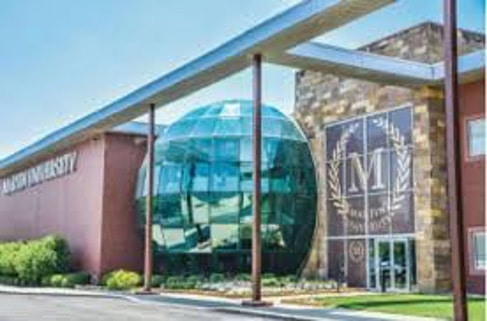
The profile of students who attend Martin University is anything but traditional. The average age is 38, and more than half are Millennials. Many are juggling low-wage, part-time jobs and parenting responsibilities as heads of household. And it’s not unusual for them to be carrying student debt after transferring from other colleges, according to Ezell Marrs, vice president for enrollment management for the Near Eastside Indianapolis educational institution.

Those unique circumstances led Martin University to introduce a work college model that has been primarily limited to rural and small-town communities until recent years. Under the work college model, students pursue their degree while making a commitment to work and provide service for the university or university partners.

Martin WORKS, the urban work college established with the assistance of a $1 million Lilly Endowment grant, improves students’ odds of better post-graduation outcomes since they will be paired with companies that provide relevant work experience. “They are not paying tuition as part of this program — and they are getting paid a competitive wage with top-tier corporate employers, in some cases, Fortune 500 companies,” Marrs said. “They will engage in learning and work-related experience that will set them up for full-time employment in more profitable careers.”

In some historic work college models, everyone who works at the campus is a student with the exception of faculty, Marrs said. Over the decades, many have evolved to meet new career demands. Warren Wilson College in Asheville, N.C., for example, was founded in 1894 as the Asheville Farm School to give underserved and, in some cases, previously uneducated young people, more solid job prospects through a low-cost education. In 1967, it became a four-year liberal arts college. Today, Warren Wilson College, which has been touted as a “best buy” by Fiske Guide to Colleges, continues its focus on “learning by doing” through a work program and community engagement.

“The work college model has been around for some time, but It’s a fairly new concept for an urban setting,” Marrs said. “Paul Quinn College in Dallas pioneered the urban work college. We are now pioneering an urban work college for post-traditional students.”

Martin Works, which will accept its first students in the fall of 2021, is centered around three pillars to ensure that its students succeed — academics, relevant employment with corporate partners, and community service, with a focus on serving its surrounding neighborhood in the 46218 zip code, Marrs said.

The program also requires that participants first engage in a summer training session to ensure they are prepared to work in corporate settings, Marrs said. “The Martin WORKS Academy, the preparatory piece that proceeds enrollment, will help students learn the skills and foundational courses that will go into their jobs. When we send a student off to a Fortune 500 company, we will ensure they have basic employability skills, including communication skills and other soft skills.”

The work college model addresses some of the inequities inherent in some traditional internship programs in which students are not paid or underpaid to gain experience in their preferred careers, Marrs said. Historically, that has been a challenging prospect for students who can’t afford to forego a steady paycheck. “I know of a student from Ball State who was working in media and not getting paid,” Marrs said. “His situation allows him to be agreeable to that because he needs the experience. Our students have more responsibilities and need both experience and compensation.”

Another component of the program is designed to equip the students for home ownership through affordable housing provided by community partners that specialize in housing, Marrs said.

Martin Works will ultimately give a student the ability to graduate with better job prospects, and the foundation for a stable life — critical steps to addressing racial and social inequities in the community, Marrs said.

“They will walk across the stage with a resume with relevant work experience, a diploma and a job — and very little or no school loan debt,” he said.

Prospective students interested in the program can apply by visiting Martin University’s site.

Making big bets for social change

By Feature

By William Foster, Gail Perreault, Alison Powell and Chris Addy, Bridgespan, for SSIR |

When Don Fisher stepped down as chief executive of the Gap in the late 1990s, he and his wife, Doris, decided that they wanted to tackle one of the most difficult social challenges in the United States: improving public education.

Through an expert advisor, they learned about the Knowledge Is Power Program (KIPP), which at the time consisted of just two charter middle schools — one in Houston and one in New York City. And after lengthy due diligence, the Fishers committed to giving $15 million over three years (roughly three times the organization’s annual revenue at the time) to bring KIPP’s results- oriented methods to many more communities and students.

The Fishers bet big, and they bet smart.

Button Text