In June, the Department of Labor (DOL) announced proposed changes to the Fair Labor Standards Act, which outlines overtime exemptions for white-collar workers.
The proposed changes would extend overtime protections to nearly five million workers within its first year of implementation, making many positions that are currently considered overtime exempt under the act, nonexempt and eligible for overtime.
Last year, for example, staff members of a Downtown nonprofit each worked an average of 55 hours a week with annual salaries of $40,000. This organization has 35 employees. Under the changes, this nonprofit’s staffing budget would rise approximately 56 percent, an additional $22,500 in overtime for each staff member or a total of more than $787,500.
This proposed change could be a costly one for employers, especially nonprofits that already operate on slim budgets.
One of the proposed changes to the current law includes raising the salary minimum of exempt status from its current $455 per week ($23,660 per year) to $970 per week (50,440 per year). This means that under the proposed changes that in most all cases an employee would need to earn at least $50,440 per year to qualify for exempt status and ineligible for overtime.
Exceptions to this would include outside sales, teachers, doctors and lawyers. However, for most general business positions this ruling would apply.
Another proposed change is related to the performance of the primary duties of the job. Currently, there is no specific time an employee has to spend performing the primary duties of his or her job to qualify as exempt — it is to be used as a guide but it is not determinative. The proposed rule specifies that an employee must spend 50 percent or more of his or her time performing the primary duties of the job in order to qualify for the overtime exemption. This is a rule currently in place in California and the DOL seeks to adopt it.
There are many other proposed rule changes but the above are just a couple that are sparking attention.
The good news is that the DOL is seeking feedback on its proposed changes during the current public comment period through September 2015. Once the comment period ends, the DOL will review all feedback and work to finalize changes.
Based on historical decision-making data, we can expect to see final rules around second quarter of 2016.
In the meantime, employers should stay up to date on developments regarding the proposed changes and evaluate its workforce.
Currently, Synergy is working with its clients to plan ahead by:
Understanding how these changes may impact company culture and employee morale.
Encouraging FLSA audits to identify the impacted with the proposed changes.
Developing actions plans on how to implement changes when they occur.
Identifying methods to reduce overtime for those roles that were previously exempt from it.
Thankfully, these are just proposed rule changes at this time but the DOL is very clear that changes will be made.
Unfortunately the specific changes won’t be known until sometime next year.
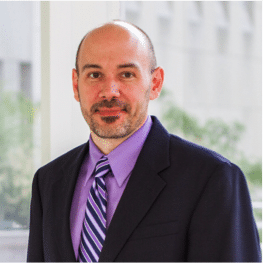
Jeremy York, SPHR, SHRM-SCP, is a Human Resources Field Representative for Synergy PEO Services. With over 15 years experience, he provides strategic and generalist HR support to local nonprofit organization leaders and their staffs. Jeremy has a bachelor’s degree from Purdue University in Organizational Leadership and Supervision and a master’s degree from Indiana Wesleyan University in Management. He is the current director of certification for the Indiana State Council of the Society for Human Resource Management (SHRM) and serves on the IndySHRM board of directors as the past president.
As a way to connect re-entry programs and service providers, the Marion County Re-entry Coalition is planning a daylong conference on Oct. 22.
The conference is designed to create opportunities for providers and criminal justice agencies to share best practices and resources regarding services for ex-offenders in Indianapolis.
Last October was the group’s fourth annual conference and 300 participants, representing 90 service providers attended.
For more information about this year’s conference, click here.
To register for the 2015 Marion County Conference on Re-entry, click here.
WHEN: Oct. 22 from 8:00 a.m. to 4:00 p.m.
WHERE: The Caring Place, 2901 N. Post Rd.
Registration is free, but limited to the first 400 people. A complimentary box lunch and light breakfast will be provided to registrants. Please cancel your registration if your plans change and you can no longer attend.
Resource area: You are invited to contribute print or other materials about your program/agency to the resource area. If you plan to bring materials for the resource area, please arrive at by 8 a.m. with your materials and check in at the registration desk.
Rhiannon Edwards goes to work every day dreaming of a better life. A good job with a bright future. A nice place to live. She dreams of being a productive part of the community.
Edwards doesn’t yearn for these things for herself, but for some of Marion County’s hardened and most difficult individuals.
Since 2006, Edwards has been executive director of PACE (Public Advocates in Community Re-Entry), a nonprofit on Indianapolis’ Eastside that provides everyday, useful services for people with felony convictions to adjust to life outside of prison.
PACE, which started in the 1960s, annually serves 1,500 new clients and 2,000 returning ones. The work isn’t always easy.
“When organizations get someone with a felony that they can’t do anything with, they send them here. We’re like the drop-off center. The worst of the worst, bottom of the barrel, that’s what we get. If you don’t help him, he’ll do that again,” said PACE’s Edwards.
“So although we don’t like what he did, we have to try to give him the tools to be better. He may decide not to be better, but we have got to give him the tools.”
Re-entry programs that prepare ex-offenders to reclaim their places in society are integral pieces of the entire rehabilitation process.
The city of Indianapolis has had an Office of Ex-offender Re-entry since 2007. Headed by Brian Reeder, this city agency coordinates employment and support services through existing community organizations. Reeder, who has been on the job since September of last year, knows the importance of community-centered programming to support ex-offenders and prevent recidivism. Another key, he says, is transitional work opportunities and housing.
In addition to PACE, he points to two other programs — RecycleForce and Horizon House – both nonprofit organizations that provide readjustment services for ex-offenders.
RecycleForce, a nonprofit, electronic-recycling company on the city’s Near Eastside, began in 2003 and hires ex-cons. Gregg Keesling, the president, says the program serves 338 with a staff of 12. Its focus is on transitional jobs and wrap-around services. The courts refer offenders to the program.
At Horizon House, a nonprofit homeless day center near Downtown, clients initially come in for a cup of coffee, to shower or get out of the heat. Under one roof, the center provides job-readiness training, housing and medical services through an onsite center run by Eskenazi Health.
Teresa Wessel, executive director for the past five years, has seen a dramatic increase in the number of ex-offenders coming through the center’s doors. Of the 2,000 unique individuals seeking Horizon House services so far this year, 62 percent were ex-felons. It is important to note they are self-reported, she said.
“We work hard on building trust and relationships, and now they’re willing to tell us. I don’t know so much that it’s an increase, people are just comfortable,” said Wessel.
The three organizations serve different populations. While the city has other re-entry programs, not all can take all types of offenders. A community center with a child daycare, for example, cannot allow a sex offender on the premises.
At current funding levels, however, these three nonprofits can serve only about a third of those in need in Marion County, and each has seen federal, state and city dollars decrease in the past several years.
In 2007, Horizon House received about 50 percent, or $650,000, of its budget from the federal government.
“Last year, our government funding was $99,000. We lost about half a million dollars,” said Wessel. Her organization has tried to fill it with help from donor support, special events and private foundations, but at the end of 2010, the organization reduced staff – from 25 to 15. Currently Wessel has three openings but has a hiring freeze.
For RecycleForce, less local and national foundation funding, not being awarded a recent federal contract and a drop in commodity prices for the material the organization resells, have all contributed to its reduced revenues.
Keesling noted that when Mayor Greg Ballard started the Office of Re-entry, there was a $400 million budget for public safety, and when Ballard launched the Community Crime Prevention Grant Program, it had a $5 million budget.
The crime prevention program is funded from public resources allocated annually by the Indianapolis-Marion County City-County Council and is administered by The Indianapolis Foundation, an affiliate of the Central Indiana Community Foundation.
“Since that time, crime prevention has gone from $5 to $2 million, and public safety’s gone from $400 up to $620 million. So the public has agreed to increase public safety by $200 million and reduce crime prevention by $3 million. We need parity and understanding,” said Keesling.
PACE has state and county contracts to provide services for Marion County Community Corrections, including the Duvall Residential Center for work release sentences, re-entry drug court and drug treatment court. Both PACE and Horizon House are United Way agencies, which has allowed a portion of their funding to remain stable.
In addition to dealing with funding cuts, re-entry agencies will likely be taxed even further after recent legislation passed by the Indiana General Assembly. In 2013, Indiana made significant changes to its criminal code for the first time in more than 30 years.
Under House Enrolled Act 1006, low-level offenders will no longer be sent to state prisons. Instead, they will be kept in local jurisdictions to serve their sentences. The change also gives judges more discretion to allow time to be served in community-based correction programs.
In part, the revisions were designed to ease overcrowding in the state prison system and control burgeoning state incarceration budgets.
With fewer individuals going to corrections and more serving their sentences in communities, the number of current and ex-offenders needing services in Marion Country is expected to double, to about 12,000.
In the 2015 legislative session, Indiana passed technical corrections to the 2013 House bill, and these three agencies are hopeful the fixes might enable them to expand. Also called the Criminal Justice Funding Law, the legislation will provide $80 million for drug treatment and mental health programs and is designed to treat the underlying causes of crime and help nonviolent offenders not continue criminal behaviors.
Additionally, the bill provides funding to local communities to serve the expected influx of low-level offenders, many with drug addictions and mental illnesses, who will now serve their time in the community instead of prison. The emphasis is on treatment and supervision rather than incarceration. Community corrections will receive $30 million in the first year, and $50 million in the second.
All three nonprofits are part of the Marion County Re-entry Coalition (MCRC), which works with many other groups from community corrections to judges to the prosecutor’s office.
Wessel, who came to the nonprofit sector after nearly 26 years in the for-profit world, said she is amazed and impressed with the amount of collaboration that happens in Indianapolis.
“We try to be careful that there is no duplication. Our resources are so scarce, there isn’t room for duplication,” she said.
When recidivism was high in 2007, city and state officials took notice and the next year, began a collaboration between the Annie E. Casey Foundation and work being done with agencies in the city, the mayor’s and governor’s offices. In 2012, the group transitioned to the Marion County Re-entry Coalition.
By 2013, the City-County Council convened a Re-Entry Study Commission to look at re-entry’s effect on the community. With 26 recommendations in hand, they named MCRC responsible to move the agenda.
One way it plans to do that is to make re-entry services more accessible. The Office of Re-Entry will manage six resource centers, modeled in part on Horizon House’s efforts to locate services in one place. The six locations have not been finalized, but strong consideration is being given to high-crime zip code areas.
More than half of the prisoners released in Marion County wind up back behind bars within three years, according to a 2013 report commissioned by the City-County Council. The biggest predictor of whether they will return to crime? Employment. And sometimes not even that is enough.
“Everybody’s going to say, you need an education, you need to change your criminogenic thinking. You need housing, you need all this, all true. But the thing you want is the job,” said Keesling.
Wessel thinks there are other factors.
“It’s still important to emphasize that (a person) doesn’t go from incarceration to release to instantly getting a job.
If you got mental health or medical issues, you’re not going to be successful at keeping a job, and most definitely maintaining a job,” she said.
To support the re-entry process, Horizon House has a computer lab and clients have generic IDs. Volunteers from area businesses help prepare ex-offenders for job interviews with role-playing situations, and also help the ex-offender account for a gap in work history. The onsite computer lab has a separate phone number, providing an ex-offender with a phone number to give to potential employers and then a place to access messages. The center also has secured storage, so that anyone who has a job or is going to a job interview can leave his or her belongings.
“The last thing you want to do at a job interview is to roll in your suitcase or have a plastic bag with you. We are trying to make sure that there’s no negative first impression that would cause someone to be discriminated against directly or indirectly because someone else is making a judgment call,” said Wessel.
The six resource centers, much like Horizon House, will be a one-stop places to access services, said Wessel. Each center must have a job-readiness training program, and clients must have access to employment, health and education services.
If these aren’t available onsite, the center must have a signed letter of agreement with other agencies to provide those services. There must be a staff member who is OWDS certified (offender workshop development specialist) or project management gained through United Way, a level of certificated specialists that can help offenders get a job and be reinstated into the community.
“So we are trying to make sure that folks are directed to the right service center or resource center that they’re eligible for and that they’re actually going to access services and not be told to go to three other places. In the past with that type of soft handoff, no one was catching them on the other end. They could have looked in the phone book. The focus is really on providing the services on site,” said Wessel.
As the re-entry programs scramble to provide more and more services, the question remains: Are they making a difference?
PACE’s Edwards said that working with the Annie E. Casey Foundation and its Making Connections program helped her organization develop data-collecting software and ensure that programming is results-focused.
“I think the organizations that were under the Making Connections model are better at collecting outcomes. The Annie E. Casey Foundation didn’t want to know how many people attended a workshop, they wanted to know who got benefits, who had a job, who still was in a job. They wanted employment numbers. They wanted to know how many people in this zip code had a job.”
Keesling said defined metrics are key.
“All of us need to agree on the metrics. This should be the top issue. We wouldn’t allow this in any other part of government or business,” he said.
Keesling said there are 135,000 felons now living in Marion County, according to the National Employment Law Project. That is 20 percent of the population who have a felony and that has an impact on their job prospects.
For Edwards, the biggest change she seen since she started at PACE nearly a decade ago is from the community and the respect they have for the work that re-entry programs do.
“When I first got here, I could just see the look on people’s faces,” she said.
Fighting the stigma of their clients is something they all still do.
“You know when something bad happens and they say on the news, ‘He had been in prison five times before.’ We know, ‘Oh, gosh, we have to fight that.’ Even though Johnny was not our client, Johnny had been to prison before and all our clients have been to prison. So that’s our biggest obstacle,” she said.
Wessel said that it’s most important to educate the community.
“You know, raise the reality, educate people on the issue,” she said.
Photos courtesy of Horizon House and RecycleForce.
By Michael L. Jackson, director of marketing and communications, Indiana University School of Public and Environmental Affairs in Indianapolis
In the complex world of nonprofit management, today’s leaders must possess a unique set of skills in order to navigate the industry’s challenging landscape. Whether it’s working with board members, leading a group of volunteers, or competing for fundraising dollars, those charged with running the organization need a broad array of skills.
The Executive Education division of the Indiana University School of Public and Environmental Affairs (SPEA) partners with The Fundraising School at the Lilly Family School of Philanthropy to provide leaders with the critical tools needed to run a successful nonprofit. Through the Certificate in Nonprofit Leadership program, the two schools have developed a four-course program that delivers intense training for real-world impact.
“Leadership of nonprofit organizations is pretty unique,” said Sara Johnson, director of Executive Education at SPEA. “One of the things considered when putting this program together was, “What specific skills like developing and assessing a nonprofit board of directors, do these executives need to have in order to lead that type of organization?’”
Classes in the certificate program are offered throughout the year and can be completed in person or online. In-person classes are held over two days (a Friday and Saturday) on the Indiana University-Purdue University Indianapolis campus. Online courses are completed during a four-week period.
The four seminars – Financial Analysis for Nonprofit Leaders, Nonprofit Management for the 21st Century, Program Evaluation for Mission Impact, and Strategic Planning and Nonprofit Leadership – are offered on a rolling basis and do not require prerequisites, giving students the flexibility to begin the program at their convenience.
“While someone could do the course work entirely online, we generally recommend that they complete at least two of the courses in the classroom setting,” Johnson said. “This program brings in participants from all across the country, and that opportunity to network and collaborate face-to-face has a big impact on the experience.”
One of Johnson’s favorite seminars is the strategic planning session where students learn to understand their own management style, which, she says, is vital when trying to develop a nonprofit board of directors.
“CEOs have to develop the acumen for developing their own boards and how to make sure they’re doing a board assessment and doing the things that make good boards,” Johnson said. “Understanding your management style helps you to be more effective with the board. If you go into a strategic planning session and you are aware of your own approach or own belief system, chances are you’ll make better progress and have greater outcomes.”
Michael L. Jackson is director of marketing and communications at the Indiana University School of Public and Environmental Affairs (SPEA) at IUPUI. Jackson joined SPEA from the Kelley School of Business at IUPUI after a 20-year newspaper career. He received his MBA in Marketing from Butler University.
By Jim Simpson, CPA and director, Financial Technologies & Management
The way nonprofits prepare and present financial reports is about to change. It is the first significant changes in over 20 years. In 2011, the Nonprofit Advisory Committee recommended modification of the 1993 financial reporting mode to the Financial Accounting Standards Board (FASB). In April, the FASB issued an exposure draft that proposed updated accounting standards. The released draft has a comment period that ends on Aug. 20.
So what does this mean for your nonprofit organization?
Before the change is official, you may want to consider formal training for board and staff members. It may be good idea to adopt some of the proposed changes before they are mandatory because they will create more relevant financials and comparable measurements.
By Rachel Feintzeig, reporter, Wall Street Journal
A group of employees at the Massachusetts Institute of Technology’s business school is experimenting with policies that could usher in a new era of flexible of work.
MIT being MIT, that experiment involves some robots.
A couple of years ago, Peter Hirst, who runs the executive-education arm of MIT’s Sloan School of Management, wondered what might happen if his 35 employees could work wherever, and whenever, they wanted. The Cambridge, Mass., school had long offered flexible work arrangements to those who requested them, but “it had always felt a little like a very special benefit,” Hirst said.
When construction forced his staff to move offices about three-quarters of a mile from the business school’s main buildings in the summer of 2013, Hirst started to question why most employees were required to trek to their desks every day.
By Gabe Duverge, copywriter, Grace College and Theological Seminary
A recent study from the Society for Human Resource Management found 38 percent of employers in the United States allow some of their workers to work from home on a regular basis, up from 23 percent in 2008. This 15 percent increase demonstrates just how quickly telecommuting is taking hold in the work place.
The primary concern for companies when considering telecommuting policies are what the costs and benefits could be. Although high-profile companies like Yahoo are ending the practice in their organization all together, there are still plenty of companies that have found success in remote management. Here are some of the key benefits of telecommuting from employer statistics group.
Most local economic development schemes focus on creating jobs. Many offer incentives to startup companies, or try to lure existing companies to relocate.
But a campaign in Montana is turning that on its head. It’s not trying to recruit companies but rather employees to come to the sparsely populated state and telecommute.
David Blackburn works for a financial services firm in Jersey City, N.J. He and his wife both have six-figure incomes, but real estate in the New York City area is so expensive that they have to live kind of far from their jobs.
By Robin Sanders and Tim Bosley, editorial, Midland Daily News
The concept of Community Corrections is designed to provide a specific segment of the present Michigan Department of Corrections population, and citizens who have just begun a life of committing crimes, with an alternative to direct incarceration, as a means to prevent them from becoming “institutionalized” and reintegrating them into the community as productive, taxpaying citizens.
At the very least, the program would remove from the state’s prisons inmates who do not pose a security risk to others or the public and reduce the costs of corrections.
At best, the centers would serve to educate, train, reintegrate and ensure the self-sufficiency of those persons deemed eligible through a rigorous and evolving evaluation process.
In 2008, Indianapolis-based Charitable Advisors launched the Cincinnati Not-for-profit News to replicate our success at increasing communication and connection across the Indianapolis nonprofit community.
We knew from our Indy readers that it was filling a void. We chose Cincinnati because of its regional proximity to Indianapolis and because there was no single point of connection for the nonprofit community, and we wanted to help fill that gap.
After three years, Jane Page-Steiner of JPS Nonprofit Strategies in Cincinnati brought her nonprofit background and local connections to further raise the visibility and effectiveness of CA’s nonprofit publication. She took on the publisher title.
Though we have had success in Cincinnati, we have found our primary focus has been on growing Indiana publications. Last week, Jane and JPS Nonprofit Strategies took over the ownership, marketing and production responsibilities of the e-newsletter with a goal of further increasing readership and impact in the Greater Cincinnati area.
This is a win for both organizations as Jane is able to pursue her vision of supporting Cincinnati nonprofits, and Charitable Advisors is able to explore launching a regional nonprofit career-focused publication.
If you are also a Cincy subscriber, expect future newsletters from Jane2@jpsnonprofit.com. To avoid the publication landing in your spam folder, it is advised to add this email address to your contact list.
The Cincinnati e-newsletter will continue as a partner for Indy nonprofits that want to reach the readers of the Greater Cincinnati area publication. It will be “business as usual” for Indy job advertisers who can continue to place their ads in the Cincy newsletter for an additional $25. Just submit your job ads to: Ads@Notforprofitnews.com and indicate that you want to advertise in both Indy and Cincy. If you choose this option, you will receive a single invoice as before.