Tag

Community

This data shows the depth and nuance of need in our communities. Let’s use it to partner together and serve our neighbors with dignity.

By Sponsor Insight

United Way’s newest ALICE report shines a light on more than 1 million Hoosier households struggling to afford the basics

By Michael Budd, president and CEO of Indiana United Ways, and Denise Luster, chief strategic intelligence and information officer for United Way of Central Indiana

The data is striking.

Over one in four workers in Indiana’s most common jobs struggled to get by in 2023.

Yet many of these workers earned too much to qualify for government assistance. Among them: child care workers, nursing assistants, cashiers, food service workers – the very people who keep our economy running.

In all, more than 1 million Hoosier households could not afford a basic household budget that year. And some 31% of Indiana families with children struggled to make ends meet.

In May, Indiana United Ways and United Way of Central Indiana published the newest ALICE report, in collaboration with research partner United for ALICE. Released annually, the report shows the depth and nuance of need in our communities. It shines a light on households that are in poverty or considered ALICE, an acronym for Asset Limited, Income Constrained, Employed.

For more than half a century, the government has used the Federal Poverty Level to determine who among us qualifies for public assistance. But the ALICE report shows that this measure misses many more who are struggling.

ALICE households earn above the Federal Poverty Level – too much to receive aid – and yet not enough to afford the basics of housing, child care, food, transportation, health care and technology.

This report seeks to give them a voice. Read through its pages, and you’ll see there is not a population untouched by financial hardship. These challenges affect every community in every corner of our state – urban, suburban and rural.

The ALICE report – this data – is us. So how do we use it to take care of each other?

Here are a few places we can start:

  1. Educate.
    The ALICE report is a powerful resource for understanding community need. We can use it to educate the public and policymakers about those needs – and how human services nonprofits are working to address them. Once others understand the breadth and depth of the challenges, then they can become an active part of solving them.

The report can play an important role in humanizing the data and dismantling stereotypes. It shows that financial hardship doesn’t show up in the way some may assume: Just because a person has a job doesn’t mean they are OK.

This interactive tool includes detailed reports for all 92 counties in the state and calculates the true cost of living for each, allowing you to see a more detailed picture of need in your community.

The report highlights the economic impact of meeting all Hoosiers’ basic needs, a useful framework when speaking to stakeholders. Meeting everyone’s basic needs changes the trajectory of struggling Hoosiers – and also boosts economic activity through increased tax revenue and consumer spending.

Employers can use this data to understand their own workforce and consider policies that support their employees, such as helping with child care costs, offering flexible schedules to accommodate for transportation challenges, and providing small loan options like the Community Loan Center model. They may also consider partnering in the Good Wages Initiative, which supports living wages and access to benefits for workers.

  1. Build and adjust programs.

    It is critical that we use data to inform our decisions. The ALICE data shows us the challenges Hoosiers are really facing. We should use this information to help us create – and modify – programming tailored to those needs.
  2. Partner together.
    One organization alone cannot solve our communities’ complex challenges.

It requires all of us – nonprofits, government, businesses, philanthropy – to take part.

Partnerships can start small. Perhaps your nonprofit addresses food insecurity. How can you connect to other agencies that address additional basic needs – such as transportation, housing, child care, health care – to ensure your clients’ needs are met holistically? We need to work together.

Above all else, what we hope you take away from the ALICE report is this: Data is a representation of real people. This report is about what is happening to real families every day in our communities.

We all deserve dignity. Let’s ensure all Hoosiers have access to the basics, to good-paying jobs, to opportunities.

Michael Budd is the president and CEO of Indiana United Ways.

Denise Luster is the chief strategic intelligence and information officer for United Way of Central Indiana.
“Work for a Nonprofit, Make a Difference”: Why This Campaign Can’t End Here

By Feature

By Chelsea Ohlemiller, Director of Community & Content, Charitable Advisors

As the “Work for a Nonprofit, Make a Difference” campaign wraps up, I find myself reflecting not only on the progress we’ve made but also on the road still ahead. In my role as Director of Community & Content at Charitable Advisors, I’ve had the privilege of spending the last several weeks in the field — meeting with nonprofit professionals, listening to their stories, and witnessing their passion and dedication firsthand.

And let me tell you — this campaign wasn’t just about filling jobs. It was about lifting voices, bridging gaps, and inspiring action.

During the month of May, we had the honor of highlighting more than 25 nonprofit organizations through our video outreach efforts. Each story we shared was a glimpse into the heart of this sector — a space filled with mission-driven individuals doing the hard, necessary work of caring for our communities. Alongside those stories, we saw over 200 job applications submitted and more than 130 new job seeker accounts created on our nonprofit job board. Those numbers represent real people taking steps toward meaningful work. That’s not just success — that’s momentum.

But while we celebrate those wins, we must also acknowledge a reality that can’t be ignored: nonprofit organizations are still struggling to recruit and retain the talent they need.

Over the past month, I heard story after story from nonprofit leaders about positions sitting open for months, staff stretched thin, and programs delayed because of understaffing. According to recent national data, nearly 75% of nonprofits report having roles they cannot fill — and that’s more than just a hiring issue. That’s a service issue. That’s a community issue.

These jobs aren’t just about running programs or balancing budgets. Nonprofit roles often mean ensuring that a child has a safe place to go after school, that a neighbor has food on their table, or that an artist has a space to create. They are vital. They are urgent. And they deserve attention.

At Charitable Advisors, our goal isn’t just to host a job board — it’s to build a bridge between people who want to make a difference and the places where that difference can be made. We believe in elevating this sector and ensuring that everyone — from recent grads to seasoned professionals — knows that nonprofit work is not only viable but valuable, rewarding, and deeply needed.

That’s why this campaign was never meant to end in May.

This work continues. It has to.

While our May campaign served as a powerful spotlight, the truth is that these stories, challenges, and opportunities exist year-round. The staffing shortage doesn’t take a break after May 31. Neither should we.

So, where do we go from here?

First, we keep telling the stories. If you followed our campaign, you saw the incredible range of missions and impact our local nonprofits are making. We need to keep showing the world what nonprofit work looks like — the triumphs, the heartaches, and everything in between.

Second, we continue connecting job seekers to purpose-driven careers. Nonprofit jobs don’t always come with big salaries, but they come with big meaning. For many, that’s the missing piece in their professional journey — a chance to align their values with their work.

Third, and perhaps most importantly, we invite you to be part of this effort.

Whether you’re a student unsure of your career path, a professional looking for more purpose, or someone who simply believes in the power of community — you can help.

Here’s how:

  • Share the message. Talk about nonprofit careers. Share job openings. Send friends and family to our job board. Sometimes people don’t realize these jobs exist — or that they could be a great fit.
  • Encourage exploration. If you know someone considering a career change, suggest they look into nonprofit work. Whether it’s development, program management, marketing, or direct service, there are roles that fit every skill set.
  • Support nonprofit organizations. Whether or not you’re job-hunting, your support matters. Volunteer, donate, attend events, advocate — these actions make a difference and strengthen the sector overall.
  • Stay connected with us. We’ll keep doing the work — highlighting organizations, promoting opportunities, and sharing success stories. Join us. Follow us. Be part of this movement.

This campaign reminded me of something I’ve long believed: the nonprofit sector is full of everyday heroes — people who choose to show up for others, day after day. But even heroes need help. They need teammates, support, and community.

If you’ve ever wondered how your career could be more fulfilling, more impactful, or more connected to the world around you — nonprofit work might be your answer. And if you’re already part of this space, I thank you. Your work matters, even when it’s hard, even when it’s unseen.

We may have closed the book on May’s campaign, but this story is far from over. At Charitable Advisors, we’re committed to keeping the momentum going. And I hope you’ll join us.

If you missed any of the incredible videos from the campaign, be sure to check them out on our social media channels — they’re still up, and still inspiring.

Follow our website and social media to learn more, get involved, and help us keep building a stronger, more connected community — one job, one story, one mission at a time.

Circle Up Indy’s 5th Annual Peace Festival raises awareness about ongoing needs in disadvantaged neighborhoods

By Feature

by Shari Finnell, editor/writer

James C. Wilson, CEO and founder of the nonprofit organization Circle Up Indy, vividly recalls the day he was interviewed by a TV journalist for a story about his volunteerism in Martindale-Brightwood — an Eastside Indianapolis neighborhood plagued by poverty and high unemployment rates.

At the time, Wilson, who grew up in the neighborhood, was astonished that many of his neighbors were calling out to him during the taping … asking him to be a spokesperson on their behalf. “Tell them about the sidewalks! Politicians don’t care about us!,” Wilson said, recalling some of the pleas directed at him.

Those voices stuck with him, prompting him to step beyond his volunteerism to launch Circle Up Indy in 2014. The organization is focused on advocating for initiatives to transform impoverished neighborhoods in Indianapolis and surrounding counties, including Martindale-Brightwood.

Circle Up Indy also hosts an annual festival that is designed to raise awareness and intentionally discuss and address socio-economic disadvantages many black and minority families experience and to increase community accountability across the city, according to an organization statement.

Due to COVID-19, the festival was cancelled in 2020, Wilson said, but the 5th Annual Peace Festival is on for this year. It is scheduled for July 10, from noon to 7 p.m., at Frederick Douglass Park on the Park’s 100th Anniversary. Because of the late start in determining whether the festival would go on as scheduled, Wilson and his team are still seeking commitments for vendors and partners.

Wilson, who also has a podcast through a WISH-TV partnership, acknowledges that he sometimes feels overwhelmed with his role in transforming his childhood neighborhood and others like it. He said he feels a responsibility to advocate for transformation, which, in all too many cases, seems to be a slow process.

“I’m honored but I’m terrified. I just want to help people,” Wilson said. “There’s a lot of pressure on me to change things but at times it seems we’re barely pushing the needle. I’m watching friends and family die.”

Wilson, who spent most of his formative years — since the age of 10 — in and out of prison, has first-hand knowledge of the challenges facing some of the youth and families in troubled neighborhoods. “I never had a father teach me how to be a man. The streets taught me what I thought it meant to be a man,” he said.

During his last stint in prison, the trajectory of Wilson’s life took a turn for the better. He met several older inmates who saw his untapped potential. “These brothers taught me so much about life,” he said. “They kept reiterating, ‘they can take your body, but they can’t take your mind.’”

When Wilson was released after serving eight years of a 10-year prison term on a robbery conviction, he thought about those invaluable lessons and attended Ivy Tech, where he became active in volunteerism, including serving as student body president, regularly participating in Lilly Global Day of Service, and serving as president of Collegiate 100, an affiliate of 100 Black Men of Indianapolis.

It was then that his community work caught the attention of a television station, which led to that unforgettable exchange with his neighbors. “After that interview, I didn’t know what to do about all the issues going on in my community … no resources, no jobs, no housing opportunities, lack of quality education,” Wilson said. “They feel snubbed because they don’t see development in their community.”

He considered what he could do to encourage an investment of resources in the community to change outcomes, including health-related programs to address mental health and addiction.

Through Circle Up Indy, he has seen progress but not as much as he had hoped for seven years ago. He is encouraged that an increasing number of individuals representing various organizations have taken the time to visit the Martindale-Brightwood neighborhood, including executive leaders from Central Indiana Community Foundation, Lilly Endowment, Inc., and Community Health Network, a major sponsor of the 5th Annual Peace Festival.

He noted major milestones such as the opening of a 15,000-square-foot library in 2020 and the Kipp Indy Legacy High, a high school that was founded in 2019.

Wilson noted that housing is a major issue in the community. “Education is always a concern but it’s offset when you have housing issues,” he said. “No one feels comfortable in school if their home situation is not stable.”

Earlier this year, the city of Indianapolis announced that $3.5 million would be invested in the Martindale-Brightwood neighborhood as part of the Lift Indy program. Under the initiative, at least 10 low-income households will have the opportunity for homeownership through career coaching and home repair.

Wilson said he is hopeful that more changes are coming for Martindale-Brightwood through a strategic, comprehensive plan that takes into account the root causes of the problems in the neighborhood — not just the data.

“It’s just the beginning,” Wilson said. “It takes a community. Not just me. It takes all of us.”

About the 5th Annual Peace Festival

The event, which takes place on July 10, from noon to 7 p.m., at Frederick Douglass Park, offers a wide range of information and resources staffed by local organizations who will help the community focus on addressing untreated trauma, slow economic development, and community accountability through effective programs, resources, employment, entrepreneurial development, and educational opportunities.

The Community Health Network Pavilion (Healthcare Zone), staffed by Community Health Network physicians, nurses, and volunteers, will provide attendees with blood pressure checks, free COVID-19 vaccines, mental health education, and other health-related wellness education.

The festival also will feature carnival games, drawings, prizes, kid zone activities, animal attraction, food and live entertainment.

Circle Up Indy is inviting vendors, exhibitors and volunteers to register to participate. Vendors can register here, exhibitors can register here and volunteers can register here.

Una iglesia local transforma un vecindario desatendido del Este mediante un plan estratégico de desarrollo económico

By Espanol

La Eastern Star Church anuncia el comienzo de la construcción de una instalación de 60,000 pies cuadrados, que forma parte de la segunda fase de su ROCK Initiative

por Shari Finnell, editora/escritora, Not for Profit Newsletter

(To read in English, click here) Translated by LUNA Language Services

Cuando se compara la habitabilidad de un vecindario, es fácil dejarse llevar por las cifras: el índice de criminalidad, las puntuaciones de las escuelas, el valor de las viviendas, las vías peatonales… o las millas hasta la tienda de comestibles más cercana. Es probable que los cazadores de casas comparen cuidadosamente estas calificaciones, sabiendo que pueden repercutir en la calidad de vida de una familia después de la mudanza.

Sin embargo, muchos residentes de algunas de las comunidades más empobrecidas de la ciudad no pueden tomar ese tipo de decisiones. Con un número importante de personas con recursos económicos limitados, mudarse no es una opción.

Jeffrey A. Johnson, Sr., conoce muy de cerca uno de esos vecindarios: la comunidad de Arlington Woods, situada en el código postal 46218, una zona que se ha visto asolada por los altos índices de delincuencia, las elevadas tasas de desempleo, los altos índices de abandono escolar y, más recientemente, un gran número de contagios por COVID-19.

Johnson, que creció en este barrio antes de ir a la universidad, regresó a los 24 años para convertirse en el pastor de la Eastern Star Church (ESC), que tiene tres sedes, incluida la principal en el 5750 E. 30th St., en el corazón de la comunidad 46218.

Bajo el liderazgo de Johnson durante 33 años, la iglesia invirtió continuamente en la comunidad a través de una despensa de alimentos, viviendas asequibles, inversiones financieras en las escuelas locales, ferias de salud, voluntariado, tutoría y otros programas. En 2017, Johnson se unió a los miembros de la ESC para anunciar el lanzamiento de The ROCK Initiative, un plan más completo para invertir en la comunidad. The ROCK Initiative se basa en cuatro pilares: vivienda asequible, comunidad fuerte, educación de calidad y seguridad financiera.

Como parte de la fase I, la iglesia renovó y construyó viviendas unifamiliares, creó un jardín urbano y construyó un complejo multiuso con 25 unidades de apartamentos y espacios comerciales ocupados por una cooperativa de crédito, una tienda de comestibles y proveedores de servicios sociales. La iniciativa recibió el apoyo de numerosos socios de la comunidad, como INHP, Habitat for Humanity, The Mind Trust, Financial Health Federal Credit Union, Community Health y Eskenazi Health.

Hoy anunció otra fase importante en el cumplimiento de su visión de una comunidad transformada: el desarrollo del Centro Comunitario ROCK para niños y jóvenes, y una instalación de 60,000 pies cuadrados que proporcionará a los estudiantes un entorno seguro para estudiar, aprender nuevas habilidades y participar en actividades recreativas y de desarrollo.

Tihesha Henderson, directora de la Sankofa School of Success, antes IPS School 99, dijo que la inversión en los jóvenes del área 46218 será duradera. “A lo largo de los años, la comunidad ha cambiado mucho”, afirmó Henderson, quien también creció en la comunidad. “Muy rápidamente pasó de ser una zona de clase media a una zona improvisada”.

La comunidad, con una población que en su gran mayoría es afroamericana, ha estado desempleada y extremadamente desatendida por mucho tiempo, añadió Henderson.

“No solo hay muchos traumas y mucha pobreza, sino que vemos muchos problemas de salud mental en esta comunidad”, comentó. “También es un desierto cuando se trata de negocios como bancos, tiendas de comestibles y apoyo a la salud mental de nuestras familias. No hay muchos lugares a los que nuestras familias pueden acudir para conseguir un empleo”, dijo. “Así que, cuando se tienen en cuenta todas esas cosas, sabemos que las necesidades de nuestros estudiantes van a ser grandes”.

The ROCK Initiative se ha mostrado prometedora y ha llenado de esperanza a los residentes de esta área, declaró Henderson. “Depende de nosotros eliminar los sistemas de opresión que afectan todos los días a nuestros niños de color, y podemos hacerlo a través de la equidad y los recursos en nuestro vecindario”.

Local church transforms neglected Eastside neighborhood through strategic economic development plan

By Feature

Eastern Star Church announces the groundbreaking of a 60,000-square-foot facility — part of Phase II of its ROCK Initiative

by Shari Finnell, editor/writer, Not for Profit Newsletter

(Para leer en español, haga clic aquí) Translated by LUNA Language Services

When comparing the livability of a neighborhood, it’s easy to quickly get caught up in numbers — crime rate, school scores, home values, walkability scores … or miles to the nearest grocery store. House hunters are likely to carefully compare these ratings, knowing that it can impact the quality of their family’s lives after a move.

However, many residents in some of the city’s most impoverished communities can’t make those types of choices. With a significant number challenged by limited financial resources, moving isn’t an option.

Jeffrey A. Johnson, Sr., is intimately familiar with one of those neighborhoods — the Arlington Woods community, which is located in the 46218 ZIP code — an area that has been blighted by high crime rates, high rates of unemployment, high student dropout rates and, more recently, high rates of COVID-19 infection.

Johnson, who grew up in this neighborhood before going off to college, returned at the age of 24 to become the pastor of Eastern Star Church (ESC), which has three campuses, including its Main Campus at 5750 E. 30th St., in the heart of the 46218 community. Under Johnson’s 33-year leadership, the church continually invested in the community through a food pantry, affordable apartment housing, and financial investments in local schools, health fairs, volunteering, mentoring and other programs.

In 2017, Johnson joined members of ESC in announcing the launch of The ROCK Initiative, a more comprehensive plan for investing in the community. The ROCK Initiative is built on four pillars — affordable housing, strong community, quality education and financial security.

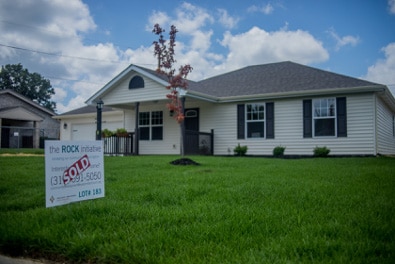
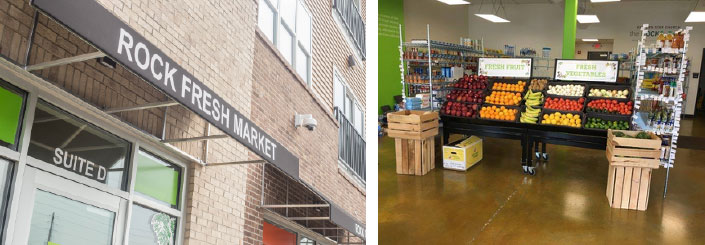
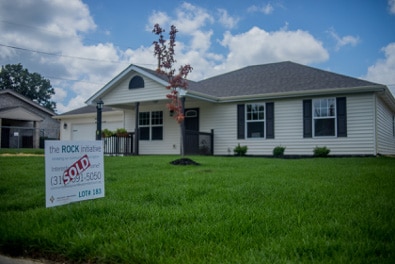
As part of Phase I, the church renovated and built single-family homes, developed an urban garden, and constructed a multi-use complex with 25 apartment units and retail space occupied by a credit union, a grocery store and social service providers. The initiative received support from numerous community partners, including INHP, Habitat for Humanity, The Mind Trust, Financial Health Federal Credit Union, Community Health, and Eskenazi Health.

Today, it announced another major phase in accomplishing its vision for a transformed community — the development of the ROCK Children and Youth Center (RCYC), a 60,000-square-foot facility that will provide students a safe environment to study, learn new skills, and engage in recreational and developmental activities.

During a groundbreaking ceremony, Johnson said The ROCK Initiative was launched to address inequities in the Eastside neighborhood.

“For too long, in this particular area, resources have not come through. We have had to deal with an economic desert, a food desert, an employment desert, and a quality education desert … which is one of the reasons, as led by God, we decided to start the ROCK Initiative,” Johnson said. “The ROCK Initiative allows us to partner up and collaborate with neighborhood, businesses, government and those who have a heart for community to make a difference. And the ROCK Children and Youth Center will help us continue our vision for a strong, safe and vibrant community so that all of our children are able grow and develop in a way God that intended them to.”

Jeff Bennett, Deputy Mayor of Community Development, told those gathered at the groundbreaking that the center represents a much-needed addition for the Eastside neighborhood, which he described as “one of the city’s most under-appreciated and under-recognized areas.”

“When we talk about community development in Indianapolis, it’s important that we recognize the work of our congregations,” said Bennett, citing the church’s investment in the neighborhood. “Eastern Star has led the way for more than 100 years. You recognized and fulfilled critical needs in affordable housing, banking and credit, food access and educational opportunities.”

Brandon Brown, CEO of The Mind Trust, which supported the opening of Rooted School Indianapolis, a high school located on the church’s main campus on East 30th Street, said that the ROCK Initiative can serve as a model for transforming neighborhoods. “With its comprehensive approach to education — with a pre-K to grade 12 continuum as one of the four major pillars, The ROCK Initiative can serve as a model of what’s possible when we think of a multi-faceted approach to uplift a community with education at the core.

“I believe that we will come back in 10 years and see this as a model of racial equity and social justice for our entire city that will serve as a shining example of what’s possible when we come together,” Brown added.

Tihesha Henderson, the Head of School at Sankofa School of Success, formerly IPS School 99, said the investment in youth in the 46218 area will be long lasting. “Over the years, the community has changed greatly,” said Henderson, who also grew up in the community. “It went from a middle-class area to an improvised area very quickly.”

The community, with an overwhelmingly African American population, has been largely unemployed and grossly underserved, Henderson added.

“Not only is there high trauma and high poverty, we see a lot of mental health issues in this community,” she said. “It’s also a desert when it comes to businesses like banks, grocery stores, and mental health support for our families. There are not a lot of places that our families can go to be employed,” she said. “So, when you factor in all of those things, we know that the needs of our students are going to be great.”

The ROCK Initiative has shown promise in giving the residents of this area hope, Henderson said. “It’s up to us to eliminate the systems of oppression that affect our black and brown kids every day, and we can do that through equity and resources in our neighborhood.”

A Commitment to Caring is Critical to the Community’s Bottom Line

By Sponsor Insight

by Sandy McCarthy, president of retirement services, OneAmerica®

The mention of OneAmerica® in central Indiana may likely spark thoughts about the company’s witty signboard, prominent position in Indianapolis’ downtown skyline, or its title sponsorship of the OneAmerica 500 Festival Mini-Marathon.

While these are important aspects of the OneAmerica corporate identity, they don’t begin to tell the full story of the company’s commitment to the customers and communities it serves.

As the head of Retirement Services at OneAmerica, I often speak on how to develop a secure financial future and how to leverage education as a key to empowerment. Today, I’d like to go a step further and share how these concepts, which are so vital to us in Retirement Services, are also foundational to OneAmerica and its commitment to our city and neighbors in central Indiana – and why, especially during these challenging times, that commitment is more important than ever.

We exist to help others

For more than 140 years, the companies of OneAmerica have operated from the perspective that our business is more than our bottom line. We’re committed to the Americans we serve and the Hoosiers we live and work with, and we believe it’s our privilege and responsibility to better the community we call home. From the top down, our leaders and associates are committed to giving back, and we view these community contributions to be as important as the impact we have on the retirement and financial services industry.

Pathways Junior Fellows Program – Education and opportunity lead to empowerment

In the retirement realm, we understand that education and access to robust tools and resources can enable individuals to take ownership of their financial futures. The same concept applies in our community, where education and opportunity can open doors and help an individual find a promising path that once seemed out of reach.

OneAmerica has brought this idea to life with our Pathways Junior Fellows Program, which provides students from underserved areas in central Indiana with an introductory workplace experience. Partnered with OneAmerica associates who serve as mentors, and in collaboration with other community organizations, the students participate in job shadowing and career exploration, receive soft-skill job training and learn about the financial industry. This paid five-week experience yields meaningful results: these students, who often saw the OneAmerica Tower from their homes but couldn’t picture themselves ever working there, now know they have the skills, experience and connections to pursue future opportunities at OneAmerica or at other companies in our community.

Investing in people has benefits beyond the individual

OneAmerica focuses much of our giving and volunteer efforts on education and workforce development, because we believe that helping individuals grow and advance sets off a positive chain reaction. Empowered individuals create opportunities for themselves and their families, leading to healthier communities and ultimately a stronger, more diverse workforce. The Pathways Junior Fellows program benefits individual students and their families, but it also helps us grow as an employer and gives us a pipeline of future employees who understand our culture, improve our organization’s diversity and make us stronger.

Another component of the Pathways program is geared toward workforce development and putting our associates on the path to sustainable income. Launched in 2018, this initiative was introduced after we reviewed Brookings Institution research about what constitutes good jobs, along with the troubling statistic that only 35% of central Indiana workers without a bachelor’s degree held a good or promising job in 2017. We took immediate action to reverse this trend at OneAmerica, examining and adjusting our positions to ensure every associate has the opportunity to earn a sustainable wage of $18 an hour*, plus strong health and retirement benefits. This investment once again created a ripple effect – impacting our associates, making OneAmerica a better place to work, and enhancing our ability to grow and further contribute to the community.

Diversity and inclusion move us forward

Our Retirement Services philosophy reflects our commitment to support all retirement-plan participants, regardless of where they are on their financial journey. We listen to understand individuals’ unique goals, challenges and viewpoints.

OneAmerica shares this commitment company-wide. We value all people, listen to individual perspectives and believe we are stronger together. Having employees with attributes and backgrounds that reflect our diverse community and the markets we serve is important, and we’ve worked to make our company more reflective. Over the last five years, among our executives, we’ve increased the percentage of people of color by 580% and the percentage of women by 65%. And, we’ve continued to sponsor and support local organizations and events focused on diversity and inclusion – from the Indianapolis Urban League and Indiana Black Expo, to Dress for Success and Integrating Women Leaders, to the 2020 Center for Leadership Development’s 40th Annual Minority Achievers Award & Scholarship Gala, among many others.

We’re also committed to racial equity and continuously moving our community forward on this important issue. We believe meaningful change comes by relying on relationships – seeking genuine feedback and learning together. We’ve instituted listening sessions with our associates, sales professionals and distribution partners, and will use what we learn to inform next steps.

We continue our commitments in challenging times

Despite the challenges of 2020, OneAmerica remains firm in maintaining our community commitments continuing to show up for the customers and neighbors who depend on us. Across the organization, we pride ourselves on being there in times of need and being a source of strength in times of uncertainty.

While this year has changed the way we connect with each other, we value our community engagements more than ever. We’re taking our seventh annual Week of Caring – when our associates volunteer thousands of hours for United Way agencies – and our United Way giving campaign virtual, ensuring that associates still have the opportunity to give back. We honored our commitments to our interns and Pathways students, offering them virtual opportunities to connect and engage. We provided advanced financial support, ahead of our payment deadlines, to vendors and local non-profits, to help with financial challenges. We opened our kitchen and cafeteria to provide Sahm’s and Second Helpings a place to prepare meals for low-income senior citizens. We funded masks and sanitizers for local healthcare workers, and we worked to support e-learning, providing central Indiana students with access to technology and internet services.

Being there for the people who count on us – from retirement plan sponsors, to working Americans seeking financial security, to our central Indiana neighbors – means everything to us. We’re driven and guided by this bigger purpose, and we’re invested in the customers, neighbors and community we serve. Though our deep community involvement isn’t always as front and center as our signboard or our recognizable position in the Indy skyline, it has always been and will continue to be the foundation of the OneAmerica story – through both good and challenging times.

*$18/hour with health and retirement benefits is the sustainable wage threshold for our region, according to the referenced Brookings Institution study.

As president of Retirement Services, Sandy McCarthy leads the OneAmerica® team offering defined contribution and defined benefits services with a strong focus on customized retirement plans through highly personalized administration and recordkeeping services. She brings more than 30 years of industry experience, including key leadership roles at Mercer, ING (now Voya), and CitiStreet.