Tag

nonprofits

National Nonprofit Day: Honoring Impact, Inspiring Action

By Feature

Charitable Advisors

Observed every year on August 17, National Nonprofit Day recognizes the vital role that nonprofit organizations play in serving communities, addressing societal needs, and advancing meaningful causes. For nonprofit professionals, this day is more than just a celebration — it’s a strategic opportunity to tell our stories, thank our supporters, and spark greater impact.

A Brief History

National Nonprofit Day was founded by Sherita J. Herring, a nonprofit advocate and social entrepreneur, to highlight the contributions of the sector. The date ties back to the Tariff Act of 1894, which included provisions exempting charitable organizations from federal taxes — the foundation of modern nonprofit status in the U.S.

Since then, the nonprofit sector has grown to include over 1.5 million organizations in the United States alone. These groups support everything from hunger relief and education to environmental justice, civil rights, health care, and the arts.

Why It Matters

Nonprofits are often unsung heroes in our communities — filling gaps, lifting up the vulnerable, and building a more just society. National Nonprofit Day offers a chance to:

  • Recognize the work of nonprofit staff, volunteers, and donors
  • Raise awareness about key issues and services
  • Mobilize support and build momentum for long-term impact

For organizations, it’s not just a moment of reflection — it’s a valuable platform for outreach, engagement, and fundraising.

How Nonprofits Can Use National Nonprofit Day Strategically

Whether you’re a small community-based group or a national nonprofit, August 17 presents a unique chance to engage your audience in creative, meaningful ways. Here are a few strategies to consider:

  1. Share Your Impact Through Storytelling

Use the day to highlight stories of lives changed through your work. Feature beneficiaries, volunteers, or long-time donors in blog posts, videos, or social media posts. Authentic storytelling strengthens emotional connections and reinforces the value of your mission.

  1. Recognize and Thank Your Supporters

Show appreciation for the people behind your mission — staff, board members, donors, and volunteers. Host a small celebration, send personalized thank-you messages, or spotlight individuals on your platforms. Recognition builds loyalty and community.

  1. Run a Mini Fundraising or Awareness Campaign

National Nonprofit Day is perfect for a one-day fundraising push or awareness drive. You could:

  • Launch a $17 donation challenge
  • Secure a matching gift from a local business
  • Encourage supporters to start peer-to-peer fundraisers

Tie the campaign to clear outcomes and make it easy for people to get involved.

  1. Pitch to Local Media

Use the day as a news hook to generate press coverage. Share a compelling story or recent success that reflects your organization’s impact. Local outlets are often open to covering mission-driven work, especially when tied to national observances.

  1. Collaborate for Greater Reach

Partner with other nonprofits or community-minded businesses to co-host events, cross-promote campaigns, or create shared content. Collaborations amplify your reach and demonstrate solidarity across the sector.

Moving Beyond the Day

National Nonprofit Day is a moment to shine — but it also reinforces why nonprofits exist in the first place: to serve others, spark change, and build a better world. By using August 17 strategically, organizations can expand their visibility, engage new supporters, and energize existing ones.

As a team who works in this field, we see the day as both a celebration and a call to action. The work is challenging, but the impact is real — and this day reminds us all of what’s possible when we come together for a cause.

National Nonprofit Day is more than recognition — it’s a launchpad. Whether you’re raising awareness, thanking supporters, or mobilizing your community, August 17 is a chance to elevate your mission and inspire action. Let’s use it well.

Harvard’s Free Online Social Science Courses: A Vital Resource for Nonprofit Leaders

By Feature

Charitable Advisors

In 2025, understanding the complexities of American democracy is more crucial than ever for nonprofit employees and leaders who strive to create meaningful change. To support these efforts, Harvard University is offering several of its social sciences courses online — completely free and accessible to the public.

Nonprofits play a pivotal role in shaping public policy, mobilizing communities, and advocating for social justice. Yet navigating the political landscape can be challenging without a clear understanding of how government works and the forces that influence it. Harvard’s free courses provide an invaluable opportunity for nonprofit professionals to deepen their knowledge in these areas.

The courses cover key topics including the dynamics of American politics, public policy development, and the intricate workings of the three branches of the U.S. federal government. They also explore how political actors and institutions influence the electorate and shift policy outcomes. This insight is essential for nonprofits seeking to advocate effectively and build strategic partnerships within government and civil society.

By engaging with these courses, nonprofit leaders can gain a more nuanced understanding of the political environment, helping them to craft stronger advocacy campaigns and elevate their organization’s impact. Moreover, the courses emphasize how individuals and organizations can use their voices to lead change, providing practical knowledge that nonprofit professionals can apply directly in their work.

Given the growing challenges facing democracy — from political polarization to declining public trust — these educational resources are a timely tool to empower nonprofit sectors nationwide. According to recent surveys, only 20% of Americans trust the federal government to do what is right most of the time, underscoring the need for informed and engaged leadership.

Harvard’s no-cost, open-access courses remove barriers to high-quality civic education, making it easier for nonprofits to build the capacity needed to thrive in today’s complex political climate.

For nonprofit professionals looking to strengthen their advocacy and leadership skills, these free Harvard courses offer a unique chance to learn from one of the world’s leading universities and drive meaningful, informed change.

Learn more and enroll at: https://pll.harvard.edu/subject/government

Empathy in Action: Why Volunteering with Kids Today Shapes a Better Tomorrow

By Feature

By: Brandy Jemczura, Founder and Executive Director of Seeds of Caring

Research abounds on the benefits of volunteering, but what role does this play in childhood development? In a world grappling with rising youth mental health concerns, declining empathy, and social disconnection, giving kids the chance to serve their communities may be one of the most powerful—and overlooked—tools we have. Volunteering helps children build emotional resilience, understand different life experiences, and feel connected to something bigger than themselves. And it doesn’t just benefit the kids. It builds stronger families, more compassionate communities, and a generation better prepared to lead with empathy and intention.

At Seeds of Caring, we imagine a future with more empathy, something that research shows is under threat in today’s culture. According to a study in the Personality and Social Psychology Review, empathy among college students has dropped significantly since the 1980s, with the steepest decline in recent years. And yet, empathy is the foundation for kindness, collaboration, and strong communities.

But there’s good news: empathy can be taught as young as age 2—and volunteering is one of the most powerful ways to do it.

Why Should Kids Volunteer?

Volunteering isn’t just something kids should do—it’s something that actively benefits them. A study from UTHealth Houston found that children who volunteer are 18-35% less likely to experience anxiety or depression. Additionally, research from the National Institute on Out-of-School Time shows that 76% of children who volunteer feel happier and more connected than their peers.

Beyond mental health, volunteering boosts self-efficacy, improves academic outcomes, and builds critical social-emotional skills such as social awareness. When kids are given the chance to take action in their communities, they begin to see themselves as capable problem-solvers and powerful changemakers.

Kids Volunteering Today = Thriving Adults Tomorrow

Did you know there is a strong case for the long-term impacts of youth volunteering? A longitudinal study published in the American Journal of Public Health found that children who developed strong prosocial skills early in life were more likely to become healthy, resilient, civic-minded adults. They were less likely to struggle with substance abuse or mental illness and more likely to succeed in school and the workplace.

When we think of workforce development in today’s job market, soft skills like teamwork, communication, and empathy are in high demand—but only 11% of business leaders believe new graduates possess the soft skills they need. That’s a gap we can close if we begin building these skills intentionally through service and volunteering from a young age.

When Families Serve Together

The benefits of youth service don’t stop with the kids. When families volunteer together, they create a shared culture of caring and a strong sense of mutual responsibility. Service becomes a family tradition. It opens the door to conversations about poverty, racism, and inequality—topics that can be hard to broach, but are essential to raising informed and empathetic children.

At Seeds of Caring, we often hear from parents who say that engaging in service helped normalize difficult conversations at home. When a child learns about someone experiencing homelessness through our partner Horizon House, or helps prepare a meal for families working hard to make ends meet through Midwest Food Bank, they start asking big, bold questions. And through these conversations, parents are able to nurture values that last a lifetime.

A study from the Corporation for National and Community Service backs this up: kids who volunteer regularly are 50% more likely to be engaged in their communities as adults. That’s the kind of legacy families can create together.

A Stronger, More Connected Community

There is one final benefit to youth volunteering that we haven’t discussed yet—it strengthens our community in tangible ways. Programs that build empathy and social-emotional skills during childhood offer an estimated $11 return for every $1 invested, thanks to the positive social, economic, and health outcomes they produce (Columbia University).

In 2023, the U.S. Surgeon General issued a rare public health advisory declaring social isolation and loneliness a national epidemic. He warned that the disconnection so many Americans are experiencing—especially our youth—has profound effects on mental and physical health, rivaling the impact of smoking and obesity. But along with issuing this warning, he identified three powerful remedies to combat this epidemic: service, love, and purpose. When children engage in meaningful service, they practice all of these and they feel connected, valued, and empowered to make a difference. Volunteering helps kids see that they have a role to play in making their community a better place and that purpose is something they can live out right now, by showing up for others.

Finally, youth volunteers bring something special to the table: fresh perspectives, boundless energy, and a deep desire to make the world a better place. Whether they’re cleaning up a local park through Keep Indianapolis Beautiful or preparing care kits for guests at Westminster Neighborhood Services, these young changemakers are already shaping the future of our city.

How Seeds of Caring Is Making It Easy

At Seeds of Caring, we’re proud to work alongside more than 30 incredible non-profit partners to ensure that kids ages 2-12 in Greater Indianapolis can engage in meaningful, age-appropriate service.

Our model pairs hands-on action with learning and reflection, because we know that kids don’t just need something to do—they need space to talk about what they’re learning and how it makes them feel. Every project is thoughtfully designed with empathy-building at its core.

Whether you’re a parent, educator, scout leader, or community member, there’s a way to get involved. Through public events, school programs, and even at-home opportunities, Seeds of Caring provides the tools and support to make service part of kids’ everyday lives.

Let’s Raise the Next Generation of Changemakers

Want to know how Seeds of Caring is changing our world for the better? Just ask the kids.

We recently invited a group of young volunteers to imagine what the world would look like if every child learned to empathize and volunteer in their community. Their answers?

  • “There would be less hatred and more kindness.”
  • “Everybody would be equal.”
  • “We would be one big community.”
  • And this one that gives me goosebumps every time: “More people would do what is right, not what is easy.”

So let’s imagine an Indianapolis where every child knows their voice matters. Let’s raise a generation that looks beyond themselves, recognizes the power they hold to strengthen their communities, and leads with compassion.

Get Involved

If you live in the Greater Indianapolis area visit seedsofcaring.org to explore upcoming service opportunities, register your child for a program, or partner with us to bring empathy-building experiences to your school or organization.

Dr. Jane Goodall once said, “You aren’t going to save the world on your own. But you might inspire a generation of kids to save it for all of us. You would be amazed at what inspired children can do.” Together, we can raise a generation that’s not only ready for the future—but ready to change it for the better. Join us!

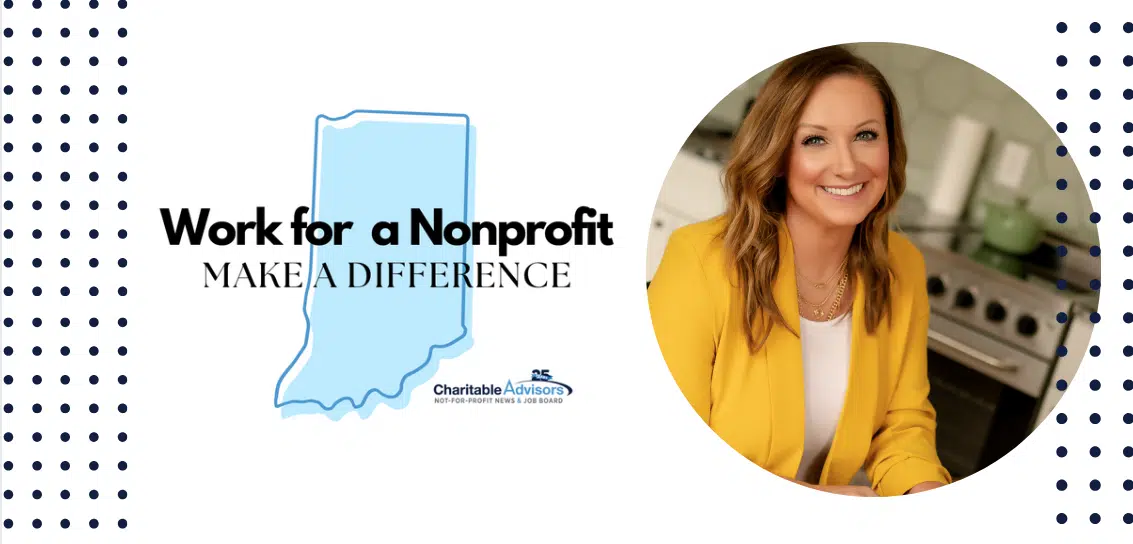
“Work for a Nonprofit, Make a Difference”: Why This Campaign Can’t End Here

By Feature

By Chelsea Ohlemiller, Director of Community & Content, Charitable Advisors

As the “Work for a Nonprofit, Make a Difference” campaign wraps up, I find myself reflecting not only on the progress we’ve made but also on the road still ahead. In my role as Director of Community & Content at Charitable Advisors, I’ve had the privilege of spending the last several weeks in the field — meeting with nonprofit professionals, listening to their stories, and witnessing their passion and dedication firsthand.

And let me tell you — this campaign wasn’t just about filling jobs. It was about lifting voices, bridging gaps, and inspiring action.

During the month of May, we had the honor of highlighting more than 25 nonprofit organizations through our video outreach efforts. Each story we shared was a glimpse into the heart of this sector — a space filled with mission-driven individuals doing the hard, necessary work of caring for our communities. Alongside those stories, we saw over 200 job applications submitted and more than 130 new job seeker accounts created on our nonprofit job board. Those numbers represent real people taking steps toward meaningful work. That’s not just success — that’s momentum.

But while we celebrate those wins, we must also acknowledge a reality that can’t be ignored: nonprofit organizations are still struggling to recruit and retain the talent they need.

Over the past month, I heard story after story from nonprofit leaders about positions sitting open for months, staff stretched thin, and programs delayed because of understaffing. According to recent national data, nearly 75% of nonprofits report having roles they cannot fill — and that’s more than just a hiring issue. That’s a service issue. That’s a community issue.

These jobs aren’t just about running programs or balancing budgets. Nonprofit roles often mean ensuring that a child has a safe place to go after school, that a neighbor has food on their table, or that an artist has a space to create. They are vital. They are urgent. And they deserve attention.

At Charitable Advisors, our goal isn’t just to host a job board — it’s to build a bridge between people who want to make a difference and the places where that difference can be made. We believe in elevating this sector and ensuring that everyone — from recent grads to seasoned professionals — knows that nonprofit work is not only viable but valuable, rewarding, and deeply needed.

That’s why this campaign was never meant to end in May.

This work continues. It has to.

While our May campaign served as a powerful spotlight, the truth is that these stories, challenges, and opportunities exist year-round. The staffing shortage doesn’t take a break after May 31. Neither should we.

So, where do we go from here?

First, we keep telling the stories. If you followed our campaign, you saw the incredible range of missions and impact our local nonprofits are making. We need to keep showing the world what nonprofit work looks like — the triumphs, the heartaches, and everything in between.

Second, we continue connecting job seekers to purpose-driven careers. Nonprofit jobs don’t always come with big salaries, but they come with big meaning. For many, that’s the missing piece in their professional journey — a chance to align their values with their work.

Third, and perhaps most importantly, we invite you to be part of this effort.

Whether you’re a student unsure of your career path, a professional looking for more purpose, or someone who simply believes in the power of community — you can help.

Here’s how:

  • Share the message. Talk about nonprofit careers. Share job openings. Send friends and family to our job board. Sometimes people don’t realize these jobs exist — or that they could be a great fit.
  • Encourage exploration. If you know someone considering a career change, suggest they look into nonprofit work. Whether it’s development, program management, marketing, or direct service, there are roles that fit every skill set.
  • Support nonprofit organizations. Whether or not you’re job-hunting, your support matters. Volunteer, donate, attend events, advocate — these actions make a difference and strengthen the sector overall.
  • Stay connected with us. We’ll keep doing the work — highlighting organizations, promoting opportunities, and sharing success stories. Join us. Follow us. Be part of this movement.

This campaign reminded me of something I’ve long believed: the nonprofit sector is full of everyday heroes — people who choose to show up for others, day after day. But even heroes need help. They need teammates, support, and community.

If you’ve ever wondered how your career could be more fulfilling, more impactful, or more connected to the world around you — nonprofit work might be your answer. And if you’re already part of this space, I thank you. Your work matters, even when it’s hard, even when it’s unseen.

We may have closed the book on May’s campaign, but this story is far from over. At Charitable Advisors, we’re committed to keeping the momentum going. And I hope you’ll join us.

If you missed any of the incredible videos from the campaign, be sure to check them out on our social media channels — they’re still up, and still inspiring.

Follow our website and social media to learn more, get involved, and help us keep building a stronger, more connected community — one job, one story, one mission at a time.

Navigating Funding Uncertainty: How Black Onyx Management Empowers Nonprofit Leaders

By Sponsor Insight

Submitted by Black Onyx Management

In today’s volatile funding landscape, nonprofit organizations face unprecedented challenges in securing stable government funding. Many nonprofit leaders find themselves struggling to plan effectively for the future. This uncertainty doesn’t have to derail your mission or impact.

The Challenge of Uncertain Government Funding

As a nonprofit leader, having predictable financial resources is essential to achieving your goals. When government funding—often a significant portion of nonprofit budgets—becomes unpredictable, the ripple effects touch every aspect of your organization. Financial forecasting becomes difficult, program sustainability is threatened, and the pressure to diversify funding sources intensifies.

Many nonprofit leaders, especially those in smaller organizations, find themselves without the internal capacity to navigate these challenges while simultaneously managing operations, overseeing teams, and maintaining service delivery.

Building Resilience Through Strategic Fundraising

Black Onyx Management, a management consulting firm with a deep community focus, specializes in assisting nonprofit organizations in building resilience against funding uncertainty by helping them create diversified revenue streams capable of withstanding changing political and economic landscapes.

A Comprehensive Approach to Nonprofit Sustainability

Black Onyx Management offers nonprofit leaders a partner who understands both the big picture and the practical details of financial sustainability:

Strategic Expertise When You Need It Most

Black Onyx Management works closely with nonprofit organizations to develop comprehensive fundraising strategies that address immediate needs while building long-term sustainability. Our team can help your organization craft a compelling case statement providing the language and framework needed to effectively communicate your impact to potential funders.

Cash Flow Planning and Budget Scenarios

One of Black Onyx Management’s core offerings is helping nonprofits understand multiple budget scenarios based on different funding outcomes. This approach allows organizations to plan proactively rather than reactively when government funding changes. Our financial experts provide guidance on tracking income streams, managing fundraising expenses, and monitoring progress toward goals.

Diversified Fundraising Implementation

Black Onyx Management’s team helps prioritize and implement diverse fundraising tactics—from individual giving and corporate partnerships to events, grant applications, and online campaigns. Their hands-on support includes board training to ensure leadership becomes active participants in the fundraising process.

A Team of Experts at Your Disposal

When you partner with Black Onyx Management, you gain access to a multidisciplinary team with specialized expertise:

  • Fundraising strategists who can help you build a sustainable development plan
  • Grant research and management specialists who maximize your organization’s potential for securing and managing grants
  • Financial advisors who help you understand cash flow and create contingency plans
  • Research analysts who provide insights into donor behavior and preferences
  • Board and leadership development professionals who strengthen your organization’s governance and capacity

Building Certainty in Uncertain Times

In a funding environment where government support can change rapidly, Black Onyx Management empowers nonprofit leaders to take control of their financial future. By building strong relationships with diverse donors who believe in your mission, developing clear and compelling messaging about your impact, and creating systems to implement your fundraising strategy effectively, you can navigate uncertainty with confidence.

Let Black Onyx Management help you transform fundraising from a daunting challenge into a strategic advantage. Together, we can build the financial resilience your organization needs to continue enhancing its impact.

Black Onyx Management specializes in assisting nonprofit organizations as they navigate changes in the funding landscape. To learn more about how their services can help your organization build financial resilience, visit blackonyxmanagement.com or contact lauren@blackonyxmanagement.com.

Is It Time to Rethink Large Nonprofit Fundraisers?

By Sponsor Insight

By Jill Robisch, First Vice President & Manager, Nonprofit Division

As the nonprofit sector continues to adapt to a post-pandemic world, many organizations have resumed their large-scale fundraising events, aiming for a return to normalcy. However, with increasing uncertainty surrounding state and federal funding, is it time to rethink the traditional approach to these high-cost, resource-intensive fundraisers?

The Return to Large-Scale Events

In the immediate aftermath of COVID-19, many nonprofits pivoted to virtual or hybrid events, discovering new ways to engage donors and reduce overhead costs. Now, with in-person events making a strong comeback, some organizations are eager to revive the familiar gala, auction, or large benefit dinner. These events often serve as significant revenue generators, brand builders, and community engagement tools.

Yet, the landscape has changed. The unknown impact of potential shifts in government funding, inflation concerns, and shifting donor expectations mean nonprofits must be more strategic than ever about how they allocate fundraising resources.

The Uncertain Future of Public Funding

Federal and state funding for nonprofits remains a moving target. With economic fluctuations and shifting legislative priorities, nonprofits reliant on government grants and subsidies may face unpredictable funding streams. Organizations that previously used large fundraisers to supplement government dollars may now need to explore whether these events can reliably fill financial gaps in a sustainable way.

Balancing Costs and ROI

Large events require significant investment—venue costs, catering, entertainment, staffing, and marketing add up quickly. Nonprofits must critically assess whether the return on investment justifies these expenditures. While some events yield high revenue, others may break even or operate at a loss when factoring in hidden costs such as staff time and donor fatigue.

Instead of defaulting to large-scale fundraisers, nonprofits should consider a diversified approach, blending traditional events with:

  • Targeted Major Donor Engagement – Intimate gatherings or one-on-one donor stewardship may yield higher returns with lower costs.
  • Corporate Partnerships – Engaging corporate sponsors for year-round giving, rather than a one-time event sponsorship, can provide more sustainable funding.
  • Peer-to-Peer Fundraising – Empowering supporters to raise funds through social networks can create broad engagement with minimal upfront costs.
  • Recurring Giving Programs – Encouraging monthly donors builds a stable revenue stream, reducing reliance on annual fundraisers.

The Future: Quality Over Quantity

Rather than focusing on returning to the way things were, nonprofits should evaluate what works best for their specific mission and donor base. This might mean scaling back on extravagant events in favor of more targeted, mission-aligned gatherings that foster deeper connections with supporters.

Ultimately, the question isn’t whether large fundraisers should disappear but whether they should evolve. By reevaluating their role within a broader, more sustainable fundraising strategy, nonprofits can position themselves for long-term success—regardless of the external funding climate.

HR Focus Group Findings – Key Challenges and Opportunities for 2025

By Feature

Chelsea Ohlemiller, Charitable Advisors

Recruiting and retaining top talent in the nonprofit sector has always presented unique challenges, but as we move into 2025, organizations are facing an increasingly competitive and ever-changing hiring landscape. Nonprofit leaders recently gathered in HR focus groups, led by Charitable Advisors, to discuss the latest trends in attracting and retaining employees, shedding light on evolving candidate expectations, salary dynamics, and the impact of AI in hiring.

Here are the key takeaways from these collaborative recruitment and retention sessions:

The Biggest Challenges in Nonprofit Hiring

One of the most significant challenges for nonprofit organizations, particularly smaller ones, is salary competitiveness. Traditionally, mission-driven work and flexible benefits made up for lower pay, but today’s candidates expect higher salaries more comparable to those in the private sector. This shift puts pressure on nonprofits, especially those that struggle to offer competitive compensation and benefits.

Another hurdle is job titles that don’t translate well outside the nonprofit space. Potential candidates may overlook roles due to unfamiliar language, leading to missed opportunities for both the organization and job seekers.

Retention remains a concern in 2025, as competition for skilled professionals intensifies. Employees who once accepted lower salaries for meaningful work now seek higher pay and advancement opportunities, making it crucial for nonprofits to offer career growth pathways.

What Candidates Want in 2025

Candidate expectations have evolved significantly over the past year. While remote work remains a major draw for job seekers, many nonprofit positions, particularly frontline and program-based roles, require in-person engagement. The inability to offer remote flexibility has made recruitment more difficult, especially for these essential positions.

Encouragingly, many employees are showing interest in internal promotions and taking on more responsibility, signaling a desire for long-term growth within their organizations. This is hopeful insight, as leadership skills are in high demand. Especially considering, organizations desire candidates who can not only fulfill their job responsibilities but also build and lead teams effectively.

Salary Expectations and Transparency

Many nonprofits are becoming more transparent about salaries early in the hiring process, helping to align candidate expectations from the outset. Organizations have turned to salary and benefits surveys to restructure pay scales and explore creative compensation strategies, such as additional paid time off and unique benefit offerings. We also heard that some nonprofits have stopped posting compensation or only post a minimum salary because applicants seem confused or unable to understand that a salary range is generally based on level of experience.

Health insurance remains a major concern for job seekers entering the nonprofit sector. Some organizations are addressing this by offering innovative benefit options, but the challenge persists, particularly for smaller nonprofits with limited resources.

Turnover and Hard-to-Fill Positions

Turnover remains high in program staff roles, which often require on-site work with little flexibility, often leading to burnout and job dissatisfaction. Other positions, such as grant writers, therapists, development professionals, and financial roles, are also becoming increasingly difficult to fill.

Grant writing, in particular, has faced a growing challenge leading some organizations to turn to AI-generated proposals. While AI can streamline the grant-writing process, it still requires human oversight. Something to keep an eye on in 2025.

Consistent with last year, therapists, home-based service providers, and instructional roles remain difficult to recruit due to certification requirements and an overall shortage of qualified professionals. Meanwhile, operations positions have seen rising turnover as the field grows and competition increases.

AI’s Role in Nonprofit Hiring

The increasing use of AI by job applicants has brought both opportunities and challenges. While AI-generated resumes and cover letters have become more common, many hiring managers report that these submissions lack personalization and depth. Cover letters created with AI often appear incomplete or fictitious and fail to match the candidate’s actual qualifications to the job.

AI can serve as a helpful starting point in the hiring process, but nonprofit recruiters stress the importance of human oversight to ensure accuracy and authenticity in applications. Many organizations are training HR teams to identify AI-generated applications and ensure that technology is used to support—rather than replace—the hiring process.

Effective Recruitment Strategies

Despite the challenges, some recruitment strategies are proving highly effective:

  • Targeted Job Boards: Using job-specific platforms helps attract the right candidates.
  • Employee Referrals: Offering referral bonuses ($100–$250) encourages staff to recommend strong candidates.
  • Career Fairs and Networking Events: These remain valuable, especially for engaging younger talent.
  • Talent Pools: Proactively building a pipeline of qualified candidates allows nonprofits to fill roles more quickly when positions open.
  • Sign-On Bonuses: When feasible, these incentives make nonprofit roles more attractive.

The Growing Importance of Soft Skills and Cultural Fit

Hiring managers emphasize that soft skills, including communication, adaptability, and passion for the organization’s mission, are becoming just as important as technical qualifications. Many nonprofits are open to candidates with transferable skills who may not check every box on a traditional job listing but align with the organization’s values and goals.

Job-Seeking Advice for Candidates

For job seekers looking to stand out in the nonprofit sector, our nonprofit leaders suggested the following practices can make a difference:

  • Submit a Thoughtful Cover Letter: A personalized, well-crafted cover letter is critical. AI-generated, generic submissions won’t suffice—hiring managers want to see authenticity and a clear connection to the mission.
  • Research the Organization: Candidates should demonstrate knowledge of the nonprofit’s mission and values in their applications, and especially in interviews.
  • Prepare for Interviews: Having insightful questions ready and addressing hiring managers by name shows initiative and professionalism.
  • Follow Up: Sending a thank-you email to the interview panel leaves a lasting impression and reinforces interest in the role.

Interestingly, on Charitable Advisors ED/CEO searches, less than half of candidates submit cover letters, despite our clear request – yet 80% of those interviewed have included a cover letter. So.. either the stronger candidates take the time to write cover letters or resumes alone don’t serve job seekers very well. Among those who received actual job offers, we believe that 100% had submitted a cover letter—highlighting its crucial role in the hiring process.

Looking Ahead: A Call to Action for Nonprofits

As the nonprofit job market evolves, organizations must adapt their recruiting and retention strategies to remain competitive. Salary transparency, leadership development opportunities, and creative compensation structures will be key to attracting and retaining top talent in 2025.

While challenges persist, nonprofits that prioritize strategic hiring, invest in their people, and foster strong workplace cultures will continue to build resilient and impactful teams. By staying attuned to candidate expectations and leveraging effective recruitment tactics, nonprofit leaders can ensure their organizations thrive in the years ahead.

Thank you to the dozens of nonprofit organizations that attended our Nonprofit Recruitment Sessions. Your knowledge, experience and personal data will help support our efforts in the new year.

The Power of Financial Wellness in Strengthening Nonprofit Impact

By Sponsor Insight

By: Jill Robisch, First Vice President & Manager, Nonprofit Services

In a world where attracting and retaining talent in the nonprofit sector is more challenging than ever, organizations must prioritize the financial well-being of their employees. Nonprofit staff often dedicate their careers to serving others, yet many face personal financial challenges that can impact their ability to focus fully on their mission-driven work. Supporting employees on their journey to financial stability, including homeownership, not only benefits the individual but also strengthens the organization’s impact.

The Ripple Effect of Financially Well Employees

When nonprofit employees achieve financial wellness, the benefits extend far beyond their personal lives. Financially stable staff are less stressed, more productive, and more engaged in their roles. They bring greater focus and energy to their work, allowing organizations to deliver services more effectively and achieve their missions more sustainably. Moreover, when employees feel supported by their employer in areas like financial education and homeownership, it fosters loyalty and helps retain top talent.

Guiding Employees Toward Homeownership

Homeownership is often a cornerstone of financial stability, yet for many nonprofit employees, navigating the path to buying a home can feel daunting. From understanding down payment requirements to finding affordable mortgage options, the journey can seem out of reach without the right guidance. Nonprofit organizations can play a pivotal role by connecting their employees with the tools and resources needed to make homeownership achievable.

One impactful way to do this is by partnering with financial institutions that understand the unique needs of nonprofit employees. For example, banks with specialized mortgage programs—such as low or no down payment options—can demystify the process and provide tailored solutions. Additionally, financial literacy programs focused on budgeting, saving, and credit-building can empower employees to take confident steps toward owning a home.

The Financial Wellness Ambassador Program: A Partnership for Success

At The National Bank of Indianapolis, our Financial Wellness Ambassador Program offers a hands-on approach to supporting employees’ financial goals. This initiative includes customizable training sessions and one-on-one coaching designed to meet individuals where they are in their financial journey.

Nonprofit organizations can invite our Financial Wellness Ambassadors to host workshops on topics such as budgeting, debt management, and preparing for homeownership. These sessions not only equip employees with the knowledge they need but also provide actionable strategies for achieving their goals. For those seeking more personalized guidance, our financial wellness coaches are available for one-on-one consultations, offering tailored advice and support.

A Shared Commitment to Financial Stability

By prioritizing the financial health of their workforce, nonprofits can cultivate a stronger, more resilient team. Whether it’s through facilitating access to homeownership resources, offering financial literacy training, or collaborating with programs like The National Bank of Indianapolis’ Financial Wellness Ambassador Program, nonprofits can make a meaningful difference in the lives of their employees.

Ultimately, financially well employees are the foundation of a thriving nonprofit. By investing in their team’s financial stability, organizations can unlock greater potential for achieving their mission and making an even bigger impact in the communities they serve.

For more information on financial wellness training or to connect with a Financial Wellness Ambassador, reach out to The National Bank of Indianapolis today. Let’s work together to build a financially empowered workforce.

Why Credential Security is Critical for All Organizations

By Sponsor Insight

In the world of non-profit and non-governmental organizations, your mission is everything. Every dollar raised, every program executed, and every service provided works toward creating meaningful and lasting impact. But behind the scenes, a strong foundation of operational resilience is critical to protect your mission—and safeguarding your usernames, passwords, and pin codes, or credentials, is a cornerstone of that foundation. Ensuring that your organization maintains proper credential management and security protects your data, strengthens trust with stakeholders, maintains the operational integrity, and ultimately enhances your programming and service delivery.

Here’s why credential security matters and how implementing best practice solutions and policies can elevate your employee experience, protect your donors and beneficiaries, and support your executive leadership and board.

1. Credentials: The Keys to Your Organization

Every solution or service you use—whether it’s for fundraising, donor management, payroll, communications, etc.—requires secure credentials to function effectively. These credentials grant access to sensitive data and critical functions, but they also pose significant risks if mishandled or mismanaged.

The Risk of Neglect:

  • Shared logins can lead to poor accountability.
  • Using weak or undocumented credentials can expose your organization to cyberattacks.
  • Poor credential management disrupts workflows, creating inefficiencies. Remember that time the social media manager forgot the only login to the Facebook account and how long it took to recover it!

2. Why Credential Security is Non-Negotiable

For Employees:

  • Avoid Shared Logins: When team members share logins, accountability vanishes. If sensitive data is mishandled, it becomes nearly impossible to trace back the action. By assigning unique credentials to each user, you empower employees with the autonomy to do their jobs while ensuring clear accountability.
  • Ease with Single Sign-On (SSO): Implementing SSO reduces password and Multifactor Authentication (MFA) fatigue by allowing employees to log into multiple platforms with one set of secure credentials. This improves productivity and reduces the likelihood of insecure practices, like reusing weak passwords.

For Beneficiaries and Donors:

  • Trust and Confidentiality: Your beneficiaries and donors entrust you with their data—be it personal details, financial contributions, or sensitive case information. A breach in credential security can lead to a breach in trust, damaging your reputation and jeopardizing future funding and support.
  • Data Protection: Proper credential security ensures their data is safeguarded from unauthorized access, giving them confidence in your organization’s ability to protect their information.

For the Executive Director:

  • Operational Continuity: When credentials are properly documented and secured, your organization avoids disruptions caused by lost or inaccessible logins. This is critical during staff transitions or emergencies.
  • Strategic Oversight: Credential security provides the Executive Director with the assurance that the organization is operating efficiently and securely, enabling them to focus on advancing the mission.

For the Board:

  • Governance and Compliance: A well-documented credential management process demonstrates to the board that the organization is minimizing risks, aligning with best practices, and adhering to compliance requirements.
  • Mission Assurance: The board has a fiduciary duty to safeguard the organization’s assets, and credential security is an integral part of protecting those assets.

For the Mission and Programming:

  • Efficiency: Securely managing credentials reduces downtime and inefficiencies caused by password resets or security breaches, allowing staff to focus on what truly matters—delivering impactful programs.
  • Resilience: A secure credential management system ensures continuity even during unexpected events, such as turnover or cyber incidents, so that programming remains uninterrupted.

3. Best Practices for Credential Security in Non-Profits

  1. Document All Credentials

Credential security begins with documentation. This means keeping a record of logins for every technical solution and service—not just IT tools. For example:

  • Grant management software
  • Fundraising platforms
  • Event registration systems
  • Volunteer management tools

Documenting credentials ensures no access is lost during transitions or emergencies.

2. Avoid Shared Logins

While shared logins may seem convenient, they are a major security risk. Every user should have their own unique credentials. This improves accountability and ensures that permissions are properly aligned with each individual’s role.

3. Implement Single Sign-On (SSO)

SSO simplifies the login process by allowing employees to access multiple systems with one secure set of credentials. This reduces password fatigue, streamlines workflows, and minimizes the risk of weak passwords being used across multiple platforms.

4. Use a Credential Management System

Invest in a credential management system to securely store, manage, and share credentials as needed. Features like encryption, role-based access, and auditing capabilities provide peace of mind and protect against unauthorized access. Popular solutions like Keeper or Bitwarden for Business can be scaled to meet non-profit needs.

4. The Ripple Effect of Strong Credential Security

When your organization adopts credential security best practices, the benefits cascade throughout the organization and beyond:

  • Empowered Employees: Staff can focus on their work without the frustration of lost or inaccessible credentials.
  • Protected Beneficiaries: Sensitive beneficiary data remains confidential, maintaining trust and ethical responsibility.
  • Confident Leadership: Executive directors and board members can focus on strategy and growth, knowing that operational risks are managed.
  • Mission-Driven Impact: Secure, efficient systems free up resources and time to invest in programs that drive your mission forward.

5. A Call to Action

Credential security isn’t just an IT concern—it’s a mission-critical responsibility. By documenting credentials, avoiding shared logins, implementing SSO, and leveraging a credential management system, your non-profit can build a foundation of trust, accountability, and resilience. Ultimately, this enables your organization to focus on what truly matters: serving your community and achieving your mission.

Let’s safeguard your operations so your impact can reach new heights. Start securing your credentials today.

Charitable Advisors Month of Giving: Spotlighting 30 Nonprofits During a Critical Time for Year-End Giving

By Feature

By Chelsea Ohlemiller, Charitable Advisors

As November kicks off, Charitable Advisors is excited to announce our Month of Giving campaign. Over the next 30 days, we’ll be spotlighting these incredible Indiana-based nonprofits across our social media platforms, sharing their missions, the communities they serve, and the ways individuals can support them through donations and other giving opportunities. This initiative comes at a pivotal time for nonprofits, as the final quarter of the year is critical for hitting fundraising goals and gaining momentum for the year ahead.

Why November Matters for Nonprofits

For many nonprofits, the year-end giving season is the most important fundraising period of the year. In fact, according to Nonprofit Source, nearly one-third (31%) of annual donations happen in the last three months of the year, with December alone accounting for a significant portion. But the push for donations often begins in November, as nonprofits ramp up their outreach and connect with donors ahead of Giving Tuesday and other key events.

Indiana nonprofits, like those featured in our Month of Giving campaign, are no exception. These organizations provide vital services across the state, from feeding families in need to offering mental health support and education initiatives. Yet, many face the challenge of limited marketing budgets and a crowded field of causes vying for donor attention. That’s where Charitable Advisors steps in—our Month of Giving campaign aims to elevate the visibility of these organizations, driving awareness and engagement at a time when it’s needed most.

The Power of Visibility

A key goal of the Month of Giving is to help nonprofits connect with potential donors who may be unaware of their work or the specific impact they’re making in their communities. Through daily posts on our social media platforms, we’ll highlight one organization each day and provide clear calls to action for how individuals can contribute. Whether it’s through financial donations or specific giving opportunities—such as supporting a particular program or meeting an urgent need—our posts will make it easy for donors to get involved.

Statistics back up the importance of this kind of visibility. The 2023 Giving USA report found that individual giving accounted for 64% of all charitable contributions in 2022, totaling $499.33 billion. Online giving, in particular, has seen consistent growth, representing 13% of total donations. With more and more donors engaging online, especially during the year-end giving season, our goal is to ensure that Indiana nonprofits have the platform they need to reach these supporters and secure the donations that will sustain their work into the next year.

Meet the 30 Nonprofits

Over the next 30 days, we will feature a wide range of nonprofit organizations working across Indiana. From small grassroots organizations to larger, well-established nonprofits, the selected groups span a variety of sectors including healthcare, education, environmental conservation, homelessness, and youth development. Each of these nonprofits plays a crucial role in addressing the needs of Indiana’s communities, and we’re honored to help share their stories. Organizations were selected from the ‘Wants & Wins’ email outreach, with priority given to the first 30 respondents to ensure a fair and timely process. For future opportunities, be sure to sign up for that email list here: https://charitableadvisors.com/subscribe/

Whether that’s through a one-time donation, a recurring gift, or in-kind support, our hope is that this increased exposure will lead to a surge in both awareness and contributions.

Preparing for Year-End Success

As we head into the final stretch of the year, we know how critical this time is for nonprofits. A study by Network for Good found that 12% of all annual giving occurs in just the last three days of the year, underscoring the importance of November as a ramp-up period for year-end success. By participating in the Month of Giving, these 30 Indiana nonprofits are well-positioned to maximize their outreach and hit their year-end fundraising goals. With the right momentum, these organizations can build a solid foundation for 2025 and beyond, ensuring they have the resources they need to continue serving their communities.

Looking Forward

The Month of Giving is an exciting opportunity to showcase the amazing work being done by Indiana nonprofits and to encourage our community to step up and support these organizations. We hope that through this initiative, donors will not only learn more about the causes closest to home, but also feel inspired to contribute in ways that make a lasting impact.

Stay tuned to Charitable Advisors’ social media channels throughout November as we highlight the incredible work of these nonprofits. Together, we can make this season of giving the most successful yet for Indiana’s nonprofit sector.

Please note, Organizations were selected from the ‘Wants & Wins’ email outreach, with priority given to the first 30 respondents to ensure a fair and timely process. While we wish we could include everyone, we are limited on space and capacity. We look forward to additionally opportunities to continue our advocacy for increasing the visibility of Indiana nonprofits.