Tag

expansion

Expanding the mission without bricks and mortar

By Feature

Raphael Health Center meets community’s growing health needs through strategic partnerships

by Shari Finnell, editor/writer, Not-for-profit News

On a day-to-day basis, the staff at Raphael Health Center gets an intimate look at the challenges facing residents impacted by social determinants of health — the conditions and environments that can contribute to disproportionately higher rates of heart disease, diabetes, high blood pressure, infant mortality, and other health risks. The center, located at 401 E. 34th St., is in the heart of a neighborhood with a median income of $56,563 — significantly lower than the national median income of $69, 021.

In recent years, the nonprofit comprehensive care facility which focuses on providing care to underinsured and uninsured households, has seen medical needs significantly increase within the community it serves, according to Sherry Gray, Raphael Health Center’s CEO, and Lauren Scharenbrock, project manager of a new strategic partnership, 34th and Beyond.

Gray, along with other members of the Raphael team, recently announced the launch of the initiative, which will provide medical services to an increasing number of patients without expanding the medical facility.

“We’ve been looking at our building and looking at the needs in our community, and we’re seeing a disconnect,” Scharenbrock said. “There’s a lot going on in a small space. We can only serve so many people in this location. We only have so many rooms, we only have so much space, and we have used every last inch of it.”

Instead of focusing on plans to expand its current building or developing a new medical center, the Raphael team looked at its partners as a way to provide medical, behavioral health, optometry, and dental care to individuals and families more cost effectively.

Through a pilot program with Salvation Army’s mental recovery house, the center will focus on sending medical providers to various partner sites one day or two days a week to meet patients where they’re at, Scharenbrock said.

According to Jesse Links, manager of rehabilitation services for the Salvation Army’s Adult Rehabilitation Center, 711 E. Washington St., the 34th and Beyond initiative has already produced results.

“We saw an increase in our completion percentage, and an increase in retention, and an increase in new people coming into the program,” said Links, noting that the medical center provided on-site services during 75 appointments in January.

Fulfilling an expanding need

As part of the 34th and Beyond initiative, Raphael Health Center also plans to provide a range of comprehensive services to clients served by other partner nonprofit organizations, including Gennesaret Free Clinics and Pathway to Recovery.

Scharenbrock said that the initiative enables patients to receive services more quickly by eliminating the barriers many of them face when seeking medical care.

While receiving comprehensive quality healthcare can be challenging for many American households, it can be particularly difficult for individuals facing homelessness or who are impoverished.

“Healthcare, in general, is too expensive,” she said. “But many of the people we serve don’t have insurance or transportation. Getting them here can be difficult sometimes. We may need to give them bus passes or arrange for them to come by Lyft.

Scharenbrock also noted that many people are not aware of the options available to them.

“We are focused on bridging that gap by going to where they are,” she said. “It reduces the financial barriers, the transportation barriers, and the fear of the unknown because they’re already in a place that is familiar. We’re really hoping to use the trust the partner organizations have with their clients and build upon that to connect them with the services that they need.”

Effective partnerships built upon trust

The comprehensive services provided by Raphael Health Center is an added tool that Salvation Army clients can rely on for help when they’re struggling, Links said.

Links said that communication and trust have been essential in continuing a partnership that could help serve its rehabilitation program clients with co-occurring conditions, such as behavioral health challenges, substance abuse, and psychological disorders.

“We’re not a clinical treatment program,” he noted. “We are a faith-based rehabilitation program. There was a gap in some of the types of services we could offer individuals. We were looking for one place that could meet our men’s needs.”

“Communication is key — being open and meeting our guys where they’re at,” he said. “They never turn them away, whether they’re insured or not insured.”

CLD set to intensify efforts to overcome racial disparities

By Feature

$33 million capital campaign will expand nonprofit’s reach in eight underserved neighborhoods

by Shari Finnell, editor/writer, Not-for-profit News

As the president of Center Leadership Development (CLD) for more than 20 years, Dennis Bland has regularly contemplated the systemic barriers that lead to troubling racial disparities in Indiana — including with income, health, housing, education, employment and financial security.

It’s a concern shared by many leaders throughout the state, especially in light of statistics that show the disparities have not diminished in many areas. In some cases, as with college-going rates, the disparities have significantly increased.

According to a recent report from the Indiana Higher Education Commission, the percentage of Indiana high school students attending college has declined from 65 percent in 2015 to 59 percent in 2019. While the decline is evident across all races, it is more significant for African American students. The report revealed a 13 percent decrease in the number of African American students attending college during the four-year period. 

As part of CLD’s $33 million RISE campaign, the organization will expand its educational programming throughout Indianapolis, specifically among minority and low-income youth residing in the zip codes of 46222, 46208, 46226, 46218, 46235, 46201, 46219 and 46205. CLD will partner with The PATH School, Christamore House, Eastern Star Church, Mt. Carmel Church and Community Alliance of the Far Eastside to provide in-school and satellite programming for students in their own neighborhoods. 

CLD, which targets five areas as part of its programming — character, education, leadership, service and career, plans to increase the number of students it impacts through its core programming from 4,000 students a year to 6,500 a year. Overall, CLD plans to provide services to 15,000 individuals annually. 

“I think so much about disparities and inequities,” said Bland, who recently helped lead the nonprofit organization past the $30 million mark of its $33 million RISE fundraising campaign. Donors have included Lilly Endowment, the Nina Mason Pulliam Charitable Trust, and the NBA Foundation. “Education ultimately translates into empowerment and cultivation, particularly in the areas that help people mobilize, grow or thrive.”

Quality programming is central to success

Bland said CLD’s programming, which ranges from elementary school to college, has been effective because of its comprehensive scope, which includes free tutoring, counseling, remedial courses, career planning, college prep, and college application and scholarship assistance. 

CLD also never assumes that a youth intuitively understands the value of an education, said Bland, who stresses the importance of identifying the issues that immobilize students. Through their programming, Bland and the rest of the CLD team help disadvantaged students and their families understand why students in more affluent communities value the power of education.

Where a student lives can inherently shape their perceptions, he pointed out. “If there’s a community where 90 percent of the students are passing standardized tests and I live in a community where 10 percent of people pass standardized tests, I will need you to give me some insights as to what they are doing right and why I’m not doing what they are doing.”

With deeper conversations with students, counselors can help them develop incentives and skills that align with the outcomes that they ultimately want, Bland added. They can help the students start caring about how they perform academically, he said.

“When young people come here, there’s going to be intentionality around giving them an education on education,” he said. “We’re not assuming that just because a student goes to school, they understand the importance of education.”

Bland said programs can be more effective by meeting constituents where they are — not where others think they should be. “It gives them an entirely different perspective. Ultimately, they begin to act differently because you created a program that meets them where they were,” he said.

Bland said programs also are designed to help participants and their families understand the challenges that are immobilizing them.

“It’s important to ask questions like, ‘What are those areas and issues that will keep you in poverty?’ ‘What are those things that keep you from climbing?’” Bland said.  “It can help them begin to think differently, process differently, and act differently and then begin to pursue paths that may be different than the path they’re on. We help them switch to a path that’s going to help them thrive and succeed.”

Goodwill’s approach to growth: one view

By Feature, Leadership

By Lynn Sygiel, editor, Charitable Advisors |

For Kent Kramer, the answer was easy. As a candidate earlier this year for the president’s position at Goodwill of Central Indiana, he was asked to title a chapter in Goodwill’s history book that would describe his future tenure.

Kramer’s answer: Tipping point.

His explanation: “I look at some of the initiatives that we have going on, they’re on the verge, a tipping point. When you have that critical mass of activity, and it hits that tipping point, all of a sudden the impact becomes enormous. And that’s where I feel we are on an education front and definitely on workforce development,” said Kramer.

Goodwill and Kramer understand that balancing growth and scale also means understanding and respecting their complex interplay.

Kramer was hired as vice president of retail in 2002. His task was to grow Goodwill’s retail revenue. But growth for growth’s sake was not the goal. Goodwill’s board saw the additional revenue as a way to boost its mission.

In his first 10 years, Kramer and his team were successful in increasing revenue from the retail side. They boosted the number of stores to 52 from 24 and grew the number of employees at those stores to 2,200 from 700. Since then, new concepts like e-commerce and outlet and boutique stores have been introduced. Goodwill’s Central Indiana staff is now at 3,200, and last year, 30 Goodwill agencies from around the country visited Indianapolis to learn more about retail growth.

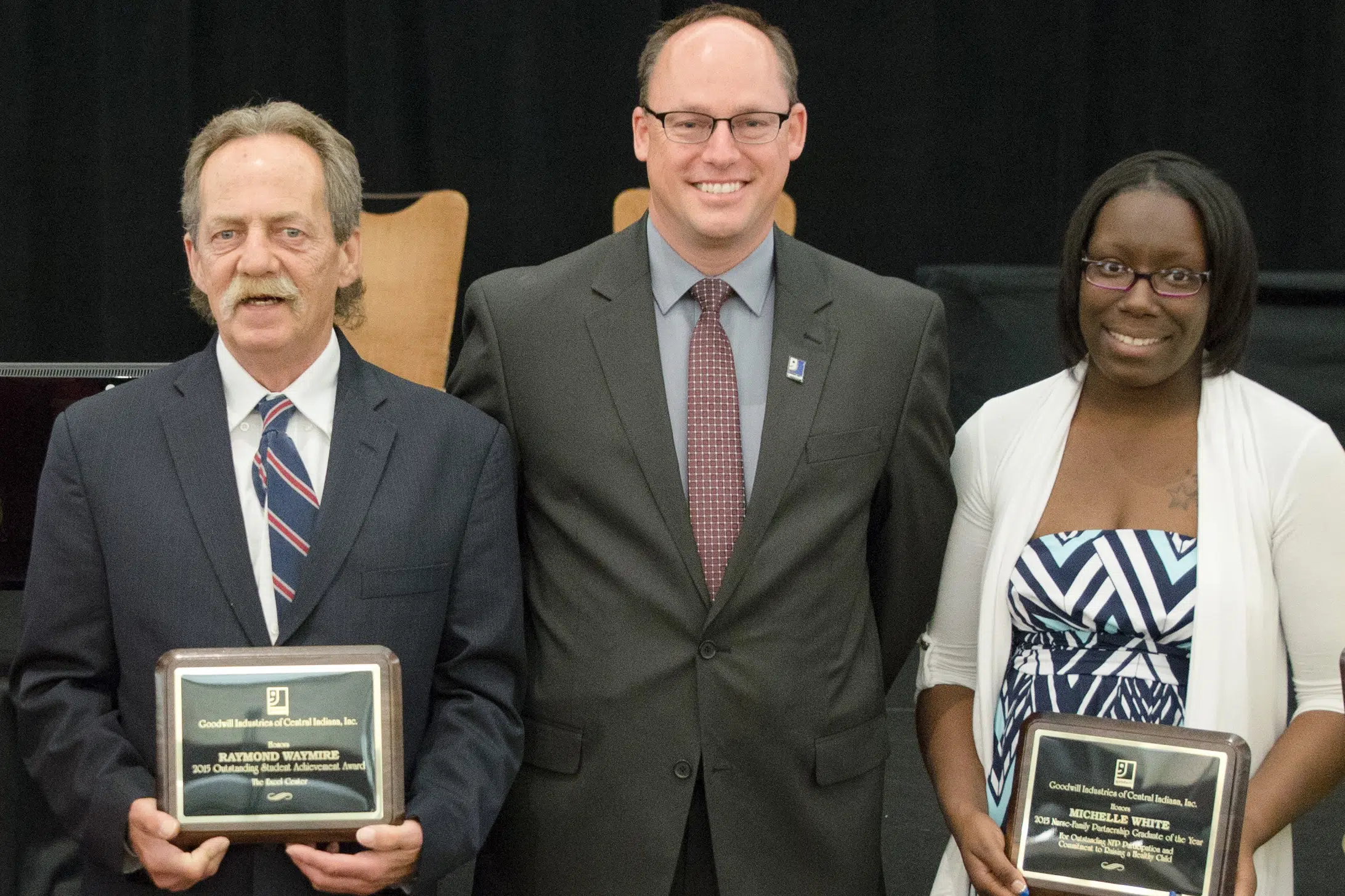
But that’s not all that’s grown. Kramer saw the organization’s work with people and families take a more holistic approach. Although Kramer is proud of opening those stores, he sees the broader effect of increased revenue. Goodwill has taken on a larger mission – helping people get to economic self-sufficiency. Two ways that Goodwill plays a significant role in reducing poverty and the array of accompanying social problems is through its Excel Centers and its Nurse-Family Partnership (NFP), both launched in the past decade.

Education has been part of Goodwill’s program portfolio since 2004, when it opened its first charter high school – Indianapolis MET High School. Since its opening, Goodwill has learned many lessons from that venture.

Those lessons spurred the opening in 2010 of the first Excel Center, a dropout recovery charter high school at Goodwill’s headquarters on Michigan Street on the city’s Westside. Designed for students 18 and older to gain a high school diploma, the first school had more of an online approach. Goodwill realized, however, that students needed an adult to coach them and hold them accountable, so the model was modified.

In 2014, Excel enrollment reached 3,000 with 501 graduates.

“We have Goodwill to surround these people. We help place them, we help coach them to success, we help knock down barriers that might still exist, and we stay with them to make sure they’re successful,” said Kramer. “All of our expansion efforts have gone to the Excel Center, and it’s kind of like, it’s on fire, and we want to keep feeding that fire because of the results.

“Let’s say, if only half of them of those come off of public assistance, that’s pretty significant,” Kramer continued.

Now there are 11 Excel Centers in Central Indiana, with two new locations in Noblesville and on the Southside near the University of Indianapolis. It has also licensed three centers through Goodwills in other cities — South Bend, Memphis, Tenn., and Austin, Texas. And in October, the Annie E. Casey Foundation is supporting the growth with a grant to bring 15 Goodwills from around the country to Indianapolis to learn more about the centers.

Continuous improvement is one of Goodwill’s key principles and its boards’ regularly review growth and impact. Goodwill has three boards – general operation, education and foundation. Each board requires that at a one-year anniversary, and then again at two years after an operation is in place that the staff dusts off the original proforma and matches it up with actual results.

“Basically at board meetings, we give a mission impact report. If we have underperforming programs, which we’ve had in the past, and if we’re not getting the impact we need, we’ve made that decision to remove ourselves from it,” Kramer said. “The last thing that we want to do is to take donations from either used-goods donors or cash donors, and invest in something that doesn’t have a mission return or an economic return. Ultimately we look for both.”

Goodwill also is always looking for better ways to analyze data to show how it is changing lives. In an 2013 economic impact assessment for Goodwill, for example, Ball State University found that in its first two years Excel Center graduates showed gains in average annual wages of $4,572.

So it’s not surprising that impact was a critical factor when Goodwill was researching the Nurse-Family Partnership (NFP) as a potential program to bring to Indiana. One of the attractions was that the program collected 2,000 data points for every client it serves and had nearly four decades of evidence to support its effect.

The program, headquartered in Denver, has a holistic approach to working with low-income mothers and their families. Each first-time mother is matched with a registered nurse who has regular contact with the family until the newborn turns 2 years old.

Since Goodwill of Central Indiana and the Indiana State Department of Health launched the program to Indiana in 2011, it has served 600 families. This year with additional support and connections to local Goodwill agencies, NFP announced programs for Lake, Madison, Delaware, Tippecanoe and White counties, and with support from private donors in Indianapolis, it will provide services to mothers living in high-risk zip codes.

But the program offers more than trying to ensure the health of a newborn. As the nurse and mother build trust, the nurse has conversations about family self-sufficiency and how this new mother might provide financial support for her family. Those conversations have led some of the mothers to enroll in the Excel program. Besides a high school diploma, the centers offer specific certifications for jobs like pharmacy technicians, electrical systems technicians, welders and information technology techs.

In order to initiate new programming, the ability to invest is critical. Expanding, according to Kramer, takes a good organizational financial backbone and cash to work with. With foresight 45 years ago, Goodwill established a foundation that allows investment in innovation and provides working capital to incubate ideas.

Growth, as Goodwill has learned, cannot always be achieved with existing staff.

“We had to hire those competencies. Sometimes when you’re growing and you’ve got an opportunity to grow fast, it’s difficult to have 100 percent home-grown talent.

“Goodwill historically has been a very entrepreneurial type organization, so you’ve got to have leaders that embrace that idea and embrace change, and not only embrace it but are change agents themselves. Status quo is a very difficult world to live in if you want to grow,” said Kramer.

Since Kramer was announced as Goodwill’s president, everyone asks him what’s next. For him, it’s not new projects, but moving things in a solid direction.

“We’ve got to be really good at keeping our eye on the ball on all of the three big opportunities — education, retail and Nurse Family Partnership — to make sure we’re efficient and delivering results. The ‘what’s next’ is getting really, really good at moving people to middle skills jobs. We’re doing it, but what’s next is ‘Watch us do it really, really, really good,’” said Kramer. “We haven’t finished. We still have lots of opportunities across our network to continue to grow.”