Monthly Archives

July 2016

Why your nonprofit should be using nonprofit accounting software

By Uncategorized

By Jim Simpson, CPA and director, Financial Technologies & Management   FTM logo

As the number of nonprofits has proliferated, accounting software is more tailored and can help manage these complexities.  But taking the time to select the right software for your nonprofit is critical.

Before your purchase, start with a software evaluation and assessment to see if you’re a good candidate for nonprofit accounting software.  The software evaluation and assessment will review your current system to determine its level or utilization and functionality.  It is probably a good idea to perform a software evaluation any time there is a major change within the organization either positive or negative.

Nonprofit accounting software has several features and functionality to help your organization with some of the following:

  • Flexible report writer
  • Grants management capability
  • Cost-allocation functionality
  • Strong audit trails
  • Integration with payroll, fundraising, and other applications
  • Expanded capabilities as organization grows
  • Various financial segment or element tracking to include funding sources, programs, projects, locations, and other essential financial information.

Here are features and functionality of the software that can provide optimum efficiency.

The flexible report writer allows you to use the accounting software to meet the internal and external complex reporting requirements.  Generating reports should be able to be varied to meet the board, program, and funder reporting requirements and easily modified to meet the changing program and funder needs.

The grants management capability allows you to track the financial results for each grant, and report back to the funder in the required format, using one accounting system.

Cost-allocation functionality allows you to easily allocate transactions on a real-time basis to multiple programs and funding sources all within the system. It should allow to you to pool various cost pools like facilities and overhead and allocate these to the various program and funding sources to provide a full-cost accounting.

Strong audit trails keep track of what users are doing within the accounting system.   The system should allow you to provide your annual auditors and program monitors with the financial information they need to meet their requirements and reduce the chances of fraud. Those involved in the finance function should have segregated permissions in the accounting system to protect the organization and its staff.

As organizations look to be more efficient, it is important they look at software that allows them to integrate their critical functions like payroll, fundraising, human resources, and other areas.   Nonprofit accounting software typically has this functionality built into its various modules or it allows for third party product integration.  It is typically modular based, which allows your organization to add functions and capabilities as the organization grows and needs additional tools.

One of the most important reasons to look into nonprofit accounting software is the ability track financial information different ways.

For example, an organization may want to track its various funding sources to see what funds are available.  It may want to track my various programs and projects to see what the programs costs are and how the organization is doing financially.  It might have various locations and want to know how each location is doing.  It might have donor and endowments restricted assets and wants to do a separate accounting for these donations to know what assets are left and make sure donor restrictions are met.

It is important, too, that staff remains efficient and effective, enabling them to focus on the long-term planning of the organization and not just keeping up with the day-to-day-accounting.

There are several purchase options that include direct purchase or subscription pricing to pay-as-you-go.  You will need to insure that you include software advisory services to include planning, implementing, and training.  In some cases, you will need to also include data conversion and integration services.
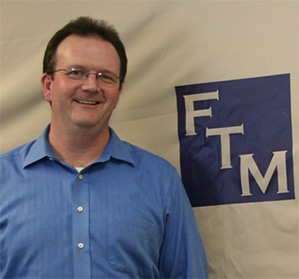
FTM_Jim Simpson photo   Jim Simpson, CPA and director of Financial Technologies & Management, is a nonprofit financial leader and trainer, CFO, controller, forensic consultant and software advisor, including Abila MIP Fund Accounting since 1999.  He has served CFO, controller and software advisor for over 25 years to over 350 nonprofit organizations.  Our nonprofit accounting solutions include Abila MIP Fund Accounting QuickBooks for Nonprofits, and other Nonprofit Accounting Software.

Contact Financial Technologies & Management to see how we can help your nonprofit with accounting solutions.  You can schedule an appointment directly from the website at WWW.FTMLLC.COM, email info@ftmllc.com or phone at 317-819-0780.

Data tool for Marion County

By Feature, Leadership

In case you missed it, WFYI’s “No Limits” aired a program about the new IndyVitals tool created by SAVI at The Polis Center. The tool contains an untold wealth of information about the 99 distinct neighborhoods of Marion County. It measures the health and sustainability of neighborhoods in Marion County in the following goal areas:

  • built environment
  • economy and jobs
  • education, arts and community
  • equity and empowerment
  • health and safety
  • natural systems
  • general demographics

John Krall’s guests were Sharon Kandris, director of community informatics and SAVI director, The Polis Center at IUPUI; Brad Beaubien, AICP, administrator for long-range planning, Department of Metropolitan Development, City of Indianapolis-Marion County and Steven Meyer, executive director, King Park.

Button Text

Three things great data storytellers do differently

By Feature, Leadership

By Jake Porway, founder and executive director of DataKind, for Stanford Social Innovation Review

How can data be used to both humanize our work and demonstrate robust social impact?

How can we use data to tell a story without bogging down our audience with numbers and statistics?

How can people be inspired by data?

These are just a few of the nearly 200 questions that represent a mix asked in a survey before Porway’s talk at SSIR’s Data on Purpose conference.

At DataKind, Porway and his colleagues use data science and algorithms in the service of humanity, and believe that communicating about the work by using data for social impact is just as important as the work itself. There’s nothing worse than findings gathering dust in an unread report.

At DataKind, staff believes projects should always start with a question. It’s clear from the questions above and others that the art of data storytelling needs some demystifying. But rather than answering each question individually, Porway poses a broader question to help get at some of the essentials: What do great data storytellers do differently and what can we learn from them?

Button Text

The state of storytelling in the nonprofit sector

By Feature, Fundraising, Leadership

By Vanessa Chase, founder, Storytelling Non-Profit and Network for Good

Stories have been a huge trend in the nonprofit sector in the past five years, but our sector has been telling stories for much longer. Year after year, we are committed to telling people about our work, progress, and needs. Each time we communicate these things, we are communicating pieces of the larger narrative about our organization.

But things are changing, and storytelling is becoming a much more intentional act. Across the for-profit and nonprofit sectors, storytelling is a buzzword and communicators are consumed with telling stories that will engage their target audience. In the nonprofit sector, donors make up that audience. Our challenge is getting our current donors to give more and acquiring new donors who care about the cause. This is not a new or small task for our sector.

“The State of Storytelling” is a project that came to life out of an interest to know how the nonprofit sector is actually using stories and what results organizations are getting. Stories are constantly talked about as a tactic, but are they really helping nonprofits get better fundraising results?

Button Text

Don’t waste your professional development

By Sponsor Insight

By Stefanie Krievins, coach and founder, The Heart Projects |

We do-gooders are great at doing good, which usually also means being constantly active. What we’re not so great at is renewing our spirit and taking breaks to avoid compassion fatigue — that unique form of tension and stress that comes from helping those in distress.

Professional development, in particular leadership development, can help you address the toll that this difficult — yet fulfilling — work takes on your well-being.

Many nonprofit staff are quick to attend trainings on the development of their technical skills: fundraising, management, budgeting, marketing and outcomes development. While this is certainly important, you’ll be able to apply those learnings more quickly if you also address your leadership skills:

  • How to prioritize
  • Goal setting
  • Project and time management
  • Emotional intelligence
  • Ability to challenge the status quo
  • Inspiring and communicating with others

As you enter a new budget year, plan now to strategically use your professional and personal development benefits offered by the organization.

In the short-term, it can seem difficult to dedicate time to your own development because there are so many pressing issues. If you apply the information directly after the training or coaching, you’ll probably find that you’re more efficient, focused and energized. In the long-term, learning these important skills will support you to have more of an impact for the organization.

Here are some ways you and your organization will benefit from leadership development:

  • Understanding your strengths and how your job provides you with joy. It might seem odd to seek training or coaching when you’re happy in your job, but it will only support you in becoming a better leader faster.
  • Learning new skills. One of my favorite quotes is, “Leaders are learners.” In our important work, leaders are needed at every level and we need people equipped to take on new challenges in an educated way. The secret to every great leader is that they are constantly learning new skills and new levels of self-awareness.
  • Understanding why you feel stressed. Stress can feel overwhelming and all encompassing. Taking the time to understand specific stressors helps you isolate the problem and then figure out how to solve it. Being able to get rid of stress is just the first step. The second step is to identify the positive emotion you want to replace it with.
  • Respite. Those in human and social services especially deal with some the worst of humanity: abuse of kids and seniors, teens left to fend for themselves on the streets, drug abuse, untreated mental illness, etc. This can, and does, traumatize employees and staff at all levels. You deserve the opportunity to truly disconnect and renew your energy — and have it funded by your employer. You are carrying out the organization’s mission, so its budget needs to cover the emotional health of employees. This can be done via coaching, therapy, EAP services, paid retreat time or spiritual direction, a form of one-on-one discernment with a trained professional.

Leadership development comes in many forms and goes beyond the typical training/conference/workshop. Here are some creative suggestions for you to leverage your allocated professional development benefits:

  • Paid wellness/spiritual retreats (just for you or for a larger team)
  • One-on-one or group coaching
  • Job swapping with an individual from another organization
  • Finding a mentor through a formal mentor program
  • Joining a mastermind (it’s like having your own personal board of directors)
  • Paid sabbatical of a month or more, usually available after at least five years of employment
  • Attending a stress management or meditation/mindfulness workshop

If you have especially challenging goals for the upcoming year, don’t be afraid to ask for additional leadership development. Your organization will increase the likelihood of meeting its goals if it supports your growth. You also owe it to your organization to implement what you learn by practicing your new skills, and providing a report to your manager on how the leadership development impacted you.

By focusing on your own needs and development, you’ll strengthen your organization with better outcomes, more effective outputs and stronger teamwork. Personally, you’ll benefit because you’ll be able to take on more challenges and be in a better position for a promotion. Make your growth a priority this year.


stefanie Stefanie Krievins is the founder and coach for The Heart Projects, which delivers free resources at stefaniekrievins.com. She also offers personal leadership development programs and coaching for nonprofit staff, volunteers, social entrepreneurs and those who want to connect with work that matters. She has a master’s degree in nonprofit management from SPEA at Indiana University, completed credentialed coaching training from Erickson International, and has more than a decade of employment and volunteering in the charitable sector in Indiana and nationwide.

Three key fundraising opportunities for Indiana nonprofits

By Sponsor Insight

By Jen Pendleton, CFRE, vice president-Indiana, Aly Sterling Philanthropy

In my new role as vice president with Aly Sterling Philanthropy, I’ve been meeting with nonprofit leaders like you, all over Indiana.

While you and your fellow leaders represent a diverse group of organizations dedicated to a range of causes, I’ve discovered that, regardless of your organization’s size or type, you share many of the same challenges.

Can you relate to any of the following?

  • Is your nonprofit struggling to increase annual fund giving and also bring in major gifts?
  • Do you feel alone and unsupported within your organization when it comes to fundraising?
  • Do you struggle to engage your board members fully?

Now, I choose to be optimistic and refer to these challenges as opportunities – because that’s ultimately what they are! Every one of these issues is solvable with some planning and careful thought to address the issue at its root cause.

Consider the areas of OPPORTUNITY below and how they apply to your organization.

  1. Leadership

Many of you shared your struggle to find board and staff leaders who are great at what they do, willing to work hard and, most importantly, able to stick around longer than a year or two.

Consider these points:

  • Plan ahead for succession and dedicate time to strategically recruit and onboard your leadership. It’s one of the most important things you can do all year.
  • Look in your current donor and constituent pool and proactively recruit people who already love your organization and care about your mission.
  • Take time to get to know each board member individually. Meet with each of them (or at least call) once or twice a year to talk, catch up and see how they think things are going. You’ll be amazed what an impact it can have on you and your board member!
  • Make sure you and your fundraising staff have support from organizational staff and board by encouraging intentional collaboration.
  • Take time to celebrate your successes and say thank you! It makes everyone feel good and keeps staff and board energized and committed.
  1. Time and resources

Every organization says resources – people, money and time – are the biggest challenges to their mission. The “overhead myth” seems to be alive and well, and most of you are still trying to do more with less.

Consider these points:

  • Assess where you, your staff and board are spending your time. Is it on the most important things?
  • Determine what you can stop doing, what you should start doing and where you need to invest to accomplish your most strategic goals.
  • Ask your board for the resources needed to meet your mission. Show them a plan for reaching your goals and ask for their investment.
  1. Building a culture of philanthropy

In most organizations, only one or two people focus on stewardship and/or fundraising. At least one organization I spoke with doesn’t have any fundraising staff.

Why does this matter? Because best practices show the most successful organizations are those that create a “culture of philanthropy.” This means they involve everyone in every department at every level in raising money and stewarding donors. If you think your development director is your #1 fundraising tool, think again. That grumpy, uninformed person answering your phone or working the front desk can undo months of cultivation in one conversation.

Consider these points:

  • Assess how many people are focused on fundraising and stewardship in your organization.
  • Consider what would happen if you leveraged all staff and board to be evangelists, “thankers” and cultivators of your donors and mission.
  • Start small. Determine what your culture of philanthropy looks like and build a pilot culture with a few key people… then refine and launch to board and staff when you have some wins!
  • Don’t be afraid to try new things. To grow to the next level, change is required. Assess what you can stop doing and create the time to start doing more meaningful work that matters and helps bring more revenue and resources in the door!

It’s true that collaboration, resources and culture – mixed with planning and careful thought – are the keys to solving organizational challenges as well as the larger issues impacting our community and world. You’re immersed in the work of both, and I’d like to help.

Let’s get started! I’m happy to meet with you and your team to brainstorm soon. It’s how we do business – build relationships first – at no cost to your mission.


jen-pendleton Jen Pendleton, CFRE, is vice president of Aly Sterling Philanthropy, leading the firm’s work in Indiana. Before coming to ASP, Jen served as president and CEO of the Community Foundation of Boone County (Indiana), where she led a campaign to raise $1 million in matching funds from the Lilly Endowment for the county’s Community Impact Fund.

Can schools be held accountable without real consequences?

By Education, Feature

By Matt Barnum, LA School Report |

California is hoping to redefine school accountability in the “California Way.”

While state officials are hard at work designing a system in line with the oversights demanded by the Every Student Succeeds Act (ESSA), the new federal K-12 education law, they also want to remain true to the state’s ethos of de-emphasizing test scores and focusing on helping — rather than “punishing” — struggling schools.

“We have had now basically three years without a functioning accountability system and we’re approaching the moment when we actually have to put something in place,” said David Plank, a Stanford professor and executive director of the research group Policy Analysis for California Education (PACE).

A report released in May by a task force convened by the state superintendent lays out a series of metrics — beyond standardized test scores — for judging schools, but says little about what happens to the ones that persistently score poorly.

Button Text

Teach for America retools efforts to recruit graduates from top colleges

By Education, Feature

By Emma Brown, national education reporter, The Washington Post |

Teach for America has spent most of its 25 years working to expand, growing from a concept outlined in a Princeton student’s honors thesis to an education-reform juggernaut that places thousands of idealistic college graduates in some of the nation’s neediest classrooms.

But that growth has stalled. Applications for TFA’s two-year teaching stints have plummeted 35 percent during the past three years, forcing the organization to reexamine and reinvent how it sells itself to prospective corps members. It has been focusing particularly on how to engage students at the nation’s most-selective colleges, where the decline in interest has been among the steepest.

“It’s going to take us time to recover,” said Elisa Villanueva Beard, TFA’s chief executive, noting that the organization’s leaders are trying to “step back and take a really honest look” at why TFA is struggling to attract interest and how to reverse the trend.

Button Text

Don’t let outdated practices hamstring your nonprofit

By Sponsor Insight

By Teddie Linder, business manager, Netlink, Inc. |

Recently, Netlink assisted a for-profit property-management company in its acquisition of multiple apartment complexes in another state. The client planned the acquisition and worked with us to ensure a timely takeover regarding technology. In advance of the transition, the only variable not completed involved obtaining master settings, licensing and passwords from the previous IT management resource. This info is needed to make sense of what is in place, make changes, install new software, create new accounts and connect to the new management company’s network and IT resources.

Unfortunately, the property-management company’s existing IT provider wouldn’t address any needs in advance of the changeover.

The staff arrived to work on the first day under new management only to find their systems didn’t work properly. They were unable to conduct the routine daily business like moving tenants in and out, and handling maintenance requests. The manager in charge of the transition was upset, frustrated and angry; the transition took longer and was going to be more expensive.

Even after it was resolved, a single question remains: What happened?

Instead of handing off the administration rights, the IT staff simply wiped settings and licensing from the computers. All of the programs were removed. Netlink’s staff faced a long day of configuration, relicensing programs and resetting equipment in multiple offices, before the company’s staff was back online.

Did the previous company do anything wrong? Not really; they simply followed a system that was advantageous for them, but one that hamstrung the client. The end-result was that it made life difficult for the owners, executives and staff by creating an unneeded “hostage situation” for technology assets and tools: the servers, workstations, software and subscriptions that allow a business to operate.

This “standard practice” involves the IT company setting up accounts in its name, not under the client’s. It is an outdated approach that many times involves billing the client for additional services with a markup. The problem with this relationship is the client doesn’t “own” the setup, server, the subscription or the license. So when it is time for the client to make a change or move on, they have to start with brand new setup, sometime new subscriptions (increasingly used for software licensing or programs), and migrate company data to the new setup.

This practice creates a level of stress and a lack of mobility that is unnecessary.

A different model to consider is “client-owned, provider-managed.” Each account is established with the client as the owner of the account. Payment is made directly by the client company to the vendor of the service(s) and the IT provider is paid only for managing those services. This keeps the role of the client, the IT Management provider, and the services vendor clear and allows the client to change as the market or other forces require.

The bottom-line is business owners or executives should ALWAYS maintain access to their own information technology framework where possible. The client’s business should always have access to licensing, passwords, and configuration details that a reputable IT provider maintains on the company’s behalf, and can be repurposed when needed. Examples include:

  • E-mail hosting (Office 365/Google Apps/other)
  • Server & file access
  • Internet ISP connection (know who Internet service provider is, and have the account information accessible)
  • Domain network/registrar info
  • Website hosting info

Netlink, Inc. shifted to the client-owned, provider-managed model several years ago sensing the limitations and wanting to combat the perception of holding IT information hostage. It is a cleaner, clearer, and more customer-centric approach, different than reselling or recreating setups from scratch. Our clients own their configurations, which will travel with the them, regardless of whether Netlink manages the company’s IT or not.

The clarity of succession brings benefits to both the client and the IT provider. Both parties are clear on the IT provider’s role, as well as the cumulative benefit of maintaining configurations and documentation on the client-owned setup.

At Netlink, we believe strongly in the power of the client relationship — keeping the optimal customer experience as the guide for all that we do. Adding predictability and removing ambiguity benefits everyone. Like any good business relationship, simplicity, clarity and transparency are minimums and benefit everyone regardless.


teddie_linder Teddie Linder is the business manager for Netlink. A certified Green Belt in Six Sigma she focuses on process improvement that benefits the customer and the business. She can be reached at teddie@netlinkinc.net.