By Lynn Sygiel, editor, Charitable Advisors
Over the ages, flowers have taken on symbolic meanings. Ancient Greeks, Romans, Egyptians and Chinese refer to the use of flowers in their stories and myths. The Greeks considered flowers to be of particularly high importance and associated them with the gods.
But the language of flowers, floriography, can convey simple and complex messages. Random Acts of Flowers (RAF), a nonprofit started in 2008 in Knoxville, Tenn., uses flowers as part of its simple mission: improve the emotional health and well being of individuals in health care facilities by surprising residents with recycled flowers, encouragement and personal moments of kindness.
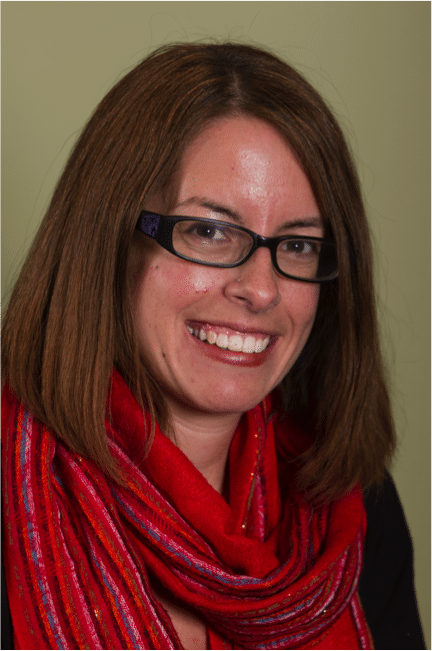
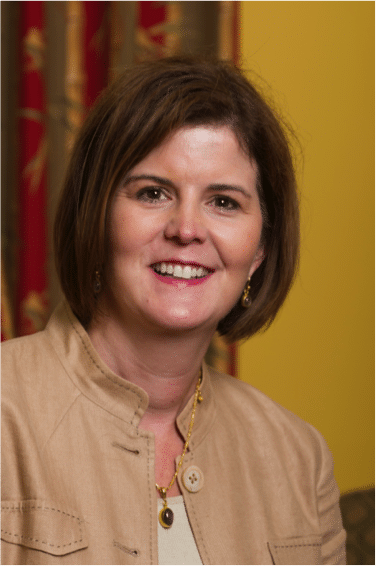
The Indianapolis bureau, the organization’s most recent, opened in October. Renting space on East 54th Street on the city’s Northside, its purple storefront is an eye catcher. The response has been unbelievable, according to Alison Kothe, Indianapolis’ executive director. Kothe was hired in June to launch the operation, and since then, has focused on the joy of giving flowers.
[content_box box_type=”normal”]Locally, weekly flower donations come from McNamara, Kennicott Brothers Wholesale, Marvin’s Wholesale, FTD/Proflowers, Fresh Market, Flanner & Buchanan, Crown Hill Funeral Home & Cemetery, Royal Creations, Conkle Funeral Home, Leppert Mortuary, Laurel Hall, Posh Petals, JW Marriott, Lilly Lane Flowers and George Thomas Florist.[/content_box]
While she admits the logistics are complicated with a lot of moving parts, the idea of delivering flowers to people in need is not. “I call it a deceptively simple concept,” she said.
Living in Knoxville, Tenn., in 2007, RAF founder Larsen Jay landed in the hospital after a life-threatening accident. As a young filmmaker in his 30s, Jay didn’t typically receive flowers. But while recovering, he noticed how flowers sent from friends gave him a psychological boost. He also realized during his stay how many people on his hospital floor didn’t receive flowers and had few visitors.
So the next year, he founded Random Acts of Flowers, an attempt to make a difference for those in need. An RAF survey revealed that 81 percent of recipients surveyed had received no other flowers. Recent research also shows that flowers help reduce the length of hospital stays and lowers blood pressure.
RAF now has five branches – Knoxville, Tampa Bay (2013), Evanston, Ill., (2015), Menlo Park, Calif., (2015) and its newest in Indianapolis.
Why Indianapolis? Five years ago, Betty Stilwell, then chief philanthropy officer at IU Health, mentioned the organization to Kothe. Stilwell said she had been talking with Jay Hicks, president and CEO of Prime Care Properties and Management. After meeting RAF’s founder and joining its national board, he thought Indianapolis was ready to become involved.
“Hicks was really the mover and shaker behind the Random Acts of Flowers in Indianapolis,” Kothe said. Once the commitment was made, things moved quickly. The first seed-money house party was in March of this year, and the new 501(c)3 moved into its space in September and started deliveries the next month.
As of early December, over 1,245 arrangements had been delivered to area hospitals and nursing homes.
In July, Kothe and Lindsay Potter, RAF’s program manager, traveled to Knoxville for training. Immersed in the details of the operation, they had a series of hands-on trainings. And one thing they learned was to be cognizant of the differences between delivering to a hospital or a nursing home.
“One of the things that I thought was particularly impressive about the Knoxville ethos is that you cannot obviously deliver to entire hospitals in a single delivery, but nursing homes are different. It’s more of a community, and we want everybody to have an arrangement,” she said.
“Ideally, in the best of all worlds, all of our deliveries would go to people in need, but because of the nature of hospitals, we have no idea who’s going to be in what room,” she said. As the organization gets rooted, Kothe wants to work more closely with hospital personnel to identify patients who really need a boost.
Another group that’s on the priority list is the veterans hospital. In all RAF branches, Veterans Day has special significance. Locally, Roudebush Veteran Affairs Medical Center is not yet on board, but Kothe is hopeful that an influential community leader can help her expedite the approval.
“It’s a shame, but we’re plugging away with the local staff through the bureaucracy. Vets are by far the most appreciative — not only are they in the hospital for longer periods of time, but almost all of them are far away from family. If ever there is a constituency that could benefit from all elements of the effort — the color, the joy, the interaction with a person being kind — it is vets,” she said.
Volunteers make up the nonprofit’s workforce. So far, 130 volunteers are orientated and trained. Potter would like that number to be 250.
In its first year, the group plans deliveries twice a week of 50 to 75 arrangements. Its first crew of 10 volunteers had a production goal of 100 arrangements or 10 per volunteer. But no matter how enthusiastic the group, Kothe said, after seven arrangements, the enthusiasm wanes. What she and Potter don’t want is for the task to become drudgery.
After potential volunteers complete an application online, they attend an hour and a half on-site orientation and training session. With a small conference room, Potter likes to limit the group to seven, with a maximum of 10. Training sessions are offered on days when volunteers are arranging, so that each new volunteer can also get hands-on training. New sessions are planned this month and in January and are posted on RAF’s Facebook page.
“If people want to do arranging, then the first time they do an arrangement, we have them work with Emily, who’s our program coordinator, and comes from a floral background,” said Potter.
Corporations have also found value in volunteering. Avant Healthcare is one that recently took advantage. The company encourages employees to give back to the community. Besides annual volunteer hours, at the Indianapolis-based company, departments can take advantage of a team-building activity.
Pam Schiefelbein, director of strategic operations and training at Avant Healthcare, was part of the team that recently volunteered for RAF. “From the time we walked in the door, to the minute we left, we felt welcomed and appreciated. As we learned more about the nonprofit, we realized that our goals were identical — we each want to have a positive impact on the patient,” she said.
Recycling is key to the effort.
Vases, all donated, have some size requirements, but have come from a variety of sources. Recently, Second Presbyterian Church and Woodstock Country Club offered spare vases. Individuals, too, have shared their excess containers.
“We focus on a certain size. So for instance, a little bud vase cannot be used because it doesn’t create a beautiful arrangement. We cannot use a coffee cup either. If we’re making 100 deliveries, we’ve got to be economical in terms of the size of vase, so we can fit it into the cart,” said Kothe.
Flowers are donated, and picked up by the volunteers. Local donors include florists, funeral homes, grocery stores and event venues.
On Mondays, one of the volunteers heads to Richmond early in the day, where FTD/ProFlowers has its home office. The volunteer fills up the van with boxes and boxes of flowers, and not only brings those flowers back, but also picks up from local contributors.
While some volunteers come with many, many years of floral experience, it is not mandatory. RAF has requirements about height and width and how many flowers for each arrangement, which isn’t necessarily universal in world of floral arranging said Potter.
What isn’t used is composted, with future hopes to generate income.
“Ultimately it would be nice to sell it because amazingly there are very few nurseries that do organic composting. They buy organic compost materials, but they don’t do it on their sites,” said Kothe.
While Potter has worked for other nonprofits, she believes that every week RAF lives up to its mission.
“Every week, we do what we say we’re going to do, and it’s easy to measure it. I’ve worked in places where you’re working hard, and you’re doing all these wonderful things, but you never know if you’re making the impact that you want to be making.”
Locally, RAF plans to further research the effect. Dr. Burke Mamlin, a board member, is a researcher at Regenstrief Institute in Indianapolis, and went on the first Eskenazi Hospital delivery.
“He had read the literature that a growing body of research indicates there is a real psychological benefit. He was so excited about just the visceral reaction that he saw among the patients, that he has taken it upon himself to take this research to the next level. He wants to try to determine what exactly is the biological phenomenon that occurs that creates shorter hospital stays, blood pressure lowering and recovery rates. That would be very exciting,” said Kothe.
Kothe said RAF is a no brainer.
“There’s no downside to it. It’s not political, it’s not religious, and it’s not anything but bursts of joy in people’s lives that have none. And then there’s the personal contact, the encouragement.”