Community leaders announce plans to build 96 more permanent housing solutions as part of a comprehensive plan to end and prevent homelessness by 2024
by Shari Finnell, editor/writer, Charitable Advisors
The road to homelessness can be complex — with individuals and families experiencing varying factors that can lead to them living on the street, in parks or in vehicles, as outlined in Evicted: Poverty and Profit in the American City. In the Pulitzer Prize-winning book, sociologist Matthew Desmond provides a rare look into the lives of several individuals who failed to avoid homelessness in Milwaukee.
After years of analyzing the homeless population in Indianapolis, city officials and community leaders realize they still don’t have all the answers — but are hopeful that a comprehensive approach that includes a continuum of care, hundreds of new supportive permanent housing units and rental assistance can put them on the path to ending homelessness by 2024, said Chelsea Haring-Cozzi, the executive director of the Coalition for Homelessness Prevention and Intervention.
While many cities have traditionally focused on short- to medium-term solutions that focus on stabilizing housing within a 12- to 24-month time period, the Indianapolis Continuum of Care (CoC), a coalition of public and private organizations and individuals, has shifted the focus on more permanent solutions for homeless people in Indianapolis, Haring-Cozzi said.
As part of that plan, the CoC recently announced plans to build 96 permanent housing solutions with a $37 million grant awarded by the state of Indiana. The Indiana Housing and Community Development Authority (IHCDA) has chosen three supportive housing developments in Indianapolis for this year’s round of Low-Income Housing Tax Credits (LIHTC). The three local developments will create 96 new units of permanent supportive housing for individuals experiencing homelessness in Indianapolis.
The projects include:
Hanna Commons, 2800-2910 E. Hanna Ave., Indianapolis, Ind., 46227. Awarded $1.2 million annually for 10 years to provide 50 supportive housing units for individuals experiencing homelessness.
St. Lucas Lofts, 2810 E. New York St., Indianapolis, Ind., 46201. Awarded $1.08 million annually for 10 years to provide 50 affordable housing units for youth experiencing homelessness.
Compass on Washington Street, 1033 East Washington St., Indianapolis, Ind., 46202, awarded $1.2 million annually for 10 years and $900,000 in Housing Trust Funds to develop 36 supportive housing units for individuals experiencing homelessness.
Construction on all three housing developments is expected to start later this year with an anticipated completion date by the end of 2022. All three developments qualify for Indianapolis Housing Authority vouchers. These projects bring the city of Indianapolis and the CoC closer to its goal of developing 500 new supportive housing units by 2024. Currently, there are 360 supportive housing units under development in the city.
The plan is also focused on preventing homelessness. Haring-Cozzi noted that the pandemic, as of yet, has not contributed to a noticeable uptick in the number of homeless people in Indianapolis as some people had feared.
“When counts were analyzed in January 2021, compared to last January, Indianapolis didn’t see much of a change,” she said. “Even before COVID, Indianapolis was among the few communities nationwide that wasn’t seeing the same type of uptick in homelessness.”
However, the impact of COVID-19 may still need to be realized, she said. The next few months may reveal how if there will be any sustainable fallout caused by the pandemic. “We’re hopeful eviction moratoriums have curbed the impact of the loss of housing and the loss of income, along with people getting rental assistance,” she said.
Local research team reveals the challenges of building an effective plan post-COVID-19, and how to overcome them
by Shari Finnell
As organizations shift their focus to a return to “normal” after COVID-19 restrictions, many leaders are realizing that they must prepare for an entirely new normal — one that accommodates employees’ desire to introduce more flexible work-from-home policies as permanent options.
Leaders can use this unprecedented crossroads to lead their organizations to a more productive environment — with the right planning, according to Sam Julka, president and founder of Doris, a company commissioned to research how remote and in-person working models impact productivity.
Sam Julka, president and founder of Doris
Doris, which recently released a comprehensive planning guide, “Hello, Hybrid: Your Workplace Playbook:,” captured data and insights from 16 organizations throughout the Midwest to determine the different factors that contributed to work productivity under a hybrid model.
“We studied that concept very deeply,” said Julka, during a recent interview with Charitable Advisors. “We learned there were multiple definitions of the word ‘productivity.’ We also learned through this study that the hybrid work model was going to be where many organizations wind up.”
Organizations that successfully implement hybrid work models can reap numerous benefits, including higher employee retention and optimal recruiting outcomes, Julka said. However, the transition may be difficult. When compared with fully remote and fully in-person work models, hybrid models will be the most challenging to execute well for numerous reasons, Julka said.
For example, the research revealed numerous complexities beyond determining if employees will all work in the office on specified days. Teams will need to figure out policies and protocols around factors like ensuring that employees take PTO; whether it’s acceptable to send and respond to emails beyond normal work hours, managing employees’ work hours to ensure they are avoiding burnout, and assessing career advancement opportunities — whether an employee chooses to work from home or fully in the office, Julka said during the interview.
“The playbook is really meant to help any organization, specifically a leadership team that’s trying to figure out their path forward,” she said. “Instead of writing a research paper, which is what we most often do, we ended up creating a tool to make it as helpful as possible for various organizations.”
Julka noted that the playbook will guide teams through comprehensive planning and deep conversations around their hybrid model, taking into consideration scenarios that are unique to their workplace.
“I don’t think that leadership teams are going to be able to read five white papers, and then just all of sudden have the answers. There won’t be a silver bullet that everyone will be able to follow,” Julka said.
“If you’re going to do a hybrid model, you have to do a very good job of thinking deeply about what your model may look like,” she added. “There will be rigor involved in trying to figure this out, and it will be harder than it was when we all just sort of dropped the pencil at our desk in March of 2020. It will be harder as we start to figure out how to come back effectively.”
Julka also said it is important to anticipate some failure points in all the variables as organizations adapt to a new way of working. It also is critical to recognize that the foundation of a healthy hybrid model is trust and accountability among the workforce,” she said.
“If an organization is thinking about a hybrid model, our recommendation would be to have some pretty serious conversations about what it means to trust your workforce, trust your leaders and how you’re going to all hold each other accountable for what’s going to happen,” Julka said.
To hear the full interview with Sam Julka of Doris, click below.
by Shari Finnell, editor/writer Not for Profit News
Mark Williams began his new role as the executive director of the Indianapolis Art Center (IAC) in July 2020, in the midst of the COVID-19 pandemic. As with most arts and culture entities, the 87-year-old art institution had operated primarily through hands-on, in person experiences.
A year into the pandemic?
“We’re thriving,” said Williams, who had left the for-profit sector as the CCO and founder of ImageNation, a marketing and branding firm to take on the position at IAC.
“When a crisis happens, people want to get back to replicating or substituting what they’ve done in the past,” Williams said of the natural desire to get back to normal. “Our approach was the opposite. It was an era of innovation for us. We had to look at things in new ways across all of our classes and offerings, asking ourselves, ‘How are we staying relevant?’”
Under Williams’ leadership, the IAC team started finding the answers to that critical question. Innovation followed, including an expanded offering of online art classes, the sale of art kits, which quickly sold out, and the birth of Locally Made fest, a collaboration with the Indy Jazz Fest that will be held on the grounds of the art center from May 15-16. All participants, including jazz musicians, artists and food vendors, are local.
And, unlike its signature Broad Ripple Arts Fair, which was canceled for 2021, the new fest will have a limited number of tickets to ensure social distancing under COVID-19 guidelines, Williams said. About 1,500 tickets will be sold, but jazz performances will be available online to those who want to participate. The Broad Ripple Arts Fair regularly attracted 15,000 to 16,000 visitors.
Williams said IAC’s new programs and offerings aren’t a temporary fix — a solution only to cope with the restrictions caused by the pandemic. “As people come back in person, we know that the digital components are not going away … it’s embedded in the way we work and function,” he said. “So, it’s got to be baked into the process moving forward.”
He said embracing an innovative mindset is critical, not just to survive a pandemic, but to thrive in the future. “If you didn’t take the time to embrace new innovations, you’re going to get left behind; left out of the conversation,” Williams said.
Facing tough decisions
In addition to opening up pathways to innovative thinking, the IAC team had to face the difficult decision in January to cancel its annual Broad Ripple Arts Fair. “At that time, I don’t think anyone thought we’d be where we are now, here at the end of March, with the vaccination rollout,” Williams said. “If we had to make that call, we likely would be re-evaluating that decision and thinking of ways to handle the art fair safely. But we had to make the call for the artists.”
After announcing the cancellation of the Broad Ripple Arts Fair, the IAC focused on what it could do safely and how it could collaborate with some of its friends, Williams said.
“After all the meetings, we decided to have an event that would be solely focused on uplifting our neighbors — our local creative community that had been locked out of work for a whole year. And that’s our professional musicians. That’s our working artists,” Williams said.
That brainstorming led to the creation of the Locally Made festival in partnership with the Indy Jazz Fest, which will feature more than 50 working artists who will be spread out on the 10 acres of land that make up ArtsPark.
In an effort to support the local restaurant industry, they also invited food and drink vendors to participate. “They’re hurting as bad as the rest of us,” Williams said. “It’s really going to uplift the entire experience to a more premium experience.
As part of a plan that had to be submitted to the Indiana State Health Department for approval, the festival organizers had to outline its approach to the event, including submitting square footage and reduced capacity to allow people to spread out. While current ticket sales are limited to 1,500, there’s a possibility that it could be expanded based on evolving COVID-19 restrictions.
The announcement of IAC partnering with the Indy Jazz Fest was met with some skepticism, Williams noted.
“It is interesting from the outside (observations),” he said. “I heard people saying, ‘Why would the Indianapolis Art Center partner with the Indy Jazz Fest? And why would Jazz Fest partner with the art center?’ And I’d sit there and say, ‘Why not?’ These are two great organizations coming together to do something even bigger than either of them could do individually.”
Williams said it requires thinking about the needs of the other organization — not just your own — when seeking a collaboration. When he approached the Indy Jazz Fest about a collaboration, one of the first discussions involved how to make it profitable for the community members represented by each organization.
“These are all our neighbors and our friends and we’re all emerging from this pandemic.” Williams said. “As part of this fest, we’re saying let’s gather safely, let’s do it responsibly, and make it work so that people who’ve been out of work and can earn a living once again.”
When comparing the livability of a neighborhood, it’s easy to quickly get caught up in numbers — crime rate, school scores, home values, walkability scores … or miles to the nearest grocery store. House hunters are likely to carefully compare these ratings, knowing that it can impact the quality of their family’s lives after a move.
However, many residents in some of the city’s most impoverished communities can’t make those types of choices. With a significant number challenged by limited financial resources, moving isn’t an option.
Jeffrey A. Johnson, Sr., is intimately familiar with one of those neighborhoods — the Arlington Woods community, which is located in the 46218 ZIP code — an area that has been blighted by high crime rates, high rates of unemployment, high student dropout rates and, more recently, high rates of COVID-19 infection.
Johnson, who grew up in this neighborhood before going off to college, returned at the age of 24 to become the pastor of Eastern Star Church (ESC), which has three campuses, including its Main Campus at 5750 E. 30th St., in the heart of the 46218 community. Under Johnson’s 33-year leadership, the church continually invested in the community through a food pantry, affordable apartment housing, and financial investments in local schools, health fairs, volunteering, mentoring and other programs.
In 2017, Johnson joined members of ESC in announcing the launch of The ROCK Initiative, a more comprehensive plan for investing in the community. The ROCK Initiative is built on four pillars — affordable housing, strong community, quality education and financial security.
As part of Phase I, the church renovated and built single-family homes, developed an urban garden, and constructed a multi-use complex with 25 apartment units and retail space occupied by a credit union, a grocery store and social service providers. The initiative received support from numerous community partners, including INHP, Habitat for Humanity, The Mind Trust, Financial Health Federal Credit Union, Community Health, and Eskenazi Health.
Today, it announced another major phase in accomplishing its vision for a transformed community — the development of the ROCK Children and Youth Center (RCYC), a 60,000-square-foot facility that will provide students a safe environment to study, learn new skills, and engage in recreational and developmental activities.
During a groundbreaking ceremony, Johnson said The ROCK Initiative was launched to address inequities in the Eastside neighborhood.
“For too long, in this particular area, resources have not come through. We have had to deal with an economic desert, a food desert, an employment desert, and a quality education desert … which is one of the reasons, as led by God, we decided to start the ROCK Initiative,” Johnson said. “The ROCK Initiative allows us to partner up and collaborate with neighborhood, businesses, government and those who have a heart for community to make a difference. And the ROCK Children and Youth Center will help us continue our vision for a strong, safe and vibrant community so that all of our children are able grow and develop in a way God that intended them to.”
Jeff Bennett, Deputy Mayor of Community Development, told those gathered at the groundbreaking that the center represents a much-needed addition for the Eastside neighborhood, which he described as “one of the city’s most under-appreciated and under-recognized areas.”
“When we talk about community development in Indianapolis, it’s important that we recognize the work of our congregations,” said Bennett, citing the church’s investment in the neighborhood. “Eastern Star has led the way for more than 100 years. You recognized and fulfilled critical needs in affordable housing, banking and credit, food access and educational opportunities.”
Brandon Brown, CEO of The Mind Trust, which supported the opening of Rooted School Indianapolis, a high school located on the church’s main campus on East 30th Street, said that the ROCK Initiative can serve as a model for transforming neighborhoods. “With its comprehensive approach to education — with a pre-K to grade 12 continuum as one of the four major pillars, The ROCK Initiative can serve as a model of what’s possible when we think of a multi-faceted approach to uplift a community with education at the core.
“I believe that we will come back in 10 years and see this as a model of racial equity and social justice for our entire city that will serve as a shining example of what’s possible when we come together,” Brown added.
Tihesha Henderson, the Head of School at Sankofa School of Success, formerly IPS School 99, said the investment in youth in the 46218 area will be long lasting. “Over the years, the community has changed greatly,” said Henderson, who also grew up in the community. “It went from a middle-class area to an improvised area very quickly.”
The community, with an overwhelmingly African American population, has been largely unemployed and grossly underserved, Henderson added.
“Not only is there high trauma and high poverty, we see a lot of mental health issues in this community,” she said. “It’s also a desert when it comes to businesses like banks, grocery stores, and mental health support for our families. There are not a lot of places that our families can go to be employed,” she said. “So, when you factor in all of those things, we know that the needs of our students are going to be great.”
The ROCK Initiative has shown promise in giving the residents of this area hope, Henderson said. “It’s up to us to eliminate the systems of oppression that affect our black and brown kids every day, and we can do that through equity and resources in our neighborhood.”
by Shari Finnell, editor/writer, Not for Profit News
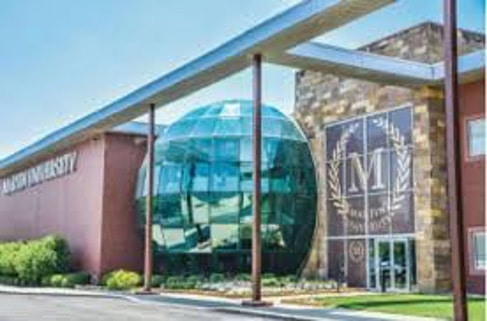
The profile of students who attend Martin University is anything but traditional. The average age is 38, and more than half are Millennials. Many are juggling low-wage, part-time jobs and parenting responsibilities as heads of household. And it’s not unusual for them to be carrying student debt after transferring from other colleges, according to Ezell Marrs, vice president for enrollment management for the Near Eastside Indianapolis educational institution.
Those unique circumstances led Martin University to introduce a work college model that has been primarily limited to rural and small-town communities until recent years. Under the work college model, students pursue their degree while making a commitment to work and provide service for the university or university partners.
Martin WORKS, the urban work college established with the assistance of a $1 million Lilly Endowment grant, improves students’ odds of better post-graduation outcomes since they will be paired with companies that provide relevant work experience. “They are not paying tuition as part of this program — and they are getting paid a competitive wage with top-tier corporate employers, in some cases, Fortune 500 companies,” Marrs said. “They will engage in learning and work-related experience that will set them up for full-time employment in more profitable careers.”
In some historic work college models, everyone who works at the campus is a student with the exception of faculty, Marrs said. Over the decades, many have evolved to meet new career demands. Warren Wilson College in Asheville, N.C., for example, was founded in 1894 as the Asheville Farm School to give underserved and, in some cases, previously uneducated young people, more solid job prospects through a low-cost education. In 1967, it became a four-year liberal arts college. Today, Warren Wilson College, which has been touted as a “best buy” by Fiske Guide to Colleges, continues its focus on “learning by doing” through a work program and community engagement.
“The work college model has been around for some time, but It’s a fairly new concept for an urban setting,” Marrs said. “Paul Quinn College in Dallas pioneered the urban work college. We are now pioneering an urban work college for post-traditional students.”
Martin Works, which will accept its first students in the fall of 2021, is centered around three pillars to ensure that its students succeed — academics, relevant employment with corporate partners, and community service, with a focus on serving its surrounding neighborhood in the 46218 zip code, Marrs said.
The program also requires that participants first engage in a summer training session to ensure they are prepared to work in corporate settings, Marrs said. “The Martin WORKS Academy, the preparatory piece that proceeds enrollment, will help students learn the skills and foundational courses that will go into their jobs. When we send a student off to a Fortune 500 company, we will ensure they have basic employability skills, including communication skills and other soft skills.”
The work college model addresses some of the inequities inherent in some traditional internship programs in which students are not paid or underpaid to gain experience in their preferred careers, Marrs said. Historically, that has been a challenging prospect for students who can’t afford to forego a steady paycheck. “I know of a student from Ball State who was working in media and not getting paid,” Marrs said. “His situation allows him to be agreeable to that because he needs the experience. Our students have more responsibilities and need both experience and compensation.”
Another component of the program is designed to equip the students for home ownership through affordable housing provided by community partners that specialize in housing, Marrs said.
Martin Works will ultimately give a student the ability to graduate with better job prospects, and the foundation for a stable life — critical steps to addressing racial and social inequities in the community, Marrs said.
“They will walk across the stage with a resume with relevant work experience, a diploma and a job — and very little or no school loan debt,” he said.
Prospective students interested in the program can apply by visiting Martin University’s site.
When volunteers are providing an invaluable service to a nonprofit, it can be challenging to tell them that they have it all wrong in some critical areas — especially when they’ve been operating in that mode for years or, in some cases, decades.
That was the dilemma facing the Indiana State Museum and Historic Sites’ board of directors following a March 6, 2019, meeting in which its past board president, Greg Pemberton, an attorney, outlined the need to update a Memorandum of Understanding (MOU) Plan for the Friends groups connected to its network of 11 historic sites across the state of Indiana.
“Many of these groups have kept the state at arm’s length for several years, and some are untrusting when both the Friends groups and the Indiana State Museum and Historic Sites (ISMHS) organization both have the same goal,” Pemberton said during the 2019 meeting, before leading a board discussion on numerous areas of concern:
Friends groups cannot operate independently of the overall museum system. However, many had been acting independently for decades, developing their own branding for their websites and marketing collateral; operating board-related activities for their respective sites; and, in some cases, identifying themselves as separate 501(c)3 organizations.
Some of the groups had been inconsistently reporting tax information to the state, which is required under law.
Each group had been operating under outdated MOUs, which were drafted before the museum system became a quasi-state agency in 2011. All of these MOUs would need to be updated to align with legal requirements outlined by the attorney general’s office. The new guidelines would dictate that all funding and donations from the 12-network system, including the Indiana State Museum in Indianapolis, must come from one unified fund.
Cathy Ferree, ISM President and CEO
The board members seemed optimistic that many of these issues could be quickly addressed with new Community Partner Guidelines, and a series of discussions with its five Friends groups. By the end of the board meeting, Cathy Ferree, ISMHS president and CEO, and Kate Brownlee, then ISM chief development officer, had agreed to meet with ISMHS regional directors and friends’ board of directors over a two-month period. The ultimate goal was to have the Friends groups operating under the new guidelines by July 1, 2019.
Encountering resistance along the way
As it turns out, shifting to the new agreement wasn’t a straightforward proposition.
Overwhelmingly, the Friends groups’ response to operating under the new guidelines was, “Why do we want to change things?,” recalled Andrew Briggs, who has been an ISM board member for about 1o years.
“A lot of these groups had been set up years ago,” said Briggs, a banker from Geneva., Ind., who also serves as the chairman of the Indiana Bankers Association. “They didn’t have a structure that was conducive to a quasi-government entity. They sort of did things their own way — ‘under our umbrella and tax ID number.’”
According to P. Garrett Adams, President/Board Chair for the T.C. Steele State Historic Site Friends group, the site in Nashville, Ind., had been operating independently for nearly 30 years. The members of the volunteer organization had developed close ties with the site staff and community, actively recruiting volunteers, raising funds for capital improvements and seeking grants to support enhancements, including a recreation of Steele’s studio wagon, and the purchase of AV equipment and golf carts for visitors.
When that model of operations was threatened to be disrupted, members of the Friends group feared that their long-term relationship with the site and its staff also would be impacted, said Adams, who is a pharmaceutical project manager for Eli Lilly & Co. “We were not as concerned about losing autonomy,” he recalled. “We needed a better understanding of the impact on members and membership benefits. The larger focus was on seeking to understand what it meant for our relationship to the site.”
Because of those types of concerns, at least one Friends group appealed to its local legislators to block the implementation of the new MOU among the historic sites, Ferree recalled. “It was complicated,” she said. “Change is difficult for people. Many of them were confused; they didn’t understand why the rules had suddenly changed.”
Many of the complexities had preceded this particular governance issue. Nearly nine years prior, the Indiana State Museum and Historic Sites undertook the steps to become a quasi-state organization, operating as a state agency and a nonprofit organization. In the face of declining financial support in state dollars, the new structure gave them the ability to apply for grants and invest in fundraising initiatives.
However, it was all new territory. “We needed to raise our own dollars in a way we had not done before. Currently, 75 percent of the organization is funded by the state and 25 percent we raise ourselves,” Ferree said.
Also, before that time, Friends groups had operated as independent 501c3 organizations, Ferree pointed out. Since the statute governing quasi-governmental entities dictated a change in the way they operated, it demanded a shift in the museum’s long-term relationships with its Friends organizations.
Another layer of complexity dated back to 2009, when then Indiana Gov. Mitch Daniels announced a plan to merge the Indiana State Museum and 11 historic sites under one new agency. Many of the Friends group members had been actively involved in their respective sites long before any of these decisions came to fruition.
“We needed to recalibrate our relationships,” Ferree said. “The collaboration had been there, but they had been able to operate more independently. It’s not bad or good. We just needed to be sure we were on the same page; there were things we still needed to do to become a full quasi-governmental organization.
“It was a difficult process,” Ferree added. “It really took a lot of conversation and listening and understanding for us to make this shift. And it’s an even more complex proposition when you’re working with different groups that each have their own culture and needs.”
Board members invest in an intensive endeavor to reach resolution
Although there was strong resistance to the new agreement, the board and staff knew they couldn’t back down, Briggs said. “We wanted to make sure everything was right, and it was time to bring everything in line to match up with IRS codes,” he said. “We had all these different groups doing their own thing. We didn’t want to take the risk of not reporting something correctly. That would put all of us at risk.”
With Ferree and Brownlee encountering significant pushback as employees of the Indiana State Museum and Historic Sites, several board members, including Briggs, embraced the challenge of reaching out to the Friends groups in what would turn out to be a series of meetings and conversations throughout 2020.
Board member Nancy Jordan said it was imperative that the board stepped in to resolve the conflict. “The board has ultimate responsibility to ensure this quasi-government agency is delivering on our mission and meeting the duties of care,” said Jordan, who is a senior vice president at Lincoln Financial Group. “We also wanted to hear first-hand the needs, thoughts and concerns of all these supporting groups. Their voice is critical to our collective success.”
William A. Browne, Jr., ISMHS board president, said it was especially important to recognize the value of the Friends group while, at the same time, being direct about the need for change.
“The Friends groups have had the good goal of taking care of these historic sites but they were not all operating under the same rules,” explained Browne, who also is principal/president of Ratio Architects, LLC. “We have to report every single dollar the sites and museum generates so we can file taxes appropriately. That became an issue over the years because each of the Friends group was operating in a free-form manner, if you will. It’s not the kind of structure that needed to be put in place for a quasi government.”
As board members started meeting with various Friends groups, they understood that the original timeline wouldn’t suffice to achieve true collaboration.
“We started to wade into this, and realized that people were very emotionally attached and we were stirring things up because we were asking them to operate differently,” Browne said. “Some people took exception with that. We had to figure out a strategy because, in the end, we knew it would be nothing but a positive thing for us.”
A focus on listening and collaboration
According to Ferree, the board’s commitment to drawing Friends group members, community leaders, and local legislators into difficult conversations was key to achieving true collaboration.
“The board members went above and beyond, traveling throughout the state, spending a lot of time talking to people and sorting things through,” she said. “They took extended time to move the institution forward in a complicated situation. They brought very different skills to the table, rallying around each other’s strengths.”
As a result of the meetings, the teams established the community partner guidelines, and set up quarterly meetings — to begin in mid-March — and attended by Ferree, board members, and other ISMHS staff. The agenda is set by site staff and the meetings will be run by site managers and regional directors. The meetings are open to anyone in the community, and will provide increased transparency at all levels, Ferree said.
“We realized that we needed to formalize the communications in a way that held us accountable to the Friends’ groups,” she said. “If we were going to ask them to help us do things systemwide, we need to be transparent.”
Jordan said the resulting collaborative approach resulted in a win-win outcome. “A great intangible benefit has been the opportunity to bring the Friends/supporting groups together to learn from each other,” she said.
Browne said the key to any successful partnership lies in the ability to communicate and connect. “With the right framework for that communication to be able to occur, you can bridge a lot of gaps and issues,” he said. “Just setting up a communications strategy is really critical to having a successful relationship and dialogue across distance.”
As a result of that collaborative approach spearheaded by the ISMHS board, the Friends groups are overall pleased with the outcome, Adams said. “We were able to get to a very good place,” he said. “The board did very well in bringing everyone together, talking through ideas, concerns and questions. It worked out very well. We are all now looking through a common lens, and we’re excited about things moving forward and the future of our collaboration.”
Local experts say transformative change demands a comprehensive strategy
by Shari Finnell, editor and writer, Not for Profit News
With the events of 2020 heightening awareness around the need for racial equity and social justice reform, nonprofit organizations have been at the forefront of efforts to institute transformative change.
Yet, no matter how much progress was made in 2020, achieving racial equity in the workplace will continue to be one of the most important issues organizations must tackle for at least the next decade, predicted Ben Hecht, the CEO of Living Cities, a collaborative of foundations and financial institutions, in a Harvard Business Review article.
The work toward racial equity must be comprehensive and deliberate, according to two local experts who are immersed in racial equity initiatives.
“It’s important for organizations to do an assessment of all their systems, including policies and procedures, how you recruit and hire, how you promote, and what ongoing training looks like,” said Tim Nation, executive director of the Peace Learning Center, which works with schools and organizations on educational initiatives around equity, social and emotional learning and restorative practices. “Not-for-profit organizations also need to assess how connected we are to the community. Do we act as saviors who know all the answers? Or are we really connected to the community in a way that we’re able to truly understand what their needs are?”
Nation also said it’s important to determine if the composition of the organization’s board and staff is representative of the communities they serve.
The Peace Learning Center, which has been at the forefront of racial equity initiatives since its inception in 1997, continues to assess itself against those measures. “We have, at the Peace Learning Center, established a racial equity committee that is assessing where we are on all of those different components — determining our strengths and weaknesses, and identifying areas that we can improve.”
Michael Twyman
Michael Twyman, principal/owner of InExcelsis, a consulting firm, said the work to achieve racial equity within the workplace can seem daunting but nonprofits and other organizations must commit to it as they would with any other major initiative.
“It’s a lot of work, but it’s necessary work,” said Twyman, who also is an associate faculty member of the IU Lilly Family School of Philanthropy. “If we’re willing to do the work for other initiatives because we believe they’re important, we must put forward the resources to make racial equity happen.”
“We have resources at our disposal. How we deploy them or allocate them is a matter of choice,” Twyman added. “It can be something as simple as shifting the mindset. Most organizations will need professional assistance.”
Nation said anti-racism training is only the start in achieving substantive change. “When it comes to racial equity, the first step is awareness. You have to be aware of the issues and appreciate why it matters. A lot of training programs serve that purpose.”
All of Peace Learning Center’s staff members recently underwent training with Crossroads Against Racism in Chicago, which involved a rubric on how to become an anti-racist organization. “It identified where you’re at and what you need to work on,” said Nation, noting that the team followed up by reviewing all of its policies and recruitment practices.
Nation also said that people, particularly non-minority individuals, need to understand how deeply rooted racism is in American society. “It’s not as much as individual racism as it is institutional racism. An individual may not consider themselves as prejudiced, but the systems they work in, the history of racism in our country, which goes all the way back to slavery, have shaped the way institutions operate, including our government and organizations.
To illustrate the complexities of addressing racial inequities, Nation used an analogy involving fish. “If you go to a lake and see a dead fish, you say what’s wrong with the fish and you start trying to figure out how to fix the fish instead of addressing what’s wrong with the lake — the groundwater,” he said. “In the same way, we have a lot of initiatives to fix fish but we haven’t been getting down to the policies that created the problems.”
Educational systems, for instance, have devoted a lot of time trying to fix children instead of assessing the problems with the systems they must function in, Nation said.
The disparities between minority and white populations, including wealth gap and school suspensions, are examples of institutional racism at work, Nation said. Even with infant mortality rates, the richest black women have the same negative outcomes as poor white women, he pointed out.
“It’s racism,” Nation said. “All the evidence is there. Unfortunately, since it seems white people benefit from racism, some of them don’t want the system to change. There’s not a consciousness of how a changed system can benefit them.”
He also said that people often are confused about the definition of racial equity. “Equal is not always equitable,” Nation said. “When you have had 400 years of oppression for black people, it’s not difficult to understand why there is a wealth gap. It’s like a game of Monopoly. If you’re starting the game after all the properties have hotels on them, how in the heck are you supposed to catch up?”
Twyman, who has consulted organizations through diversity, equity and inclusion work, said that each organization must develop a customized approach to addressing those issues.
“If you’re serious about it, it really is a comprehensive approach to working and operating in a different way,” Twyman said. “It can’t be limited to ‘Sign me up for the workshop, check my name off the list and I’m good.’ We need to gain a deep understanding of the larger historical context that got us to the place where we are. There needs to be an acknowledgement of who we are as a nation. How it has brought us to where we are.”
Next, Twyman said, an organization needs to establish a mutually agreed upon definition of the terms racial equity and racial justice — the ultimate goal of what an organization will look like as it embraces those qualities. “How do you want to be operating differently?” he asked.
Lastly, an organization must work to define the journey, Twyman said. “How do those two things intersect — where your organization is now — the historical context, and the aspirational goal. What is the journey in between?” Twyman said. “How do you come together as part of a journey that takes you to a place where you’re no longer complicit and you’re advocating for racial justice? That can look different for every organization.”
The process can be challenging because it may require putting the organization under a microscope, Twyman said. “There has to be a sense of humility about accepting the possibility that we don’t know it all and that we unintentionally have been complicit in creating inequities, as well as helping to perpetuate them,” he said. “There also should be a willingness to hear the voices of people who have had the experience of being marginalized or oppressed … listening and accepting that at face value.”
The process could include a mix of ongoing professional development, training that focuses on changing organization culture, addressing the composition of the board and staff, and assessing policies, processes and procedures that unintentionally or intentionally serve to put people of color at a disadvantage, Twyman said.
Any assessment must be specific about issues around equity, sometimes in ways that may not immediately be obvious, Twyman said. For example, he said, a well meaning initiative to invest $5 million in a neighborhood to benefit minorities could have the opposite effect — gentrifying a neighborhood that, in the long run, doesn’t benefit them.
With nonprofits, businesses and other organizations putting in the work to achieve racial equity on a consistent basis, Twyman said, real change is possible.
“I am hopeful,” Twyman said.
“I think the promise of every new generation is that it will be a little smarter, a little wiser. Those who have joined and supported movements like Black Lives Matter are raising the questions around racial justice and demanding changes in a way that I haven’t seen in my lifetime. There’s urgency, clarity and energy,” he said. “Not to say that it didn’t happen previously. Now, it’s a broader and a more diverse movement that makes me very hopeful because I think that’s what it’s going to take.”
In the past, “We’ve all put this onus on people of color to fix this thing,” Twyman said. “As Dr. Martin Luther King, Jr., said, ‘ We know through painful experience that freedom is never voluntarily given by the oppressor; it must be demanded by the oppressed.’ White people also have to demand change and be committed to the work that goes along with it.”
Study also shows that charitable giving for these organizations reached $7.1 billion but represents less than 2% of total giving
by Shari Finnell, editor, Not for Profit News
When more than 3 million people around the globe gathered on Jan. 21, 2017, in support of the Women’s March on Washington, it was designated among the largest one-day social movement protests in history. Several months later, the #MeToo hashtag movement ignited a campaign that gave women a voice on issues related to sexual violence and harassment.
Those events not only raised awareness on women’s rights, they seemed to contribute to an increase (85.2%) in charitable giving to organizations that support women’s reproductive rights during a five-year period, from 2012 to 2017. Those were among the findings of The Women & Girls (WGI) Index 2020 report, recently released by the Women’s Philanthropy Institute at the IU Lilly Family School of Philanthropy at IUPUI.
“For a long time, the work at the Women’s Philanthropy Institute has been focused more on the donor side of the equation,” said Tessa Skidmore, a Women’s Philanthropy Institute visiting research associate who led the study. “We have examined the unique characteristics of women’s philanthropy. With this research, we focused on women and girls as the recipients of charitable giving. There have been studies that have examined the percentage of giving for religion, education and the arts, but not the dollar amount of giving to organizations that are dedicated to primarily serving women and girls.”
Skidmore said that organizations that met the criteria of the study included those in which 80 percent of program expenses were allocated to programs for women and girls, such as Girls Inc., Planned Parenthood, women’s auxiliary organizations, and women’s philanthropic organizations, including the Junior League. Nearly 47,000 organizations met that criteria for the 5-year period of the study.
The research, which was funded by a grant from the Bill & Melinda Gates Foundation, represents the first multi-year look at how giving to women’s and girls’ organizations has changed in recent years, according to the institute. The giving measured donations from individuals, foundations and corporations from 2012 to 2017, which grew by 36.4% — similar to other charitable organizations during that time period.
Although the report revealed an overall increase in charitable giving for women’s and girls’ causes in the United States — up to $7.1 billion by 2017, it also noted that it remained at 1.6% of total giving.
“While women’s and girls’ organizations saw steady growth in philanthropic support from 2012 to 2017, contributions to these organizations continue to comprise a relatively small share of overall charitable giving,” said Debra Mesch, Ph.D., professor of Philanthropic Studies and Eileen Lamb O’Gara Chair in Women’s Philanthropy at the Indiana University Lilly Family School of Philanthropy. “For any organization or donor invested in women and girls, the WGI provides powerful empirical data and stories of growth and challenges that can help the sector work collectively to address gaps in funding.”
According to Skidmore, the report also revealed the impact that government funding has had on organizations that primarily focus on women’s and girls’ causes.
During the study period, from 2012 to 2017, government grants to women’s and girls’ organizations increased by 34.4% — significantly outpacing the 14.6% rate of growth in government grants to other charitable organizations.
With the collection of more data in 2018 and ensuing years, the WGI Index report may continue to show correlations between movements that raise awareness and, as a result, lead to an uptick in giving in certain categories, Skidmore said. “In future years, we may begin to see the impact from the pandemic and racial justice protests.”
Jeannie Sager, director of the Women’s Philanthropy Institute, also noted that the research could be used by advocates to support future initiatives.
“The COVID-19 pandemic has disproportionately affected women and particularly women of color. In light of this, women’s and girls’ causes —particularly those addressing the intersection of race, gender and other areas of inequality — will need more resources,” Sager said. “The WGI’s insights can kick start discussion and action to generate philanthropic support for these critical organizations,”
Other key findings of the report include:
● Growth in philanthropic support for women’s and girls’ organizations was especially strong in 2017 (9.4%).
● While philanthropic support for women’s and girls’ organizations increased across the board from 2012 to 2017, particular types of organizations — such as those focused on reproductive health and family and gender-based violence — saw especially strong growth. Support for reproductive rights organizations increased 85.2% from 2012 to 2017, and 33.7% in 2017 alone — more than triple the rate of other WGI organizations (9.4%).
● Although the composition of women’s and girls’ organizations based on nonprofit subsector and mission focus largely held steady in 2017, organizations dedicated to general and reproductive health received an increased share of philanthropic support.
The full report and visual summary are available here.
After more than 15 years at the helm of the IndyFringe, Pauline Moffat decided it was time to activate a succession plan — identifying and hiring her replacement as CEO for the annual theater arts festival. While Moffat previously had given some consideration to this phase in IndyFringe’s development, the events of 2020 — a global pandemic and racial injustice protests — triggered a more serious look at the implementation of a succession plan, she recalled.
“The world is changing,” Moffat said. “It reminded me of my duty. We did not have a succession plan in place to take IndyFringe through the next 10 years. I knew it was time for us to start seriously thinking about it.”
As Moffat spends her final few weeks at IndyFringe — assisting its new CEO, Justin Brady, with strategic planning, she leaves behind a case study of how to transform a fledgling street festival into a vibrant arts organization with two theaters, zero debt, an active army of supporters, committed sponsors and donors, and a strategic plan to ensure its long-term viability.
When she took on the roles as IndyFringe’s co-founder and leading executive in 2005, Moffat knew little about Indianapolis and the business of running an arts festival. “I didn’t come from an arts background,” said Moffat, a marketing professional who had just moved from Australia at the time.
Setting the foundation through a fundraising education
Moffat determined that a formal education in fundraising was a good place to start. She had already heard about the reputation of the Indiana University School of Philanthropy. “One of my major clients told me that the IU Fundraising School is the best in the world,” she recalled. “That piqued my interest because there is nothing like it in Australia.”
The courses didn’t disappoint, said Moffat, who considers them foundational for anyone operating as a leader in the nonprofit industry. Moffat initially took one course and, as she faced new milestones as CEO, she enrolled in additional courses that aligned with the leadership’s goals at the time — from strategic planning to successfully managing capital campaigns.
As part of a fundamental course on fundraising, she gained a critical understanding of the differences in communicating supporters and donors. “It provided the techniques and principles of fundraising, including language, terms and references you need to understand when communicating with constituents and patron. Your conversation must be couched in different terms, depending upon who you’re talking to,” Moffat said.
Moffat also stressed the importance of adopting a “constant learner” mentality when guiding a nonprofit through different stages.
“When we got to the point of doing a more comprehensive plan, I enrolled in that course,” she said. “The IU School of Fundraising provides a wonderful learning opportunity. It’s a great investment.”
Strategic board selection and planning fueled IndyFringe’s growth
Developing a strategic plan for IndyFringe’s growth, including identifying the right board members at every phase, has been critical to the organization’s successes, Moffat said.
“It’s important to come up with a good solid plan that’s achievable, something that everyone can feel good about, like 10 percent growth year over year,” she said.
The composition of the board was an area that demanded close attention, Moffat said. “For each stage of the organization’s strategic growth, efforts were made to get the right board members,” she said. “At the grassroots stage, it’s important to have board members and volunteers who are willing to work hard, putting in a lot of physical effort and energy.
When the organization set a goal to secure property, Moffat said, they recruited board members with real estate knowledge.
Next, the focus turned to how to become a sustainable organization. “At that point, we needed people who are much more experienced than us, people with experience and wisdom. Educators. We did that and the results were fantastic,” Moffat said. “When we decided to build a second theater, we needed expertise on how to do that while leveraging and protecting what we already had. If we always have to rent, how do we protect the festival? We went to the phase of capital fundraising — how do you build a building and then become debt free?
“I would tell a young executive that those are the key goals — get a great board, don’t carry debt and develop a good plan so that you can achieve results,” Moffat said. “We’ve had challenges, absolutely. But the festival has never suffered. We have always had affordable ticket prices to ensure that people can attend but at the same time asked the question, ‘How do we operate without debt?’”
Navigating uncertain times in 2020
As the spread of COVID-19 forced organizations to cease their operations and programs, IndyFringe was in an enviable position. The theater group did not have to worry about significant bills since it owned its properties. Moffat said that she believes it will be key to IndyFringe being sustainable in the theatrical space in the coming years.
While its debt-free status helped IndyFringe better navigate shutdowns caused by COVID-19, Moffat relied on advice from other international Fringe organizations to help her team determine whether to cancel all programs or move forward with some shows with restrictions in place. The World Fringe association includes more than 250 Fringe festivals from around the world.
“We have the support of all the other Fringes around the world — this huge network of people doing problem solving,” Moffat said. “We could see that COVID was hitting Australia in a big way while it was still just a blip in the United States. In Asia, everybody was prepared for this. We were engaged in a lot of discussions about how they were able to navigate it. As a result, it was pretty easy to make a call to cancel the festival early. Performers didn’t have to wonder what we would be doing.”
As IndyFringe approached the prospect of reopening earlier this summer, it considered a balance of streaming shows and live theater. “We were exploring who’s doing it well and how do you do it better,” Moffat said.
The organization decided to move forward with outdoor performances. “With our second theater, we designed it so that it had a wall that opened to the park,” she said. “The moment they said you could have up to 250 people gathered outdoors, we started working on the logistics of how to host programs, including festivals, music, dance and theatrical performances.”
IndyFringe was able to sell out all but two of its shows, with a maximum of 100 people in attendance. Procedures included temperature checks and social distancing checks. “It was stressful,” Moffat recalled of the experience. “It didn’t get any easier because COVID cases kept going up. Nothing was getting better.
“It probably was the hardest four months in my life,” she added. “You’re fraught with anxiety about whether you’re doing the right thing.”
Maintaining personal connections with donors, volunteers
During the pandemic, Moffat said, the IndyFringe team also committed to keeping personal connections with their donors, volunteers and other supporters. Without the ability to engage with them frequently during in-person events, Moffat and the team focused on reaching out, including with telephone calls.
“You need to know your donors. It was important to keep the conversations going,” she said. “It was time to be personal, starting with the top people you know, those who understand your organization and mission, and are connected to it. It’s also a great time to get to know your volunteers by picking up the phone.”
The feedback was overwhelmingly positive. “They appreciated it. If they couldn’t be close to people, it was great to have that personal connection,” Moffit said. “It gave me just as much pleasure.”
Choosing the right successor at the right time
With the reduction in programming created by the pandemic, Moffat said the timing was right for a succession plan. “The more I thought about it, the more I realized that now is a good time. It would give them (the successor) the freedom to create their festival and build their own team because it would be such a long time between festivals.”
As the leadership team worked on identifying a replacement, they were committed to finding someone who had close ties to Indianapolis. “They also needed to understand that Fringe is not a 9-to-5 job,” Moffat said. “It’s a way of life and it demands a world connection. We’re a community … we share everything. It’s an open book. We’re very noncompetitive.”
Justin Brady clearly fit those requirements, she said. Brady, a graduate of Butler University and Indiana University, had worked in theater in New York City. He also was intimately familiar with IndyFringe, having been a part of the organization’s growth in its early stages.
Moffat will work with Brady throughout December, focusing on strategic planning with assistance from an award by Lilly Endowment. “That was very important to get the strategic plan done, and it does require both of us,” she said. “The future and the past have to come together to determine what does 2021-22 look like?”
Bloomerang CRO and co-founder encourages nonprofits to engage in out-of-the-box thinking to prepare for the coming year
With 2021 quickly approaching, there’s little doubt that nonprofits will continue to navigate the challenges caused by the unprecedented combination of a pandemic, social unrest, food insecurity and high unemployment rates. Yet, the year can represent a period of significant and, in some cases, much needed growth for small- to medium-sized nonprofits, according to Jay B. Love, Bloomerang’s Chief Relationship Officer and co-founder.
In sharing his insights on the best path forward in 2021, Love highlighted ways for nonprofits to better engage with corporate partners, supporters and volunteers, and explore more effective and cost-efficient ways to leverage technology. He also predicted that nonprofits will increasingly use artificial intelligence to develop meaningful relationships with supporters, and that two-factor authentication to enhance data security will become commonplace.
Here are Love’s insights:
1. Lean into the virtual lessons taught by COVID-19. “2021 is a time for thinking outside the box, as the old saying goes,” Love said. “We can still fulfill our mission without doing things the old-fashioned way.”
While the shift to a virtual work setting may have been initially painful for some nonprofits, the benefits of doing so can be long lasting, according to Love. “Every nonprofit has had to learn how to embrace technology in a greater fashion because of the need for so many of them to work from home,” Love said. “It caused a lot of systems to be revolutionized.”
As a result of the increasing reliance on web applications, nonprofits are now able to realize some of the advantages they bring, including streamlined processes, and more frequent touchpoints with supporters, volunteers and the community.
Now that a significant portion of the population has become accustomed to functioning in a virtual world, Love said, there will be an increasing acceptance of virtual connections. “I don’t think business travel is ever coming back,” he said. “People have realized that you can do business remotely and easily talk to people this way. For a lot of nonprofits, 50 percent or more of their workforce will continue to work from home. It’s not just the future. We all have lived with this pandemic and realized it works very, very well.”
For nonprofits, virtual connections can represent a bonus. It allows them to broaden their reach, as well as hire talent anywhere in the country. “You can live in Florida and work for a nonprofit in Indianapolis and do it very, very well.”
Meeting with a supporter or a board member can be as simple as finding a 30-minute slot on your calendars, without the need for travel.
2. Recruit tech-savvy board members. In 2021, as nonprofits increasingly leverage technology, some nonprofit teams may feel at a disadvantage because they don’t have the funds to hire a full- or part-time digital marketing professional. Love recommended analyzing your board composition to determine if there’s room for growth. “It’s very important to have board members who not only have the capability to help you embrace technology but who fully enjoy doing it,” Love said. “If every small nonprofit had one or two board members with those capabilities, it would help them bridge the gap.”
3. Seek partnerships with local tech companies. In addition to recruiting assistance from board members, Love recommended developing partnerships with local tech companies to recruit tech-savvy volunteers. “There are about 150 tech companies in Indianapolis. If someone were to contact them, they would love to do volunteer work in some way, even if it is remotely,” Love said. “It would make employees feel better about their employer as well the nonprofit. You probably will end up having lifelong volunteers and donors.”
4. Be more strategic about using volunteers. Love also pointed out that many nonprofits appear to be missing out on critical opportunities to use volunteers in more effective ways. Every quarter, Bloomerang’s team offers one of its nonprofit clients the opportunity to use as many as 50 of its employees to help with volunteer work. In one instance, a nonprofit responded that they had no idea how they would use the volunteers. In other cases, the Bloomerang volunteers have been assigned to tasks like yard work, Love observed.
“I’ve got network geniuses … people who know everything about technology and they have them moving mulch and painting walls,” Love said. “Those young men and women would love to go there and help them set up apps and would enjoy it more than moving mulch around.”
During one of their volunteer projects, Bloomerang employees were unable to complete their outdoor project because of inclement weather. “It was storming so we had 25 people who went inside the building and, during the course of the morning. All they did was enjoy doughnuts and coffee, and write handwritten thank you notes,” Love recalled. “They came back and said it was the most rewarding volunteer experience they ever had. However, if we hadn’t raised our hand and said, ‘Hey, why don’t we help you do this?’ they would have never thought of it.”
5. Embrace relationship building via artificial intelligence and other technology.Instead of waiting for things to get back to “normal,” strategically create a new normal when it comes to relationship building virtually, Love recommended. “COVID is not going away in 2021. It’s going to be here,” he said. “Nonprofits that are embracing web-based technology to build relationships with their supporters, volunteers and vendors are seeing unbelievable results.”
Love said that artificial intelligence (AI is continually evolving, opening the door to more personalized connections with supporters. “We are already seeing that artificial intelligence can take a look at what’s in a database and create a rough draft of an email or letter, never missing anything that needs to be communicated with a volunteer or a supporter,” he said. “It will issue prompts of when you’re supposed to be communicating with donors, supporters and volunteers. If it’s buried deep in your database that my anniversary of supporting your organization is coming up or that my dog’s birthday is coming up, it will issue a prompt for the ideal time to send a message.” Love said that it’s the equivalent of being a best friend to your supporters. “You may be able to do that with four or five of your friends, but if you have a database of 1,000, 5,000 or 20,000 constituents, you need AI to issue those prompts.”
Bloomerang’s platform already is operating with a significant amount of AI to help clients build relationships with their constituents, Love noted. “If you have a first-time donor, for instance, we will prompt you three or four times in the first several months on how to follow up with that person,” he said. “When someone is about ready to lapse and not being retained, without donating again, we also set up a series of prompts.”
The platform also scans communications, such as emails, to ensure that there is more focus on talking about the person instead of the organization.
Love also said that nonprofits can encourage their supporters to use technology as part of their digital outreach. “Volunteers and supporters are able to reach out to their own personal network on behalf of your organization,” he said. “Now it’s not uncommon for an avid supporter of your organization to open up their email address book on #GivingTuesday and help you get an additional 10 to 20 donors very easily.” He also said that supporters are increasingly asking Facebook friends to support their favorite charity on their birthdays.
He predicted that more apps, similar to Twitter and Facebook, will become more commonplace to elevate communications on behalf of nonprofits.
6. Enhance your messaging to reflect current events. Love also recommended nonprofits revisit their messaging to ensure that they are elevating their mission during this time of crisis. For example, he said, an organization that must move job training online can highlight the increased need for those type of services and the expenses required to deliver them. He also said that it’s important to include details about the anticipated results. “Any time you’re reaching out to gain support for your mission, you should talk about the results you’re achieving,” he said.
7. Anticipate stricter data security measures becoming the norm. Lastly, the population will start embracing stricter security measures that are tied to their financial records. “It used to be that people would complain about having to enter a password,” he said. “In the near future, they’re going to embrace a deeper level of authentication, including two-factor authentication, to make donations or to access information.”