Category

Sponsor Insight

The top 3 must-do’s in effective strategic planning

By Sponsor Insight

By Hannah Gooding, consultant, Hedges

Imagine having to map out a family road trip without knowing your destination. Sounds a bit backwards and overwhelming, right?

Too often, barriers of time and resources leave nonprofits of all sizes and at all life-stages operating this way: with no clear destination or a strategy for getting there. Nonprofit leaders may feel like all they can do is to “keep driving.” They provide their services. They steward their donors. They submit their grant reports. They maintain the status quo without ever getting to stop and ask: Where are we trying to go? What do our participants need? What are we trying to solve and how will we know we’re successful?

These questions are natural stepping stones in a strategic planning process — a process nonprofit organizations should undergo every three to five years.

However, for many organizations, a strategic plan can feel like a box to check. When that happens, nonprofit executives may attempt to answer these important strategy questions in a board room on a Saturday lacking external perspectives, buy-in, or consensus.

When checking the box is the end-goal, nonprofits lose sight of the value of good strategy. Good strategy is a product of a thoughtful, flexible process that can’t be tackled in a board room — even with the most diverse and talented board and staff in the world. Good strategy is not a strategic plan. Without a process that is inclusive and destination-driven, a strategic plan is just a bunch of buzzwords that sits in a binder or in a file on a desktop. Indeed, as President Dwight Eisenhower once said: “Plans are useless. Planning is everything.”

So how should organizations approach a strategic planning process that will result in real strategy?

First, there is value in having a conversation with your funders about why a strategic planning process would be game-changing. Funders want to invest their resources in organizations that are guided by good strategy. In fact, many offer capacity building grants or award endowment funding so that organizations can truly invest in a planning process.

However, to ensure a strategic planning process is worth the investment of both your time and resources, there are three important things to keep in mind.  

1 A strategic planning process should be inclusive. Incorporating a diverse range of perspectives and experiences is the best way to develop a strategy that is not only realistic, but also exciting for your key supporters and relevant to those you serve.

A strategy-rich planning process starts with setting the perspectives of your participants, volunteers, partners, donors, and other stakeholders as the decision-making foundation. You can do this by facilitating one-on-one interviews, focus groups, surveys, or “town halls” to glean important feedback about what is working well and how your organization might need to shift, adapt, or grow.

At this stage, a third-party facilitator becomes incredibly important, providing the necessary neutrality to collect real information. This individual can be the buffer if a participant needs to share concern about mission-creep or that the model your donors love isn’t working for the clients who actually experience it. As one of our participants put it: “No one wants to tell you your baby is ugly.”

An inclusive strategic planning process not only leaves room for honesty, but also provides a space to build buy-in with your closest allies, partners, and supporters. Asking your stakeholders for their ideas is the quickest way to ensure you have their support when it comes time to implement (and fund) those ideas. Asking your participants for their feedback is the best way to ensure your work is grounded in integrity and purpose.

Take for instance, when the Coalition for Homelessness Intervention and Prevention (CHIP), on behalf of the Indianapolis Continuum of Care, set out to develop the Indianapolis Community Plan to End Homelessness. It engaged 400 community stakeholders — including 170 individuals who were experiencing or had experienced homelessness — in the planning process. By doing so, Indianapolis residents and more than 80 unique agencies were able to make their voices heard and collaborate to create a true community plan.

Key funders, who were included in the planning process, decided to orient their funding priorities around the strategies that were developed. One of their priorities became the commitment to raise and align $4 million toward implementing the strategies identified in the plan. Through careful crafting of the Indianapolis Community Plan to End Homelessness, the Continuum of Care not only set the strategy for addressing one of the most pressing challenges in our city, but unified key perspectives and achieved vital seed funding in the process.

2 A strategic planning process should be oriented toward a clear destination. It should set the results you want to achieve, or the difference you want to make, as the yardstick by which you test all of your decisions.

A good strategic plan should act like a compass — not prescribing every specific turn you must take, but a tool that reminds you what direction you should be going to get to your destination. However, like a compass, a strategic plan is useless unless you know where it is you’re trying to go. Setting a destination is essential for setting strategy.

A strategy-rich planning process doesn’t just ask: “How do we keep going down this path?” Instead it asks: “What do we want to be different for our community and our participants, and what do we need to change about our approach to make that vision a reality?” One of our clients, for example, answered this question by simply saying: “We have to stop being all things to all people.” This realization articulates what so many nonprofits experience when they lose sight of their true destination — an attempt to do everything “okay” versus one thing extremely well.

When a strategic planning process is destination-driven, it puts your endgame into clear focus and pushes your organization to make decisions based on what gets you closer to your real goal and greater impact.

Keep in mind that your destination:

  • should align with your mission;
  • should be specific and measurable;
  • should elevate the insights of your key stakeholders; and
  • should put your participants’ needs front and center.

3 A strategic planning process should be holistic. Setting strategy should include an assessment of what we at Hedges like to call “The Four Pillars of Organizational Health.” In addition to considering the strengths, challenges, and opportunities of your programs and their impact, strong strategic planning takes into consideration plans for strengthening the organization’s leadership and culture, development and financial management, and marketing and communications. 

An organization must be able to measure the impact of its programs with the use of strong data, foster leadership and a culture throughout the organization, execute engaging and effective fundraising strategies while maintaining strong financial management, and communicate its impact to key stakeholders and the broader community.  Like four legs of a table, these Four Pillars of Organizational Health will provide the strength and balance your organization needs to realize your strategic vision even during times of uncertainty and change.   

In a strong strategic planning process, you will take the information you learned from your inclusive research process, align it with your clear direction, and finally set your plan to holistically align with each of these four pillars. This approach allows you to focus on the overall health of your organization in a way that optimizes your resources to create sustainability. While a holistic approach takes more time and resources, the end result builds the capacity of your organization to further expand its impact in the most meaningful way.

As you approach a strategic planning session/process, remember, setting strategy is a process and the process is everything.

Don’t waste your time on a strategic plan that documents the status quo. Especially now, when the philanthropic landscape is changing, unrestricted dollars are elusive, and community needs are becoming increasingly complex, good strategy is more important than ever.


Hannah Gooding is passionate about three things: nonprofits, problem-solving, and pie. She has been a consultant with Hedges since 2017. With a background in nonprofit program management, her expertise in research and strategic thinking has supported dozens of nonprofit organizations in Central Indiana.

Blue & Co. – We are your biggest advocates.

By Sponsor Insight

By Annmarie Novotney, audit and accounting senior manager, Blue & Co.

Your organization exists for a reason. You have a mission to accomplish, and you’re driving hard every day to meet that challenge.

Nonprofit organizations face unique obstacles like identifying the best use of available resources, growing to support increased services and remaining financially viable while maintaining a strong focus on efficiency.

At Blue & Co., we understand the challenges you face, and work – not only as your service provider but also as your business partner – to help you navigate and overcome these challenges.

Our growing list of nonprofit clients (over 900 individual organizations) is proof of the abilities our experts demonstrate in areas that are relevant to you as a nonprofit organization. Some of our largest categories served include healthcare organizations, collegiate membership organizations, higher education entities, community foundations, social services groups, trade organizations and other membership organizations, and private and corporate foundations.

Our titles may include accountants and consultants, but we do much more than that. We are able to accurately identify day-to-day management issues and operational concerns, such as internal controls, segregation of duties, management effectiveness, and board development. We offer practical solutions that add value and help ensure you understand all aspects of compliance in your sector.   

It is our mission to support your mission. We want to stand with you as an invaluable resource to advance your services in the community. We believe in our nonprofit clients and are dedicated to helping them carry out their vision. Let us be a partner to you as you drive your organization to succeed.

Here is a brief overview of our top nonprofit services:

Annmarie Novotney is an audit and accounting senior manager at Blue & Co. Carmel’s office. She specializes in providing assurance and consulting services to nonprofit organizations and is active in the nonprofit community, recently completing a six-year term as treasurer for the Susan G. Komen Central Indiana Affiliate. She is a member of the Indiana CPA Society, the American Institute of Certified Public Accountants and Executive Women in Finance.

Don’t leave the employer out of the retirement plan equation

By Sponsor Insight

By Kevin Kidwell vice president national tax exempt sales, OneAmerica®

It’s well documented that Americans aren’t saving enough to fund their retirement. So the drumbeat in the industry has been to remind participants in employer-sponsored retirement plans of the importance to “defer, defer, defer” and set aside a portion of their take-home pay.

Meanwhile, companies that administer 401(k) and 403(b) plans have endeavored to provide clients with relatable uncomplicated guidance, make enrolling and plan access simple, and provide resources to keep everything on track. For example, some plans are designed for automatic investment in a target date fund so that some employee participants don’t have to lift a finger.

Broadly speaking, this evolution to making things easy has been borne out by studies in behavioral finance that have shown that these plan designs work.

While we all agree that saving for retirement is a good thing, there’s a financial commitment from the employer that should be acknowledged and also applauded. The retirement plan industry is focused on helping the participant put aside enough money; but just as important, is a focus on assisting the employers in creating the best structure for the organization’s financial goals.

No employer wants to experience hardship when it’s trying to do right by its employees in funding retirement contributions.  But some cookie-cutter approaches, which may seem easy in design and implementation, may not take into account the diverse needs of differently paid staff or worse yet, create cash flow issues that endanger the organizational mission.

The value in saving for retirement

The National Institute on Retirement Security[1] (NIRS) warned recently that American workers fortunate enough to have a retirement account offered through their employer still face a deep retirement savings shortfall.

Ultimately, the inability of older Americans to be self-sufficient after a lifetime of work will have negative impacts on the U.S. economy, government budgets and families, according to NIRS.

How retirement plans work

Contributions made by an employer to an employee’s retirement plan ─ whether the plan provides for elective deferrals or not – is regulated by the Internal Revenue Service (IRS),[2] and it’s those complex IRS rules that outline the guardrails for a tax-exempt retirement plan. (If you work for a nonprofit, that’s a common savings approach at your organization.)

The IRS allows an employee to defer his or her pay and allows the employer to also then make a tax-deferred contribution. The plans have strict rules in order to maintain their tax-deferred status. (The Employee Retirement Income Security Act requires several tests each year to prove a plan does not discriminate in favor of employees with higher incomes.[3] These rules don’t apply to government plans.)

While it’s not given, over time these contributions accumulate through the act of continuous employee/employer contributions and compounding.

A match, where the employer contributes an identical amount to what the participant invests, is not mandatory, but is the most common type of contribution.

I would argue that there are also other ways for employers to make contributions for the benefit of the entire company.

Here’s what could make a difference and is worth consideration:

  • Look at the usefulness of creating three separate retirement plan pools — one that matches automatically for everyone who opts into in the retirement plan, one that is reserved for specific groups of employees with high-demand jobs, and a third that’s targeted to profit-sharing based on performance.[4]
  • Consider a formula that factors in the Social Security Replacement Ratio. Not many people realize Social Security’s payout structure provides benefits progressively, so that people who earned the lowest wages at a company upon retirement receive a higher replacement rate than did the higher earners. As a result of this Social Security policy, the law allows employers to make contributions to offset the Social Security deficit for middle and higher income workers – compensating them for what Social Security is not going to pay out when they are eligible to draw it, in other words.
  • Consider unique retirement plans at companies or organizations with specialty occupations, such as the medical field, acknowledging that the retirement-saving needs of “late entrants” into the workforce (attorneys, physicians, accountants and other professionals of occupations that require years of schooling) are different than other members of staff. Adults who left their careers to raise their children missed out, so they could be eligible for unique retirement plan designs that helps them catch up.

Employers may also look at the possibility of contributing more to the retirement account during a great year for the organization’s bottom line, but also possibly contribute less in a down business year.

Ultimately, the retirement plan of any tax-exempt organization needs to mirror their mission. The plan should be of optimal plan design and be one where the employer isn’t painted into a corner by funding obligations.

We’ve found through our experience that there are all kind of things we can do that makes sense. But ultimately, if the system in place is not good for the employer, it won’t be good in the long term for their employees.

In Kevin Kidwell’s role as vice president of national tax-exempt sales, he works to provide ideas, knowledge, information – both technical and practical – in an effort to facilitate improved plan and participant outcomes. Since joining OneAmerica in 1988, Kevin has held various positions within the Retirement Services division. Beginning in 2000, his exclusive focus has been on healthcare and tax exempt organizations.

Indianapolis-based OneAmerica®, an organization that can trace its roots back to 1877, has been helping organizations with their tax-exempt retirement plans since 1964. We believe a retirement plan should do more than help someone retire – it can help organizations recruit, retain and reward employees.

What can we answer for you?

OneAmerica® is the marketing name for the companies of OneAmerica. Products issued and underwritten by American United Life Insurance Company® (AUL), a OneAmerica company. Administrative and recordkeeping services provided by McCready and Keene, Inc. or OneAmerica Retirement Services LLC, companies of OneAmerica which are not broker/dealers or investment advisors.

The views and opinions expressed in this material are solely those of the author and do not necessarily reflect the views and opinions of any of the companies of OneAmerica. Provided content is for overview and informational purposes only and is not intended and should not be relied upon as individualized tax, legal, fiduciary, or investment advice. Investing involves risk including potential loss of principal.


[1] https://www.businesswire.com/news/home/20190206005338/en/National-Institute-Retirement-Security-Testifies-House-Ways

[2] https://www.irs.gov/government-entities/federal-state-local-governments/employer-pick-up-contributions-to-benefit-plans

[3] https://www.plansponsor.com/401k-nondiscrimination-tests-explained/

[4] https://www.irs.gov/retirement-plans/plan-participant-employee/retirement-topics-vesting

Hedges: Let us bring clarity …

By Sponsor Insight

By Erin Hedges, president, Hedges

Nonprofit leaders often worry about organizational sustainability, demonstrating impact and planning for their next chapter.

At Hedges, we get it. We’ve been there too! That’s why our team of experienced consultants is passionate about empowering nonprofit leaders to confidently and effectively address the challenges that come their way. By investing in our services, nonprofit leaders can stay focused on solving the most important issues facing our community.

Since 2002, Hedges has been a trusted partner to more than 100 leading nonprofits, foundations and public entities in Central Indiana. We have worked with them to maximize their impact, produce measurable results and attract larger community investments.  From helping a single nonprofit to strategically plan and secure funding to helping a foundation to measure and communicate its impact of a community-wide initiative, Hedges has provided an array of services to support the success of our nonprofit community.

Drawing on our team’s deep understanding of the local nonprofit landscape, topical expertise, and extensive knowledge of nonprofit best practices, we specialize in helping leaders address complex challenges. Through strategic planning, grant services, program development and evaluation, and board development, we assist in building a nonprofit’s capacity allowing them to further their mission in a sustainable way.

If you’re a nonprofit leader who is ready to make transformational change, our team is ready to help. Contact me at erin@hellohedges.com or learn more about our measured approach to social change at www.hellohedges.com.

Erin Hedges is the president of Hedges and has worked in the nonprofit sector for over 20 years.

How to engage with donors of color

By Sponsor Insight

By Tyrone Freeman, assistant professor of philanthropic studies, Lilly Family School of Philanthropy

Save the dates

Interested in learning more about diversity and philanthropy? The Mays Family Institute on Diverse Philanthropy Speaker Series will feature Dr. Noah Drezner of Colombia University speaking on LGBTQ philanthropy on March 27 and Sandra Vargas, the former head of the Minneapolis Foundation discussing Latinx philanthropy on April 24.

In the nonprofit community, donors of color are being referred to as ‘new and emerging,’ by fundraisers and organizations looking to engage them.

However, this phrase belies the fact that people of color have given for hundreds of years and continue to give via mechanisms such as individual giving, giving circles, donor networks, donor advised funds, family foundations and other forms.

Let’s start with history. Donors of color like Thomy LaFon, Colonel John McKee, Madam C.J. Walker, Annie Malone, Sheila Johnson, LeBron James, and Oprah Winfrey reflect the reality that people of color have been significant donors for generations. These individuals and their generous philanthropy have supported causes ranging from schools to churches to social services to arts and arts education to scholarships throughout the past 200+ years.

This generosity, however, is not the sole domain of the black elite or wealthy. Donors of color across various economic levels have utilized diverse giving tools and approaches to participate in philanthropy. In recent decades, giving circles, the latest version of the generations-old habit of pooling and sharing resources to meet personal and social needs, have become a particular area of focus. Groups like Black Benefactors in Washington, D.C., Sisterhood of Philanthropists Impacting Needs in Denver, the Community Investment Network in North Carolina, and the more recently created African American Legacy Fund of Indianapolis are organized by black donors at all income levels and ages who support their communities.

What’s more, organizations like United Negro College Fund and the Thurgood Marshall Fund have long existed to develop black and other donors who support black advancement, and black religious, educational and social service organizations attract donors of color to support an even wider range of causes.

The Young, Black and Giving Back Institute in Washington, D.C., is engaging young, highly educated professionals of color, a group it says has been ignored as the nonprofit world focuses on how best to cater to millennials. Regional Blacks in Philanthropy groups, along with others such as the Association of Black Foundation Executives and the African American Development Officers Network, have long brought together grant-making and fundraising leaders of color to advocate for social justice, equity in funding and diversity in the grant-making and fundraising professions.

These groups and individual donors of color have given and continue to give at all levels and in different ways. Indeed, African-American families have contributed the largest proportion of their wealth–including savings, cars, land, and investment accounts – to charity since 2010, according to the Urban Institute.  

As a result, the true “new and emerging” phenomenon is not donors of color, but rather the sudden interest being shown in them by nonprofit organizations, which will not ultimately benefit the community unless tough questions are asked, resources are committed and honest relationships are built.

Here are several suggestions for engaging with, cultivating, soliciting, and stewarding donors of color.

  • Diversify your board, staff and programming.  

Generally, donors of color, and prospective donors of color, will want to see evidence of commitment to diversity and inclusion represented across your organization or cause. Be prepared to educate them about what you have done and are doing.

  • Learn about the rich traditions and histories of giving in communities of color.

Understanding your donors of color as individuals within a broader historical and cultural context of giving is critical to building relationships and successfully engaging them. It’s vital to understand donors of color on their own terms.

  • Analyze your donor database and your social network.

Who have you reached out to, and who have you not? Why? You must understand the current situation in order to determine a way forward, and you may have to expand beyond your organization’s traditional networks.

  • Engage with racial, ethnic, gender, sociocultural, and other identities as appropriate for cultivation and solicitation activities.

Ask questions as part of your cultivation strategy to connect with donors of color as individuals on their own terms. How would they like to be engaged? What are they currently drawn to within your organization? What gaps in services or programs do they see and want to help address. Use the answers to inform your strategy on how you want to engage with that donor.

  • Be intentional.

Be deliberate in investing the time, resources, and attention necessary to successfully engage diverse donors. If they have not been responsive to existing efforts and approaches, find out why and then figure out how to adapt. Don’t place the onus on them for not being responsive. Figure out why your efforts have not resonated with them and fix it.

A related article by Freeman appeared in the Chronicle of Philanthropy.

Tyrone Freeman, Ph.D., assistant professor of philanthropic studies and director of undergraduate programs at the Lilly Family School of Philanthropy, researches and analyzes donors of color throughout history, and previously worked as a professional fundraiser and directed educational programs at The Fund Raising School.

Insights from 2017–2018 CEO/ED Leadership Transitions

By Sponsor Insight, Uncategorized

By Bryan Orander, president, Charitable Advisors

Every two years, we do a quick analysis of the nonprofit leadership transitions Charitable Advisors has supported. Our takeaway two years ago was that an increasing number of new ED/CEOs were coming from outwardly facing roles like fundraising and advocacy in contrast to the longstanding “program expert” being the primary leaders being considered.

For this assessment, we analyzed the 26 organizations that we worked with through the entire transition process in 2017-2018. Internally, we found this exercise helpful to not only celebrate success, but also to set goals for the future.  

Here’s a brief summary of what we’re seeing from the frontlines.

Number of leadership transitions – In total, we supported 12 organizations in 2017 and 17 in 2018. Of that number, we were engaged in only the search-preparation work with several clients. For purposes of this analysis that brings the two-year total to 26.

The increase in transitions from 2017 to 2018 means this trend of retirements and turnover is continuing to impact our sector. We are already working with three organizations planning leadership retirements in late 2019 or early 2020.

First-time executive directors and CEOs – For 69 percent of the 2017/2018 hires, this was their first ED/CEO position. Of that number, 19 percent were internal promotions. In general, board members seem to have a preference for capable internal candidates, but many have limited knowledge of the staff leaders reporting to the ED/CEO.

Recruiting sectors: In total, 73 percent of the new leaders came from the nonprofit sector and 19 percent previously held business roles. We expect nonprofit backgrounds to continue to dominate but board members are sometimes open to business leaders who bring specific expertise or broad networks.

Age/generation: We debated whether to divide hires by generation or age group. We don’t track birthdays, so we estimated age and generation. It is a good sign that early and mid-career professionals are stepping up into the ED/CEO roles. On the downside, it may be getting harder for older leaders to find their next roles and that likely means we are underutilizing experienced people from our sector.  

Gender: The past two years have been a tale of two streaks. In 2017, our clients overwhelmingly hired female ED/CEOs. In 2018, there was an extended stretch that was heavily male. For the two years, overall, the mix was 65 percent female and 35 percent male. This overall mix is close to the national statistic but shows how small samples can skew perceptions.

Race/Ethnicity: I am pleased to be able to say that board leaders are becoming much more vocal about their desires to recruit diverse candidates who are often underrepresented on their leadership teams. We are also focused on improving this metric and can report that 19 percent (5) of our ED/CEO hires over this two-year period were leaders of color, including three of our last 10. With each search, we are working to expand our reach and visibility with the pool of capable diverse leaders. Our goal is to present a diverse slate of qualified candidates to every search committee.

To help support our effort, we encourage candidates to provide their information to our Executive Candidate pool even if current open searches are not of interest. Please submit at: https://charitableadvisors.hirecentric.com/jobs/133773.html

Looking ahead: As we look to 2019 and beyond, we anticipate a continuing flow of boomer retirements and natural leadership turnover that will provide opportunities for next generation leaders. It is our goal to continue to improve our processes and networks to make a positive contribution to the changes in nonprofit leadership.

We are excited about our reputation for being an affordable and effective alternative to board members taking on the search themselves in this tight labor market. Please contact Bryan Orander at Bryan@CharitableAdvisors.com or Don Gulbrandsen at Don@CharitableAdvisors.com with questions or comments about affordable, effective executive search or succession planning support.

A OneAmerica® survey may help participants understand their personal financial picture

By Sponsor Insight

Best channels to help employees understand their retirement picture

By Melissa Musial, marketing research and data manager, OneAmerica  

As a nationally known record-keeper interested in aiding employers with their employee-retirement-plan objectives, the question of whether retirement plan participants have ample education on financial fundamentals ─ and whether increased education on these topics is needed ─ is foremost on our minds at OneAmerica.®

By financial fundamentals, I mean basic budgeting, credit scores and monitoring and debt management; all cornerstones of personal finance and topics that are instrumental to an effective financial wellness curriculum.

Without ample education, adults are often on their own to understand and navigate the delicate balance of paying off owed debt, living the life they want to live, and setting enough money aside to prosper after their work life is completed.

OneAmerica takes the pulse of participants  frequently, and in 2017-18, it conducted its largest-ever survey of retirement plan participants, including those who work with tax-exempt organizations like yours.

The poll of more than 12,000 respondents[1] showed that participants report the highest knowledge levels on the topics of budgeting, credit and debt monitoring and management (95 percent) which is great news, as it indicates educational efforts focused on these topics are influencing audiences.

But the poll also shows that more than 60 percent of respondents lack knowledge on basic investing, retirement plan features, insurance planning and withdrawal strategies at retirement. Additionally, more than one quarter of survey respondents indicate they are only knowledgeable on two or fewer of nine financial wellness topics ranging from budgeting to college planning to personal taxes and that those who are less knowledgeable are more open to receiving education.

Given these results, there is clearly an opportunity for education that OneAmerica encourages plan sponsors (or the human resources professional at your organization) to embrace, because insight is only good when action follows. The company believes it is important to continue to provide education on topics of budgeting, credit and debt monitoring and management, as survey participants did not appear to be applying their reported knowledge.

Equally as important in an effective financial wellness curriculum is including education on those topics that participants report lower knowledge about and that are often a barrier to full-plan participation — for example, investing and retirement plan features.

While the industry is making it easier for participants to begin preparing for retirement with the use of automatic plan features, without education on investment fundamentals or retirement plan specifics, participants may be under preparing or feel that the automatic features are enough to prepare them for a successful retirement.

Tailoring education for pre-retirees regarding to withdrawal strategies is also critical. Without education on withdrawal strategies, those near or at retirement may continue to work due to a lack of knowledge on how to begin the de-accumulation stage. (To de-accumulate is to take the wealth you’ve acquired during your working years and begin to spend it to fund your lifestyle in retirement.)

This could provide additional concerns for plan sponsors – such as increased benefit costs and struggles to bring in new talent due to lack of attrition.

The survey also provided a very clear direction of participant educational preferences. When asked how they like to receive financial wellness education, 65 percent of respondents indicated that having online resources sent to them was their preferred delivery channel.

Additionally, the OneAmerica survey inquired about the value that participants place on educational resources and found:

  • Web-based tools such as webinars, videos and podcasts were reported the most valuable resource by 42 percent of survey respondents, favored as much by men as women and across all three age ranges, but resonating the strongest among those aged 35 and over, as well as those with higher household income.
  • ‘Real-time chat’ tallies in second, at 15 percent, which resonates more strongly with the 18-to-34 demographic (at 21 percent).
  • More traditional methods – direct mail flyers/postcards (13 percent) and posters and flyers at work (four percent) – rank fourth and sixth respectively.

The survey results clearly show a shift in education trends. Traditional communication channels such as print and posted items in the workplace have less value to participants. Plan sponsors should embrace those mediums that participants prefer when selecting education deliverables, and when creating their retirement plan’s participant education and communication goals.

This survey was the third conducted by OneAmerica in five years, and the insights will be used (as has been done in the past) to assist retirement plan sponsors and HR professionals to work with participants to improve their financial wellness and overcome retirement planning hurdles.

Do you want to know more about the OneAmerica Survey? Download a free infographic and whitepaper at www.oneamerica.com/RSsurvey


Melissa Musial is a 20-year veteran of the retirement industry and currently serves as the Marketing Research and Data Manager at OneAmerica, where she focuses on using data, analytics, industry trends to meet people where they are at in their retirement journey. She was recently named by LIMRA as one of the 10 Rising Stars of Marketing and Communications under 40 in the financial services industry. 


OneAmerica is the marketing name for the companies of OneAmerica. Products issued and underwritten by American United Life Insurance Company® (AUL), a OneAmerica company. Administrative and recordkeeping services provided by McCready and Keene, Inc. or OneAmerica Retirement Services LLC, companies of OneAmerica which are not broker/dealers or investment advisors. Provided content is for overview and informational purposes only and is not intended and should not be relied upon as individualized tax, legal, fiduciary, or investment advice.

# # #

About OneAmerica

A national leader in the insurance and financial services marketplace for more than 140 years, the companies of OneAmerica help customers build and protect their financial futures. OneAmerica offers a variety of products and services to serve the financial needs of their policyholders and customers. These products include retirement plan products and recordkeeping services, individual life insurance, annuities, asset-based long-term care solutions and employee benefit plan products. Products are issued and underwritten by the companies of OneAmerica and distributed through a nationwide network of employees, agents, brokers and other sources who are committed to providing value to our customers. To learn more about our products, services and the companies of OneAmerica, visit OneAmerica.com/companies.                                                                                                                                                                

[1] From Aug. 25, 2017 to Jan. 31, 2018, more than 12,200 OneAmerica retirement plan participants responded to an online poll, sharing their thoughts on financial wellness, education and resource preferences, and potential roadblocks to retirement.


Nonprofits and corporations working collaboratively

By Sponsor Insight

By Abby Rolland, communications projects manager and Genevieve Shaker, Ph.D., associate professor of philanthropic studies, IU Lilly Family School of Philanthropy

Last year, corporations gave over $20.7 billion to nonprofits, an increase of eight percent since the year before (Giving USA 2018).Through gifts of cash and in-kind materials made through corporate-giving programs, as well as grants and gifts by corporate foundations and volunteering opportunities, corporations and their employees continue to engage in philanthropy. The idea of linking a corporation’s philanthropy with its business interests, often referred to as strategic philanthropy, began to take hold in U.S. companies during the 1980s.

There are tremendous opportunities for nonprofits and corporations to work together. They both need each other to be successful – nonprofits need donors, volunteers, and board members from the business community, while corporations need nonprofits as vehicles to partner with to give back to the community.

Corporation employees also benefit from opportunities for collaboration between nonprofits and corporations.

“Being involved with nonprofit organizations and their developments encourages corporate employees to be more innovative, creative, and increase personal growth,” said Casey Ruschman, products and services manager for Indiana, Ohio, and Kentucky at Duke Energy Corporation and a current graduate student at the Lilly Family School of Philanthropy.

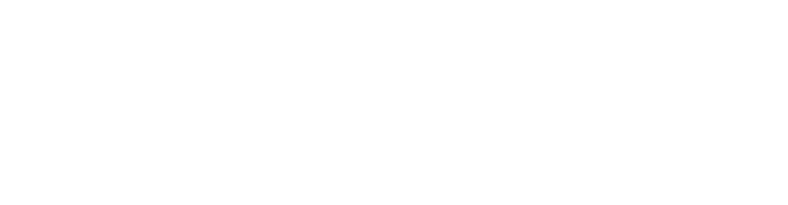
Ruschman had a successful nine-year career in the accounting and finance department at Duke Energy in Cincinnati, Ohio when she reached a personal crossroads – stay in that department or work more with the community. When a position managing the Duke Energy Foundation opened, Ruschman saw the perfect opportunity to continue working for the company, while also engaging with communities in Ohio and Kentucky.

During her four years leading the foundation, Ruschman realized that she needed formal education about the philanthropic sector.

“I discovered that in order to do my job to the best of my ability, I needed more tools and better strategies on giving.” Those thoughts, as well as conversations with her boss, led Ruschman to look into online programs in philanthropy and nonprofit management. “This school and its graduate program really stood out to me,” she explained.

Ruschman’s commitment to furthering her education to enhance her knowledge of philanthropy led to her nomination for and acceptance of the Cincinnati Business Courier’s ’Forty under 40’ award.

“I want to be in a career that gives back to the community, and the Lilly Family School of Philanthropy helps practitioners be innovators and leaders who create positive and lasting change.”

Through her time as the Duke Energy Foundation manager, her current role managing the company’s low-income energy efficiency programs in three states, and her service on several nonprofit boards in Cincinnati, Ruschman has worked with nonprofits in multiple different capacities.

“There are many ways for nonprofits to engage and partner with corporations,” she said. Ruschman encourages nonprofits to look into various corporate giving and volunteering programs at corporations in their respective communities.

Key to making a strong first impression is doing your homework.

  • Look into grants, scholarships, or in-kind product delivery that matches the nonprofit’s programs and goals with the corporation’s interests in the community.

“Research various ways that corporations directly give money to nonprofits,” Ruschman said.

  • Determine whether a company has an employee volunteer program.

“We have an internal program where we can see volunteering opportunities in the Greater Cincinnati area. Employees are then able to sign up for these various opportunities during their free time,” she said. “If I’m passionate about a cause, I can get a group of coworkers together and form a volunteer event at a local nonprofit. It’s a great way for employees to participate in established volunteering events or start their own,” she explained.

  • Research matching gift programs.

“Matching gift opportunities provide ways for nonprofits to leverage more dollars. The Duke Energy Foundation will match $1 for $1 up to $5,000 per year for each employee donation to any nonprofit organization,” she said.

  • Research and then ask corporations about other ways they and their employees can give back to the community.

“My company has a program that allows me to track my nonprofit board service or volunteer hours in an internal system where those hours equate to dollars. Then, I receive up to $2,000 a year for volunteer work that I can give back to any nonprofit,” she explained.

“Corporations in the U.S. have a large role in philanthropy. For example, Duke Energy works in seven states, and the Duke Energy Foundation annually provides over $30 million in charitable giving. The company strongly promotes community involvement and giving back,” she said.

“Giving back to local communities gives corporations as a whole a way to create a more positive workplace environment, boost employee engagement, garner positive media coverage, and attract and retain investors.”

Are company employees more likely to participate in philanthropic activities if the corporation promotes charitable giving? Genevieve Shaker, Ph.D., associate professor of philanthropic studies, researches and analyzes workplace-giving campaigns and has found that to be the case.

A research study conducted by Shaker, Dr. Robert Christensen, and Jonathan Bergdoll (2017) found that employer-matching programs encourage giving by employees.

“When employers matched donations, workers appeared more likely to give and to give more money to a cause. About eight percent more people said they donated when they worked for companies that offer this benefit, compared to employees of companies that don’t,” Shaker and colleagues wrote.

“It’s clear that employees at corporations want to give back in some capacity,” she added. “It’s important for nonprofits to ask about these opportunities with their donors, and for corporations to make clear with their employees that user-friendly matching gift opportunities exist,” she finished.

Ruschman agrees, and she encourages nonprofits to focus on mission when discussing matching gifts and other corporative giving and volunteering opportunities with companies.

“Nonprofits that are clear about their mission and their impact in the community are ones that stand out to us. They understand the needs of the community and have concrete solutions, and they partner with other nonprofits, community leaders, government, corporations, and volunteers to achieve their mission,” Ruschman explained.


Ruschman’s advice for nonprofits when working with a corporation 

  • It’s critical for nonprofits to research a corporation’s giving strategies before making contact in order to understand if they are eligible to secure funding. Make a list of the nonprofit’s community partners, philanthropic support, financials, and other volunteering opportunities.
  • Create a plan focused on a program or project that would match the corporation’s ideals and outcomes. The nonprofit should have two or three ideas on ways the corporation can support its work.
  • Meet with the corporation staff person via phone or in-person to discuss the potential relationship.

For Ruschman, her desire to give back has resulted in a career that merged her two passions of business and community service.

“Being a worker and citizen that cares about giving back plays an important role in the culture of a company. I am fortunate to work for a company that is committed to community and service. Personally, my career will always focus on helping people and giving back to better society,” she said.


Abby Rolland is communications project manager for the Indiana University Lilly Family School of Philanthropy at IUPUI and a current student in the master’s degree program.


Genevieve G. Shaker, Ph.D. is associate professor of philanthropic studies at the Indiana University Lilly Family School of Philanthropy at IUPUI. Her research focuses on fundraising, higher education advancement, philanthropy in the workplace, and philanthropy, public good, and faculty work. She is associate editor of the journal Philanthropy & Education.

Avoiding common costly retirement plan errors

By Sponsor Insight

By Kevin Kidwell, vice president of national tax-exempt sales, OneAmerica®

As an employer, it’s likely gratifying for you to look out for the welfare of your employees, particularly when it comes to helping them build a retirement.

Less enjoyable though may be the administration and compliance of your nonprofit’s retirement plan. As an employer, you have responsibility, however, to work to avoid the common errors and pitfalls that are discovered during Internal Revenue Service (IRS) and Department of Labor (DOL) audits.

Here are my suggestions to avoid them.

Common plan errors

First, ask yourself what you think costs more to remediate — a malpractice suit, or a correction to your retirement plan? Any guesses as to the average cost of correction?

You might be surprised that the costs are nearly identical.  In 2015, the average DOL audited fine was $424,000, and the average malpractice suit was $425,000. [1]  While both costs may seem astronomical, there are ways to prepare and reduce your risk of an audit-plan failure resulting in a fine.

There are two types of government audits that your plan may be exposed to, the first from the IRS and/or the second from the Department of Labor.

The IRS tends to focus on more tax-related issues, such as current deductions or delaying the recognition of income. Also within the IRS’s jurisdiction is regulation compliance particularly that pertain to plan qualifications, including nondiscrimination testing and all limits.

The IRS also looks at plan-document compliance. This includes consistency among all plan documents and operation, compliance with constantly changing plan eligibility regulations and administration.

More recently, the IRS has become concerned with improper investment valuations in cases where an asset is illiquid (so few retirement plan participants and a low volume of activity, and not easily converted into cash) or is not readily valued, which can cause an undervalued or overvalued benefit distribution.[2]

The labor department focus tends to be on audits, ensuring that a plan is maintained for the benefit of the employees. This office is concerned about things such as fees, eligibility and timing of contributions.

Even most plans not subject to the federal law that protects plan participants, known as The Employee Retirement Income Security Act of 1974 (or ERISA), are subject to state law, which contains language that mirrors ERISA and its “prudent expert” rule, which is the highest standard of care possible. It encompasses the standard fiduciary obligations, but in addition requires their application in a manner that an expert in the field would use. In presentations that I make about the “Prudent Expert Standard” and “ERISA” I typically include a lot of legal terms.

My suggestions:

  • Document the plan and processes
  • Follow the provisions of the plan and processes
  • Make sure the fees you are paying for services are reasonable
  • If you aren’t sure or have questions in all of those areas, find an experienced financial professional who can help you

In a nutshell: If Joe Smith has a retirement plan, the intent is to keep the maintenance fees reasonable and ensure that the beneficiary money is invested properly.

It’s worth the effort

Preparing for an audit can be a time-consuming process. You will likely be asked to provide copies of documents, procedures and disclosures without a lot of warning or much time to fulfill the request.  These may include:

  • Plan document and amendments
  • Investment process documentation/Investment Policy Statement
  • Board/committee meeting notes
  • Fee disclosures
  • Effective notice of eligibility/Annual meaningful notice
  • Loan/ Qualified Domestic Relations Order (QDRO) procedures
  • Current 5500 and audit report

A well-designed retirement plan can help to provide meaningful solutions for your employee base.  It also allows you to recruit talented employees and find ways to incentivize through retirement.

When I’ve done presentations on audits, whether tax-exempt or 401(k) audiences, I’ve seen people in the audience cringe. But our strong suggestion is to work with experienced professionals to minimize the potential for the audits ever happening. Planning, preparation and collaboration with retirement professionals can lead to a much less stressful situation down the road.


Kevin Kidwell is vice president of national tax-exempt sales and works to provide ideas, knowledge, and information – both technical and practical – to facilitate improved plan and participant outcomes.

Since joining OneAmerica in 1988, Kevin has held various positions within the Retirement Services division.

Beginning in 2000, his exclusive focus has been on healthcare and tax-exempt organizations.


Disclosures

OneAmerica® is the marketing name for the companies of OneAmerica.

The views and opinions expressed in this material are solely those of the author and do not necessarily reflect the views and opinions of any of the companies of OneAmerica. All information is believed to be from reliable sources; however, we make no representation as to its completeness or accuracy.

Products issued and underwritten by American United Life Insurance Company® (AUL), a OneAmerica company. Administrative and recordkeeping services provided by McCready and Keene, Inc. or OneAmerica Retirement Services LLC, companies of OneAmerica which are not broker/dealers or investment advisors.

Provided content is for overview and informational purposes only and is not intended and should not be relied upon as individualized tax, legal, fiduciary or investment advice.

Registered Representative of and securities offered through OneAmerica Securities, Inc., a Registered Investment Advisor, Member FINRA, SIPC.

Not affiliated with or endorsed by the Social Security Administration, the Centers for Medicare & Medicaid Services, or any governmental agency. 


[1] Source: What is the Bigger Liability-a 401(k) or a Malpractice Suit-By: Mike Haynes, Director, Retirement Plan Services

[2] Source: Audit survival tips for retirement plans By: Tom Swain, FSA, EA, FCA, MAAA, Bryan, Pendleton, Swats & McAllister, LLC (BPS&M)

The right conversations benefits donors and fundraisers

By Sponsor Insight

By Abby Rolland, Content Coordinator, and Andrea Pactor, Interim Director – Women’s Philanthropy Institute, The Lilly Family School of Philanthropy  

You’re a new professional in the nonprofit field. You’re just starting in your career, and you want to learn more.

You’re a seasoned fundraiser, but you continually find ways to sharpen your knowledge about new trends in the field.

As an alumna of the IU Lilly Family School of Philanthropy at IUPUI and a professional fundraiser for three years, Kyla McEntire, was looking for a way to connect with potential donors and educate a broader audience about charitable giving. In her role as the fund manager at The Oaks Academy, an independent school that provides a classical education to a diverse student population, McEntire engages with donors, alumni, and corporate sponsors, supports events and leads stewardship for the development team.

She developed these skills during her time at the Lilly Family School of Philanthropy, when she served as a graduate assistant with the Eli Lilly and Company Foundation and learned about the role of philanthropy from the grantmaker’s perspective.

“Through my experience there, I developed a passion for opening up lines of communication between nonprofits and companies that support them.”

Her commitment to communication, education, and collaboration was recently illustrated with her work to create a conversation space for both nonprofit professionals and everyday givers wanting to engage and learn from individuals working in the field.

“My colleague Sara Fichtner, and I were inspired by a Women’s Philanthropy Institute event last fall, which featured women speakers, and attracted both women and men. We wanted to establish an event series where women would lead the conversations, but encourage both women and men to attend,” McEntire said.

Buoyed by this fall event, McEntire and her colleagues designed a series for the spring and summer that would focus on what philanthropy is and what it can look like.

“I’ve been working to develop opportunities for our female donor base at The Oaks, and an event series seemed like a strong starting point.”

“We used the examples of volunteering with the Junior League or participating in a giving circle, then expanded to show statistics on women in philanthropy nation-wide,” she said. The event included research from the Women’s Philanthropy Institute to provide a broad overview of the power of women in philanthropy today.

“Our second and most recent event “Give Like the Pros Do” was a deeper dive into individual giving for the everyday giver. We know those who are middle class and/or don’t have financial planners or wealth advisors might not have access to the tips and techniques utilized by high-net worth donors. We wanted to remove that barrier.

“The Oaks was built on meaningful gifts of all sizes – you can give intentionally and use tax strategy to leverage your impact, even if you aren’t writing large checks.

“We also marketed the event towards women because as was highlighted by our speakers at the previous events women aren’t always at the table making philanthropic decisions. Hopefully, we’re empowering women to make informed and intentional philanthropic decisions and advocate for giving to the causes they care about.

“Both of the events received positive feedback from those who attended and we’re looking forward to the final event of the three-part series, which will focus on family philanthropy, as well as how donors from The Oaks prioritize their own philanthropy and how they make philanthropic decisions with limited time and resources. We hope to continue the event series with a different theme in 2019,” McEntire explained.

**Note: The third event takes place on Oct. 25 at The Oaks Academy, Middle School at 4:30 p.m. and is open to the public. Register here to attend.

For McEntire these events mattered for both nonprofit professionals and the community as a whole because they stress the importance of creating and sustaining positive relationships, and showed how fundraisers can encourage current and potential donors to continue learning.

She also encourages individuals to look beyond the event itself. “Events aren’t always the answer or a good idea. To evaluate the success of the event, you have to look at the relationship capital it creates with potential donors, rather than the short-term financial cost.

McEntire also takes to heart the idea that fundraising professionals should not diminish their role as relationship builders

After offering this series, here are some suggestions that McEntire offers fundraisers and other nonprofit professionals when designing these types of events:

  • Hosting events adds value to the lives of those attending, and acts as a “safe” entry point to the organization.

“If you love what you hear, and want to get plugged in with us, great! If not, we’re operating on the idea of “philanthropy first,” so we hope you leave with important takeaways no matter what.”

  • Bigger events aren’t always better events.

“These conversation events have been intimate and they allow me and my team to connect on a deeper level with those who attend and also give us better opportunities for follow-up.”

  • Fundraisers can avoid falling into the trap of assumptions.

“We assume that everyone thinks about giving as much as we do, and that’s not the case. As professionals, we should always be interested in learning more about where our donors are coming from, and events help foster that understanding.”

  • Before and after the event, encourage donors to bring up their philanthropic priorities in meetings with financial advisors.

“If their advisor explains that they (the client) have a certain amount to give and asks what organization they want to support, events can keep that organization at the forefront of their mind.”

“As Dr. Tim Seiler at the school says, this profession is one that we should be proud of. When we raise support for The Oaks, it’s an invitation to potential or current donors to invest in something transformative and they know we take their investment seriously,” McEntire said.


Abby Rolland is content coordinator for the Indiana University Lilly Family School of Philanthropy at IUPUI and a current student in the master’s degree program.  

Andrea Pactor, M.A. ’03, is interim director of the Women’s Philanthropy Institute at the Lilly Family School of Philanthropy.


[content_box box_type=”normal”]

To start an event series, McEntire encourages fundraisers to go through these steps.

  • Create a strong proposal for the series, with a thoughtful implementation strategy.
  • Advocate for internal buy-in.
  • Utilize current relationships to recruit expert speakers.
  • Use the event to grow and strengthen relationships through those who: attend, volunteer to speak, and host the event.

[/content_box]