Tag

nonprofit

Why a Strategic Plan Is Your Most Underrated Fundraising Tool

By Sponsor Insight

By: Kristen Schunk Moreland, President and Founder of Schunk Moreland Strategies

Many nonprofit organizations do not think of their strategic plan as a fundraising tool. It is often viewed as something required by the board, something funders may request, or something that helps guide internal priorities. Once complete, it may be referenced from time to time, but it is rarely fully activated in a way that meaningfully shapes how the organization raises resources.

At the same time, these same organizations are working diligently to secure funding through grant writing, donor engagement, and campaign development, all while trying to clearly communicate why their work matters and why it deserves investment. What is often overlooked is that these two efforts are not separate. In fact, when used effectively, a strategic plan can become one of the most powerful tools an organization has to support its fundraising efforts.

This became clear to me early in my career. In 2011, I co-founded a nonprofit organization that opened after several years of planning. I remember sitting in a funder’s office with my co-founders, confident in our mission and deeply committed to the work, only to be asked a simple but revealing question: could we share our strategic plan? At the time, we did not have one. We were encouraged to return once we had clarified our priorities and could more effectively articulate our direction. That experience was a turning point, highlighting that while passion is essential, it is not sufficient on its own.

Fundraising in the nonprofit sector is, at its core, about confidence. Funders are not only evaluating the importance of your mission; they are also assessing your organization’s ability to deliver on that mission. Whether explicitly or implicitly, they are asking whether an investment will lead to meaningful and measurable impact. A strong strategic plan answers that question before it is ever asked. It demonstrates that your organization understands the environment in which it operates, has identified clear priorities, and is aligned in its approach to achieving them.

Without that level of clarity, fundraising can become reactive. Organizations may find themselves adjusting their message depending on the audience, pursuing opportunities that do not fully align with their core priorities, and describing their work in ways that feel broad rather than focused. By contrast, a well-defined strategy shifts the dynamic. It enables organizations to move beyond generalized appeals for support and instead invite funders to invest in a clearly articulated vision for impact, one that is tied to specific initiatives, outcomes, and measurable progress.

This clarity also addresses a critical, and often unspoken, concern for funders: risk. Every grant, gift, or sponsorship represents a decision about where to place trust. An organization with a clear and actionable strategic plan signals stability, alignment, and thoughtful leadership. It reassures funders that the organization is not simply responding to immediate needs, but is working toward a broader, coordinated vision with intention and discipline. In a competitive funding environment, that distinction can be decisive.

A strong strategic plan also creates the conditions for more meaningful and sustained support. Funders who are willing to make larger or multi-year commitments are not focused solely on immediate needs; they are interested in understanding where an organization is headed over time and how their investment contributes to long-term outcomes. A strategic plan provides this context, connecting present-day funding to future impact and offering a framework that extends beyond a single grant cycle.

Equally important is the role a strategic plan plays in strengthening internal alignment. When board members, staff, and leadership are unified around clear priorities, that alignment becomes evident externally. Messaging becomes more consistent, the case for support becomes more compelling, and the organization presents itself with greater clarity and confidence. Without that alignment, even the most compelling mission can appear fragmented or inconsistent.

Despite this, many nonprofits invest significant time and energy into developing a strategic plan only to treat it as a static document rather than a living tool. It becomes something that exists, rather than something that actively informs how the organization communicates, prioritizes, and engages with funders and partners. When this happens, a significant opportunity is lost. The value of a strategic plan lies not simply in its creation, but in its application. It should be embedded in donor conversations, reflected in grant proposals, and integrated into how the organization consistently articulates its work and its impact.

At its best, a strategic plan aligns mission, priorities, and funding strategy into a cohesive and mutually reinforcing approach. When this alignment is present, fundraising begins to evolve. It becomes less about repeatedly making requests for support and more about inviting others to participate in a clearly defined and thoughtfully led vision. Organizations shift from reacting to opportunities to attracting the right partners who are aligned with their direction.

If a strategic plan is not actively guiding fundraising efforts, it is not reaching its full potential. When it is fully integrated into how an organization leads, communicates, and makes decisions, it becomes more than a guiding document. It becomes the most important fundraising tool in your toolkit.

From Data to Impact: Best Practices for Nonprofit Storytelling That Inspires Action

By Sponsor Insight

Lesley Gordon, VP of Public Relations, Black Onyx Management

In today’s philanthropic landscape, strong programs alone are not enough. Nonprofits must also clearly communicate the value of their work to donors, partners, and the communities they serve. Effective storytelling is not simply marketing. It is a strategic function that connects mission, outcomes, and funding in a way that motivates people to act.

Here are three best practices that help organizations strengthen their storytelling and increase engagement with current and future supporters.

Know Your Program and Collect the Right Data

Every compelling story begins with a clear understanding of the work itself. Organizations that tell the most powerful stories are those that have invested in documenting their programs and measuring results consistently.

This means:

  • Establishing clear program goals and intended outcomes
  • Tracking participation, outputs, and outcomes regularly
  • Collecting both quantitative and qualitative data
  • Capturing stories directly from participants and stakeholders

Good storytelling depends on credible, organized information. When data is incomplete or inconsistent, organizations often struggle to demonstrate progress or communicate impact convincingly. On the other hand, strong data collection allows nonprofit leaders to move beyond anecdotes and show measurable change.

Just as important is ensuring that staff understand what data matters and why. When program teams and leadership share a common framework for documenting results, storytelling becomes far more natural and authentic.

Translate Data Into Stories Across Platforms and Mediums

Collecting data is only the first step. The next challenge is translating that information into messages that resonate with different audiences.

This requires intentional planning and, in many cases, specialized expertise. Effective storytelling teams know how to adapt the same core message for multiple platforms, including:

  • Printed materials and annual reports
  • Digital newsletters and websites
  • Social media campaigns
  • Grant reports and funder updates
  • Presentations and talking points for community meetings

Each platform serves a different purpose and audience. A donor reading a newsletter may want a concise impact summary, while a social media audience responds best to visuals and brief narratives. A funder may need detailed metrics paired with a clear explanation of long-term outcomes.

Organizations that invest in communications strategy and skilled storytellers are better able to maintain consistency while tailoring their message appropriately. This ensures that every interaction reinforces the organization’s mission and credibility.

Align Your Story With Funders and Future Supporters

Strong storytelling is not only about sharing what happened. It is about connecting outcomes to what donors care about and showing how continued investment will make a difference.

When developing stories and communications, organizations should consider:

  • Is this story relevant to our funders’ priorities?
  • Is the information clear and easy to understand?
  • Does the message highlight outcomes, not just activities?
  • Is there a clear and compelling call to action?

Donors and institutional funders want to understand how their contributions lead to measurable progress. Stories that clearly connect need, action, and impact help supporters see their role in the solution.

Just as important, storytelling should look forward as well as backward. Effective communications demonstrate not only what has been accomplished, but also what is possible with continued support.

Bringing It All Together

At its best, nonprofit storytelling is a coordinated effort that connects program design, data collection, communications strategy, and fundraising goals. Organizations that treat storytelling as a core function, rather than an afterthought, are better positioned to build trust, strengthen partnerships, and sustain their work overtime.

For nonprofits that are looking to strengthen their approach, Black Onyx Management serves as a resource at every stage of this process. From designing evaluation frameworks and improving data collection to developing communications strategies and translating impact into compelling narratives, Black Onyx Management helps organizations ensure their stories are clear, credible, and aligned with funding opportunities.

Thoughtful storytelling is not simply about telling a story well. It is about making impact visible and giving people a meaningful way to be part of the work.

Charitable Advisors’ Quarter-Century of Service

By Feature

As Central Indiana’s nonprofit sector reflects on the close of a memorable 2025, Charitable Advisors is marking a milestone of its own: 25 years of supporting, informing and strengthening the region’s nonprofit community. The anniversary not only celebrates progress but underscores the ongoing need for reliable information, shared resources, and strong sector infrastructure.

Founded in 2000, Charitable Advisors has focused on building nonprofit capacity across Central Indiana. This year’s initiatives — spanning workforce development, leadership transitions and community storytelling — highlight the organization’s commitment to helping nonprofits navigate evolving challenges. Read more about the history of Charitable Advisors.

Strengthening the Workforce

June of 2025 brought the release of the eighth Central Indiana Nonprofit Salary & Benefits Survey Report. With participation from more than 300 nonprofit organizations, the report provides detailed compensation data for 26 common roles, giving leaders essential insight for hiring and retention. Free access is made possible through sponsors: Barnes Dennig CPA and Advisors, the National Bank of Indianapolis, NFP, Charitable Allies, and Charitable Advisors.

Charitable Advisors also expanded recruitment tools for advertisers on the job board. The “Social Media Boost and Featured Job” option increases visibility for open positions, while the free applicant tracking system, available to all job advertisers, helps streamline candidate management.

The statewide “Work for a Nonprofit. Make a Difference.” campaign ran twice in 2025, featuring more than 50 nonprofits. Video profiles highlighted career pathways and the sector’s community impact. A November partnership with Dean Dorton expanded the campaign’s reach and funded three $500 awards. See the October 2025 participant videos here.

Why This Matters: Indiana’s Nonprofit Landscape

Nonprofits remain a vital force in Indiana’s economy and civic life. According to the Indiana Nonprofits Project, organizations in the sector employ roughly 10% of the state’s paid workforce. Tens of thousands of nonprofits statewide — including public charities, foundations and civic groups — underscore the need for communications, connection, accessible data, recruitment tools and leadership resources. Rising costs, shifting funding and changing community needs continue to place pressure on organizations large and small.

CEO Searches and a New Consultant Professional Network

As we wrap up 2025, Charitable Advisors is stepping into our 121st and 122nd executive searches for ED/CEO roles, helping small and midsize nonprofits access cost-effective succession preparation and search services. More than one-third of these searches support retiring executives, a trend that continues across the region.

The Indiana Nonprofit Consultant Community has taken shape this year, growing from a small, local peer group into a statewide network of about 290 consultants. Its active ListServ connects nonprofits to advisors and circulates both formal and informal RFPs, broadening access to specialized expertise. Consultants can be added to the list by contacting Bryan@CharitableAdvisors.com.

Sharing Nonprofit Needs and Successes

Charitable Advisors continued amplifying organizational needs and stories through its monthly Wants & Wins e-publication, curated by Director of Community and Content Chelsea Ohlemiller. This resource shares donations, success stories and surplus-matching opportunities, offering a practical tool for collaboration and shared problem-solving.

Our team also welcomed Morgan Riley, who now supports our publications, nonprofit outreach and administrative responsibilities. Riley’s role follows the transition of longtime team member Julie Struble to a new career opportunity.

Looking Ahead to 2026

Charitable Advisors’ 25th anniversary serves as both a celebration and a recommitment. The weekly Not-for-profit News will continue every Tuesday at noon, delivering timely updates and resources to nonprofit leaders. The “Work for a Nonprofit. Make a Difference.” campaign will return in May, and new virtual and in-person opportunities are planned to help professionals form connections, share ideas and strengthen networks.

United Way’s Workforce Pathways Accelerator Initiative leads to industry credentials, jobs, better wages

By Sponsor Insight

Five local nonprofits are offering the initiative in its second year

Submitted By United Way of Central Indiana

Careers that require credentials – a commercial driver’s license or health care certification, for example – can earn people livable wages that help their families thrive.

But barriers stand in the way.

First, there’s the price tag. Earning a commercial driver’s license can cost at least $5,000. Certified medical administrative assistant: $4,900.

Then, there’s the time commitment: often months of training.

On top of that, families must find – and pay for – child care. They may need a laptop or equipment for training that they can’t afford. They may have an unreliable car or lack transportation to get to and from training.

Now in its second year, United Way of Central Indiana’s Workforce Pathways Accelerator Initiative is designed to be an “on ramp” for people seeking industry-recognized credentials. The initiative eliminates barriers and helps participants earn certifications and land jobs that pay livable wages – on a quick timeline.

Beginning in July 2024, Dress for Success Indianapolis and Indianapolis Urban League piloted the initiative in its first year. United Way funding covered the cost of participants’ training and certification testing, helped eliminate barriers and allowed the nonprofits to hire a coach to guide them through training and employment – and beyond.

In that first year, the initiative served more people than United Way and its partners anticipated: 76 enrolled – and 41 earned credentials.

In July 2025, United Way expanded this work: Fathers and Families Center, Public Advocates in Community Re-Entry (PACE) and Indiana Plan joined Dress for Success Indianapolis and Indianapolis Urban League in offering the initiative.

What is the impact? In the first year, Dress for Success Indianapolis helped women earn Certified Medical Administrative Assistant (CMAA) credentials, in a field where jobs are essential and in-demand.

Karrise was one of the program’s graduates. After a stroke in 2016, Karrise could no longer work the physically demanding jobs she one held. Now with her CMAA, Karrise can see herself in a health care job that is meaningful, where she can stay for the long term and work up the career ladder.

“Our work doesn’t stop. There is a huge need for this type of programming,” said Bernadette Monk, United Way’s economic mobility director. “Residents and neighbors are interested in short-term credentials, because it gives them hope. In that quick amount of time, they’re able to see their income increase.”

Read – and watch – more about Karrise’s journey and the Workforce Pathways Accelerator Initiative’s first year on United Way’s website: https://www.uwci.org/blog/2025-dress-for-success-workforce-pathways-initiative

The AI Questions Foundations Will Ask In 2026 (And Why That’s Good News)

By Sponsor Insight

By Lauren Bickham, Assistant Vice President and Fund Director at Black Onyx Management

Artificial intelligence isn’t just transforming how nonprofits operate—it’s expanding their potential. Nearly two-thirds of nonprofits now use AI—organizations of all sizes find it accessible and are identifying practical ways to incorporate it into their work. Additionally, philanthropy is making unprecedented investments to ensure AI’s transformative power benefits the organizations tackling society’s most pressing issues.

A $500 MILLION BET ON AI FOR IMPACT

In October, ten of America’s most influential foundations—including MacArthur, Ford, Omidyar Network, Mellon, and Packard—announced Humanity AI, a $500 million initiative dedicated to ensuring AI delivers for people and communities. The coalition will begin aligned grantmaking this fall, with pooled grants starting in 2026.

This represents a fundamental shift: philanthropy is moving from cautious observation to active investment in AI as a force multiplier for social impact.

HOW FOUNDATIONS ARE SUPPORTING AI ADOPTION

The sector is recognizing that nonprofits shouldn’t navigate AI alone. Yet a significant opportunity exists: while capacity building is common in philanthropy, a 2025 study by the Center for Effective Philanthropy found that nearly 90% of foundations don’t yet offer AI implementation support to grantees. This gap is changing rapidly as leading foundations demonstrate what’s possible:

Capacity Building Grants: KPMG Foundation committed $6 million to help nonprofits integrate AI into operations. GitLab Foundation offers $250,000 grants plus six months of technical support from OpenAI engineers, API credits, and peer learning networks.

Skills Development: The AI for Nonprofits Sprint aims to bring 100,000 nonprofit staff to baseline AI literacy in 2026. Microsoft, OpenAI, and others have launched free training specifically designed for nonprofit professionals.

Collaborative Funding: Foundations increasingly favor multi-partner proposals that bring together nonprofits, universities, and tech organizations—sharing both resources and expertise.

Infrastructure Investment: The National Science Foundation is investing over $700 million annually in AI research, with increasing focus on AI ethics, digital equity, and applications for social good.

WHAT FOUNDATIONS WANT TO SUPPORT

When foundations evaluate AI-inclusive proposals in 2026, they’ll be looking for organizations that demonstrate:

  1. Mission Alignment: How does AI amplify your impact rather than simply automate tasks?
  2. Responsible Implementation: What safeguards ensure AI enhances rather than replaces human judgment and relationships?
  3. Equity Focus: How does your approach address bias, ensure transparency, and promote digital equity?
  4. Sustainability: Who maintains and improves the AI system beyond the grant period?
  5. Data Stewardship: What governance protects the communities you serve?
  6. Learning Orientation: How will you share what works (and what doesn’t) with the sector?

These aren’t barriers—they’re guideposts for maximizing AI’s positive impact while minimizing potential harms.

THREE WAYS TO EXPLORE AI’S POTENTIAL FOR YOUR MISSION

You don’t need technical expertise or a big budget to start exploring AI for your organization. Here’s how to get started:

  1. FOCUS ON PROBLEMS, NOT TOOLS
    Where does your staff spend time on repetitive tasks instead of high-value work? Where could personalization improve outcomes but seems impossible at scale? What data could inform decisions but remains unused? These questions identify AI’s most valuable applications for your organization.
  2. TAP INTO FREE SUPPORT
    The sector is investing heavily in making AI accessible. Free training through Microsoft Learn’s AI Skills for Nonprofits, OpenAI Academy, and IBM SkillsBuild can boost your team’s confidence. Many offer certificates that demonstrate growing expertise.
  3. JOIN LEARNING COMMUNITIES
    The Technology Association of Grantmakers is launching learning exchanges for organizations developing AI strategies. Fast Forward and other intermediaries connect AI-powered nonprofits for peer learning. You don’t have to figure this out alone.

THE OPPORTUNITY AHEAD

Philanthropy is making a bold bet: that AI, when used responsibly and equitably, can help nonprofits achieve breakthrough impact on society’s most difficult challenges. With $500 million in new funding starting in 2026, along with comprehensive training and technical support, the sector is creating an unprecedented opportunity for mission-driven organizations.

The question isn’t whether AI will change social impact—it’s how your organization can help shape that change in ways that boost your mission and benefit your community.

PARTNERING FOR AI-ENHANCED IMPACT

Black Onyx Management assists nonprofits in exploring and clearly articulating how AI can enhance their impact. Whether you’re thinking about your first AI implementation or creating a detailed strategy, we combine philanthropic insight with technical knowledge to support you:

  • Discover high-value AI applications aligned with your mission and capacity
  • Develop compelling narratives that show foundations how AI amplifies your impact
  • Design responsible implementation frameworks that protect the communities you serve
  • Build proposals that position your organization for AI-inclusive funding
  • Create strategic plans that integrate AI thoughtfully into your theory of change

The foundations investing in AI aren’t just funding technology—they’re investing in organizations ready to reimagine what’s possible. We help you become one of them.

Contact Black Onyx Management to explore how AI can expand your impact and how we can help you communicate that vision to funders. Visit blackonyxmanagement.com or contact lauren@blackonyxmanagement.com.

2025 Central Indiana Nonprofit Salary Report Now Available

By Feature

Nonprofit leaders across Central Indiana now have access to a vital new tool: the 2025 Central Indiana Nonprofit Salary Report, published by Charitable Advisors and available free of charge.

This eighth edition of the survey compiles salary and benefits data for 26 nonprofit positions, offering organizations critical benchmarks to guide compensation decisions. With responses from 319 nonprofits—more than double the sample size of typical surveys—the report delivers a comprehensive view of the region’s nonprofit workforce.

First launched in 2010, the salary report was created to fill a longstanding gap: before then, no summary of nonprofit wages and benefits existed for Central Indiana. Today, the report is considered a cornerstone resource for boards and executives seeking to balance limited budgets with the need to recruit and retain qualified staff.

“We regularly hear about the value this information provides to nonprofits to benchmark pay rates for specific roles and to consider changes to benefit offerings,” said Bryan Orander, president of Charitable Advisors. “Our hope is that these survey results will help organizations of all sizes attract and keep the talent they need to achieve their missions.”

The 2025 edition highlights wage trends across service areas and budget sizes. For example, average salaries for executive directors range from about $67,000 at small nonprofits to more than $250,000 at the largest organizations. The report also examines benefits such as retirement contributions, additional paid time off, and professional development opportunities—factors increasingly important in today’s competitive talent market.

Beyond compensation figures, the survey provides guidance on applying results to organizational strategy. It encourages boards to consider long-term pay philosophies, monitor executive compensation, and evaluate non-financial benefits like flexible schedules and training.

This year’s report was made possible through the support of The National Bank of Indianapolis, NFP, Barnes Dennig, and Charitable Allies. Their sponsorship ensures that the report remains free to nonprofits across the region.

The full 2025 Central Indiana Nonprofit Salary Report is available for download at CharitableAdvisors.com under the Resources tab > Salary Survey.

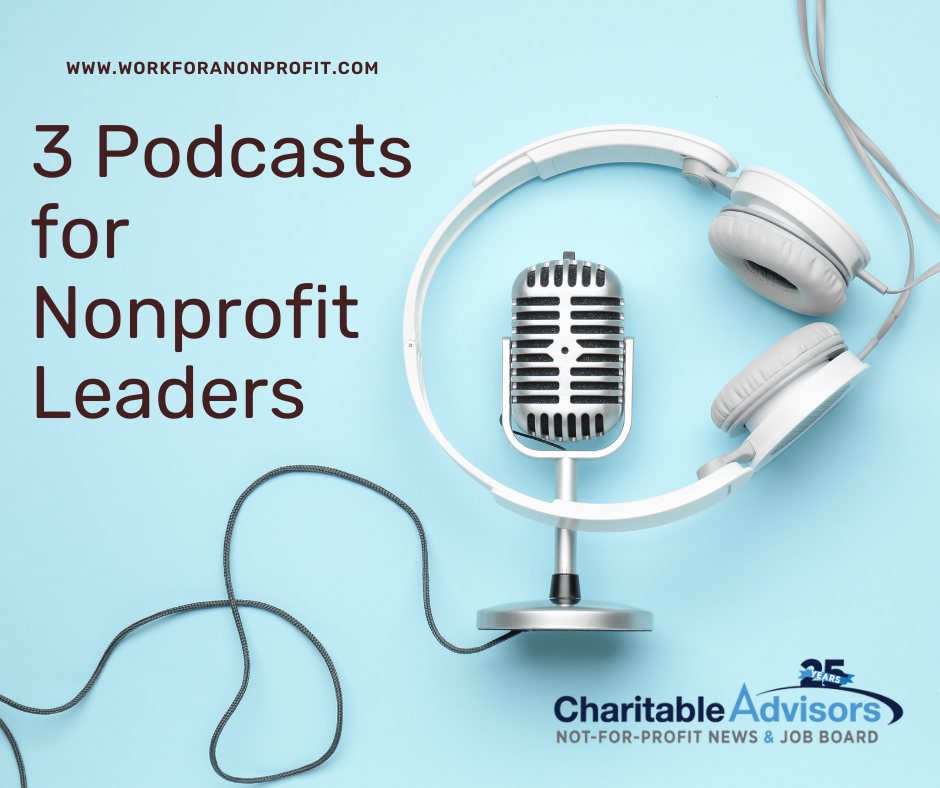
3 Podcasts for Nonprofit Leaders: September Picks for Motivation and Advocacy

By Feature

Charitable Advisors

As nonprofit leaders navigate the complexities of the sector, staying informed and inspired is crucial. With the arrival of a new month, several podcasts have emerged as valuable resources for motivation, advocacy, and organizational growth. Here are three standout podcasts that are currently popular and relevant for nonprofit professionals.

  1. Inspired Nonprofit Leadership
    Hosted by Sarah Olivieri, Inspired Nonprofit Leadership offers a blend of strategic insights and motivational content tailored for nonprofit executives and board members. The podcast delves into topics such as organizational health, leadership development, and effective communication. Recent episodes have featured discussions on building organizational courage and fostering inclusive leadership practices. With a 5.0 rating on Apple Podcasts, it stands out for its practical advice and empowering messages.
    Listen: https://podcasts.apple.com/us/podcast/inspired-nonprofit-leadership/id1446218521
  2. Nonprofit Leadership Podcast
    Dr. Rob Harter’s Nonprofit Leadership Podcast provides in-depth conversations with nonprofit leaders across various sectors. The episodes explore challenges and successes in areas like fundraising, community engagement, and strategic planning. Listeners gain insights into real-world applications of leadership theories and practices. The podcast’s consistent release schedule and diverse guest lineup make it a valuable resource for those seeking to enhance their leadership skills.
    Listen: https://podcasts.apple.com/us/podcast/nonprofit-leadership-podcast/id1102505312
  3. Your Path to Nonprofit Leadership
    Your Path to Nonprofit Leadership provides a platform for emerging and established leaders to explore career development and organizational growth. Recent episodes like “5 Essential Topics Every Nonprofit Leader Should Know” and “The Strategic Leap: How Nonprofit Leaders Can Scale with Intention” offer guidance on scaling organizations and navigating leadership challenges. Hosted by Dr. Patton McDowell, this podcast is tailored for those seeking to enhance their leadership journey and organizational impact.
    Listen: https://podcasts.apple.com/us/podcast/your-path-to-nonprofit-leadership/id1487854841

As we enter a new month, these podcasts provide nonprofit leaders with the tools, insights, and inspiration needed to navigate the evolving landscape of the sector. Whether seeking to enhance leadership capabilities, develop strategic plans, or stay informed on industry trends, these podcasts offer valuable content to support nonprofit missions and objectives.

What are your favorite podcasts for nonprofit leaders and staff? Email your recommendations to chelsea@charitableadvisors.com

Beyond the Basics: How Algorithm-Aligned Storytelling Can Transform Your Nonprofit’s Social Media Impact

By Feature

Charitable Advisors

In the crowded digital space, where every scroll competes with breaking news, celebrity drama, and viral trends, nonprofits face a daunting challenge: how do we rise above the noise and truly connect with people who care?

The answer isn’t just posting more frequently or sharing an occasional success story. The real game-changer is intentional, algorithm-aligned storytelling—a powerful blend of emotional narrative, platform-specific strategy, and data-driven creativity that cuts through the noise and gets seen, shared, and supported.

If your organization is still treating social media as an afterthought or a basic update channel, it’s time to evolve.

Here’s how to elevate your impact, visibility, and donor engagement by using the algorithm to your advantage—and telling stories that can’t be ignored.

Why Storytelling + Algorithm Strategy = Visibility and Growth

At its core, social media is about connection. And nothing connects like a story. Research from Stanford shows that people are 22 times more likely to remember information when it’s embedded in a story versus a standalone fact. But even the best story will fall flat if no one sees it.

That’s where understanding algorithms comes in.

Each platform—Instagram, TikTok, LinkedIn, Facebook, YouTube—prioritizes content differently. And yet, they all reward the same behaviors:

  • High engagement (likes, comments, shares, saves)
  • Longer watch or scroll times
  • Content that encourages meaningful interaction

In short: the better your story, the more time people spend with it—and the more the algorithm rewards you.

Key Action #1: Create “Story Arcs” Over Time, Not One-Off Posts

Most nonprofits post a single photo with a caption about someone they’ve helped. That’s fine—but not transformational.

Instead, think like a content creator or documentary producer: break your impact into episodic content. Use story arcs to take your audience on a journey.

How to implement:

  • Introduce a beneficiary, community, or issue in Part 1.
  • Share the challenges in Part 2.
  • Show the transformation or impact in Part 3.
  • End with a call to action: donate, share, or join your cause.

🎯 Pro Tip: Instagram Reels and TikToks that follow 3–5 part storytelling arcs generate 35–70% more engagement than standalone posts, according to data from Hootsuite (2024).

Key Action #2: Use “Relatable Anchors” in Your Storytelling

Your story might be about advocating for school transportation in Indianapolis or a housing crisis impacting the entire state. But the algorithm—and your audience—need a reason to stop scrolling.

Use relatable anchors—universal emotions or situations that make people feel seen.

Example:

  • Start a post with “Imagine not being able to send your child to school because there’s no bus service.”
  • Then reveal the location, the community, the work you’re doing.

This human-first framing invites curiosity and relatability, which drives higher engagement and time-on-post—two critical algorithm signals.

Key Action #3: Lean Into Native Video and Closed Captioning

Video is king—but only if done right.

Native video (uploaded directly to platforms) outperforms shared YouTube links by 2x to 3x, according to Sprout Social. Videos under 60 seconds with auto-captioning and hook lines in the first 3 seconds perform best.

Make it work:

  • Start videos with a surprising stat or emotional question.
  • Keep captions on for silent scrolling (which accounts for 85% of Facebook video views).
  • Add direct CTAs (“Double-tap if this made you feel something” or “Comment with ❤️ if you agree”).

Key Action #4: Hack the Algorithm with “Meaningful Engagement” Prompts

The 2024 updates across Instagram and Facebook favor “meaningful interactions” over passive likes. This includes DMs, comments, shares, and saves.

Post ideas that entice interaction:

  • “What would you do in this situation?”
  • “Tag someone who inspires you to give back.”
  • “Save this post to read later.”

📊 Meta’s data shows that content generating comments and saves gets 4x more reach than content with likes alone.

Key Action #5: Turn Donors and Volunteers into Micro-Influencers

Your nonprofit likely has dozens—if not hundreds—of supporters who would be thrilled to help you grow, but they don’t know how.

Action Step: Build a “digital advocacy kit” with branded Canva templates, captions, and hashtags. Encourage monthly donors, board members, and volunteers to post about why they support your cause.

Even accounts with 300–1,000 followers can have big impact when posts are authentic and timely. This is called networked visibility—and it costs you nothing.

🔎 According to Edelman’s Trust Barometer, people trust friends and “people like them” more than celebrities or brands—making peer-driven content 2.5x more effective at converting interest into action.

Key Action #6: Use Data to Drive and Adjust Your Content Strategy

Don’t just post and hope. Use analytics to refine your approach weekly.

Look for:

  • Retention time on Reels or video posts
  • Which posts get shared or saved most (these indicate high value)
  • Optimal posting times (often early morning or post-dinner)

Pro Tool Suggestions:

  • Meta Business Suite Insights (free)
  • Later or Buffer for scheduling + performance tracking
  • TikTok Analytics for engagement drop-off points

Set monthly KPIs for impressions, engagement, and CTR to donation or newsletter sign-ups. Treat social media as a living lab—not a billboard.

The New Era of Impact: Be Seen to Be Supported

Visibility isn’t vanity—it’s viability. If people don’t see your work, they can’t support it. If they don’t feel your mission through your stories, they won’t give, volunteer, or share.

When you harness the power of storytelling plus a platform-aware strategy, you go beyond just broadcasting. You build community, drive action, and increase impact.

So don’t just update. Move. Stir. Connect. Align with what the algorithm wants—and what the world needs to hear from you.

Your story matters. It deserves to be seen.

‘Get on Board’ Returns June 23 to Connect Community Leaders With Local Nonprofits

By Feature

INDIANAPOLIS — Leadership Indianapolis will host its annual Get on Board event on Monday, June 23, at Newfields, bringing together more than 130 nonprofit organizations and hundreds of community members looking to make a difference.

Presented by AES Indiana, Get on Board serves as a gateway for individuals to explore nonprofit leadership, committee service, and volunteer opportunities across the city. From arts and education to housing, health care and environmental advocacy, participating organizations span a wide range of missions.

The event offers a rare opportunity: a one-stop setting where people from all backgrounds can connect directly with nonprofits and discover how their time, skills and experiences can support meaningful change.

A Pivotal Time for Nonprofits

As the nonprofit sector continues to recover from pandemic-related challenges, many organizations are facing renewed uncertainty in funding and programming. Community engagement—including board service and volunteer leadership—is critical to navigating these disruptions.

“Nonprofits rely on dedicated community members to fulfill their missions,” said Beth Perdue Outland, vice president of Leadership Indianapolis. “Get on Board helps many individuals take that first step toward engagement, whether through governance, committee work or hands-on volunteering.”

Building Boards That Reflect the Community

A growing body of research highlights the importance—and ongoing challenges—of diversity in nonprofit leadership. According to BoardSource’s 2021 Leading with Intent report, just 29% of board chairs felt their boards reflected the communities they serve. Despite incremental progress, only 10% of board members surveyed identified as Black, and just 5% identified as Hispanic or Latino. Age diversity also lags, with more than two-thirds of board members over the age of 45.

Leadership Indianapolis hopes Get on Board makes it easier for more people to participate in our city’s civic life.

“Diverse leadership is essential for nonprofits to truly understand and serve their communities,” said Rebecca Hutton, president and CEO of Leadership Indianapolis. “We want every attendee to feel welcomed and encouraged to step into these roles.”

The Value of Varied Experience

Nonprofit boards require more than passion for a cause—they need a breadth of expertise to function effectively. Legal, financial, communications and technology professionals all bring critical value, even if their day jobs don’t directly align with a nonprofit’s mission.

“While a youth services organization might need mentors, it also needs accountants to manage its budget and marketing experts to help tell its story,” said Hutton. “There’s a place for everyone to contribute meaningfully.”

Younger professionals, often underrepresented in boardrooms, bring their own assets: digital fluency, wide social networks, and fresh perspectives. Savvy organizations are taking note.

Expanded Format for 2025

The 2025 Get on Board will be the largest to date, featuring an expanded venue footprint at Newfields and extended hours from 4 to 6:30 p.m. Admission is free with registration and includes same-day access to the museum and gardens.

Attendees can expect an informal, welcoming atmosphere where organizations are eager to share their missions and discuss how individuals can get involved.

Get on Board creates meaningful connections between talented individuals and organizations that need their voices and skills,” Outland said.

For Patrick Jessee, CEO of Enable, the event marked a turning point. “After moving back to Indiana from Washington, D.C., I wanted to reconnect with the community,” he said. “At Get on Board, I found a mission that meant a lot to me personally.” That led to a board position with the Boys & Girls Clubs of Indianapolis, where Jessee also went on to serve as board president.”

How to Participate

Get on Board will take place Monday, June 23, from 4 to 6:30 p.m. at Newfields. Admission is free, but advance registration is required. Whether you’re a seasoned board member or exploring civic engagement for the first time, the event offers an opportunity to find your place—and make an impact.

For more information and to register, visit https://leadershipindianapolis.com/programs/get-on-board/

Champions of Change: Honoring the 2025 ELEVATE Award Winners

By Sponsor Insight

Submitted by United Way of Central Indiana

Every community thrives because of the people who dedicate their time, talent and passion to making it better. In Central Indiana, we are fortunate to have leaders, volunteers and advocates who work tirelessly to uplift others and create lasting impact. Their efforts – whether through mentorship, advocacy or community revitalization – help shape a more equitable and vibrant community.

Each year, United Way of Central Indiana recognizes young changemakers through the ELEVATE Awards, celebrating those who go above and beyond to strengthen our communities. The 2025 ELEVATE award winners, recognized in February at the seventh annual event, are individuals whose dedication to service, leadership and philanthropy is making a difference in Central Indiana.

Volunteer of the Year: Stephanie Marshall

As president of the Brendon Park Civic Association, Stephanie Marshall has transformed her northeast Indianapolis neighborhood through leadership and advocacy. From organizing monthly clean-ups to securing grants for community restoration projects, Stephanie is committed to fostering a thriving environment where everyone feels a sense of belonging. Her work goes beyond beautification: She has also created a task force to revitalize Devington Plaza, ensuring that residents have a voice in shaping their community’s future.

Nonprofit Employee of the Year: McKenna Houston

A passionate advocate for education and innovation, McKenna Houston, development officer at the STARTedUP Foundation, is dedicated to empowering young minds. Through her work, she provides opportunities for students to explore entrepreneurship and develop leadership skills. She has published a children’s book to inspire career curiosity, developed an app, and led initiatives that introduce students to the world of business. By fostering creativity and innovation, McKenna is equipping the next generation with the tools they need to succeed.

Diversity, Equity and Inclusion Advocate of the Year: Wendy Catalan Ruano

Wendy Catalan Ruano, a bilingual match specialist at Starfish Initiative, is a champion for historically marginalized communities. Their work in advocacy focuses on addressing systemic barriers and amplifying the voices of undocumented individuals. Wendy’s dedication to public service and commitment to creating economic stability for others make them a true leader in this space.

Emerging Leader of the Year: Peter Hanscom

Peter Hanscom, chief development officer at Free Press Indiana, has made a significant impact by championing local journalism and civic engagement. Through his leadership, Peter has worked to elevate diverse voices and create opportunities for young professionals. His commitment to storytelling and community building ensures that important issues remain at the forefront and that all voices are heard.

United Way Champion of the Year: Brandon Cobb

A dedicated leader in United Way’s workplace campaign efforts, Brandon Cobb, associate director of strategy and operations at Eli Lilly and Company, has played a pivotal role in engaging employees in philanthropy. His efforts to train and motivate hundreds of ambassadors have significantly increased participation and support for critical community initiatives. Beyond his volunteer work, Brandon continues to push himself toward excellence – whether in strategic planning, professional development or even running marathons.

People’s Choice Award: Logan Metzger

With more than a decade of service to Second Helpings, Logan Metzger, a biomedical engineer at Adjutant Solutions Group, has been a dedicated force in the fight against hunger. He co-founded First Course, a young professionals’ group that introduces others to philanthropy and food security efforts. With over 800 volunteer hours logged, Logan’s passion for service continues to strengthen Second Helpings’ mission to support those in need.

These six people are proof that making a difference starts with a commitment to action. Whether through revitalizing neighborhoods, empowering students, advocating for marginalized communities, supporting local journalism, leading volunteer initiatives, or tackling food insecurity, their contributions shape Central Indiana for the better.

At United Way, we are proud to celebrate these ELEVATE award winners and the countless others who dedicate their time to building a stronger, more connected community. Their efforts remind us that meaningful change doesn’t happen overnight – it happens through consistent, passionate work driven by people who care.

Who in your community is making a difference? Take a moment to recognize and celebrate them – because together, we can build a brighter future for all.