Category

Uncategorized

Charitable Class: What is it and how can you ensure you are serving one?

By Uncategorized

By Zachary S. Kester, Executive Director and Robert Miller, Program Officer, Charitable Allies

Still unclear and fretting over whether your charity serves a charitable class?  

Do not worry, you are not alone in this concern.

It is a common issue among nonprofit organizations and identifying a charitable class is paramount for those seeking to qualify as a 501(c)(3) organization. Some organizations may worry that its targeted population is simply too small. Others may not fully understand the IRS’s ostensibly rigid requirements.

Yet, sometimes ensuring that a charitable class is being served can morph into a difficult and burdensome exercise. However, by knowing the following key concepts of nonprofit law regarding serving a charitable class and adopting a few ways to ensure compliance, a tax-exempt nonprofit organization can avoid most, if not all risk, associated with this area of nonprofit operation.

Definition of charitable class 

Generally, a charitable class is the group of people or other defined group, such as the homeless or indigent population, endangered animals, or wildlife habitats, that can properly receive assistance or programming from charitable organizations.

In this context, properly means that the class being served by the organization needs goods, services, or funds provided in a way that fits within a charitable purpose as laid out in the Internal Revenue Code § 501(c)(3), i.e. “for religious, charitable, scientific, testing for public safety, literary, or educational purposes, or to foster national or international amateur sports competition … or for the prevention of cruelty to children or animals.”

According to the IRS, a charitable class must be sufficiently large or indefinite so that aiding them benefits the whole community. Members of a charitable class can range from a person deemed indigent and in need of public housing to a prisoner or parolee needing rehabilitation services to a person suffering from a recent disaster and is need of temporary food, water, and shelter to endangered animals. Additionally, other potential charitable classes include, veterans, elderly individuals, physically or mentally handicapped, talented and/or gifted individuals, families of people killed in the line of duty, the poor, the distressed, and even other charitable organizations. In the end, you must ensure that you are serving a “charitable class” or you will not be given tax-exempt status under 501(c)(3).

Further, a charitable class may include a group of members not inherently considered a charitable class. Take for instance a for-profit business. For-profit businesses rarely constitute a charitable class. However, given the fact that a business may suffer just as much as an individual during a natural disaster, the IRS has typically allowed businesses to be included as members of a charitable class. This means that during a declared disaster or even in the wake of a terrorist act, the IRS may approve tax exemption for nonprofit organizations organized and operated to combat community deterioration, deeming the benefit to the business as incidental.

In order for a charitable class to be sufficiently large, tax-exempt organizations need to serve a large enough class to prove to the IRS that the entire community is benefiting from their activities, either directly or indirectly.

Similarly, tax-exempt organizations organized under 501(c)(3) are not permitted to serve only one individual or even a small, defined group of individuals. For example, an organization organized as the Jane Doe College Fund or the Children of John Doe’s College Fund operated to provide scholarships to Jane Doe and the children of John Doe, respectively, would not be given tax-exempt status as a defined charitable classes of such small sizes are not sufficiently large.

However, as mentioned above, being sufficiently large is not the only way to create a charitable class that meets the IRS’s requirements. To that end, the IRS does not require a charitable organization or nonprofit to determine every possible individual to lump into these groups. In fact, as mentioned above, the IRS specifically allows indefinite groups of individuals, where the number of individuals who may benefit from the charity or nonprofit has yet to be realized. This exception is understandable for a number of reasons, including the fact that the IRS has seemed to recognize that a new charity may only serve a small number of individuals before it is able to secure the necessary support to expand its services.

For example, the widows or widowers of firefighters killed in a given geographic area while discharging his or her duties would constitute a charitable class, even if the number of potential beneficiaries is undetermined. In fact, in some cases, the class might only include one person and the charitable class will be deemed sufficient so long as the potential class is indefinite. This can be accomplished in this specific scenario simply by organizing your nonprofit so as to support all widows or widowers of firefighters killed in the line of duty in a specific area. Therefore, even if there is only one widow or widower at the time the organization is organized, the class can still get larger and encompass more people.

To simplify, an organization created and operated solely for the benefit of one person would generally not qualify for tax-exemption as a charitable organization or nonprofit organization. Conversely, an organization organized and operated to benefit a large group or an indefinite group would qualify. 

Ensuring your organization’s compliance 

As difficult as it may seem it some instances, the IRS does require nonprofit organization’s to retain proof that it is serving members of a charitable class. In order to ensure that you are complaint with the rules surrounding charitable classes, the following practices have been identified as being able to provide such proof.

First, using in-take sheets to register the recipients and record their demographics is a good start. These demographics should include the basic information about age, sex, etc. along with any specific information your organization would need to prove that it is serving those within the charitable class it was organized to serve. For example, if your organization is supposed to be serving the poor, then part of the in-take sheet should include a request for documents that contain information about the recipient’s income, like a check stub, tax forms, etc.

Other information that should be received from the recipients of your organization’s services include identification documents, such as a driver’s license, state ID, Social Security card, birth certificate, passport, etc. Many grantors or donors require collection of this documentation too. Also, be sure to keep the information collected highly secure to avoid any privacy violations.

Lastly, these in-take sheets should include a sworn affidavit or affirmation attesting to the veracity of material information provided. In some cases, much of this information cannot be provided by the intended recipients due to their inability to access them, because the documents have been lost, or any number of other plausible reasons. Therefore, as insurance, your organization should also include a document that the individual can sign that states they do not have the necessary documentation and affirm that they meet the necessary requirements to receive the services being offered.

In the end, your organization needs to be aware that the IRS does require organizations to retain sufficient evidence that they are serving a charitable class. A simple assertion that a charitable class is being served is insufficient. Thankfully, there are a number of ways to prove this and the above examples are just some of the ways that have been identified to provide the IRS with the necessary information. 

Conclusion

A charitable class must be sufficiently large or indefinite so that aiding them provides a benefit for the community as a whole. Additionally, a charitable class must be made up of individuals, organizations, animals, etc. that are eligible to receive assistance from nonprofit organizations due to their connection with one of the permissible charitable purposes. This may seem like a relatively easy step in creating a non-profit, but failing to ensure that your organization serves a charitable class can cause your organization to lose its tax-exempt status or be denied tax-exempt status in the first place.

Even once you receive your tax-exempt status, you cannot relax and forget about the concept of the charitable class. You must ensure that you can prove to the IRS that the recipients of your organization’s services would qualify to be members of a charitable class.

Overall, the concept of a charitable class is an often forgotten or overlooked aspect of operating a tax-exempt non-profit organization. However, if your organization follows the guidance and tips provided above, then your organization should be able to avoid risking its tax-exempt status due to something that is relatively easy to prevent by ensuring compliance with the requirements of serving a charitable class.


Attorney Zac Kester provides generalist and strategic nonprofit legal and consulting services. He holds a Master of Laws, a post-law school advanced degree, in which he studied the unique needs of tax-exempt nonprofit organizations. His legal and consulting career has focused on nonprofit organizations.

With highly experienced legal and training personnel, Charitable Allies provides all manner of legal and educational services for boards, officers, management and staff of myriad charities throughout the sector. From basic one-time questions about a single matter to training for boards and officers to complex reorganization or merger of activities, Charitable Allies is your go-to cost-effective provider of legal services to nonprofit organizations.

Contact Zac Kester, executive director, at 317-333-6065 or zkester@charitableallies.org with any questions.


Ways for your Board to use a salary survey

By Uncategorized

By Bryan Orander, president, Charitable Advisors

Since 2010, Charitable Advisors has produced a bi-annual salary report for Central Indiana’s nonprofits to assist in determining competitive compensation and benefits for staff. Our methodology has relied on your support in providing raw data to provide our area’s actual compensation.  For that we are grateful.

This Thursday (March 1), we will begin the information-gathering phase of our 2018 Central Indiana Nonprofit Salary Survey, and it seems the ideal time to explore how the final product can be a tool to benefit area nonprofits.

PLEASE PARTICIPATE

We want to encourage readers to make sure your nonprofit is participating to help produce a comprehensive sector report. If your organization hasn’t received your link by Friday, March 2, please contact Kathleen@CharitableAdvisors.com.

As a thank you for your participation, the final report is free and will be sent in July.

General access to the report will be available in the fall on Charitable Advisors’ website.

While the HR department most often uses salary surveys or to provide useful benchmarks when hiring new staff, here are three more ways that board members and staff leaders can use this information to help their organizations.

  • IRS form 990: Every year, each nonprofit completes its Form 990 tax return and must explain how they set compensation for the chief executive (and other highly compensated staff, if applicable). Having a local salary survey that is targeted to nonprofits is an ideal tool and offers data support for completing this requirement.
  • Competitive Executive Director/CEO compensation: Executive Director/CEO compensation is the one position that the board has complete responsibility and control over. Too commonly, the ED/CEO receives some type of annual performance conversation followed by a cost-of-living increase without regard to the overall marketplace compensation.

In other cases, the board may identify a “pay gap” but defers addressing it. In our executive search work we often find that organizations are surprised that they will need to pay more for their new, less experienced ED/CEO than they have paid their departing, more experienced executive. Use the report to define your ED/CEO compensation goal and then assemble a strategy to help fund it – it can be a multiple-year process, if needed.

  • Compensation philosophy: While not the board’s role to review and approve individual staff compensation beyond the Executive Director/CEO, the board does have both a responsibility and an opportunity to apply their insight and expertise to help determine what benefits staff should receive and to understand where the organization fits in the overall nonprofit sector compensation scheme. Some questions to consider:
  • What positions are most difficult to fill and retain? How does compensation compare with similar organizations?
  • How does the organization compare in its offerings of health insurance, a retirement plan, and retirement match?
  • Do you want compensation to be at the 50thpercentile, the 75th percentile or the 25th percentile?
  • What resources does the organization have available and what are the trade-offs between paying less and managing more turnover versus paying more, and potentially hiring and retaining stronger staff?

Use these suggestions to spark a conversation at your next Executive Committee meeting about how your organization will apply the 2018 salary survey when it becomes available, perhaps as part of your 2019 budget discussions. The salary survey report can help provide perspective and data to support these types of conversations. And as you move forward, you will want to include your HR staff, PEO, or HR services provider.

Why your nonprofit should be using nonprofit accounting software

By Uncategorized

By Jim Simpson, CPA and director, Financial Technologies & Management   FTM logo

As the number of nonprofits has proliferated, accounting software is more tailored and can help manage these complexities.  But taking the time to select the right software for your nonprofit is critical.

Before your purchase, start with a software evaluation and assessment to see if you’re a good candidate for nonprofit accounting software.  The software evaluation and assessment will review your current system to determine its level or utilization and functionality.  It is probably a good idea to perform a software evaluation any time there is a major change within the organization either positive or negative.

Nonprofit accounting software has several features and functionality to help your organization with some of the following:

  • Flexible report writer
  • Grants management capability
  • Cost-allocation functionality
  • Strong audit trails
  • Integration with payroll, fundraising, and other applications
  • Expanded capabilities as organization grows
  • Various financial segment or element tracking to include funding sources, programs, projects, locations, and other essential financial information.

Here are features and functionality of the software that can provide optimum efficiency.

The flexible report writer allows you to use the accounting software to meet the internal and external complex reporting requirements.  Generating reports should be able to be varied to meet the board, program, and funder reporting requirements and easily modified to meet the changing program and funder needs.

The grants management capability allows you to track the financial results for each grant, and report back to the funder in the required format, using one accounting system.

Cost-allocation functionality allows you to easily allocate transactions on a real-time basis to multiple programs and funding sources all within the system. It should allow to you to pool various cost pools like facilities and overhead and allocate these to the various program and funding sources to provide a full-cost accounting.

Strong audit trails keep track of what users are doing within the accounting system.   The system should allow you to provide your annual auditors and program monitors with the financial information they need to meet their requirements and reduce the chances of fraud. Those involved in the finance function should have segregated permissions in the accounting system to protect the organization and its staff.

As organizations look to be more efficient, it is important they look at software that allows them to integrate their critical functions like payroll, fundraising, human resources, and other areas.   Nonprofit accounting software typically has this functionality built into its various modules or it allows for third party product integration.  It is typically modular based, which allows your organization to add functions and capabilities as the organization grows and needs additional tools.

One of the most important reasons to look into nonprofit accounting software is the ability track financial information different ways.

For example, an organization may want to track its various funding sources to see what funds are available.  It may want to track my various programs and projects to see what the programs costs are and how the organization is doing financially.  It might have various locations and want to know how each location is doing.  It might have donor and endowments restricted assets and wants to do a separate accounting for these donations to know what assets are left and make sure donor restrictions are met.

It is important, too, that staff remains efficient and effective, enabling them to focus on the long-term planning of the organization and not just keeping up with the day-to-day-accounting.

There are several purchase options that include direct purchase or subscription pricing to pay-as-you-go.  You will need to insure that you include software advisory services to include planning, implementing, and training.  In some cases, you will need to also include data conversion and integration services.

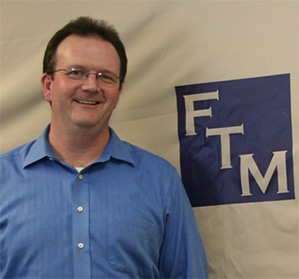
FTM_Jim Simpson photo   Jim Simpson, CPA and director of Financial Technologies & Management, is a nonprofit financial leader and trainer, CFO, controller, forensic consultant and software advisor, including Abila MIP Fund Accounting since 1999.  He has served CFO, controller and software advisor for over 25 years to over 350 nonprofit organizations.  Our nonprofit accounting solutions include Abila MIP Fund Accounting QuickBooks for Nonprofits, and other Nonprofit Accounting Software.

Contact Financial Technologies & Management to see how we can help your nonprofit with accounting solutions.  You can schedule an appointment directly from the website at WWW.FTMLLC.COM, email info@ftmllc.com or phone at 317-819-0780.

New nonprofit job board launch next week

By Uncategorized

The Charitable Advisors team is excited about upgrading its Nonprofit Job Board. The change will take place early next week, and we want you to be prepared. The primary change in the new system is that both employers and job seekers will have on-line accounts to help make the job search and candidate review process easier.

In 2015, nonprofit employers posted nearly 1,000 nonprofit job openings on the Central Indiana Nonprofit Job Board. Many nonprofit employers tell us that we are their #1 source to find and hire new employees.

On Monday, Charitable Advisors’ Nonprofit Job Board will upgrade to the latest version from our vendor, ExactHire. Employers will still post ads by e-mailing to ads@notforprofitnews.com and job seekers will still find job openings using newsletter links or by clicking “Nonprofit Job Board” on the website home page at www.CharitableAdvisors.com .

Job advertisers –

  • What changes? – Each employer’s designated contact will have an account set up by Kristen that will provide easy, on-line access of all applicants for the advertised position. This will eliminate employer e-mails for each applicant. Employers still have the option to link job seekers directly to their websites or internal job boards.

Job seekers –

  • What’s the same? – Job seekers still are able to view all job postings at no cost and without any login. Job postings in the newsletter will link to the specific job. Alternately all postings can be accessed by going to CharitableAdvisors.com and clicking on “Nonprofit Job Board” at any time. Job board postings will be updated multiple times each week.
  • What changes? – When an applicant is ready to apply for a position, he or she will be asked to set up an account with a password. Each time he or she applies for a position, it will require a login to his or her account to apply. There are two primary benefits to this new process – 1) job seekers will not need to input basic contact information with each application, and 2) the system will keep a record of all the positions/employers for personal reference.

If you experience problems or have questions, we encourage job seekers to reach out to Julie at Julie@CharitableAdvisors.com and employers to correspond with Kristen at: Ads@NotforProfitNews.com. Charitable Advisors will develop an FAQ for future reference.

Building trust with donors

By Feature, Leadership, Uncategorized

by Andy Canada at Johnson Grossnickle Associates |

One of the most important things an organization can do to guarantee long term success and support from donors is to instill and cultivate trust between the organization and its donors. Millennials in particular value trust with an organization, with 84% saying they will only donate to organizations they trust and 90% saying they will stop giving if an organization loses their trust. Organizations should never take trust for granted as it is a foundational building block.

Here are some steps to help build trust between an organization and its donors.

Clear Communication

  • Spend enough time talking to donors and explaining your mission
  • Give updates on projects and initiatives
  • Present clear and concise case statements
  • Ensure staff and volunteers are communicating the same message

Provide Transparency in Philosophy and Finances

  • Be specific about how contributions are being used
  • Clearly explain how unrestricted funds are used
  • Use giving guides that show specific mission-driven uses for funds, i.e. “your donation of $25 will feed a family for one week”
Button Text Button Text