Category

Feature

Solving conflict? Can be as easy as child’s play

By Feature, Programming

By Lynn Sygiel, editor, Charitable Advisors

Except for a few Revolutionary War buffs, few people have likely heard of French nobleman Comte de Rochambeau. Rochambeau fought with the colonists against the British, and there’s an old tale that he and George Washington played rock, paper, scissors in a tent shortly after the British surrendered at Yorktown.

In some circles around the country, including Indianapolis, the popular playground game is called “roshambo.” A reference traced all the way back to the venerable French count? Probably not, although the Revolutionary War would have been a lot less bloody if it were contested by roshambo instead of cannons and muskets.

Indianapolis-area kids are setting a good example when it comes to settling conflicts on the playground, said Christine McConnell, the development manager for Playworks, an international program focused on helping kids play together in a safe and harmonious manner.

“We have seen the statistics bare out that the arguments that happen at recess carry over to buses, carry over to the walk home, carry over, carry over, carry over. And when you diminish one, and you alter that path, then you see a dramatic reduction in all of that,” said McConnell.

Relatively new to Indiana, Playworks Indy opened its office four years ago. Indiana University Health provided the funds to make the program available in the state.

According to Joyce Hertko, director of community outreach and engagement at IU Health, the company learned about the nonprofit and believed it was a strong and worthy organization that could make a difference in area schools. For a group focused on health, she said, it made sense.

“We talked about the research that’s been done to show that when kids are active, and they have time out from school, they actually can be more productive in school,” said Hertko.

But it’s more than just playing.

“I think also on the playground, students learn how to work with their peers, and they learn how to work out a problem. It’s a great time to test their leadership skills,” said Hertko.

Playworks started in Northern California 20 years ago after a principal complained about escalating schoolyard conflicts and their negative effects on the school’s culture. Jill Vialet, a school volunteer, was moved to action and started Sports4Kids in two Berkeley, Calif., schools. That was in 1996, and in 2004, she was named an Ashoka fellow, a prestigious award that carried with it financial support for her to expand the program. Her goal is to “provide healthy, inclusive recess and play to low-income schools.”

In 2009, the organization was renamed Playworks, and according to McConnell, a region and school has to be all in to make the program succeed.

“The school has to be interested in having the transformation process occur, and they have to have an environment that’s conducive to it. It cannot just be another program that is put upon a school,” she said.

This school year, according to Audrey Hall, local Playworks program director, there are 5,300 students receiving direct service through its Coach and TeamUp programs.

Four IPS schools, School #61, Clarence Farrington Elementary; School #107, Lew Wallace; School #44, Global Prep Academy; and School #69, Kindezi Academy and one charter school, Irvington Community Elementary, have fulltime recess coaches.

In addition, four Washington Township schools are involved in the nonprofit’s TeamUp program, which works with an on-site coordinator to teach, model and empower a sustainable recess program.

“The Coach program is really an intensive in-school program. Our coach lives in the school. For our schools in this area, they’re literally getting a staff person. The kids know and respect and love this person. Coaches also go in and do class game time, so they’re in the classrooms, too. It’s really woven into the fabric of the actual school day,” said McConnell.

In addition, teachers can schedule class game time to help develop skills and interpersonal relationships. These can be anything from help with kindergartners struggling with colors or the alphabet to third-graders not getting along in the classroom. In Indiana, coaches have pioneered a break in the middle of ISTEP testing.

“The goal is that it’s not something extra for the teacher to do, but something they look forward to,” said Hall.

Right now, all area coaches are AmeriCorps volunteers and trained by the nonprofit. Every Friday, the six have a 90-minute session, where together they continue professional development, learn new games and talk through challenges. Who makes a good coach? Hall said she wants coaches who can relate to staff, have youth-work experience, a positive personality and for whom the fun factor is high.

Because AmeriCorps is built on service, these coaches also plan community events. Last year at School 61, the coach did a community event and Playworks provided the refreshments. Over 250 families came.

“So the school looks at us as a convener, and we’re a natural vehicle for that, we can be a good partner in helping them to reach and engage their parent population. It’s a positive force in that way,” said McConnell.

Just how important is recess? Three years ago, The American Academy of Pediatrics issued a policy statement about “The Crucial Role of Recess in School,” including identifying the benefits — cognitive, social, emotional and physical — of a safe and well-supervised recess. This year Rhode Island made mandatory a 20-minute recess for elementary students, including sixth-graders.

At a Playworks’ school, students are invited to the playground, which is mapped with designated areas for games. Boundaries are visible and are made with cones, chalk or painted lines. Activities vary by age group, and students can select from a variety of games – 4-square switch, sharks and minnows and alligator swamp. Many are games that have been around, but with new names.

There is enough equipment on the playground to provide active play. Hall said the coach’s goal is to create an environment where kids want to get out and play. Every school is a little bit different, but the goal is to keep it fresh.

Playworks activities are designed to engage students in physical activity, foster social skills related to cooperation and conflict resolution, improve students’ ability to focus on classwork, decrease behavioral problems and improve school climate.

Every recess ends with an organized closing.

“The kids get back in line, they let all the steam out, and they walk back into the classroom in an orderly fashion. So the teachers earn back a time with tushes in the seats. The teacher is not solving bullying issues, so they’re getting increased learning opportunities, and the teachers are getting to teach more,” said McConnell. Over the course of the school year, according to Playworks’ data, the teacher gains 18 hours in instructional time.

[content_box box_type=”normal”]

Playworks services

Compiled by Lynn Sygiel, editor, Charitable Advisors

pw-sidebarPlayworks is changing school culture with safe, fun, and healthy play at school every day. Only elementary schools and its staffs are eligible for Playworks.
In the Indianapolis-area this school year, 5,300 students are receiving direct service through the Coach and TeamUp program.

Here’s an overview of Playworks programs:

Playworks Coach: fulltime recess and in-classroom game coach, based at the school.

Indianapolis area schools

  • School 44, Global Prep Academy
  • School 61, Clarence Farrington Elementary School
  • School 69, Kindezi Academy
  • School 107, Lew Wallace Elementary School
  • Irvington Community Elementary, charter school

Playworks TeamUp: partners with a group of elementary schools and provides an on-site coordinator to teach, model and empower a sustainable recess program.

Washington Township: Greenbriar, Fox Hill, Nora and Crooked Creek elementary schools.

Junior Coaches: A leadership program for fourth- or fifth-grades at Coach schools. After teachers and administrators identify potential candidates, these elementary students develop skills to take on added responsibility for leading recess. To set them a part on the playground, they wear purple shirts.

Playworks Pro: provides professional training and ongoing development to school staff, paraprofessionals and after-school care providers to create and maintain a great recess and play environment throughout the school year. Indianapolis worked with the Indiana State Department of Health to identify regions needing pro-training in schools, districts or youth-serving organizations. In the Warsaw area, multiple elementary schools from several districts came together for pro-training.

Training: provides specific training for youth-serving organizations’ staffs. Last year, Playworks trained the summer program staff for Nicholas Park, and Big Car’s staff were trained to understand crowd management and attention getters.

A 348-page game guide is available for schools, youth groups and church youth groups.

Corporate Playworks: Play Days is a fun and active team-building, volunteer and community engagement experience to get employees out of the office and onto the playground, serving kids and schools.

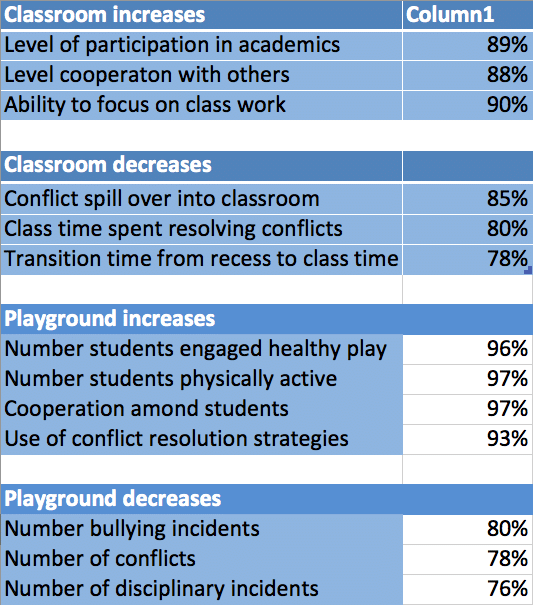
2016 survey results

In Indianapolis administrators, teachers and school support staff completed surveys. Of the 84 Indianapolis-area respondents, 88 percent wanted Playworks to return next school year.

Here is the compilation:

screen-shot-2016-11-28-at-10-07-34-pm

[/content_box]


According to Hertko, last year IU Health offered Playworks as one of its options for five IPS schools and three parks. School 69 opted to have Playworks and positive messaging painted on the school’s wall. That day, the principal reported there were no discipline problems, not even little things.

The program has real, measurable data to prove its effect. Mathematica Policy Research and Stanford University found that a Playworks recess can transform school climate, paving the way for less bullying and more focus on learning.

“You can go to a number of nonprofits here in Indianapolis that are doing good work, and you can hear a story of transformation, and it is just as touching and just as important,” said Hertko.

“I think what is different about Playworks is they have metrics in place that also measure that. There are students who are stepping up to be leaders who weren’t, and when the program is measured among teachers and administrators and students, they’re actually moving the dial on these issues. And that, I think, is really important,” said Hertko.

Junior coaches add a unique dimension to the program. These are fourth- or fifth-graders who are identified by teachers and administrators as potential playground leaders. On the playground, they are the ones in the purple shirts. Their end goal: to lead recess.

“It’s our leadership program and a core component. We take fourth- and fifth-graders who are leaders in their schools, but they’re not necessarily your student council presidents. They have reputations, and they need additional assistance. The role is an added responsibility and requires trust. So it’s a big deal and a paradigm shifter for a lot of kids,” said McConnell.

McConnell has a desire to measure what happens to junior coaches when they leave elementary school where they stand out.

“They’re at an interesting phase, they could go either way academically, either way socially. What happens when they go to seventh and eighth grade? What does that look like? We have anecdotal information that they stay the track because they’ve had the experience, but we don’t know enough to definitely say. That’s an area to explore,” she said.

McConnell said the key skills that kids develop are empathy and inclusion.

“I think they learn to relate to each other and because of the variety of activities it allows kids to interact with each other without barriers, without boundaries. They have more empathy for each other when they go back into the classroom,” said McConnell. “The inclusion part is you’re more likely to play with people you don’t know or people you don’t like, if you all want to play kickball.

“It softens the hard edge that comes with variations in language, academic abilities and athletic abilities. They learn to work together and play together, which is a natural expression of empathy, right?” McConnell continued. “They relate to each other differently, and so that transfers over to the educational environment, the actual academic environment.”

For parents, it’s about safe play. McConnell and Hall know the challenges for Playworks students – the majority receive free- and-reduced lunch and live in high-crime neighborhoods. Walking to the neighborhood park may not be an option.

“What we recognize is that there are amazing parks in this community, but the walk to the park from a kid’s house may not be safe. Recess is, in fact, where kids tend to play and be safe. And that safe factor translates into the home. So that’s a benefit to the family. Kids want to go to school, and they’re safe. So that’s a pretty important platform,” McConnell said.

They have learned from parents and the general community that safe play slowly radiates.

McConnell said there are junior coaches who actually teach roshambo to their neighbors as a way of resolving conflict. “They might say, ‘We’re going to play tag and then we’re going to solve it this way.’”

Nationally Playworks announced its intention to dramatically expand both the current number of students enrolled in programs, as well as reach hundreds of thousands of children through free resources and training for schools. Over the next four years, the AIM program, backed by $26 million in new funding, will reach 3.5 million kids in 7,000 elementary schools.

Locally, the Indianapolis staff wants to grow direct service, but also have more opportunities to reach pockets of vulnerable children in rural and urban areas like Muncie, Anderson and Terre Haute.

One model is to work with school districts and offering a combination of training and online resources. While they cannot direct serve every region of the state, they can positively impact school districts by reaching adults.

The good news is that all of this is in the final vetting stages. This is a way to reach a critical mass at the grassroots level, and then, according to McConnell, the organization can launch a policy discussion.

“It’s what informed Rhode Island’s decision, and that’s what changes the landscape. So we recognize that offering the program to anyone who really and truly is interested and supporting him or her through the process, changes the discussion. What does it really mean to educate a child? What does it really mean to fight obesity? Let’s look at it through what builds a healthier community and what builds a healthy child,” she said.

Hertko offers everyone an invitation: Come to a school that has Playworks and observe the playground and the classroom.

“I think that Playworks teaches how to get students’ attention, how to get them focused and also teaches students to do it themselves. It’s helping the kids, it’s helping the teachers, administration to make those schools healthier environments for students to learn and grow.”

Students embrace opportunity to move forward

By Feature

By Lynn Sygiel, editor, Charitable Advisors

yb_cooperBritany Cooper dropped out of school at 18, and learned about YouthBuild from her cousin. He heard about the program to finish high school from his mom who picked up a flier. Inspired, Cooper called the same day to get into the program.
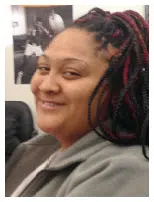
While the majority of students in this program are definitely male, this mom with a 7-year-old has about a month before she reaches her goal to be a carpenter and make a better life for herself and her daughter.

I went to Broad Ripple, and then I dropped out ’cause I had a kid. I was 18 when I had my child.

Since then I’ve been working off and on. I wasn’t doing nothing, and I was like, ‘I got to do something ’cause my child cannot see me doing nothing.’

And so I was like, ‘This is an opportunity for me to change my life,’ so I took that step. Thank God that I’m here and I’m just trying to do something that I’ve been wanting for all my life. I’m changing my life around. I teach my daughter the way to success is to take the opportunity.

I changed when I came here: I was shy, I never talked. It’s hard, but it’s a process that you got to go through just to get something.

I’ve been here four months, and I’m reaching my goals. Math is my skill. I love math.

I have a friend. He wants to get his GED. I say, ‘It’s the best place to go.’ We talk about it and I say, ‘Are you sure you want to do this? It’s a process, but it’s worth everything that you would be working for toward your goals.’

At YouthBuild, the staff is good people. They never let you down for nothing. They continue to help you get your goals, sit with you and let you be. And if you want to go to college, they’ll help you do that, too. It’s a lot of things they can help you with. Anything that you want to do, they’ll help you find it.

It’s a good program that people don’t even know about. These are opportunities, but it’s just an opportunity, if you want to do it. It’s awesome.


yb_ledezma Originally from Chicago, Chantell Ledezma, 22, spent most of her early life in Milwaukee. But after she was expelled while also being pregnant, she didn’t go back and finish high school.

Now with a 4-year-old daughter and back in school, she wants to be a surgical assistant. Ledezma has been at YouthBuild Indy for three months.

“I was a good girl. I don’t know if I was mad inside or if I was mad at the world. Teachers told me if I keep on getting suspended, I would be expelled. I was like, ‘Mommy will kill me.’

Then one day a girl was trying to fight me outside the school. I was like six months pregnant, and I was trying to ignore her. I was trying so hard to ignore her. But she said something, and I put my book down and just charged at her. I was on suspension for a couple of days, and then the principal was like, ‘We’re going to expel you.’ I just had one more year left and I dropped out.

I was 17 when I had my baby. I wasn’t interested in going back, and then I moved here, and I didn’t know nobody.

My sister was telling me about this program. I went to talk to the lady and had to make a decision between two programs. Something about the YouthBuild flier popped out at me. I called them and made an appointment. Me and my sister came in, and I got accepted, and I’ve just been here ever since.

At YouthBuild, they care about you and really help with all your problems. Feeling, talking, anyway they can help. On top of everything I’ve been through, I can always talk to one of the teachers. They’ll listen to you, and they’ll help you. If you don’t have something, like I didn’t have white shirts when I first came here, they helped me get the white shirts.

I’ve got three tests left. They try to make it interesting. The science class, I’m like, ‘OK, now I understand it. How it’s supposed to be done now.’ At first I didn’t know anything about science, and all that, so now I’m getting the hang of learning it, and how to remember it.


yb_keyoTyler Keno, 22, wants to be a role model for his two daughters, ages 4 and 2.

After life on the streets and trouble with the law, Keno spent time in Terre Haute and then left the state for Georgia.

Back in Indiana now and on house arrest, he is working to get his education. He’s been at YouthBuild for three months.

With another child on the way, his plan is to pass his tests, and then get certified to be a welder.

I was this young, hot-headed kid. I started skipping at eighth grade and had caught me a case when I was 14, a juvenile and still going to Harshman Middle School.

I dropped out and then spent time at Gibault in Terre Haute. When I got out of there, I went to Georgia and went to day school down there. That’s where my whole life changed and I had dreams and everything. I met the rapper Gucci Mane. I met Rick Ross, all of them. They were really going to work in my favor when I got off of probation down in Georgia.

I was in Georgia for eight months and finished my eighth grade year. I was about to go to high school, and I ended up coming back here.

Before I came to YouthBuild to be honest with you, I was on the streets doing what I do. As soon as I came here, it made me do a 360. When I got locked up, got caught with that $15,000 and all that dope, and I was sitting there for the two months till I got bonded out, sitting there like, ‘Man, I could do better.’ I had my third child on the way. I could be better than this, man. I’m not this type of cat. I don’t want my girls dating anyone like me. I don’t want that for my children. I know I’m trying to do the right thing, change my life, better myself for my children.

I’m currently on house arrest and found out about YouthBuild through this other resource, PACE. My counselor told me about it.

I didn’t take the tests yet. I feel like I need to get more learning and skills before I take the test. I’ve been here three months, it’s probably going to take me like five or six months to finish the program.

If you want change, start with yourself. That’s how I look at it, man.


yb_edmondArmani Edmond, 19, grew up in Indianapolis on the city’s Eastside. He has two siblings — one older, one younger – and a supportive mom.

Edmond was on the path to graduate from high school until math got in his way. He says it was the best thing that happened to him.

Now, a YouthBuild Indy employee, he had two job offers when he finished his education earlier this year.

I actually came from Arlington High School. I was there for about five years, when it was a middle school and high school. I made it up until I didn’t pass my End of Course Assessment (ECA) math exam. Math was always my worst subject. Never was good at it.

I found out on Friday before graduation that I wasn’t going to receive a waiver for that portion of the ECA, so didn’t really know what to do. I already ordered my cap and gown. I was really upset for a while, kind of laid around for a little bit, didn’t want to talk to anybody, was angry, mad at the world.

A flier had got passed down for YouthBuild. I didn’t want to hear it at first, but my mother encouraged me to try it. So, she said, ‘Let’s call.’ I scheduled a time to meet. My mom was really supportive.

I set up an interview and went through the interview process. I was invited to Mental Toughness, and I pretty much tackled it.

At the time, it was right down the street. It was walking distance, and I used to walk here every day.

I don’t come from much. A lot of people who come here, they don’t have much growing up. We bonded as a family, especially our group ’cause we were a smaller group. We really took it seriously. It was unique for us, and it made us learn a lot about each other and our roles.

Not graduating from high school was probably the best thing that happened to me. When people hear that, they don’t really believe it. But that is the best thing that ever happened to me. Honestly, if I had graduated, I wouldn’t have known what to do. I came here and I went up four grade levels of math in a short time, math was actually my second highest GED test score. Math is my favorite subject now.

Here we talk about deeper things than just academics. You know academics are the most important thing, but we like to get to the root of certain issues with different people, so we can approach class differently. In high school, that’s not really done too much. You know you’re given the book work, but if you don’t want to be there, you’re not going to learn.

YouthBuild Indy offers hands-on education

By Feature, Programming

By Lynn Sygiel, editor, Charitable Advisors

The refrain is a familiar one, and young people hear it all the time: “Study hard, go to college, get a good job.” For many students, it’s great advice. In a competitive marketplace, a good education is vital.

Rodney Bussell, program director at YouthBuild Indy, is all for studying hard and getting a good job. But going to college? Bussell says it’s not for everyone.

“Somehow, somewhere, you need to get certified in something,” said Bussell, who has a background in youth work and has been in charge of YouthBuild Indy since 2015. “If you’re better at using your hands, let’s get you in an apprenticeship program. If you’re not that classroom person who will sit in the class for the next four or five years all day long and write papers, if that’s not you, it’s OK. It’s not a bad thing.”

At YouthBuild Indy, a nonprofit on the city’s Eastside near 25th Street and Keystone Avenue, low-income young people receive construction and trades training while working to earn a High School Equivalency Diploma. The program began in Harlem in New York City in 1978, and a decade later, its founder took it national.

yb_20160519_142831 The Marion County program, around for eight years, is open to the county’s high school dropouts ages 18 to 24 who are drug-free. It is managed by EmployIndy, funded by the U.S. Department of Labor, and has had more than 350 young adults complete the program.

Chantell Ledezma, 22; Tyler Keno, 22; Britney Cooper, 25, are currently enrolled in the program, and Armani Edmond, 19, who finished in the spring, is now a staff member. These four enrolled to earn their equivalency diploma and construction training, but it has provided them with much more than that.

“Yes, it is about the education, but staff care about your feelings, too. That’s why I like coming here. It’s not just the money or the education, I just feel like they help with a lot,” said Keno, who has been with the program for three months.

For Cooper, the program is her chance to make a change and have a better life.

“My goals are to build myself, have a career and look into the future. We all motivate each other every day. It’s the place to come to,” she said. Cooper dropped out of school at 18 to take care of her daughter.

Bussell said the program provides stability and a sense of family for these young adults.

“You create trust for them. A lot of them don’t have a family structure that a lot of us may have grown up in. So a lot of times, we build trust, let them see that we’re there for them and they haven’t seen before. They’re kind of in that traumatic lifestyle.

“We help them see the big picture and outline their goals and aspirations: How do you choose? Do you want to go to college? Do you want to do construction? Do you want to go into another field? How are we going to help you get there?”

YouthBuild Indy opened in 2008 at the John Hope Academy on 16th Street. It’s now on the third floor of 37 Place, a multigenerational community center in the Martindale-Brightwood neighborhood. Because of its location, the organization lacks some visibility. Potential students don’t just walk in the front door.

Part of Edmond’s job is to get the word out through social media, meetings with area school guidance counselors and billboards around the city. In the past, students found the program through fliers, the courts, referrals from other programs and word of mouth.

We’ve been trying to pump it up because the numbers are kind of lower than we’d like them to be. We really are trying to market it. A lot of people are trying to figure out what we do or say, ‘I never heard of you,’” said Bussell. “We’ve had some decent foot traffic, we still would like to have more. Armani does a great job of getting out in the community, doing a lot of fairs and trying to make people aware of the program.”

On Bussell’s wish list is a different location that would include a carpentry shop with classrooms. Both city officials and other businesses have reached out to offer projects for students, and having an onsite shop would allow students to work on these projects with staff supervision.

The program targets Marion County students because of the county’s high poverty and dropout rates and emphasizes certain ZIP codes.

Potential students have to show proof of low income — food stamps, Medicaid or a check stub, if they are working. Staff expects that students are drug free, but they are not regularly tested.

Even if a student meets all the criteria, he or she must be interviewed and invited to a two-week mental toughness boot camp. During this time, the student is not enrolled in the program, but both the staff and students are charged with determining if the program is the right fit. Students under consideration must arrive at 8:30 every morning sharp, wear a white shirt and khakis, and only after completing the boot camp, are asked to make a commitment.

“It’s basically like tryouts for a sports team or anything like that. It’s basically seeing who wants it bad enough,” said Edmond. “After completing that two-week process, they will have a class graduation. Right after that, they’ll come back up, and we’ll have a meeting to see who made the cut, who wanted it bad enough and who will be accepted into the program.”

Edmond also works with students, talking and helping them through every day. I’ve been through it, and just being that person they can relate to and give them tips and tell them to keep pushing forward up to their graduation point.”

Once enrolled, grant funds help provide students with gas cards or bus passes and a weekly attendance stipend. Students get $75 a week during an education week and $100 during a construction week.

Besides Bussell, the program has three case managers, a recruiter, three to four teachers and a construction manager. Troy Turner from Turner Construction teaches safety courses and manages the construction work and Marian University oversees the education portion.

Most students spend a week in the classroom and then rotate to a construction site or learn about basic Occupational Safety and Health Administration, engineering, electrical or construction certifications. Students also learn the expectations and responsibilities of the workplace through the JAG program, which also helps them work on resumes and take part in mock interviews.

With Turner’s guidance 73 percent of the students have completed their National Construction Certification, which is nationally recognized and issued by the National Center for Construction, Education and Research (NCCER). Often the construction work focuses on Indy’s abandoned houses. The Community Development Corporation purchases these homes and then contracts with Turner Construction, which guarantees that these will be training houses for YouthBuild.

Students just completed houses on Capitol and Graceland avenues and Oxford Street and now are working on Kenwood and Leland streets.

“Giving them NCCER, they have a basic fundamental foundation of what construction is, and it’s a good certification to have. Our students move ahead of the bunch. They come in to a job interview with a high school equivalency and NCCER. We have a young man who got a job right away. He said, ‘I got NCCER,’ and he walked out of a job fair with two jobs,” said Bussell.

Through partnerships with organizations such as IndyPendence Job Corps, Bussell is looking to grow the trade options to include CNA or IT training.

“We can expand on it, but the foundation is always going to be construction,” said Bussell.

Can students come back? “Once at YouthBuild, always at YouthBuild,” is a saying that is espoused by staff.

“When young people graduate, we don’t just cut them lose. We have a year follow-up. We’ll make sure they have jobs, and if not, we’ll try to get them back to find one. We celebrate 30 days, 60 days, 90 days job-holding accomplishments.”

YouthBuild partners with or holds occasional hiring fairs.

“I will contact some of my alumni and ask, ‘Are you working?’ If you are working and you are satisfied OK, if not, let’s get you in here,” Bussell said.

YouthBuild Indy places 68 percent of its participants in further education programs or employment and has an 81 percent diploma/certification rate.

Would Cooper, Keno, Ledezma and Edmond recommend the program to friends and family?

Ledezma says if they really want to go back to school, this is the place to be.

“If it was one of my friends, like my homeboys, I’d be like, ‘Bro, you trying to bury yourself. Like come up to the place where I’m at.’ This might be weird, but everyone wants the money, and I’d be like, ‘They pay you, too. Get you some money, get your education,’” said Keno.

Three Chicago nonprofit organizations to receive investments totaling nearly $3 million

By Feature, Programming

By Mary L. Datcher, senior staff writer, Chicago Defender

Chicago Beyond announced the winners of its first-ever innovation challenge and will present three nonprofits with investments that total nearly $3 million overall. Launched by Chicago Beyond in April, the GO Innovate challenge sought early-stage ideas that offer innovative programming in two areas: Supporting College Matriculation and Graduation; and Reengaging Youth in Work and School.

For each winning organization, Chicago Beyond is also funding a research partnership with the University of Chicago’s Urban Labs to evaluate the impact of each investment. Every investment recipient has worked with Chicago Beyond and Urban Labs to develop a unique research question that will allow detailed study of the program and better understanding of what works, in order to positively impact a greater number of young Chicagoans and increase the field of knowledge in these topic areas.

More than 200 organizations applied for the first innovation challenge. Applications were reviewed by the Chicago Beyond team and finalists were selected by two independent selection committees which were formed for each topic area.

“Our first innovation challenge brought out some of the best and most innovative ideas in programming to help our city’s youth succeed in school and in life,” Chicago Beyond Managing Director, Liz Dozier, said. “There is no shortage of passion for and commitment to the young people of Chicago. We are grateful for the opportunity to present these three organizations with investments to not only reach more young Chicagoans immediately, but to learn from and share our research outcomes in order to have a greater impact on the future of our youth nationwide.”

Read moreButton Text

MacArthur, Chicago Community Trust create low-interest loan program for nonprofits

By Feature

By Lisa Bertagnoli, reporter, Crain’s

Chicago Community Trust and the John D. and Catherine T. MacArthur Foundation earlier this year introduced what they say is a win-win for Chicago’s philanthropic community: A way for charitably minded investors to participate in a local social-impact fund and a way for area nonprofits and social-enterprise companies to access $100 million in long-term, low-interest loans.

The program, called Benefit Chicago, is unique in the country and is the city’s most ambitious social-impact investing tool to date, said Julia Stasch, president of MacArthur Foundation. “It is the first-of-its-kind collaboration among a community foundation and global private foundation with a deep commitment to its hometown,” Stasch said.

It is designed to meet what research has shown to be a $100 million need for capital over the next five years among area nonprofits and social-enterprise companies. It will also satisfy investors’ desire to make investments with “meaningful social, economic and environmental impact,” the release announcing Benefit Chicago said.

The program is set up for an initial 15-year run. If successful, it could be emulated in other cities, Stasch said. The fund could also increase beyond $100 million. “It would be good to not see the unmet gap that we’re seeing today,” Stasch said.

Button Text

STEM education: in-school and out-of-school working together

By Feature, Programming

By Lynn Sygiel, editor, Charitable Advisors

Paul Ainslie and Bob Abrams have followed similar career paths. Both have had lengthy careers in the corporate sector – Ainslie at automotive-supplier Delphi and Abrams at engine-maker Cummins and other small businesses.

But that’s not all they have in common. Both now work for nonprofit organizations and each is charged with advancing science, technology, engineering and math – or STEM, for short. Abrams is Indiana’s Afterschool Network STEM coordinator and Ainslie is the managing director of I-STEM based at Purdue University.

Abrams and Ainslie are working together, helping to marry in-school and out-of-school STEM efforts. Both see limitless opportunities to expand and build upon in-school learning through flexible and engaging out-of-school programming and by connecting programs to community resources.

“The extension is to connect in-school and out-of-school STEM teachers, so that there is consistency. If they’re going to do a lesson in physical science in the STEM science class, there may be an after-school program that would align to that,” said Ainslie.

In the 21st century, many have rallied around STEM education, citing students’ need for greater scientific and technological literacy to function in today’s society and economy. Corporate leaders have worried about where the next generation of workers will come from with too few students seeing these disciplines as springboards for their careers.

Abrams and Ainslie say there is plenty of is exemplary STEM curriculum, but typically, the after-school approach has been more ad hoc, and they want to change that.

“So we’re doing that connecting by saying, ‘Let’s extend the learning on this science STEM topic to the after-school space,’” said Ainslie.

“What we’re trying to do is say to schools and after-school programs, ‘OK, this is working well in school, what can you do with the out-of-school program?” said Abrams.

What the duo has found in their travels around the state are willing communities, but what’s lacking are models. Their strategy is simple: Find programs doing that and share them as demonstration sites.

So far they have identified two programs, although they believe there are more out there.

Warren Township and Columbus each have an elementary school that has repurposed a computer lab as a STEM lab, and has a dedicated STEM resource person. Much like art, music and physical education, students rotate throughout the school day. Both see the potential of repurposing the STEM labs for after-school programming and connecting the in-school and out-of-school teachers.

“In Warren, the school is Liberty Park Elementary. It’s a Project Lead the Way-based STEM center and PLW did the training for that instructor. That’s the model. If you go with a strong curriculum, then training is part of it, too. And that’s got to be a key thing,” said Ainslie.

In the Columbus school district, according to Abrams, there is one school right now with plans to expand to others. The school uses a California-based program called Iridescent, which is an initiative that incorporates the cooperation of scientists and engineering experts as mentors.

“So Cummins in Columbus sends people in to lead particular exercises, but there is a dedicated teacher in that school who has gone through the training and leads that program,” he said.

Corporations are interested in supporting these types of efforts.

Ainslie has been working with Eli Lilly and Company and its Science Coaches program, which has 85 professionals, working in classrooms, primarily K-8. He said there is interest from Rolls Royce, Roche and Cummins, too. It’s an opportunity to get STEM professionals into the classroom to provide expertise without an impact on school budgets.

“There are a number of corporate partners that are interested in helping out, but they see the recent landscape being random acts of STEM. They’re good individual activities, but sustainability is questionable. So if we can demonstrate a sustainable, self-generating structure that works, I think we have something that people will invest in,” said Abrams.

Both Abrams and Ainslie provide professional development for educators. While schools already have academic standards, the Indiana Afterschool Network has developed specialty standards in multiple areas, including STEM. Indiana’s 38 standards serve as a framework for after-school programs. An online strengths-based self-assessment tool, it helps K-12 after-school programs rate their performances.

“Indiana has actually been recognized as a leader in out-of-school standards, including the STEM standards. Indiana was the first to focus on specific topics, and the STEM standards have become sort of the standard for the country,” said Ainslie.

What both acknowledged, however, is that there is a lot of variability in the focus on STEM and the quality of the STEM programs.

Since 2013, the Indiana Afterschool Network (IAN) has been collecting data through self-reporting. In its online mapping database, 992 programs are now registered, and of those, 44 percent offered STEM programming. IAN estimates that the current database represents about a third of the programs statewide.

While both provide professional development, Abrams said after-school is challenging for multiple reasons, specifically staffing.

“It doesn’t pay much, there is high turnover, and it doesn’t have an accreditation process. So finding people who are interested, motivated, skillful and being able to retain them is a real challenge,” he said.

“It gets into how well-prepared are the educators who are running the STEM programs. Are they just doing ‘gee-whiz’ activities that they learned on YouTube or are they actually talking about learning, and checking for student understanding?” said Ainslie.

Having the materials is good, but educators need to be prepared to assess learning and still make it fun. It’s the difference between having just an experience and having a quality STEM experience. Both want students both in- and out-of-school programs to have full discussions about their STEM experiences, which includes explaining what they observed, discussing what they learned and how they might do it differently.

“That sort of full discussion that we try to encourage educators and teachers to have doesn’t always happen in after-school. Sometimes it’s making a volcano, ‘Wasn’t that cool? What do we do tomorrow?’ It’s not the complete quality science experience that we want kids to have,” said Ainslie.

Both realize, too, that time spent in after-school programs is short. Programs must make time for snacks, homework and physical activity.

And the number of Hoosiers enrolled in after-school is only 11 percent with the majority on the elementary school level.

So they have a plan.

Warren Township school district educators have been providing feedback and believe it is better to have focused, time-limited activities, like a space camp for three weeks.

“We feel if there are focused short-period activities, like a weeklong Makerspace programming and it’s publicized, it may introduce more families to after-school opportunities that they aren’t aware of,” said Abrams. “Makerspace staff will come to the site and parents can make sure their kids are there.

“If you schedule STEM every day from 4 p.m. to 5 p.m., half the people are gone by 4:45, except for a couple who stay until 6 p.m.,” said Abrams.

There are also programs such as IndianaFirst robotics, STEM Scouts and coding activities that are gaining momentum because they’re viewed more like camps.

For someone thinking about starting an after-school STEM program, Abrams and Ainslie have some advice. Find resources partners, schools and business that want to be partners. Define the skills and curriculum and how you will train teachers. Recognize what you’ve got to start with, what can you build on, so you don’t have to start from scratch. Find people who are interested, motivated and skillful.

“It’s a three-legged stool. I mean, it’s in-school, out-of-school and community partnerships,” said Ainslie.

Indiana legislation to watch: After-school funding bill

By Feature, Programming

By Lynn Sygiel, editor, Charitable Advisors

Last year, 11 percent of Indiana young people took part in after-school programming. That is below the national average of 18 percent.

While before- and after-school programs serve nearly 45,000 Indiana children each day, they often operate with limited and patchwork funding from diverse public and private sources.

But that may be changing.

In the 2016 legislative session, Sen. Dennis Kruse, R-Auburn, authored Senate Bill 251, the Out-of-School Learning Fund, to create a fund to give schools grants to pay for programs before and after school and create an advisory board to make recommendations about the fund to the Indiana Department of Education.

The bill was sponsored by Rep. Robert Behning, R-Indianapolis, Rep. Vernon Smith, D-Gary, and Rep. Woody Burton, R-Whiteland.

The bill passed both chambers and was signed by Gov. Mike Pence. It established an out-of-school learning advisory board for a three-year period. The advisory board is required to make an initial report on existing programs and recommends policies, procedures, funding levels and eligibility criteria to the General Assembly before Nov. 1.

“The after-school topic got on the agenda last year in the legislature, and the education committee under the guidance of Senator Dennis Kruse for the first time said, ‘Hey, let’s take a look at after-school education,’” said Bob Abrams, Indiana’s After-School Network STEM coordinator.

“Where it’s going to lead in this budget year, I don’t know, but for the first time, it was discussed,” said Abrams. “There are states around the country – Oregon, California and Maryland — where after-school programming is a line item in their state budget.”

“I’d say that for the initial foray into the legislature, it went really well,” said Paul Ainslie, managing director of I-STEM based at Purdue University.

“It isn’t just STEM. In fact most of it is really safety and security for kids after school. We don’t have that many kids in after-school programs, and quite frankly, there’s a lot of kids at risk because of that during that 3 to 6 p.m. after-school time.

“So I think that’s part of what’s being recognized,” he said.

STEM programs

By Feature, Programming

Here is information about four programs that have grown in participation in Indiana for after-school students.

IndianaFIRST, a nonprofit founded in 2001, is a growing robotics program in the state for K-12 students. This year at the high school level there are plans for three district competitions, with a final pool of 32 state finalists competing at the 2017 Indiana State Championship at Huntington North High School.

Contact: Renee Becker-Blau, executive director
http://www.indianafirst.org/

STEM Scouts, a national pilot program from the Boy Scouts of America, is focused on fun ways for girls and boys in grades 3-12, to learn more about science, technology, engineering and mathematics. STEM Scouts offers a scouting experience with less emphasis on the outdoors. There are labs around the state.

Contact: 317-813-7125
Address: 7125 Fall Creek Road North, Indianapolis, IN 46256 Email: stemscoutsindy@scouting.org
https://stemscouts.org/find-a-lab/council/1/indianapolis/#labs

1st Makerspace: A program just gaining traction. Begun in 2015, it connects formal and informal learning by providing hands-on “making” opportunities to enrich and add value to education in the STEM areas.

Contact: Kim Brand, president
Address: 1010 E. Michigan St.; Indianapolis, IN 46202
http://www.1stmakerspace.com/for-educators

CoderDojo: CoderDojo Indiana (CDI) is a regional partnership formed by the TechPoint Foundation for Youth, the CoderDojo Foundation, and coding clubs throughout the state. Initial funding for this program was provided through a partnership with Eleven Fifty Academy. CDI focuses both on helping to grow new CoderDojo sites as well as strengthening existing ones.

Contact: Courtney Lambert, CoderDojo State Coordinator
Address: 5255 Winthrop Ave. #150; Indianapolis, IN 46220
https://www.techpointyouth.org/coderdojo/

Helping young black males succeed

By Feature

By Lynn Sygiel, editor, Charitable Advisors

What’s in a name? A lot, according to Michael Twyman, the executive director of OpportunINDY.

Formerly called Your Life Matters, OpportunINDY began as a directive by former Indianapolis Mayor Greg Ballard to leaders of Indiana Black Expo and the Indiana Civil Rights Commission in 2014 to reduce the rising level of murders and violence that affected a high percentage of African-American males in Indianapolis.

At the time, 66 percent of the victims and 64 percent of the suspects were African-American males. Ballard asked Tanya Bell, president and CEO of Black Expo, and Jamal Smith, the civil rights commission’s executive director, to lead a violence prevention task force. Their team’s charge: Develop a plan to reduce crime by increasing opportunities for young people.

Twyman, who now leads the project, announced a name change earlier this year. The original name, copyright protected by Radio One, was on loan and was often confused with the national “Black Lives Matter” movement. The new name, Twyman said, reflects the project’s original roots to expand opportunities for African-American males ages 14 to 24.

“One of the interesting things that the task force did — that dovetails with the name change ironically — is to focus on how Indianapolis could begin to provide, create, incentivize and expand better opportunities for African-Americans to be successful,” said Twyman.

“It was a different prism from which to look at the issue. It really puts more onus on the community to say, ‘What are we not doing or not doing enough of perhaps that is leading to why this phenomenon seems to be tragically increasing?’”

Ballard’s other charge was to focus on the conditions that precipitated the troubling statistics.

“It was really a recognition that we’re not just going to look at symptoms, we’re going to look at root causes,” said Twyman.

Twyman came on board in 2015 when Indiana Black Expo took over the program itself. Two years earlier, he left his position as director of grants programs for the Nina Mason Pulliam Charitable Trust to become director of the Institute on Race and Ethnicity at University of Arkansas-Little Rock. He was returning to his hometown and to a position where he “could effect change at a level that he could really see.”

[content_box box_type=”normal”]

How to help OpportunINDY

OpportunINDY has a common agenda that allows anyone in the community to partner to join or work to improve conditions in their area.

So for example to meet the graduation goal, most school districts are represented at the table. There are nonprofits, too, including 100 Black Men, College Mentors for Kids, Big Brothers Big Sisters, Boys & Girls Clubs, the YMCA, and some of the community centers.

“A number of the usual suspects, but then there are some smaller groups, nonprofits, civic organizations, that have an interest in that area,” said Twyman.

Twyman suggests that there are many ways individuals can engage. Here are six that can help the initiative’s success:

  1. Provide financial support to OpportunINDY. Support the shared work of partners who are stretched thin in every industry as they work alone.
  2. Explore the four focus areas of its plan of action.How might you directly support one partner working on the shared outcomes in your own sphere of influence?
  3. Contact OpportunINDY’s Focus Area Leads.How can you help move the agenda of an entire focus area? Even a bit of in-kind support, a new policy or an open door to information could make all the difference on an outcome.
  4. Sign up for OpportunINDY updates. Remain updated, keep the initiative’s progress and challenges in mind, share what you know with others.
  5. Make a difference right where you are — at work, home, in your neighborhood, in your place of worship.

Consider these ideas: Ask questions. Learn from your own data. Review the stories you tell. Change how or where you conduct business. Review your policies. Think creatively. Engage young black men in planning, outreach and evaluation. Connect with groups, organizations or businesses you wouldn’t normally work with.

  1. Mentor. No matter your age, stage, position or ethnicity, there is a young black man who welcomes your counsel, your listening ear, your constant presence, your encouragement. It doesn’t take a degree or special training to actively care. You can start doing that today!

Contact information

[/content_box]

The task force, according to Twyman, spent their short time together developing a plan.

“Indianapolis did it just the opposite of most collective impact models. They did the strategy first. That’s not necessarily a bad thing, it’s just a different way,” he said.

“You have to have buy-in and true collaboration and trust among the players in order to say that you will commit to shared measurements, to being communicative across sectors and across organizations and across silos that you have now dedicated yourself to be part of a larger solution beyond your institution or organization mission,” said Twyman.

That strategy actually worked to the city’s advantage when the Obama White House got wind of the effort several months before the announcement of its own national initiative, My Brothers’ Keeper. White House staff came to the city to sit down with the mayor and task force before the national rollout.

“A lot of the other communities signed on to become a My Brothers’ Keeper community and then had to put together a plan. So having a plan first worked in our favor,” Twyman said.

Twyman said when major funding opportunities geared toward young men of color became available; Indianapolis already had a connection, a plan and work being done. He also quickly realized that there was no capacity organizationally or an infrastructure to manage the work.

Now with a staff of five, and more than two years deep into its work aimed at disadvantaged black teens and young men in its neighborhoods, schools and workforce, OpportunINDY just hosted a citywide conference – Your Mind Matters. The session was intended to plant seeds, and get more nonprofits and programs involved in the project’s overall mission.

Twyman is proud of making the transition from a task force report to hiring staff and developing a volunteer effort in less than two years.

“I think had this remained a program idea or initiative of a mayor or the city of Indianapolis, it would no longer exist. For it to have life and to begin to be worth its weight, it had to become community owned and driven. A lot of times what I say to people when, they say, ‘So what is OpportunIndy doing?’ and I’ll say, ‘What are you doing for OpportunIndy?’ Cause it’s we, it’s not us, we’re the conductor.

“I think that Indianapolis is a community and city that does a few things very well. We do pretty good working across the public and private sector divide and around issues that we care enough about,” he said.

The project serves as a collaborative umbrella to bring people and organizations to the table. OpportunINDY does not create new programs, but works to change conditions with current resources. Often, organizations operate in vacuums, improving their little corner of the world, but without a big picture.

Focused on four areas — education, employment, criminal justice and health/safety — the project has set goals to increase the rate of high school graduation rates among African-American teens; increase the employment rate for young black men; and decrease the rates of homicides, imprisonment and recidivism.

Each area has specific strategies. For example, education’s outcomes and strategy performance measures are:

All young black men will graduate from high school on time and enter the

workforce with an industry certification, enter the military and/or complete other post-secondary education by age 24.

There are three strategies with action plans that help accomplish this goal.

#1: Ensure that all Marion County high schools and alternative programs have positive learning environments that fully engage black young men through quality curriculum, instruction and support services.

#2: Ensure Marion County post-secondary schools have policies and programs that actively recruit, mentor, retain and graduate young black men.

#3: Increase the number of young black men ages 14-24 participating in self-discovery activities, career planning and exposure to high-demand/high-wage jobs.

Besides the focus on graduation in Marion County, there is a targeted neighborhood — the 46218 ZIP code, and even more specifically, two housing projects – Hawthorne Place and Beechwood. That initiative focuses on three primary outcomes: 1) participants graduate from high school; 2) attend college and/or pursue a career with a livable wage; 3) refrain from committing crime or becoming incarcerated.

“We have place/space strategy in 46218, and that came to us through an opportunity through the Department of Education with our linkage to My Brothers’ Keeper,” Twyman said.

Twyman believes that organizations like OpportunINDY can help bring resources into the community and identify things that are working well across the country.

“When you’re doing the work, you’re doing the work. You don’t have time,” he said.

How will the project identify success? One way the public can determine what progress is being made by comparing the gains made in the five goals is through an annual report card that the project will release in the summer of 2017. The report will be in the form of an infographic scorecard on its website and hard copies will be distributed publically.

While it’s early, according to Twyman, it appears that there will be a bump in high school graduation rates due to alternative discipline and restorative justice practices taking root, and even a slight decrease in the homicide rate.

“We cannot lose sight of the opportunity to not only maximize our individual work, but know that our individual work is only as good as it is in helping to solve a larger community problem,” said Twyman.

MicroGreens Project: getting rooted in Indianapolis

By Feature, Programming

By Lynn Sygiel, editor, Charitable Advisors, Photo credit: MicroGreens Project

When Colleen Rocap shares her excitement about the MicroGreens Project, she often gets this question: How are you using microgreens in your work? But for Rocap, it’s not about salad shoots; it’s about working with kids whose families are SNAP recipients and teaching them to cook so they can “sprout” change.

“Long story short, it is a program that teaches kids living on a SNAP budget how to cook food for a family of four for $3.50,” she said. “Let’s be honest, if you’re 12, you’re not making most of your food decisions at home, somebody else is doing that,” said Rocap, the local MicroGreens chapter coordinator.

But Rocap believes she can help change that, arming kids with skills and information.

Later this month, she will pilot the MicroGreens Project with 10 to 15 students from KIPP Indy College Prep Middle, a charter school on the city’s Eastside. Ronak Shah, a seventh-grade science teacher, has offered an after-school cooking club. Shah is working with Rocap to launch this effort.

“A lot of these kids have a single mother who works and a lot of the time are responsible for creating meals for their family. While they’re doing that, they can teach their younger siblings,” said Rocap.

In one class a week over an eight-week period, students will learn how anyone can shop for, prepare, and enjoy a healthy meal based on a total budget of $3.50 per meal per family of four.

“In the first class, the kids learn their knife skills and mirepoix. They’re learning how to chop the veggies and do everything safely, and how to use their cutting board. Then we’re taking all that stuff that they prepped, and freezing it to incorporate in the next lesson,” Rocap said.

Lessons use receipts from the closest grocery store to generate conversation about costs and how to stretch dollars.

“It’s nutritious healthy foods, but it’s all based on budgeting. So instead of just buying a packet of chicken that’s already been separated into different parts, we’re saying, ‘Here’s a whole chicken. It costs a lot less.’ We teach them how to take it apart and use over the course of this many weeks and incorporate it into this many meals.

“Buying in bulk is also a huge part of it and then not just telling them how to cook the food, it’s getting them to do it themselves. Giving them the skills, giving them the tools,” she said.

Every student in the program will get a cutting board, chef’s knife and measuring spoons. Under consideration, based on students’ needs, is giving them a crockpot or a cooking pan and a hot plate.

“Some kids don’t even have a stove. Based on what the need is, that’s what we want to give them,” Rocap said.

Started by then D.C. chef Alli Sosna, local wellness coach Rocap learned about the program from a tweet by Michael Pollan, an author and national food activist. She is adapting the program to meet area kids’ needs. Sosna, now based in New York, was in Indianapolis this summer to train Rocap and was a guest at a special event to raise awareness for the newly forming Indianapolis chapter of the MicroGreens Project. It was started to empower children to feel comfortable making healthy choices in the kitchen, at home and at the grocery store.

“The last class is a kind of ‘Top Chef’ final where we put a bunch of ingredients in front of the kids and say, ‘Get creative. However you want to do this.’ They’re all ingredients that they’ve already used and they’re familiar with them. But that’s just kind of like the fun thing they do in the end,” Rocap said.

In this pilot phase, she is soliciting input for the program. Some have suggested doing demonstrations in a grocery store with a different topic and food each time.

“There is just a huge disconnect between, I mean if you have the food available, that’s one thing. But people aren’t going to pick it up, if they don’t know what to do with it,” she said.

Eventually, she’d like to offer the program in community centers and other places where the need is, and maybe involve parents in the course.

If you are interested in learning more about the program, you can reach Rocap via email at rocap.colleen@gmail.com.