“Drug czar” steps up efforts against opioid crisis

By Feature, Programming

By Lynn Sygiel, editor, Charitable Advisors

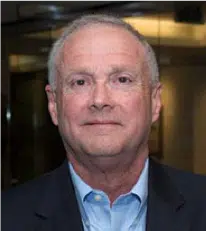
When Jim McClelland retired after 41 years at the helm of Goodwill of Central Indiana, he didn’t envision an encore career. He was looking forward to traveling with his wife and serving on several boards.

But when Gov. Eric Holcomb signed an executive order and tapped him for a cabinet position, McClelland relinquished his daily flexibility. Last January, he became Indiana’s first Executive Director for Drug Prevention, Treatment and Enforcement and reports directly to Holcomb. He also chairs the Indiana Commission to Combat Drug Abuse and coordinates the activities of nine Indiana agencies.

It’s a position that several other states have created.

For nonprofits that want to support the state’s efforts, here’s McClelland’s advice:

  • Learn all you can about the issue.  The more you learn, the better you will be able to see where and how your organization can help.
  • Become part of a local coalition focused on prevention, treatment and recovery.  In Indiana, every county has a “local coordinating council” that might offer such opportunities or be able to suggest how your organization can contribute to the overall effort.
  • Address some of the underlying root causes of substance misuse and abuse by working with others to improve all of the social determinants of health.

While at Goodwill he supported the concept and developed programs around the idea that so many of our social problems are interrelated and tend to reinforce and compound each other, rather than treat them in isolation.

“What we were trying to do at Goodwill in efforts to reduce intergenerational poverty was to bring pieces together. And conceptually that’s at least in part what needs to be done here,” said McClelland.

Since then, McClelland has seen the opioid crisis up close and although he has a lengthy nonprofit working history, he had not realized the complexity of the epidemic. While it got its legs in Southern Indiana, it’s now everywhere.

“It is in small towns in rural areas, it’s in the cities, it’s in the suburbs, and it now cuts across all socio-economic groups. There are many pieces to this, and there are many steps that need to be taken simultaneously. You cannot do it sequentially and there are no quick or easy solutions,” McClelland said.

In 2016, the opiate scourge killed 785 Hoosiers, according to the Indiana State Department of Health, and the state’s emergency rooms handle more than 400 overdose visits weekly.

“This isn’t a recent problem. It’s been developing gradually over two decades,” McClelland said.  “What is recent is the awareness of the magnitude and the complexity and how many lives and families it’s affecting. It’s almost as if it had to reach a certain, critical mass awareness before people started saying, ‘We have to do something about this.’”

“We use words like ‘epidemic crisis’ to describe it for two reasons. One of those is this one got started from the overuse of legally prescribed pain medications. People thought because the doctors were prescribing these medications that they were safe. It turned out they were much more addictive than a lot of people believed,” he said.

Doing something about it is just how McClelland spends his days.

The state now has three broad priorities to reverse the epidemic.

The first is keeping people alive. To support that effort, one change is that naloxone, the reversal agent, is not only available to first responders, but can be purchased over the counter. Another initiative is a pilot project at Eskenazi Health. When someone overdoses and is rushed to the hospital, peer recovery coaches encourage them to seek treatment. The state plans to use some 21st Century Cures Act grant money to replicate this program.

The second priority is to expand treatment capacity and access. Ultimately, McClelland hopes that no one is farther than a one-hour drive for treatment.

And the third is stopping the flow of fentanyl, a synthetic opioid, which is in part the reason for spikes in overdoses and deaths. Heroin’s cousin, fentanyl has many times heroin’s potency, but looks identical.  Most fentanyl sold on the street is made in clandestine labs, is less pure, and its effect on the body can be more unpredictable.

McClelland said a lot of what he did in his first year was to put things in place that will really start paying off this year. He believes in a deliberate, strategic plan to attack the problem, and compiling and sharing data is critical. In the past year, he has worked to get state agencies that report to him to sign agreements to share data with each other, giving a more comprehensive picture.

“Now, they can start looking at this data in different ways and enable us to see things that we wouldn’t otherwise see. Hopefully, we will have data that is going to be converted into more useful, actionable and timely information,” he said.

Another is sharing this information with Pew Charitable Trust that is analyzing Indiana’s data and policies at no cost to the state. Pew will continue its work this year.

“They have just a wealth of talent and resources and a national perspective and a lot of national data. So they can look at policies across the country and they can say, ‘These really seem to be effective. Indiana, you ought to take a look at this.’ I will tell, what we’ve seen is we’re really on the right track in a lot of this,” McClelland said.

McClelland shared stories about two young men who were prescribed medications after surgery, one for a football injury and the other after an appendectomy. Both found themselves addicted and searching the Internet for more. Both had stable homes.

“A lot of people developed opioid disorder, which is the technical term. And regardless of how someone develops a substance-use disorder of that type, once you got it, you’ve got a chronic disease. It changes the structure of the brain. It’s treatable, but few people can recover without treatment,” he said.

Dr. Jennifer Walthall, secretary of Indiana’s Family and Social Services Administration, groups the people being treated into thirds. A third with treatment are on a maintenance dose of one of the FDA-approved drugs and taper off, another group needs to be on maintenance for life. For a third treatment doesn’t work. Compared to other addictive substances, treatment for an opioid-use disorder takes longer and the risk of relapse is higher, something that can take years even if in treatment.

In order to provide better access to treatment, the lawmakers approved five additional FSSA-approved, licensed and monitored opioid treatment programs that will open this year. The additional five are in Greenwood, Terre Haute, Fort Wayne, Lafayette and Bloomington and, through the federal 21st Century Cures grant, FSSA is working with addiction services providers across the state to create other new residential treatment programs or expand their existing programs.

Currently lawmakers are considering whether to add nine new treatment centers around the state in H.B. 1007. If the bill passes, the new treatment centers would be operated by hospitals.

In October, the state launched its Next Level Recovery website, www.in.gov/recovery. The site includes a geo-location feature designed to help Hoosiers find Division of Mental Health and Addiction-certified addiction treatment providers throughout the state.

Additionally, two improvements to treatment access are on the horizon. Next month, the state will launch an open-beds platform linked to the 2-1-1 system. It will enable someone looking for a residential treatment to find an empty bed. Until now, calling sites individually was the primary method.

“This is really innovative, and it’s going to enable us to make more efficient use of existing capacity. We know how many beds are out there but at any given point in time, we haven’t known where an empty one was without calling. So this is going to change that,” McClelland said.

Another change is approval of a federal waiver from the Centers for Medicare & Medicaid Services (CMS) to use Medicaid dollars for residential treatment and recovery support services.  Approximately $80 million in annual funding was recently approved.

But one of McClelland’s continuing concerns is that those who get arrested have to be treated, and unfortunately with a lack of treatment access, the jails are the de facto detox centers.

“In most counties in the state, jails don’t want to be in that position, but they are. We need some better solutions to dealing with that situation. DOC is the largest treatment provider in the state of Indiana,” McClelland said. They are working together to offer more comprehensive services.

This month, the state will launch Project Echo, a training developed in New Mexico. It is a medication-assisted treatment training that is available to providers. Primary doctors can apply for and receive a Drug Enforcement Administration (DEA) waiver to allow them to dispense methadone and buprenorphine for opioid use disorder.

In January, the state announced with the state Department of Health and the Indiana State Medical Association for the management of acute pain to include post-surgical pain. Over the next couple of months, six webinars dealing with various aspects of the opioid situation and pain management will be available.

McClelland said that another significant change is a way to integrate the prescription drug-monitoring program with electronic-medical records and pharmacy management system statewide.

“This will give prescribers and dispensers of prescriptions a tool that’s fast and very user-friendly and enable them to see a controlled substance history of a patient. They will also know if someone is doctor shopping. They will know if somebody is taking something in combination with an opioid that would be really dangerous. Up until now, the system has been clunky but the state’s paying to fix that,” he said.

There is a bill in this year’s General Assembly requiring prescribers to check INSPECT before issuing a first prescription for an opioid.  It passed 47-1 in the Senate, and in February moved to a House committee. If it passes, practitioners will be phased in, but by 2021 will be mandatory.

Other innovations include locations on where to dispose of unused opioids, which are listed on the state’s Next Level Recovery website. Walmart has taken a step to help with disposal. When a prescription for a controlled substance is filled, the customer also receives a DisposeRx packet. When disposing of unused pills, the customer adds warm water and the powder, and it is converted into a non-divertible and biodegradable gel.

There is some positive news. In January, Clark County had overdose deaths drop by a third, from 90 to 60.

“Any good news is welcome, believe me,” McClelland said. “There hasn’t been very much to this point. Here’s the problem, if you could magically prevent anyone else from becoming addicted, we still have tens of thousands of people, maybe even hundreds of thousands who need treatment. And we have to deal with that. They will not recover without treatment, and abstinence-only treatment only has about a 10 percent success rate. We are focused on expanding the availability of medication-assisted treatment and the recovery support systems or services that people are going to need, and we’re going to be doing it for a long time.”

McClelland also talked about the Fairbanks Foundation’s prevention initiative — $12 million over three years.

“Fairbanks has been interested in this for a long time. We have had a lot of conversations with them over the last year, but this is their initiative and they really stepped up to the plate here. They are focused on evidenced-based prevention programs and there are some programs that have been around a while that have shown through randomized control trials, real solid evidence, significant long-term impact, introduced in substance use and misuse among young people.

“And that’s what we want to see more of. I’m always been interested in innovation and trying new things, but here with the problem that we’ve got now and the limited resources to deal with it, we need to focus our resources on what we know work,” he said.

“When it comes to preventing substance abuse and helping those who have a substance use disorder achieve and maintain recovery, there’s a quote from ‘Dreamland,’ by Sam Quinones that I particularly like:  ‘Nobody can do it on their own.  But no drug dealer nor cartel can stand against families, schools, churches, and communities united together.’”
EARN Indiana program pays off for nonprofits, college interns

By Feature, Programming

By Lynn Sygiel, editor, Charitable Advisors

As Teachers’ Treasures executive director for the past four years, Margaret Sheehan works with volunteers daily. The Eastside nonprofit volunteer-run store, which opened in 2000, provides teachers access to donated educational supplies and other materials.

And while volunteers have been critical to the store’s efforts, late last summer Sheehan added an employee to her staff — a paid intern. It was the nonprofit’s first paid intern.

But the benefit was not just to the organization, but also to the student who is gaining professional experience in the workplace. The college student has taken on additional projects that a nonprofit would not have tackled as readily.

Recognizing that experiences like these develop workplace skills, the Indiana Commission for Higher Education took over the former summer work-study program, and it was renamed the Employer Aid Readiness Network (EARN) Indiana program in 2013 under Indiana Code 21-16-2. Last year the legislature approved $606,099 for each of the 2017-18 and 2018-19 fiscal years.

The program pays 50 percent of the intern’s pay and is administered in partnership with INTERNnet, a free internship-matching program managed by the Indiana Chamber of Commerce. The goal is to help create or expand high-quality experiential opportunities. HB 1312 in 2013 expanded the program to allow for-profit employers to also access the matching funds. Previously, only government agencies, colleges and universities, and nonprofits were included.

For more information about EARN Indiana, check out INTERNnet’s website.

And for an employer guide on internships in general, visit INTERNnet’s website.

In order to qualify for this practical experience as a paid intern, a student must be a full- or part-time college student with financial need.

Teachers’ Treasures is not the only nonprofit providing students with these workplace experiences. Last year, 113 nonprofit positions were filled, including an environment residential center, library and a municipality and rehabilitation center. In 2016, there were 102 interns hired by nonprofits.

Erin Crofton, the education director at Dunes Learning Center in Chesterton, said it didn’t take long for her board to endorse applying to the program, and it has had a positive impact on the bottom line.

“We’re always looking at budgets, and I thought ‘Wow, it says that they will reimburse 50 percent of the salary for your interns for the time that they’re here.’ That sounds too good to be true,” she said.

EARN Indiana interns can be hired during the summer or school year for at least eight weeks. Crofton hires naturalists during the school year, all of whom have graduated from college, so those program interns are not eligible for EARN Indiana dollars.

But in the summer, Crofton hires 10 residential environmental program interns who are still in college. While not all her summer counselors qualify, for the past two years she’s had at least two. According to the guidelines, no more than 50 percent of a nonprofit’s workforce can be interns.

But Crofton has found that not only does EARN Indiana help fund the intern program, it helps her draw applicants from a wider geographic region with the positions advertised on INTERNnet, which has a statewide reach.

For students, the database is searchable and includes a hotline for questions.

Both Sheehan and Crofton said the online application is straightforward.  Once a nonprofit applies and submits a position description, it receives a response within five business days. After approval, the employer receives an email from the commission verifying the position title, work hours, pay rates and the employment timetable. A second email contains an employer agreement and the position is posted.

At Teachers’ Treasures, Sheehan completed the application this first time, and the director of operations is taking care of the communication and reports. Crofton does both. Both said the customer service is great support. As long as the employer is in good standing, there is no limit to the number of times an employer can apply for EARN Indiana internship dollars.

At Teachers’ Treasures, Maryann O’Connor, an IUPUI sophomore who has been employed since August, managed two projects – a STEM and an upcoming gala auction, as part of her experiential internship. For the auction, she met with board members one-on-one to ascertain where they might have connections, and then followed up with them.

After Eli Lilly learned that 60 percent of fourth graders in Indiana had never had a STEM activity, the pharmaceutical company approached Teachers’ Treasures to connect to area teachers. The EARN Indiana intern had experience in this area and worked with Teachers’ Treasures staff and teachers to determine what type of kits would provide teachers. As a result the nonprofit built 2,000 kits to make slime, complete with Borax, glue, beakers and a teacher demonstration kit. O’Connor identified what was needed, and coordinated Lilly employees through an Indy Do-Day at Gleaners to assemble the materials.

“I am grateful for the real responsibility I’ve been trusted with,” O’Connor said. “The STEM project allowed me to actually interact with teachers and see the results of this effort. I was able to take on a leadership role, which included writing the teacher instructions, managing the assembly and taking overall responsibility for the project.”

Sheehan said that while this was a little outside the scope of what the nonprofit typically gives away, without an intern she would not have attempted it. She said there is always going to be an interesting project that you wouldn’t take on without an intern.

“We had the right intern in place,” she said. “She took responsibility. They were her projects — both very different.”

And while Teachers’ Treasures has gained, so has O’Connor.

“This internship has helped me better understand my career path. It applied my course work to a nonprofit and has been a valuable hands-on experience. I am interested in continuing to work with nonprofits,” said O’Connor who is double majoring in international studies and Spanish and is working to complete the nonprofit management certificate. She said this internship was an opportunity to see a nonprofit up close.

“It’s been great working with a small staff, which allows you to see the key components of the operation at work. The organization has an executive director, volunteer coordinator, events coordinator and operations manager and you can see how they function together.”

O’Connor said that it is important that those not in the nonprofit sector apply for nonprofit internships. She has friends who are business majors, and are having difficulty finding one. Her advice is that business managers can see all sides of an operation on a smaller scale.

Reporting the EARN Indiana’s intern’s hours can be on an ongoing basis or be a one-time payment.

“You just have to have all of the reporting done by a certain date, and you can just get a check then or you can do it ongoing. I like to do it ongoing just so I make sure, I don’t have to dig for stuff. The program provides that flexibility,” said Crofton.

If a nonprofit is considering applying, Crofton offers simple advice.

“Absolutely do it. There’s nothing you could lose from it.”

Key is to keep in mind why you’re doing it.

“My major recommendation for any internship is always keep in mind, why are you doing the internship and what are you providing the student. I believe that internships are not for the organization itself necessarily. It’s really you’re helping move this individual along in their career.

“Provide a good experience. I think EARN does that because it has to be experiential, and an intern cannot just get coffee and make copies all day,” said Crofton.

Attracting and retaining good fundraising talent

By Sponsor Insight

By Lee A. Ernst, Associate, Johnson, Grossnickle and Associates

The foundation of a strong fundraising program is built on relationships. When your organization has a talented and dedicated staff, you have the key elements to form relationships with your donors.

What can you do to ensure you’re attracting and retaining your most valuable asset – people – while growing a strong culture of philanthropy?

What does the data show us about the current landscape of hiring development staff?

Recent research shows that the fundraising profession has a high turnover in staff positions and a dearth of qualified candidates to fill the void. Working with our clients, we hear stories of vacancies, long searches and short stays.

Here are some basic facts:

  • The average tenure for major gift officer positions is 18 to 24 months, according to a study by the Education Advisory Board.
  • According to the Underdeveloped Study, development director positions are also in a high state of turnover, with 50 percent of development directors indicating they anticipate leaving their position in the next two years and anywhere from 11 to 27 percent — depending on organization size —  saying they anticipate leaving the field of development all together.
  • The same study found that more than half (53 percent) of executive directors reported that their most recent development director hiring process attracted an insufficient number of candidates with the right mix of skills and experience.

What can be done to help attract and retain fundraising talent?

  • Think outside the box. More nonprofits are seeking and recruiting talent with “non-traditional” fundraising backgrounds. Many other professions such as sales and marketing have transferable skills that apply well to relationship building in fundraising.
  • Consider compensation incentives.Incentive-based bonuses can be a good way to help promote a team culture and encourage an entire team to hit a fundraising goal as long as it’s done without compromising the AFP code of ethics.
  • Be flexible.Flexibility in the workplace allows staff to maintain a balance of work and home life. Rethinking policies to allow for earlier and later start times and accommodating working from home and part-time work can benefit the organization and accommodate staff.
  • Orient and train new staff.Take the time to connect new fundraisers to your mission. Make the job about advancing the mission, not just raising funds. The core of good fundraising is building relationships, and if a gift officer isn’t excited or connected to the mission, donors will pick up on this.
  • Consider promoting from within. Look for opportunities to home-grow your staff. Forward looking organizations can focus more on promoting from within to build future leadership. This will require a stronger emphasis on training and mentorship from those currently in leadership roles, but will pay dividends in the future.
  • Build a culture of philanthropy.A shared sense of purpose and vision fosters board, CEO, and organization-wide teamwork. When everyone understands what development is working to achieve, all can see how their individual roles can further support and promote the mission.
  • Communicate goals regularly.Conduct performance evaluations with feedback regularly and reinforce both short-term and long-term goals, in alignment with the strategic plan.

As the economy improves, jobless rates fall, and we see the long-anticipated surge of baby boomer retirements come to fruition, we can expect the scarcity of qualified development candidates to continue to present a challenge to hiring and retention. However, with ingenuity in attracting and adapting nontraditional candidates and a focus on training and connection to mission, organizations can position themselves to fill the void and find future staff members to help carry their mission forward.


Experience as a successful major gift officer at a large university has given Lee Ernst a unique understanding of major gift work and donor dynamics. As an associate at JGA, Ernst uses this experience to assist nonprofits in the creation and implementation of development and major gift plans that can help organizations achieve their philanthropic goals. She has demonstrated success in a wide range of development situations, and has a proven track record of personal cultivation and solicitation.

Board certified: Learning how to govern from the experts

By Sponsor Insight

By Sara M. Johnson, FACHE, Director, Executive Education, IUPUI-School of Public and Environmental Affairs

Public service is important and over the last 30 years has evolved beyond just describing government careers. Many people are motivated to volunteer on the “front lines” and even donate money to worthy and favorite causes, especially at year end.

And, as critical to the sector as these activities are, serving as a nonprofit board member can be even more important.  A board member’s role includes fiduciary responsibility, potential for conflicts of interest, oversight of an executive director and a responsibility to those the organization serves.

In her book, “Five Life Stages of Nonprofit Organizations,” author Judy Sharken Simon defines governance as, “… the legal authority responsible for guarding the organization’s adherence to its mission and ensuring its long-term stability and operations in order to do so.” As organizations move through the five stages, Sharken Simon also describes the phase of governance that characteristically accompanies these five developmental stages.  She accurately applies an existing concept of organizational development — the organizational lifecycle to nonprofits.

Interestingly, though, Sharken Simon doesn’t suggest board development until the board is governing in the Third Stage.  Prior stages describe the accompanying governance stages as “locating people to serve on the board” and “Homogenous, passionate.”

Is it really a good idea to begin with “locating people to serve on the board” and, then, wait until the organization is more mature to conduct board development?  What if you began with locating “qualified” people to serve on the board?  Maybe this is inferred in Sharken Simon’s writing, but without this consideration, many boards do just that: “locate people to serve.”  Often, accepting the role as a favor, these individuals are not prepared for the responsibilities of nonprofit governance.  This approach is not consistent with effective management or governance practices.

Several years ago, Indiana University Executive Education faculty, experts in nonprofit management and governance, developed the Certificate in Nonprofit Executive Leadership (CNEL) program. This program has successfully prepared nonprofit leaders for nearly 10 years.

Information can be found here: https://spea.iupui.edu/executive-education/leadership-programs/nonprofit-executive-leadership-certificate.html

This same team of expert faculty has now turned their attention to address the need for qualified board members.

The Certificate in Effective Nonprofit Governance (CENG) is designed to prepare individuals to effectively serve on a nonprofit board…BEFORE (or soon after) they are on the board.  This IU certificate program not only provides busy professionals both online and face-to-face education and training, it also creates a much-needed pipeline of qualified board members for Indiana nonprofits.

“Taking this course was the right thing to do.  I feel better prepared to serve on the board. The course is well organized and I highly recommend the course to anyone who is considering serving on the governing body of a nonprofit.” Donna Haggard, Hendricks Regional Health

SPEA will offer its third noncredit Certificate in Effective Nonprofit Governance beginning in February. The program prepares board members to be proactive in their critical governance efforts. Please check out the Certificate in Effective Nonprofit Governance here.

Consider sponsoring someone to earn this certificate and better support your organization or, if you are an individual wanting to enhance your own board effectiveness, contact our Executive Education team for additional information at spea.iupui.edu/executive-education.

Be proactive – develop your new board members now – it’s a critical role that warrants preparation.


Sara Johnson is clinical assistant professor for the IU School of Public and Environmental Affairs and director of IU Executive Education. Johnson teaches graduate and executive education courses. She is a fellow of the American College of Healthcare Executives (FACHE). As director of Indiana University Executive Education, Johnson leads a team of over 40 faculty and staff.

Ask more of your supporters in the Season of Giving

By Sponsor Insight

By Mark Shreve, director of client experience, SmallBox

Among the doorbuster offers, year-end appeals, and shipping confirmations, this survived your daily email sweep. This holiday season – as corporate and nonprofit brands compete for your attention and money – it’s time you ask more of your supporters.

Previously we shared (Charitable Advisors, March 2017) that nonprofits should ask, listen to and involve their audiences as part of their brand strategy. This approach aims to strengthen engagement among supporters and amplify the connection with a broader network.

When we interview supporters of organizations, we hear repeatedly that they desire a greater connection, they want to belong and attach to experiences, and they want to know how they can best serve as your advocates in the larger community and within their circles of influence during the giving season (and every day).

If you have a long wish list this holiday season include your supporters in your ask. It is a great time to finish the year with momentum, and jumpstart initiatives for 2018.

Here are some examples of what our clients and friends have done to activate a larger audience on their behalf:

Empower your ambassadors

#Giving Tuesday has become a ubiquitous holiday tradition among nonprofits, following corporate Black Friday and Cyber Monday campaigns, to jumpstart end-of-the-year giving appeals. One local social-service agency (rather than organization to use another word) joined the #Giving Tuesday festivities this year with a different approach — not asking previous donors for money. An email sent to donors asked for them to serve as ambassadors, provided a toolkit with sample language and photos, and requested them to encourage their contacts to support the organization.

By asking and providing a framework of how to help, this organization was able to expand their reach during this one-day campaign.

Mobilize to energize

A grant-making organization devoted to improving our local communities is setting a new strategic vision to guide their work. Rather than create a plan based solely on internal feedback, this organization decided to directly involve members of the community. Over the course of one month, they were able to convene a group of 40 community leaders, provide training to properly solicit feedback from neighbors, and synthesize the data into actionable insights.

One ambassador said the involvement “left me with so much hope for the future.” Because of the hundreds of facilitated conversations with community members, this organization will enter 2018 with the insights and energy needed to address complex community issues.

Create their! own experience

There’s still time to end the year with energy that can continue into the new year. A county library system is asking patrons to participate in the design of a library experience that aligns with their usage preferences (both online and in branches). Based on interviews and indirect research performed in local branches and on digital surveys, library leaders will start 2018 with patron feedback that will jumpstart efforts to create and deliver more personalized experiences.

These few examples exhibit how your organization can invest in dynamic, end-of-the-year experiences with your stakeholders.

Since your supporters are accustomed to hearing from you, and may be searching for ways to help at this time of year, seek to increase their loyalty by involving them in the mission of your organization. For many organizations, asking for feedback reinforces a connection to supporters and may also lead to financial donations.


Mark Shreve has supported nonprofit organizations for over a decade and is currently the director of client experience at SmallBox, a creative agency that builds meaningful brand experiences with organizations and their audiences. To learn what this may generate for your organization, ask Shreve for coffee at mark@smallbox.com.

SmallBox is a brand experience design agency that collaborates with organizations dedicated to creating impact and serving others. Initiate a conversation with SmallBox at info@smallbox.com.

Tax bill could impact Indiana’s charitable giving

By Feature, Legislation

By Charitable Advisors staff

At this time of year, we are reminded that Americans are generous people. Last month, for example, an estimated $274 million was raised online during the sixth annual Giving Tuesday event. And much of that total will be written off on people’s taxes.

By the end of this week, Congress is expected to approve changes to the U.S. tax code, and it’s important for nonprofits to understand their potential effects. Dissecting what we know about the pending bill can help put it in perspective.

The details of the fast-moving tax code rewrite released on Friday indicate that the standard deduction will temporarily be increased from $6,350 to $12,000 for single taxpayers and from $12,700 to $24,000 for married couples filing jointly. In 2025, those deductions will revert to the current law.

One consequence of roughly doubling the standard deduction would be to significantly lower the number of filers who itemize. Currently, only taxpayers who itemize can deduct charitable contributions.

This change has the potential to affect middle-income families, according to Una Osili, professor of economics and associate dean for research and international programs at the Indiana University Lilly Family School of Philanthropy. She estimates roughly 30 million households making between $50,000 and $100,000 will be less likely to itemize their deductions on their taxes.

According to IRS data, over 500,000 donors in Indiana claimed the charitable deduction, accounting for $3.2 billion in donations. But without seeing a direct link between their contributions and their bottom-line tax obligations, fewer potential donors are expected to open their wallets.

Research by the Lilly School shows that itemizers are much more likely to donate to charitable causes. A recent report showed that 83 percent of itemizers reported donating any amount of charitable giving at all, compared to 44 percent of non-itemizers. And non- itemizers contribute less than 20 percent of total giving. Lilly’s Osili predicts at least a $13 billion annual drop in charitable giving if the new standard deduction becomes law.

One remedy this fall was a universal charitable deduction introduced by U.S. Rep. Mark Walker (R-N.C.) that would have incentivized charitable giving for low and middle income earning individuals and families. The Universal Charitable Giving Act (H.R.3988) would have established a universal charitable deduction for individuals and married couples who did not itemize, and be in addition to the standard deduction.

According to Marissa Manlove, president and CEO of the Indiana Philanthropy Alliance, it is disappointing that it was not considered.

“This solution would have allowed taxpayers at all income levels to take advantage of the 100-year-old charitable deduction. Without such an incentive, I fear charitable giving could decrease dramatically, placing underserved Hoosiers at greater risk. I encourage our nonprofit sector to monitor the effect tax reform has on their organization and to share stories of people affected with their policymakers,” she said.


Nonprofits: Taking a productive break

By Feature, Governance

By Lynn Sygiel, editor, Charitable Advisors

The advice is often well-intentioned, and it’s something that hard-working, driven individuals may hear a lot: Stop and smell the roses, get away and clear your head, or take a sabbatical to rest and rejuvenate.

When one person in a company takes a break, the work can still go on. When the whole company takes a break, there’s an inherent danger that the vacation will be permanent.

Nonprofits, many of which operate on limited budgets, are no exception. Out of sight, out of mind? A temporary shutdown could be considered a gamble, but it could also be just what a struggling organization needs.

Several years ago, two area nonprofits  — the Indianapolis Opera Company and the Martin Luther King Community Center — announced they were taking a break. It raised many questions in the community over the future of the two organizations.

Both nonprofits resumed operations in about a year and from all indications, appear to have used their “downtime” wisely.

Both nonprofits had funding issues that needed to be resolved, but beyond trying to shore up their financial shortcomings, both used the time to figure out their roles and how they stood in the community. One tactic for both boards was to carve out time to listen to their constituents, to understand what services were important to them, or in the case of the Opera, what performances did their patrons prefer.

To help with the process, both organizations had funders who were willing to keep the process moving.

Kimberly Sterling was Martin Luther King’s board president when the decision to temporarily close was made in early 2014. The board’s goal was to temporarily transfer programming to other agencies, and within six months be back up and running. Early on, the board hosted a town-hall meeting, and according to Sterling, there was a great community response. Attendees shared which services were critical and which could go away.

“So as we began to work on a strategic plan for both the short term, and more importantly from a sustainability perspective for the longer term, we were able to heed the voice of the community,” Sterling said.

United Way of Central Indiana offered the center financial support to hire a consultant, Pat Gamble-Moore, to serve as a kind of interim director and keep things moving, things like paying bills and working with the board to design a plan. She worked with the board for nearly a year, and after taking a position at PNC, joined the board herself.

During its pause, the center’s building was never unoccupied. While there was no staff, tenants and agencies were using the building. And while it had to revamp and transform the organization, the board formed strategic partnerships with other groups such as the Edna Martin Christian Center and Kaleidoscope to provide youth programming.

Matt Mindrum, the Opera’s current board chairman, had just signed on to the board when the announcement to shut down was made. He noted that not only was the environment changing here, but opera companies were changing in many places and moving away from large performance spaces to more intimate ones and adding variety to their repertoire.

“So the business model was changing on a macro level at the same time that our circumstances were changing at a micro level. I think that combination really required us to press the reset button. Not only did we need to pause so we could pay our bills, and figure out how to get moved into the Basile Opera Center building and do all the things that we talked about doing for a long time, but we also needed to pause to figure out where we were going.”

After the company canceled the final opera of the 2013-2014 season, a funder provided a grant to assess the future of the Opera, hiring a consultant and market research firm. Together, Steven Stolen and Smari helped the board identify what audiences wanted and determine what various future paths could look like.

“We treated the study, not only as an opera study, although it was opera-funded through the Lilly Endowment, but we included the IRT, the ISO, Butler, the Chamber Orchestra, the Phoenix Theater, the Center for the Performing Arts in Carmel, Jazz Fest and Dance Kaleidoscope. We went out and talked to folks who weren’t just our core audience, but really the arts-inclined audience broadly speaking. And we heard a variety of things from them,” said Mindrum.

Among the findings: Sponsors’ expectations were not being met, the budget needed to be severely cut and reworked, the venues were too large, leadership had to change, and the board of directors needed an overhaul.

“Quality had been inconsistent, and that was probably the biggest takeaway, and quality if you’re a professional performing arts organization, is job one. It’s not that we didn’t have some really high-quality productions, but we had too much variability,” said Mindrum who inherited the chairmanship of the company’s first year back.

David Starkey, the Opera’s general manager and artistic director since March, says the Opera’s board did something more difficult than they realize — they didn’t let the quiet or dark period go on too long. According to Starkey, these resets have a national average of about 3 ½ years.

MLK changes

In its search for a new director, Sterling said the Martin Luther King board was looking for someone with leadership capabilities who had community center experience but not necessarily as the leader. It was also important to understand the uniqueness of how community centers work.

In June of 2015, the MLK board hired Allison Luthe. She had both a community organizing background, and a short stint at a community center. She came on board as managing director, an interim position.

With a short-term playbook in hand, Luthe worked with the board to change both programming and mission. The mission had focused primarily on providing programming, but now it was also trying to be more inclusive to the needs in the neighborhood.

“It was pretty clear to me that we weren’t connected to the neighborhood,” Luthe said.

She cites an example. On Labor Day, a couple of months after she arrived, there was a group of parents across the street from the MLK center on West 40th Street who were protesting chain-link fence going up around the adjacent Butler-Tarkington Park because of park improvement. Luthe met some of the protesters  — youth football coaches — who feared they would lose practice fields because of the park’s development.

Luthe found out the coaches didn’t know Martin Luther King was a community center to help serve some of the very kids they were coaching. No one had ever introduced themselves before, the protesters said.

“There was a disconnect,” Luthe said. I just spent a lot of time getting to know them, we had the town hall meeting at the school and they came to that. We ended up seeing each other in a couple of other places.  One of them, their brother was murdered, so we helped them plan the peace rally that they had. So really, we just spent time getting to know them and now they all bring their kids here, the football team works out of here.”

Luthe would become the center’s executive director and worked with the board to develop a long-term strategy.

Before the pause, United Way provided more than 60 percent of the funding for the MLK center. Today it’s at 23 percent and the center has a mix of funding from a variety of sources. Luthe secured a small grant from Meridian Street United Methodist Church to restart some youth activities, and the church has continued as a partner.

When Luthe began as managing director, there were 1.5 employees. Today, there are nine full-time, five part-time permanent employees and 10 temporary employees in the summer. The budget went from $300,000 to $1.2 million, with federal and state contracts.

One main question that the center had to answer: When does it make sense for the center to have its own programming and when should it collaborate?

And while programs and staff have returned, the center now offers its after-school K-5 programming at the neighborhood’s public school, School 43. The program is funded by a 21st Century Community Learning Center grant, which is highly competitive. Grades 6 and 7 meet at the center, but the center is submitting a proposal to expand the grant to add those grades to the school as well.

There is still a long list of partnerships, which won’t go away even with funding, said Luthe, since the partners excel at offering these programs.

The board realized that a signature fundraising event was needed to maintain community relationships. MLK’s grew out of conversations with community members during Luthe’s first summer. With four murders in the neighborhood in the summer of 2015, she had calls from former neighbors who were concerned and wanted to help.

Her response to each of them was simple.

“We’re in a renewal phase and doing better. What if we had a breakfast event and you come and talk a little bit about the history, so that we could stay in touch with our history?“

The Founders’ breakfast fundraiser was born and now happens the Friday before Martin Luther King’s birthday and is hosted by Meridian Street United Methodist Church.

Financially, there is a short leash. There are check limits and the finance committee meets monthly. Everything that is proposed has to have a funding source. The board is proactive, and asks tough questions.

Recently the center hired a wellness coach. The center already had employment coaching and a WorkOne mobile unit. For people who want a better way of life, no matter how much is in their bank account, the center wants to help them grow personally or professionally.

MLK spent the last year doing focus groups with the Public Policy Institute, which is getting ready to produce a report about gentrification, racism, neighborhood safety, and perception of where you live.

Visitors to the center tell Luthe the building has a sense of life, and she’s hoping to add an MLK Guild to help make it more of a welcoming community-owned place.

Sterling said one of the board’s goals was to see people using the facility.

“I think that’s always important when people who are coming for services feeling like it’s a place that they would want to be in. But I think most important are the services that are being provided are based on the needs that are assessed,” said the former board chair.

Opera changes

One of the changes that the Opera made was to its programming venue. It moved from Clowes Hall that had a capacity of 2,100 to the Schrott Center for the Arts, which seats 450. The Opera has also offered programming at Booth Tarkington Civic Theatre in Carmel, which is similar in size to Schrott.

In addition, the office’s move to the Basile Center at 40th and Pennsylvania streets, Starkey said, was a game changer and is helping it to become a center for community arts and culture with its additional tenants.

“It changed the Opera from being a producer to a community leader. And when you look at IMA, and IRT and the Symphony, those three nonprofits, they all have place.

“And now we’re in a place where we are daily giving to our community, and that changed the mindset,” said Starkey. “An arts organization that takes that more collaborative approach is a core of the 21st century model. I have found tremendous dedication to this neighborhood, this building, to this revitalization, how they shift and move has been really encouraging.”

But that’s not all that has changed.

“So, venue, programming, collaboration, and then maybe the final thing would be the type of artists that we seek to cast and to develop here. We’ve embraced the idea that we want to be a training ground for the next generation of world-class singers. We’ve got the best opera school in the country an hour down the road (Jordan School of Music at Indiana University), and we’ve got lots of other great programs nearby.  We’re a rich community when it comes to vocal arts,” said Mindrum.

“We believe we need to be the champion of the vocal arts, the champion of opera. And opera is automatically the top of the food chain. Our responsibility is to be the best professional company that does opera and theatrical representations of that,” said Starkey.

That now includes building a strong middle and offering shows that have ensembles.

“When you do a South Pacific, it’s an ensemble show, when you do Man of LaManchia, it’s an ensemble show,” said Starkey.

The Opera’s board has taken steps to try to ensure a pause doesn’t happen again, including shrinking the board. Mindrum said the board was somewhat unwieldy. The board, he said, now provides more detailed and regular oversight in a variety of places, especially financial. The budget changed, too. It was at $1.9 million and is now a little over $900,000.

“So we shrunk the board, but we’re now in a position where we’re ready to expand it again a bit. We went from a maximum of 45 in our bylaws to a maximum of 35 in our new bylaws. We’re at 23 or 24 right now. We definitely had to sort of narrow before we could broaden again,” he said.

Starkey said it’s a change of philosophy.

“It’s not about how big and bulky can you be. It’s about the nimbleness that you have in your leadership. So size shall represent philosophy and philosophy should represent size. The board has to have a more intimate relationship and understanding of its involvement, and it cannot be just oversight and check the boxes,” said Starkey who moved back to Indiana from Asheville, N.C. in March.

While Mindrum and Starkey believe the temporary suspension was necessary, Mindrum reminds that a pause is never going to be perfect on the other side.

“You feel like you’ve stopped, you’ve done the right things. You’ve taken stock of where you are, you’ve asked the marketplace where you should be going and you put the strategy together. You hired a new director, and you’ve gotten the board reconstituted. Everything is in where you think is the right spot, and then you press “go” and not as much audience comes back as you thought was going to come back. You run into funders who said, ‘I want to see a couple of years of history before I’m going to come back and provide funding.’”

The Opera didn’t have a surplus the first year back and Kevin Patterson, the general director serving both executive and artistic roles, was the “right guy” to get them back on stage. Now with Starkey, Mindrum believes the Opera has the guy who was going to get us to operate within our means.

“He did a great job with Man of La Mancha. We took what had been tracking toward another deficit year and turned it around and broke even in this last fiscal year, and now we’re on track for a solid surplus this year.

My two primary goals as chair were to continue to put on quality productions and operate within our means. That’s really it. And I think that will get us to a place where we’ll continue to build confidence and use this new programming model to develop new audiences, continue to build the education program that is been so strong and really fits nicely with our approach to develop talent, use this building in a better way.”


Advice from those who have been there

By Feature, Governance

By Lynn Sygiel, editor, Charitable Advisors

For many people, experience is the best teacher. And while not all nonprofits have taken a pause, two local organizations have recently been through the rigorous process and can offer their perspectives.

Kimberly Sterling, the former board president of the Martin Luther King Center, and Allison Luthe, the center’s current executive director, shared advice applicable to a human services agency.

The Indianapolis Opera’s Matt Mindrum, the current board chair and David Starkey, the general manager, looked at the pause from an arts perspective.

Here are some of their suggestions:

Have a clear plan and consistent messages

Sterling said it’s not enough to just ensure that clients will be served. The board should have a purpose behind the pause. Why is it happening? Is it purely financial or are there services that are being duplicated by others?

Before the pause, a nonprofit needs a media plan, and everyone from staff to leadership has to be clear in their descriptions of the reasons for the break. Electing a spokesperson is important to make sure messages are consistent. Having one person delivering the message also frees up others to attend to other steps to turn around the organization.

Know your board

Sterling said it is critical when planning a pause to understand who on the board is willing to work. During a pause, there will be an additional time commitment, and an oversight board will not work.

“Everyone needs to be all in, and if you’re not, it’s OK, we just needed to know who’s staying and who’s not. It needs to be a board that clearly understands its role and works well together. Board development was absolutely critical, especially in the short term, particularly when we didn’t have staff.”

In MLK’s case, the board chair decided to step down because of other commitments, and Sterling took the helm.

The board also knew it needed a strong treasurer and someone to work with the auditors. MLK’s was a volunteer who stepped up after reading about the center’s situation in the newspaper, and volunteered his services to help. Although his term is up, Jeff Gearries continues to serve on the board.

When Sterling rotated off the board at the end of her term, she wanted to make sure there was a strategic plan. The board’s responsibility was not only to fight fire an immediate need, but also plan for the next three to five years.

Sterling said the board’s work was guided by a quote from Dr. Martin Luther King: I am what I am because of who we all are.

“As you think about what a community center is, it’s about the community, it’s not about the staff members, and it’s a reflection of the community or at least it should be.”

Recognize that healing needs to take place

In both cases, there was a lot of personal attachment to the organization as it was.

Starkey, who became the Opera’s general director in March, recognizes that the healing is still happening.

When you have an accident and you injure your body, you have to be very dedicated that you heal, and you must be very optimistic. I came to a city and to an organization that was deeply troubled. I knew many of the people and many of the circumstances, knowing the past leadership of this company, admiring it from a distance. The healing is still happening. And I think we have the greatest healing tool, and that’s music, specifically singing. Time does heal. If you come back pretty quickly, then some of that didn’t have time yet.”

Know your community

Luthe’s first month on the MLK job saw the Double 8 food store on Illinois Street close. Her first reaction was to move into action and provide support. While the center didn’t have a lot of money at the time, they did have two shuttles available, and people in the neighborhood that needed food.

Their plan was to drive folks to the nearest grocery store. They produced fliers, and got everybody excited.

But nobody showed up to ride the shuttles.

“That’s when I said, ‘We’re going to have to get in touch with people and find out what they do need.’ If you’re going to be a community center, you’ve got to be grounded in the neighborhood. Make sure that in your renewal that you’re really connected to whom you should be connected to.”

Define your organization

Luthe said people had to understand that, “collectively this is going to be a new thing.”

“If you have a million dollar house next door (in Tarkington Tower), and then you’ve got an abandoned block of boarded-up houses, what’s your mission and who are you really here to serve? So I think people needed to figure that out. Are we a social justice organization that is a cultural center, are we a social service provider or are we a gathering place?”

Leverage infrastructure grant programs

By Sponsor Insight

By Teddie Linder, business manager, Netlink, Inc

The largest companies in the world are invested in good corporate citizenship.  As a nonprofit leader staying up to date on these opportunities could enhance the resources you have available.

One area in particular has options you may want to investigate: technology infrastructure. This phrase simply means the common area where your files, database and company information is stored.

Large (or even medium) organizations have a LOT of information that many people have to work with and access regularly.  They need to be in a shared area like a server.  On-premise servers (the big box in the back closet) now cost at a minimum $10,000 and sometimes grow to $18,000 – $22,000 by the time everything is said and done.  Finding the funds for this capital expense every 5 to 7 years can be difficult.

These days, many organizations and companies are going to “the cloud.”  Clouds are simply large datacenters run by companies like Google, Amazon and Microsoft.

The advantage of utilizing these services means being able to afford the storage and convenience of a server, but paying a monthly fee (operational expense) rather than outputting funds for a large hardware purchase (capital expense).

Then there’s this: the two largest companies in this arena – Amazon and Microsoft – have strong nonprofit programs and are heavily invested in good corporate citizenship.   Their programs include grant credits that offset the costs of paying the monthly service fees.

These grants are not difficult to obtain.  Depending upon the usage, a grant could cover several months of fees or most of the year.

Amazon web-services grant

Amazon Web Services offers nonprofits a $2000 annual grant that can be used toward AWS services.  Depending upon your organization’s needs, this grant could cover several months of payments.  One of Netlink’s clients was able to offset an entire quarter.  This grant requires you to be a member of Tech Soup and to pay a $175 administrative fee.

Microsoft Azure grant

Microsoft offers nonprofit organizations $5,000 in grant credits toward usage fees.  This grant is requested directly from Microsoft and covers all usage fees.  A small- to medium-organization may have a monthly fee of $300 to $400.  Even at the top end of that range, that pays the usage for the year.

Cloud management is also important!

Which one is best and should you go after the larger grant?  That really depends on your organization’s needs, and it’s important to get expert guidance in this area.  Infrastructure in tech is just as important as it is in your building.  You rely on your technology infrastructure to keep your organization’s digital assets safe.

Your technical experts should be part of your team to make decisions that keep your technology up to date.  Look for programs for NFP’s in technology, and let your team know about them to save funds and have a strong technology base.


Teddie Linder is the Operations Manager for Netlink, Inc.  She has over 20 years experience helping businesses use technology to accomplish their strategic goals.


A helping hand for fundraisers

By Sponsor Insight

By Pamela Clark, Lilly Family School of Philanthropy

Since 2008, Nathan Hand has raised money for causes he believes in. Working for nonprofits like Christel House, School on Wheels, and the Mind Trust, he has gained a wide range of both field and management experience.  The Indiana University Lilly Family School of Philanthropy alumnus shared his thoughts about philanthropy, his fundraising career and provided advice for relatively new fundraisers.

Hand joined The Oaks Academy about four and a half years ago and was recently named its chief advancement officer. He says that a few key points stand out about its development program – including that the school and everyone involved with it are “aligned around a set of thoughtfully developed core values” that provide direction for all aspects of its work.

“Our board and leadership are supportive of relationship-based fundraising and understand that we’re in the business of building relationships over time and inviting people to join an incredible mission,” Hand says. “The mission itself is multi-faceted, drawing interest from those interested in (or motivated by) poverty alleviation, community development, racial reconciliation and faith.

“I was always taught to hire people smarter than me, so I’m part of a brilliant team who are experts in their roles, work their tails off, support each other and believe fully in the mission.”

Helping people has been a central tenet for Hand since childhood. “My parents were active in the church and community and expected the same of us kids,” he says. “They modeled a service-oriented lifestyle and always put others first. Many of my early experiences in philanthropy were facilitated by the scouting program, service clubs and activities. They gave me an early understanding of privilege, civic responsibility and the power and beauty of giving.”

Hand attended DePauw University thanks in part to a scholarship that included 20 hours of service each week throughout his four years in Greencastle. He participated in several nonprofit internships and says, “I found myself fascinated by the sector and how various groups came together to address a common concern.  Philanthropy and nonprofit leadership became a focal point. I felt at home in the space and loved jumping out of bed every morning to try and move the needle for a cause.”

For him focusing on fundraising seemed a natural choice. He quickly recognized the centrality of funding to any mission and was not shy about inviting people who could help to join him in achieving funding goals.

“I loved meeting new people, understanding their interests and making meaningful matches between people and causes. During those early internships, several nonprofit CEOs shared that in their career path into leadership, they didn’t realize that much of a nonprofit CEO’s role is fundraising and that they didn’t feel comfortable doing it and/or didn’t know how,” Hand says. “I figured I would study and try to excel at something that would be needed in the marketplace. Frankly, it’s less about ‘development’ or ‘fundraising’ and more about mobilizing and engaging a group of people to accomplish something important.”

Hand’s pursuit of such accomplishments led him to study at the Indiana University Lilly Family School of Philanthropy at IUPUI, where he earned a master’s degree in philanthropic studies.

“People are at their best when they’re giving of themselves and that’s enjoyable to be around every day,” Hand notes. “One challenge is that not everyone has a positive image of or experience with fundraising. Too many fundraisers over ask, rush into it, exert pressure and don’t honor people. Philanthropy in its purest form is absolutely beautiful. It should be enjoyed and appropriately facilitated.  Some supporters have been burned by bad experiences and assume they can’t engage with a cause without fear of being treated poorly.”

Hand shared five things that could be helpful to fundraisers who are early in their careers — those with two to five years of experience.

  1. Realize that relatively speaking, this is a new and still unknown profession. Many boards and CEOs are looking for ‘quick fix’ fundraising with overnight results, not long-term sustainable philanthropic community building. It’s likely you’ll need to do a lot of coaching and educating internally. You can’t plant today and harvest tomorrow. Find a place/nonprofit that understands that and hasn’t over-committed themselves. That only adds undue (and unrealistic) pressure to fundraising staff and worse, their community of supporters.
  2. Being an early-career fundraiser is hard. Most of the larger donor relationships are held by the CEO and lead fundraising staff.  Make the most of your role, learn the various parts of fundraising work, and meet with everyone you can. Practice building solid relationships and your comfort level with talking to complete strangers about important things.
  3. Stay on top of trends. People and institutional funders are looking for outcomes, sustainability, scale, etc. More and more people are seeing their philanthropy to be an ‘investment’ and expect returns.  It’s much less about ‘charity’ than years ago. Be ready to champion that thinking internally in your organization.
  4. Thank people. Personally.
  5. Only work for causes and people you believe in.  That’s what will get you through the long days and remind you how important the work is. Seek out great bosses and mentors who share those values.

Hand says newer fundraisers can benefit from professional development and training, but it’s important to look for reputable, research or experience-based programs, whether seeking in-person or online courses. One such example is The Fund Raising School, which he says also is   accessible, has a strong faculty and is a great way to understand the concepts in several areas of fundraising quickly.

Hand, who teaches at The Fund Raising School, also suggests getting involved in as many parts of the nonprofit’s fundraising operation as possible.

“Take any tasks that no one else wants to do. Do them perfectly and ask for more,” he says.

“When it comes to personal fundraising, it’s very hard to ‘go along’ on a donor visit due to the dynamic between the people and the fact that a personal ask is being made. Instead, afterward ask your boss to walk you through how the visit went, what was said, the donor’s reactions and so on. Learn from that and apply what you learn to your own visits as you build your career.”


Pamela Clark is Director of Student Services and Admissions for the Indiana University Lilly Family School of Philanthropy at IUPUI. She has served in university admissions and advising roles for more than 20 years and enjoys working with students and supporting them in achieving their academic goals.