All Posts By

charitableadvisors

Next Mile Project, an incubator and co-working space for nonprofits

By Feature, Trends

By Nidhi Subbaraman, senior staff writer, BetaBoston |

Boston tech entrepreneurs can choose from a variety of havens in which to grow their young businesses: They could seek admission to Somerville’s green-tech incubator, Greentown Labs, or apply to join the state-sponsored MassChallenge accelerator.

Now a group seeks to bring the incubator concept so common in the tech space to new groups that are launching nonprofit endeavors. The Next Mile Project is a new Boston co-working space for young ventures in the not-for-profit world. Founder Vilas Dhar’s goal has been to bring the same network, training, mentorship, and camaraderie available to tech startups to organizations working on issues like social justice and global development.

Button Text

Innovations in the independent sector

By Sponsor Insight

By David P. King, Ph.D., Karen Lake Buttrey Director, Lake Institute on Faith & Giving |

Today’s nonprofits are exploring ways that innovative, cutting-edge ideas can help them address pervasive societal issues, in order to expand their reach for maximum effectiveness and impact.

Timms_Henry_2015 Lake Distinguished Visitor Want to understand how your organization can leverage innovative programming, technology and changing power dynamics to make a greater difference?

Timms, the 2015 Lake Distinguished Visitor at Lake Institute on Faith & Giving, will discuss these ideas and more in a free public conversation to be held on Oct. 15 at 11:00 a.m. at Christian Theological Seminary (1000 W. 42nd St.). The event is co-sponsored by Lake Institute on Faith & Giving and CTS.

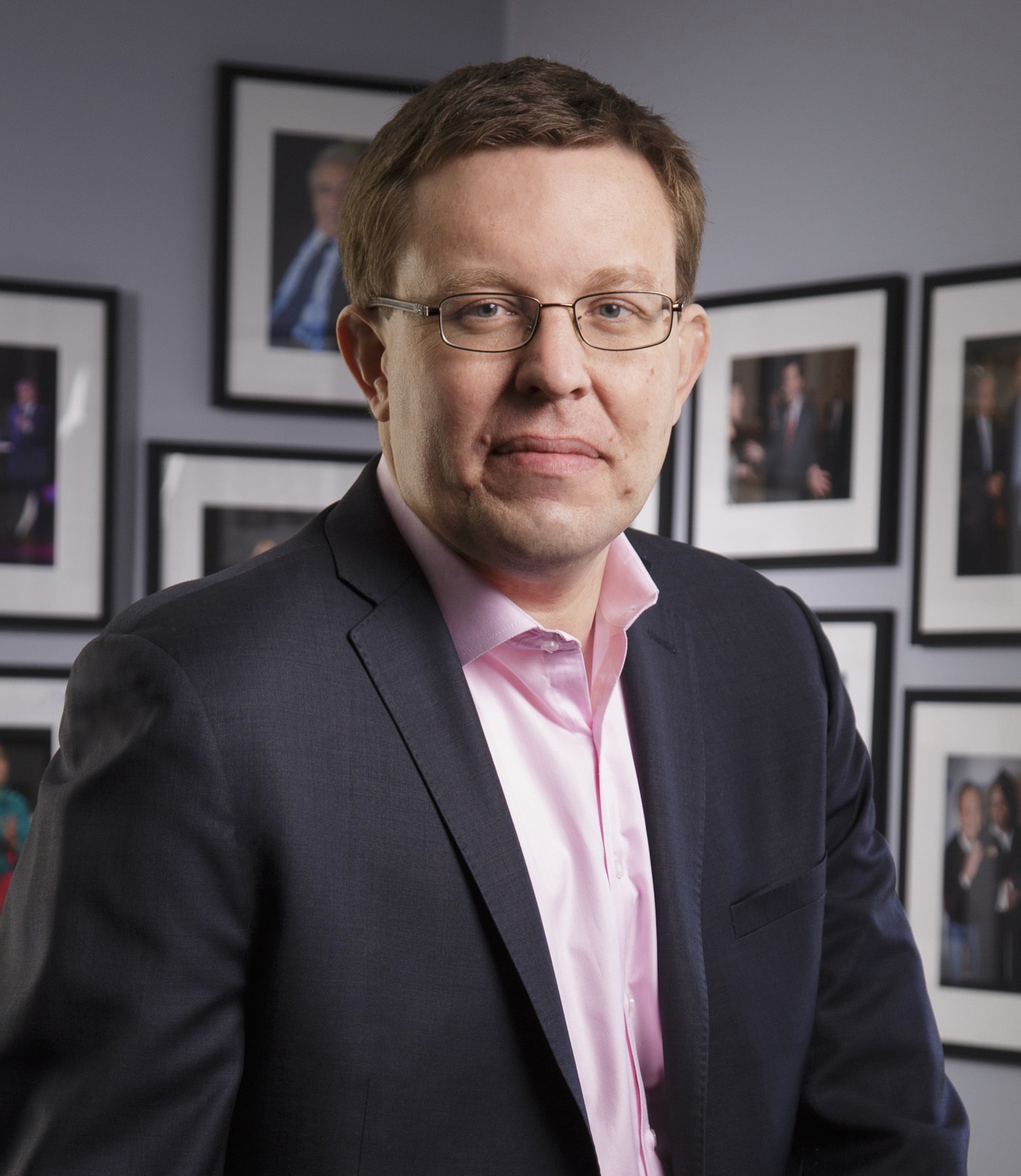
Henry Timms, executive director of New York City’s famed 92nd Street Y (92Y), is at the forefront of this movement. Under his leadership, 92Y is re-imagining the role of the traditional community center, using both innovative programming and technology.

Timms is helping bring the movement to scale, teaching other nonprofits to think differently about the means by which they advance the greater social good. In 2012, he founded #GivingTuesday, which engages more than 10,000 partners in an annual, global day of giving.

He also co-founded the annual Social Good Summit, which pioneered a new, inclusive summit model that opened up critical discussions to a much wider audience and led to concurrent gatherings around the world. As an extension of the Social Good Summit, Timms and a team developed a MOOC (massive open online course) called “How to Change the World,” in which 51,000 participated in its first year

With Jeremy Heimans, co-founder and CEO of Purpose.com, a social business that builds movements, Timms is also changing the way individuals and leaders across all three sectors think about the concept of power. In a Harvard Business Review article, “Understanding ‘New Power,’” they wrote: “Power isn’t what it used to be. Goliaths are being toppled by Davids, from the networked drivers of Uber to the crowdfunded creatives of Kickstarter. But the dynamics are confusing, especially to managers in traditionally powerful institutions. … Understanding how the nature of power is really shifting — who has it, how it is distributed, and where it is heading — will be a defining challenge.”

Timms and Heimans conclude the article by calling on the innovators of “new power” to address the social good.

“We need new power leaders to make a grand entrance into civil society,” they wrote. “Those capable of channeling the power of the crowd must turn their energies to something more fundamental: redesigning society’s systems and structures to meaningfully include and empower more people. The greatest test for the conductors of new power will be their willingness to engage with the challenges of the least powerful.”


david-king David P. King is director of the Lake Institute on Faith and Giving and assistant professor of Philanthropic Studies at the Indiana University Lilly Family School of Philanthropy. Previously, he was assistant professor of Christian History at Memphis Theological Seminary and earned his Ph.D. from Emory University. His recent research focuses on the rise of evangelical relief and development NGOs, religious humanitarianism and religion’s engagement with international affairs.


Research reveals approaches to retain volunteers

By Sponsor Insight

By Marlene Walk, assistant professor, Indiana University-Purdue University Indianapolis |

Most nonprofit organizations rely on volunteers to help provide services and could not function without this source of support to conduct programs, raise funds or serve clients.

In 2013, 25.4 percent of adults in the United States volunteered with an organization contributing a little over 8 billion hours. However, nonprofits are confronted with two main challenges with a volunteer workforce.

First, nonprofit organizations are increasingly confronted with pressures to become more competitive. As volunteers are important to organizational performance, nonprofit managers are faced with increasing demands to account for the value of volunteer contributions, thus, requiring them to adapt their practices.

Second, the nature of volunteering is changing. Volunteers’ motivations and expectations have become more individualistic and ad-hoc and are less driven by long-term commitments. Moreover, contemporary volunteers increasingly expect their motivations and expectations to be met and are willing to leave the organizations if they do not perceive a good fit due to a mismatch between volunteer motives and volunteer tasks.

Thus, knowledge about how to attract, and most importantly, how to retain volunteers is even more important for nonprofit leaders.

Given these two challenges, researchers have proposed two main approaches to facilitate volunteer retention through a match of volunteer motives to volunteer tasks.

One approach — the functional perspective — argues that individuals with different reasons to volunteer might be willing to take on same types of tasks. The other approach — the diversified perspective — argues that only particular motives relate to individuals’ willingness to take on particular tasks as such that different tasks satisfy different volunteer motives.

For example, the functional perspective implies that volunteers are driven by motives such as altruistic values, professional career opportunities, and possibilities to spend time with friends and would be equally satisfied when given the task to lead a meeting, reorganize the filing cabinet, help others or organize a fundraising event. The diversified perspective on the other hand posits that individuals with a particular motive such as enhancing career opportunities will be satisfied when given a particular task such as leading a meeting, but less satisfied when given other tasks such as reorganizing the filing cabinet.

In an article that I co-authored (Willems & Walk, 2013), we shared our research that found that neither approach is sufficient and provided evidence for the importance of a combination of the functional and the diversified perspective.

In a research sample of youth volunteers, my co-author and I learned that most volunteers are satisfied if provided with the possibility to fulfill a broad and basic set of tasks. However, additionally, we identify four, more diversified, relationships between motives and tasks.

  • For those individuals with high expectations to express their personal altruistic values through volunteering, tasks related to administration, leadership, facility maintenance and fundraising were especially salient.
  • If volunteers aim to create or enhance professional career opportunities and are less motivated by the opportunity to be with friends, leadership tasks are most likely to fulfill their expectations.
  • Individuals who are not motivated by the creation of professional career opportunities are most satisfied when provided with administrative and facility maintenance tasks.
  • Finally, individuals who volunteer as a means to compensate for negative feelings or address personal problems are most satisfied if provided with tasks that can be done individually.

Ultimately, my co-author and I propose that effective volunteer management strategies could consist of a generalist base that guarantees the execution of a basic and broad set of volunteer tasks. However, in addition to that, nonprofit managers might want to pay attention to the motivational differences among specific groups of volunteers in order to be able to better match extreme variations of individual motives to volunteer tasks.


marlene-walk Marlene Walk is an assistant professor at the School of Public and Environmental Affairs at IUPUI and studies human resource and volunteer management in nonprofit organizations.

Former leaders reflect on change, progress

By Feature, Leadership

By Lynn Sygiel, editor, Charitable Advisors |

Nonprofit careers can start in a variety of ways.

— Willis Bright initially was a social worker, which developed his listening skills.

— Ellen Annala worked for multiple nonprofits, which helped shape her understanding of community.

— Jim McClelland was trained as an engineer but made the transition after a tutoring gig.

— Betsy Bikoff worked in the for-profit sector, but served on nonprofit boards.

— Hoagland Elliott had a lengthy for-profit care before taking on the challenge of leading a neighborhood health clinic.

All five retired from prominent nonprofit careers in the Indianapolis area. Combined, they spent over 150 years in the field.

During their careers, there were changes in the economy, technology, laws and regulations, competition and American culture. The number of nonprofits grew to over 1.5 million nationally, and between 1977 and 1997, increased 115 percent, or about 23,000 organizations per year.

This summer, these longtime leaders sat down with Charitable Advisors to share their know-how, discuss changes they have seen and offer input on what still needs to be changed in the nonprofit world. This is the second story from the conversation.

Two former leaders noted an evolution of executive titles. In the ’60s and ’70s, leaders at both Goodwill and United Way were called executive secretaries. The original titles, according to Annala, made it clear that the executive worked for the board. They have also witnessed a shift in executives’ roles in the community.

“While the executive is still hired by the board, I think over the years, the role, too, has evolved, not just within an organization, but in the city and in the community,” said Annala, who retired in 2012 after 23 years in leadership at United Way of Central Indiana.

In the 1970s and 1980s, nonprofit leaders were casual players in civic projects and in the transformation of Indianapolis. The movers and shakers, mostly from the corporate world, were called the city committee, and generated the ideas that would change the city’s future.

Today, nonprofit leaders have been asked to sit at that table.

Annala thinks that happened because corporate leaders could no longer spend 25 percent of their time in civic leadership roles.

Today’s nonprofit leaders deserve a lot of credit, said Bikoff.

“It takes real talent to be an executive director or CEO of a nonprofit when you think about it. The board chair changes every couple of years, sometimes every year,” she said.

“It’s quite a feat to be excellent, and fortunately, we have some excellent, excellent CEOs and executive directors of nonprofits in our community and we have for a number of years,” said the former Fairbanks Foundation vice president and chief grant-making officer who retired in January.

Another area that has changed during their careers is the boards’ responsibilities. As the numbers of nonprofits increased, so has regulatory scrutiny. In the 1960s, there were concerns about the growing universe of charitable, tax-exempt organizations. By the 1980s, nonprofits supported by grants, contracts and earned income were governed by insider boards. The governance structure of nonprofits has become more professionalized, and the level of expectations for leaders has changed, too.

“There are boards that I have observed that the nonprofit’s leadership was trusted so much, nobody asked any questions,” said Bright who retired in 2012 after spending 25 years at Lilly Endowment.

“When there was an implosion, everyone was scurrying around trying to figure out how to save this organization where a few questions along the way might have enabled the organization to have not only a real purpose that it was serving in the community and adding value, but it would not have gotten into the difficulty it was experiencing at the time,” he said. “There has to be trust with accountability.”

McClelland, too, thinks questions from board members are critical. Earlier this year, McClelland completed 41 years as president of Goodwill of Central Indiana.

“I would tell people on our board, many times the best thing you can do for us, is to ask us the right hard questions. That is hugely valuable. Make sure that we’re thinking things through, that we’re not missing something,” said McClelland.

All five leaders worked through difficult financial times. During their watch, there were a half dozen recessions, including the major recession of 2008. The bursting of an $8 trillion housing bubble and the financial market chaos led to a downturn in nonprofit contributions and return on investments.

But not all the changes that resulted were bad.

“In the nonprofit sector, you don’t have those same market forces and some nonprofits can hang on long beyond their usefulness and, quite frankly, beyond their demand,” said Annala. With the recession she saw clarity and in some nonprofits’ cases, a nimbleness or willingness to change.

“The shift in accountability and competition has forced a sense of being clearer about what you’re doing, who you’re serving, what you’re trying to accomplish and whether you’re doing it. I think there’s a new clarity,” said Annala.

According to Bikoff, planning for the future has become more the norm.

“Since the 2008 recession, more nonprofits and more nonprofit boards are taking planning more seriously, and trying to pay attention to what the organizational strength is, and are leaving behind those things that they used to do that they are no longer doing as well,” she said.

“That’s not all organizations, but a great many of them have tried to narrow their focus and many are also paying attention to their ability to implement those plans, which is almost more important than the plan itself. That is a good sign.”

Bright believes there is an incredible amount of pressure on executive directors to raise money, which has challenged program quality, because leaders have to spend so much time identifying resources.

“I’m not sure resources have increased to the same level as the number of organizations that are out there. For all the talk of sustainability, it makes it very difficult for that to occur,” Bright said.

While urban planning began in the early 20th century, strategic planning is relatively new for the nonprofit sector. Annala said even that planning has changed in order for organizations to remain competitive.

“I think there’s a role for some strategic planning or at least being clear about strategic direction. Before it was like ‘plan, do, plan, do.’ Now I think it’s a little more like plan, do, plan, do (faster). It’s like you’re going roughly west or roughly east and you may zig and zag along the way, as you try different things, but it’s not the long strategic planning that some of us used to go through.”

For Elliott, who retired after a decade as CEO at Raphael Health Center, a quality needs assessment is critical for any group thinking about starting a nonprofit.

“When Tabernacle Presbyterian Church decided to do something to help the health care in the neighborhood, they did the best needs assessment I have ever seen. When I came in a year later, I was just amazed at what a thorough job attendees of the church did. They traveled to other cities, looked at other health care sites. They did door-to-door neighborhood surveys. Right from the start, there was a need,” said Elliott.

But the economy made others take notice, too. Returns on foundations’ investments saw the same downturn.

“I think a number of the forces that you talk about were initiated by the funding community, private, public and others. I think it’s made boards of directors take their stewardship more seriously. They are not just there but try to give some direction, to do some planning and to figure with the staff how they are able to achieve outcomes and impact,” said Bright.

McClelland believes the nonprofit sector is incredibly fragmented and that over his career, there has been a proliferation of nonprofits, and an enormous increase in public spending to address major social problems. In his opinion, there are good things happening, but each one addresses one problem, issue, or one target population. They have difficulty aggregating capital or talent, replicating what works and getting it to scale.

“If you look at a lot of major social indicators, they’re worse today than they were 40 years ago,” McClelland said. “There’s a lot of data supporting the notion that these major social problems are related to poverty, low education levels, crime rate and teen pregnancy. As a society, we don’t tend to treat them as if they’re related. The public sector operates in silos. We have got to stop operating as little independent fiefdoms.

“I don’t think the answer is more money. I think the answer lies in making much more effective use of the existing resources.

“We have got to start working in a much more focused manner to leverage and combine the capabilities across the sectors. It could be within the sectors and focus. Not just collaboration for the sake of collaboration, but focused efforts to achieve something that right now is proving to be very difficult to achieve. I think this could happen. I really do. And I see some examples of it now. There needs to be a lot more of it,” said McClelland.

What is each proudest of?

  • For Annala, it is bringing a greater focus to community-level outcomes and watch as is the case with earlier childhood.
  • For Bikoff, it is helping the Fairbanks Foundation grow in the early years, and establishing strong, ongoing relationships with grantees and making a difference in the community.
  • For Bright, it is working to create a funders’ collaborative that supports high-quality summer programs for youth and influencing others around the country to do similar things.
  • For Elliott, it is building a staff from four to 15.
  • For McClelland, it is how Goodwill has adapted and improved over time.
Profiling the nonprofit leader of tomorrow

By Feature, Leadership

By Jean Crawford, contributor, Ivey Business Journal |

The nonprofit sector’s ability to provide its services has come under ever-increasing pressure with changes in public policy, significant client demographic shifts, new commercial initiatives, and growing competition from for-profit providers. Although the sector has responded creatively in many instances, the increasingly complex environment is straining the skills and abilities of nonprofit leaders to meet such demands.

Whether in the profit or the nonprofit sector, all organizations fundamentally need strong leadership talent to execute their strategy successfully. Therefore, ensuring a steady supply of leaders is critical. This is not an easy task.

Button Text

Why the world needs tri-sector leaders

By Feature, Leadership

By Nick Lovegrove and Matthew Thomas, contributing writers, Harvard Business Review |

The critical challenges society faces — such as water scarcity, access to education, and the rising cost of healthcare — increasingly require the business, government and nonprofit sectors to work together to create lasting solutions. But this is only possible if the senior executives of our leading institutions are what Dominic Barton, Worldwide Managing Director of McKinsey & Company, refers to as “tri-sector athletes” — leaders able to engage and collaborate across all three sectors.

Our research at The InterSector Project shows that these leaders often have prior experiences in each sector and a unique ability to navigate different cultures, align incentives and draw on the particular strengths of a wide range of actors to solve large-scale problems.

Take water scarcity. A potential 40 percent gap between global freshwater demand and supply by 2030 puts billions of lives — and dollars — at stake. And all three sectors have skin in the game. For agri-food and beverage businesses, fresh water is an essential ingredient in their production process. Governments are often the stewards of water and regulate its use. Nonprofits work to ensure access to clean water and conservation of watersheds and the environment.

Button Text

In the ‘reverse Peace Corps,’ future leaders hone skills

By Feature, Leadership

By Frances Stead Sellers, senior writer, The Washington Post |

After the speeches, the presentation of certificates and the photo op come the slightly sophomoric awards you might expect at an eighth-grade graduation. Graduation day at the Washington International School? A fin d’annee fete for Model U.N. students? Or some hug-the-globe gig for junior diplomats that Secretary of State John F. Kerry dreamed up?

No, this is the 15th graduating class of Atlas Service Corps, a Washington-based nonprofit founded in 2006 with the goal of creating a “global network of changemakers.” At a time when terrorist groups win attention for recruiting disillusioned young Westerners to join them, Atlas Corps is acting as a “reverse Peace Corps,” aiming to identify outstanding young nonprofit leaders around the world, and to bring them to serve and share their overseas experience for a year or so in the United States before they return home to apply their new skills. After a recent endorsement from the State Department, the fellowship has attracted as many as 1,000 applicants a month.

Button Text

How to develop as a nonprofit leader

By Feature, Leadership

By Bridgespan writers |

Many people who are working within the ranks of nonprofit organizations could become great senior nonprofit leaders. However, in part because of budget constraints, few organizations in the sector have formal professional development programs to prepare mid-level managers for senior roles. As a result, most mid-level nonprofit professionals must take responsibility for their own career development.

One way to begin the process is to tap the experience of senior leaders who already have worked their way up within the sector. To that end, we spoke with six senior nonprofit leaders — all of whom have spent much if not all of their careers working in the nonprofit sector — about their career paths and the lessons they learned along the way. We also asked what advice they would give to mid-level managers looking to move into senior nonprofit leadership roles.

Button Text

BKD Foundation’s 2014 charitable giving surpasses $10 million

By Fundraising, Sponsor Insight

The BKD Foundation is the firm’s charitable arm. The BKD Foundation is solely funded by BKD partners’ and employees’ monetary contributions. It aims to enrich the communities BDK serves through financial donations and volunteerism. The foundation supports not-for-profit organizations of all types and sizes, including employees serving in volunteer roles.

bkd-numbers

Supporting youth organizations

While the BKD Foundation provided support to a number of Indiana organizations, it made significant contributions to causes that serve the state’s youth. Junior Achievement of Central Indiana, The Villages, Big Brother Big Sisters of Northeast Indiana and Boys & Girls Club of Evansville are just a few of the organizations that benefited from foundation dollars. But the support went beyond monetary, numerous employees also regularly volunteered.

Outside of youth-specific charities, the Indianapolis and Bloomington BKD offices continued its five-year donation commitment to the Eskenazi Health Foundation for its violence intervention program and to the Community Foundation of Bloomington and Monroe County, a nonprofit that supports local charities.

Indiana BKD employees personally went above and beyond with charity efforts by donating both money and time — to Habitat for Humanity homebuilding efforts, the Salvation Army Toy Town toy drive, the March of Dime and many more.

Surrounding communities

The Fort Wayne and Merrillville offices sponsored The Carriage House Dancing with the Fort Wayne Stars event. Several BKDers also volunteered to tabulate votes and help with event-related activities throughout the year.

In Evansville, the team chose to support Community One, a local nonprofit dedicated to housing restoration and community development needs.

To learn more about the foundation’s support, browse the digital version of the 2014 foundation report.