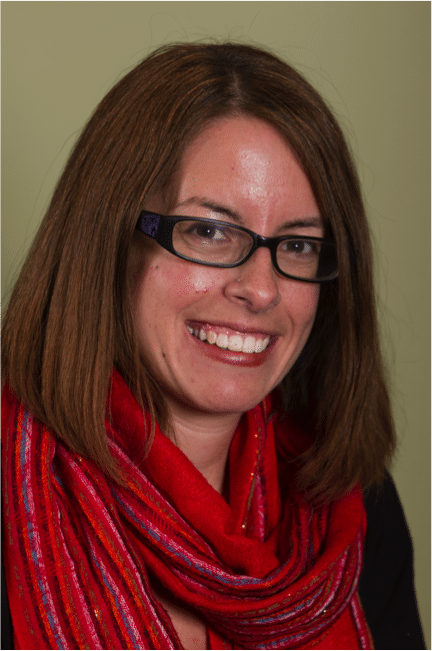
By Bruce DeBoskey, The DeBoskey Group, The Denver Post
Last year was a great year for philanthropy. It included record levels of giving and impact investing and more strategic approaches to charitable efforts. This year, 2017, will likely launch its own unique trends. I’ll be watching for these highlights:
1. Reduced tax incentives for giving
Many knowledgeable observers predict that Congress will reduce income tax rates for the wealthy — thereby decreasing the tax savings from charitable deductions. Many also expect the estate tax will be eliminated — reducing the tax incentive to make final charitable contributions.
Some predict the new administration will seek to limit or even eliminate charitable deductions. Others expect that changes will be made to donor-advised funds — implementing payout requirements similar to those required of private foundations.
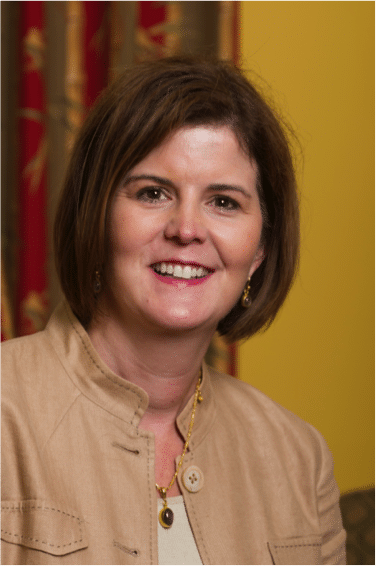
By Jamie Levine Daniel and Suzann Lupton, School of Public and Environmental Affairs at IUPUI
Creative placemaking refers to a collaborative process we can use to help shape public spaces in order to maximize shared value. More than just promoting better urban design, creative placemaking facilitates creative patterns of use, paying particular attention to the physical, cultural and social identities that define a place and support its ongoing evolution.
Installation of public art, such as the murals along the sides of building in the Mass Ave. District, and community beautification projects are just a couple of examples of how Indianapolis has embraced this evolving field.
With community-based participation at its center, an effective placemaking process capitalizes on a local community’s assets, inspirations, and potential, and results in the creation of quality public spaces that contribute to people’s health, happiness and well being.
Many organizations across the state are interested in helping to build strong, creative communities. Not as many, however, understand the physical, financial and human resources needed to lead these efforts.
To address this need, the Indiana Arts Commission recently created the Capacity Building Partnership Program. The goal of the program is to develop and support initiatives that “further develop the professional skills of the staff of cultural organizations, community leaders and individual artists” and strengthen the connection between people and the places they share.
One project of this program is a placemaking capacity-building workshop organized and hosted by SPEA at IUPUI and presented by several Indiana organizations with deep knowledge and experience in placemaking. One goal of this workshop is to move the discussion of programs and service provision away from inputs and outputs, and toward a broader conceptual discussion.
Of course, understanding the basics is important and questions of interest include: Should we do this? Who is this for? Who wins and who loses if we allocate resources here? If we decide to move forward with an initiative, what happens after the program ends? How will we know if the initiative did what we wanted it to do?
To address these questions, the workshop will include a Creative Placemaking 101 session and “Lighter, Quicker, Cheaper,” a session designed to generate low cost, introductory creative placemaking actions. Local stakeholders Big Car, Prosperity Indiana, the Harrison Center, the Hamilton County Convention and Visitor’s Bureau, the Polis Center, Indiana Housing and Community Development, the Office of Community and Rural Affairs are among the organizations that will help lead those discussions.
Additionally, the workshop will examine some of the assumptions that are made about programs and service delivery; hone external and political environmental assessment skills (e.g., asset mapping, building social capital, assess the political climate, creating alliances); and building networks that cross local, regional, demographic and wealth boundaries.
The workshop’s focus is on arts and culture, using the lens of creative placemaking, but this approach can be used to examine public and nonprofit service delivery across subfields.
If this piques your interest, keep an eye out for the early summer 2017 event. We will have complete details of time, location and registration information finalized in January.
Jamie Levine Daniel is an Assistant Professor of Nonprofit Management at the IU School of Public and Environmental Affairs at IUPUI. She holds a doctorate in public policy and management from the John Glenn School of Public Affairs at Ohio State University.
Suzann Lupton is a Clinical Assistant Professor of Nonprofit Management and Director of Academic Affairs at the IU School of Public and Environmental Affairs at IUPUI. She is a doctoral candidate in philanthropic studies at IUPUI and a graduate of the Robert H. McKinney School of Law.
At Random Acts of Flowers (RAF), recipients of the arrangements are touched and surprised.
“The calls we get from these recipients, they just make you weep because you know what that arrangement looked like. You know it was not a big extravagant bouquet, it was a tiny little happy, made-with-love arrangement to a stranger,” said Alison Kothe, Indianapolis’ RAF executive director
One Eskenazi Hospital patient called the week after a delivery and left a voicemail saying, “‘They’re making me go to this rehab place way out on 38th Street, but they cannot make me not take my flowers. They may kick me out, but I’m taking my flowers.’ It was so cute, and it was wonderful to think that a week after we made the delivery, her flowers were still well enough to go to the rehab place,” said Kothe.
Volunteers have a similar reaction. Recently two Indianapolis-based Avant Healthcare employees were involved in a corporate team-building activity.
Their experiences were similar.
“By the end of the day, after you’ve sorted through all that has come in, it’s beautiful to see all the “new” flowers put together that are ready for bouquet arrangements. It was so much fun volunteering at RAF,” said Abby Flick, an Avant Healthcare employee.
“What an amazing organization. I love the idea of brightening up the day of someone in need with beautiful flowers,” said her colleague, Jamie Burns.
How does Random Acts of Flowers choose its cities?
Founder Larsen Jay said there are four things they look when selecting cities.
Is it a place where a lot of events are held? Galas?
Is there access to health care facilities?
Is the community known for philanthropy and volunteers?
Is there potential for long-term sustainability?
Each new branch gets help from the national organization to set the course. With an eight-year track record, Kothe said they know what works and doesn’t. work. Each potential local site has to present a plan to the national board for approval.
“They know what doesn’t work. They’ve been very helpful steering us away from doing things that people suggest that they know are just not going to fly,” Kothe said.
Marketing materials are provided for each local site from the national office, helping provide a consistent look from bureau to bureau.
According to RAF, each arrangement costs $17, which includes overhead costs. Indianapolis raised $100,000 from donors before it opened its doors. Start-up costs vary from city to city, and depend on a lot of factors, including real estate. In the first year, Indianapolis gets $50,000 each quarter from the national organization to help ensure the branch’s success.
Locally, one way each bureau raises income is through sponsorship cards., the cost of which can be underwritten by companies and organizations. Each bouquet is delivered with a card that includes the volunteer who made the arrangement and the source of the flowers.
Kothe has a wish list for the organization:
An individual with clout with Roudebush Veteran Affairs Medical Center, so that RAF can begin to deliver arrangements to the veterans.
Community groups willing to donate vases. Must be between 4 and 9 inches tall.
Six corporate sponsors for delivery cards for the six months remaining in RAF’s fiscal year.
Cost: $1,000 per sponsor for 1,000 cards
A sponsor to underwrite the annual cost of “gas money” for the RAF van. Cost: $3,000 annually
An individual or sponsors to underwrite the cost of the composting effort.Cost: $5,000 annually
A sponsor for RAF’s volunteer appreciation event.Cost: $1,500
Over the ages, flowers have taken on symbolic meanings. Ancient Greeks, Romans, Egyptians and Chinese refer to the use of flowers in their stories and myths. The Greeks considered flowers to be of particularly high importance and associated them with the gods.
But the language of flowers, floriography, can convey simple and complex messages. Random Acts of Flowers (RAF), a nonprofit started in 2008 in Knoxville, Tenn., uses flowers as part of its simple mission: improve the emotional health and well being of individuals in health care facilities by surprising residents with recycled flowers, encouragement and personal moments of kindness.
The Indianapolis bureau, the organization’s most recent, opened in October. Renting space on East 54th Street on the city’s Northside, its purple storefront is an eye catcher. The response has been unbelievable, according to Alison Kothe, Indianapolis’ executive director. Kothe was hired in June to launch the operation, and since then, has focused on the joy of giving flowers.
[content_box box_type=”normal”]Locally, weekly flower donations come from McNamara, Kennicott Brothers Wholesale, Marvin’s Wholesale, FTD/Proflowers, Fresh Market, Flanner & Buchanan, Crown Hill Funeral Home & Cemetery, Royal Creations, Conkle Funeral Home, Leppert Mortuary, Laurel Hall, Posh Petals, JW Marriott, Lilly Lane Flowers and George Thomas Florist.[/content_box]
While she admits the logistics are complicated with a lot of moving parts, the idea of delivering flowers to people in need is not. “I call it a deceptively simple concept,” she said.
Living in Knoxville, Tenn., in 2007, RAF founder Larsen Jay landed in the hospital after a life-threatening accident. As a young filmmaker in his 30s, Jay didn’t typically receive flowers. But while recovering, he noticed how flowers sent from friends gave him a psychological boost. He also realized during his stay how many people on his hospital floor didn’t receive flowers and had few visitors.
So the next year, he founded Random Acts of Flowers, an attempt to make a difference for those in need. An RAF survey revealed that 81 percent of recipients surveyed had received no other flowers. Recent research also shows that flowers help reduce the length of hospital stays and lowers blood pressure.
RAF now has five branches – Knoxville, Tampa Bay (2013), Evanston, Ill., (2015), Menlo Park, Calif., (2015) and its newest in Indianapolis.
Why Indianapolis? Five years ago, Betty Stilwell, then chief philanthropy officer at IU Health, mentioned the organization to Kothe. Stilwell said she had been talking with Jay Hicks, president and CEO of Prime Care Properties and Management. After meeting RAF’s founder and joining its national board, he thought Indianapolis was ready to become involved.
“Hicks was really the mover and shaker behind the Random Acts of Flowers in Indianapolis,” Kothe said. Once the commitment was made, things moved quickly. The first seed-money house party was in March of this year, and the new 501(c)3 moved into its space in September and started deliveries the next month.
As of early December, over 1,245 arrangements had been delivered to area hospitals and nursing homes.
In July, Kothe and Lindsay Potter, RAF’s program manager, traveled to Knoxville for training. Immersed in the details of the operation, they had a series of hands-on trainings. And one thing they learned was to be cognizant of the differences between delivering to a hospital or a nursing home.
“One of the things that I thought was particularly impressive about the Knoxville ethos is that you cannot obviously deliver to entire hospitals in a single delivery, but nursing homes are different. It’s more of a community, and we want everybody to have an arrangement,” she said.
“Ideally, in the best of all worlds, all of our deliveries would go to people in need, but because of the nature of hospitals, we have no idea who’s going to be in what room,” she said. As the organization gets rooted, Kothe wants to work more closely with hospital personnel to identify patients who really need a boost.
Another group that’s on the priority list is the veterans hospital. In all RAF branches, Veterans Day has special significance. Locally, Roudebush Veteran Affairs Medical Center is not yet on board, but Kothe is hopeful that an influential community leader can help her expedite the approval.
“It’s a shame, but we’re plugging away with the local staff through the bureaucracy. Vets are by far the most appreciative — not only are they in the hospital for longer periods of time, but almost all of them are far away from family. If ever there is a constituency that could benefit from all elements of the effort — the color, the joy, the interaction with a person being kind — it is vets,” she said.
Volunteers make up the nonprofit’s workforce. So far, 130 volunteers are orientated and trained. Potter would like that number to be 250.
In its first year, the group plans deliveries twice a week of 50 to 75 arrangements. Its first crew of 10 volunteers had a production goal of 100 arrangements or 10 per volunteer. But no matter how enthusiastic the group, Kothe said, after seven arrangements, the enthusiasm wanes. What she and Potter don’t want is for the task to become drudgery.
After potential volunteers complete an application online, they attend an hour and a half on-site orientation and training session. With a small conference room, Potter likes to limit the group to seven, with a maximum of 10. Training sessions are offered on days when volunteers are arranging, so that each new volunteer can also get hands-on training. New sessions are planned this month and in January and are posted on RAF’s Facebook page.
“If people want to do arranging, then the first time they do an arrangement, we have them work with Emily, who’s our program coordinator, and comes from a floral background,” said Potter.
Corporations have also found value in volunteering. Avant Healthcare is one that recently took advantage. The company encourages employees to give back to the community. Besides annual volunteer hours, at the Indianapolis-based company, departments can take advantage of a team-building activity.
Pam Schiefelbein, director of strategic operations and training at Avant Healthcare, was part of the team that recently volunteered for RAF. “From the time we walked in the door, to the minute we left, we felt welcomed and appreciated. As we learned more about the nonprofit, we realized that our goals were identical — we each want to have a positive impact on the patient,” she said.
Recycling is key to the effort.
Vases, all donated, have some size requirements, but have come from a variety of sources. Recently, Second Presbyterian Church and Woodstock Country Club offered spare vases. Individuals, too, have shared their excess containers.
“We focus on a certain size. So for instance, a little bud vase cannot be used because it doesn’t create a beautiful arrangement. We cannot use a coffee cup either. If we’re making 100 deliveries, we’ve got to be economical in terms of the size of vase, so we can fit it into the cart,” said Kothe.
Flowers are donated, and picked up by the volunteers. Local donors include florists, funeral homes, grocery stores and event venues.
On Mondays, one of the volunteers heads to Richmond early in the day, where FTD/ProFlowers has its home office. The volunteer fills up the van with boxes and boxes of flowers, and not only brings those flowers back, but also picks up from local contributors.
While some volunteers come with many, many years of floral experience, it is not mandatory. RAF has requirements about height and width and how many flowers for each arrangement, which isn’t necessarily universal in world of floral arranging said Potter.
What isn’t used is composted, with future hopes to generate income.
“Ultimately it would be nice to sell it because amazingly there are very few nurseries that do organic composting. They buy organic compost materials, but they don’t do it on their sites,” said Kothe.
While Potter has worked for other nonprofits, she believes that every week RAF lives up to its mission.
“Every week, we do what we say we’re going to do, and it’s easy to measure it. I’ve worked in places where you’re working hard, and you’re doing all these wonderful things, but you never know if you’re making the impact that you want to be making.”
Locally, RAF plans to further research the effect. Dr. Burke Mamlin, a board member, is a researcher at Regenstrief Institute in Indianapolis, and went on the first Eskenazi Hospital delivery.
“He had read the literature that a growing body of research indicates there is a real psychological benefit. He was so excited about just the visceral reaction that he saw among the patients, that he has taken it upon himself to take this research to the next level. He wants to try to determine what exactly is the biological phenomenon that occurs that creates shorter hospital stays, blood pressure lowering and recovery rates. That would be very exciting,” said Kothe.
Kothe said RAF is a no brainer.
“There’s no downside to it. It’s not political, it’s not religious, and it’s not anything but bursts of joy in people’s lives that have none. And then there’s the personal contact, the encouragement.”
By Angela White, senior consultant and CEO, Johnson Grossnickle and Associates
Major gift donors are crucial for the ongoing sustainability of your nonprofit’s mission. In fact, high net-worth donors often provide as much as 94 percent of the funds for nonprofit campaign initiatives. So, it is important that we understand their giving patterns, preferences and motivations.
The 2016 U.S. Trust® Study of High Net Worth Philanthropy released this week provides nonprofits with valuable insights on this important donor demographic. It is the sixth edition of the biennial study, researched by the Indiana University Lilly Family School of Philanthropy and U.S. Trust.
The report surveyed 1,435 U.S. households with a net worth of $1 million or more (excluding the value of their primary home) and/or an annual household income of $200,000 or more.
On Dec. 7, I have planned a webinar with Una Osili, Director of Research at the Indiana University Lilly Family School of Philanthropy, and Claire Costello, Managing Director of the Philanthropic Solutions Group at U.S. Trust. We will review in depth the findings and discuss how nonprofits can use this data to structure their major gift fundraising program. Please register now to join us!
In the meantime, here are 10 of the key findings from the report:
High net-worth (HNW) Americans are exceedingly generous, with more than 91 percent of HNW households donating to charity in 2015, far surpassing the 59 percent of donors in the U.S. general population.
The average gift size of HNW households ($25,509) is 10 times greater than general population households average gift ($2,520).
The volunteer rate among the wealthy (50 percent) is double that of the general population (25 percent). This is an important figure, as the study found 84 percent of wealthy individuals donate to at least some of the organizations where they volunteer and volunteering HNW households gave 56 percent more than those who did not.
Most HNW households intend to continue to give at this generous level in the future (55 percent) or even increase their giving (28 percent) in the next three years. Just 3 percent of HNW households plan to decrease their giving in the next three years.
High net worth donors gave to an average of eight different charities and a variety of causes. “Basic Needs” were the charitable category supported most frequently, with 63 percent of HNW households having donating to those charities in 2015, followed by religious (49.6 percent) and health charities (40.2 percent).
Religious and basic needs organizations received the highest share of HNW charitable dollars in 2015. Religious organizations received 36 percent of overall dollars given, basic needs followed at 27.9 percent and education received 12.4 percent.
High net worth households were motived to give primarily because they believe in the mission of the organization (54.1 percent). Other top motivators were believing their gift can make a difference (44 percent) and personal satisfaction (39 percent). Only 18 percent of donors said they were motivated to give because they would receive a tax benefit.
HNW donors indicated they believe charitable giving (45 percent) and volunteering (31 percent) have the greatest potential for positive impact on society, far above voting for a political candidate (13 percent) or impact investing (3 percent).
More than half (54 percent) of the HNW donors indicated that they are concerned about the impact their donations may be having, and 78 percent indicated they don’t follow up with charities to evaluate the impact of their donation.
High net-worth donors envision themselves making a charitable bequest, indicating that they expect to leave 12 percent of their wealth to charities – an important beacon of future planned giving opportunities for nonprofits.
Angela E. White, CFRE, has been instrumental in JGA’s success since 1996, when she joined the JGA team. In 2011, she became CEO of JGA, responsible for providing day-to-day leadership to the firm and guiding the JGA staff, while continuing to provide tailored consulting services directly to our clients. White has a high level of expertise in philanthropic consulting in healthcare, education, social services, arts, and faith-based organizations. She also has considerable depth in strategic planning and data analysis.

The reality of modern business is one of ever-accelerating evolution and change.
New technologies can uproot and transform entire industries, from new service models to new devices to new ways of working. These realities put tremendous pressure on organizations to adapt quickly.
But evolving just to keep up can be messy and aimless. Rethinking your business, however, should be intentional — and that’s why we at SmallBox use the design thinking process.
Design thinking is a problem-solving methodology that puts people — specifically, your audiences — first. One of the benefits of this human-centered approach is that it’s empathy-heavy on the front end.
Except for a few Revolutionary War buffs, few people have likely heard of French nobleman Comte de Rochambeau. Rochambeau fought with the colonists against the British, and there’s an old tale that he and George Washington played rock, paper, scissors in a tent shortly after the British surrendered at Yorktown.
In some circles around the country, including Indianapolis, the popular playground game is called “roshambo.” A reference traced all the way back to the venerable French count? Probably not, although the Revolutionary War would have been a lot less bloody if it were contested by roshambo instead of cannons and muskets.
Indianapolis-area kids are setting a good example when it comes to settling conflicts on the playground, said Christine McConnell, the development manager for Playworks, an international program focused on helping kids play together in a safe and harmonious manner.
“We have seen the statistics bare out that the arguments that happen at recess carry over to buses, carry over to the walk home, carry over, carry over, carry over. And when you diminish one, and you alter that path, then you see a dramatic reduction in all of that,” said McConnell.
Relatively new to Indiana, Playworks Indy opened its office four years ago. Indiana University Health provided the funds to make the program available in the state.
According to Joyce Hertko, director of community outreach and engagement at IU Health, the company learned about the nonprofit and believed it was a strong and worthy organization that could make a difference in area schools. For a group focused on health, she said, it made sense.
“We talked about the research that’s been done to show that when kids are active, and they have time out from school, they actually can be more productive in school,” said Hertko.
But it’s more than just playing.
“I think also on the playground, students learn how to work with their peers, and they learn how to work out a problem. It’s a great time to test their leadership skills,” said Hertko.
Playworks started in Northern California 20 years ago after a principal complained about escalating schoolyard conflicts and their negative effects on the school’s culture. Jill Vialet, a school volunteer, was moved to action and started Sports4Kids in two Berkeley, Calif., schools. That was in 1996, and in 2004, she was named an Ashoka fellow, a prestigious award that carried with it financial support for her to expand the program. Her goal is to “provide healthy, inclusive recess and play to low-income schools.”
In 2009, the organization was renamed Playworks, and according to McConnell, a region and school has to be all in to make the program succeed.
“The school has to be interested in having the transformation process occur, and they have to have an environment that’s conducive to it. It cannot just be another program that is put upon a school,” she said.
This school year, according to Audrey Hall, local Playworks program director, there are 5,300 students receiving direct service through its Coach and TeamUp programs.
Four IPS schools, School #61, Clarence Farrington Elementary; School #107, Lew Wallace; School #44, Global Prep Academy; and School #69, Kindezi Academy and one charter school, Irvington Community Elementary, have fulltime recess coaches.
In addition, four Washington Township schools are involved in the nonprofit’s TeamUp program, which works with an on-site coordinator to teach, model and empower a sustainable recess program.
“The Coach program is really an intensive in-school program. Our coach lives in the school. For our schools in this area, they’re literally getting a staff person. The kids know and respect and love this person. Coaches also go in and do class game time, so they’re in the classrooms, too. It’s really woven into the fabric of the actual school day,” said McConnell.
In addition, teachers can schedule class game time to help develop skills and interpersonal relationships. These can be anything from help with kindergartners struggling with colors or the alphabet to third-graders not getting along in the classroom. In Indiana, coaches have pioneered a break in the middle of ISTEP testing.
“The goal is that it’s not something extra for the teacher to do, but something they look forward to,” said Hall.
Right now, all area coaches are AmeriCorps volunteers and trained by the nonprofit. Every Friday, the six have a 90-minute session, where together they continue professional development, learn new games and talk through challenges. Who makes a good coach? Hall said she wants coaches who can relate to staff, have youth-work experience, a positive personality and for whom the fun factor is high.
Because AmeriCorps is built on service, these coaches also plan community events. Last year at School 61, the coach did a community event and Playworks provided the refreshments. Over 250 families came.
“So the school looks at us as a convener, and we’re a natural vehicle for that, we can be a good partner in helping them to reach and engage their parent population. It’s a positive force in that way,” said McConnell.
Just how important is recess? Three years ago, The American Academy of Pediatrics issued a policy statement about “The Crucial Role of Recess in School,” including identifying the benefits — cognitive, social, emotional and physical — of a safe and well-supervised recess. This year Rhode Island made mandatory a 20-minute recess for elementary students, including sixth-graders.
At a Playworks’ school, students are invited to the playground, which is mapped with designated areas for games. Boundaries are visible and are made with cones, chalk or painted lines. Activities vary by age group, and students can select from a variety of games – 4-square switch, sharks and minnows and alligator swamp. Many are games that have been around, but with new names.
There is enough equipment on the playground to provide active play. Hall said the coach’s goal is to create an environment where kids want to get out and play. Every school is a little bit different, but the goal is to keep it fresh.
Playworks activities are designed to engage students in physical activity, foster social skills related to cooperation and conflict resolution, improve students’ ability to focus on classwork, decrease behavioral problems and improve school climate.
Every recess ends with an organized closing.
“The kids get back in line, they let all the steam out, and they walk back into the classroom in an orderly fashion. So the teachers earn back a time with tushes in the seats. The teacher is not solving bullying issues, so they’re getting increased learning opportunities, and the teachers are getting to teach more,” said McConnell. Over the course of the school year, according to Playworks’ data, the teacher gains 18 hours in instructional time.
[content_box box_type=”normal”]
Playworks services
Compiled by Lynn Sygiel, editor, Charitable Advisors
Playworks is changing school culture with safe, fun, and healthy play at school every day. Only elementary schools and its staffs are eligible for Playworks.
In the Indianapolis-area this school year, 5,300 students are receiving direct service through the Coach and TeamUp program.
Here’s an overview of Playworks programs:
Playworks Coach: fulltime recess and in-classroom game coach, based at the school.
Indianapolis area schools
School 44, Global Prep Academy
School 61, Clarence Farrington Elementary School
School 69, Kindezi Academy
School 107, Lew Wallace Elementary School
Irvington Community Elementary, charter school
Playworks TeamUp: partners with a group of elementary schools and provides an on-site coordinator to teach, model and empower a sustainable recess program.
Washington Township: Greenbriar, Fox Hill, Nora and Crooked Creek elementary schools.
Junior Coaches: A leadership program for fourth- or fifth-grades at Coach schools. After teachers and administrators identify potential candidates, these elementary students develop skills to take on added responsibility for leading recess. To set them a part on the playground, they wear purple shirts.
Playworks Pro: provides professional training and ongoing development to school staff, paraprofessionals and after-school care providers to create and maintain a great recess and play environment throughout the school year. Indianapolis worked with the Indiana State Department of Health to identify regions needing pro-training in schools, districts or youth-serving organizations. In the Warsaw area, multiple elementary schools from several districts came together for pro-training.
Training: provides specific training for youth-serving organizations’ staffs. Last year, Playworks trained the summer program staff for Nicholas Park, and Big Car’s staff were trained to understand crowd management and attention getters.
A 348-page game guideis available for schools, youth groups and church youth groups.
Corporate Playworks: Play Days is a fun and active team-building, volunteer and community engagement experience to get employees out of the office and onto the playground, serving kids and schools.
2016 survey results
In Indianapolis administrators, teachers and school support staff completed surveys. Of the 84 Indianapolis-area respondents, 88 percent wanted Playworks to return next school year.
Here is the compilation:
[/content_box]
According to Hertko, last year IU Health offered Playworks as one of its options for five IPS schools and three parks. School 69 opted to have Playworks and positive messaging painted on the school’s wall. That day, the principal reported there were no discipline problems, not even little things.
The program has real, measurable data to prove its effect. Mathematica Policy Research and Stanford University found that a Playworks recess can transform school climate, paving the way for less bullying and more focus on learning.
“You can go to a number of nonprofits here in Indianapolis that are doing good work, and you can hear a story of transformation, and it is just as touching and just as important,” said Hertko.
“I think what is different about Playworks is they have metrics in place that also measure that. There are students who are stepping up to be leaders who weren’t, and when the program is measured among teachers and administrators and students, they’re actually moving the dial on these issues. And that, I think, is really important,” said Hertko.
Junior coaches add a unique dimension to the program. These are fourth- or fifth-graders who are identified by teachers and administrators as potential playground leaders. On the playground, they are the ones in the purple shirts. Their end goal: to lead recess.
“It’s our leadership program and a core component. We take fourth- and fifth-graders who are leaders in their schools, but they’re not necessarily your student council presidents. They have reputations, and they need additional assistance. The role is an added responsibility and requires trust. So it’s a big deal and a paradigm shifter for a lot of kids,” said McConnell.
McConnell has a desire to measure what happens to junior coaches when they leave elementary school where they stand out.
“They’re at an interesting phase, they could go either way academically, either way socially. What happens when they go to seventh and eighth grade? What does that look like? We have anecdotal information that they stay the track because they’ve had the experience, but we don’t know enough to definitely say. That’s an area to explore,” she said.
McConnell said the key skills that kids develop are empathy and inclusion.
“I think they learn to relate to each other and because of the variety of activities it allows kids to interact with each other without barriers, without boundaries. They have more empathy for each other when they go back into the classroom,” said McConnell. “The inclusion part is you’re more likely to play with people you don’t know or people you don’t like, if you all want to play kickball.
“It softens the hard edge that comes with variations in language, academic abilities and athletic abilities. They learn to work together and play together, which is a natural expression of empathy, right?” McConnell continued. “They relate to each other differently, and so that transfers over to the educational environment, the actual academic environment.”
For parents, it’s about safe play. McConnell and Hall know the challenges for Playworks students – the majority receive free- and-reduced lunch and live in high-crime neighborhoods. Walking to the neighborhood park may not be an option.
“What we recognize is that there are amazing parks in this community, but the walk to the park from a kid’s house may not be safe. Recess is, in fact, where kids tend to play and be safe. And that safe factor translates into the home. So that’s a benefit to the family. Kids want to go to school, and they’re safe. So that’s a pretty important platform,” McConnell said.
They have learned from parents and the general community that safe play slowly radiates.
McConnell said there are junior coaches who actually teach roshambo to their neighbors as a way of resolving conflict. “They might say, ‘We’re going to play tag and then we’re going to solve it this way.’”
Nationally Playworks announced its intention to dramatically expand both the current number of students enrolled in programs, as well as reach hundreds of thousands of children through free resources and training for schools. Over the next four years, the AIM program, backed by $26 million in new funding, will reach 3.5 millionkidsin7,000elementary schools.
Locally, the Indianapolis staff wants to grow direct service, but also have more opportunities to reach pockets of vulnerable children in rural and urban areas like Muncie, Anderson and Terre Haute.
One model is to work with school districts and offering a combination of training and online resources. While they cannot direct serve every region of the state, they can positively impact school districts by reaching adults.
The good news is that all of this is in the final vetting stages. This is a way to reach a critical mass at the grassroots level, and then, according to McConnell, the organization can launch a policy discussion.
“It’s what informed Rhode Island’s decision, and that’s what changes the landscape. So we recognize that offering the program to anyone who really and truly is interested and supporting him or her through the process, changes the discussion. What does it really mean to educate a child? What does it really mean to fight obesity? Let’s look at it through what builds a healthier community and what builds a healthy child,” she said.
Hertko offers everyone an invitation: Come to a school that has Playworks and observe the playground and the classroom.
“I think that Playworks teaches how to get students’ attention, how to get them focused and also teaches students to do it themselves. It’s helping the kids, it’s helping the teachers, administration to make those schools healthier environments for students to learn and grow.”
Britany Cooper dropped out of school at 18, and learned about YouthBuild from her cousin. He heard about the program to finish high school from his mom who picked up a flier. Inspired, Cooper called the same day to get into the program.
While the majority of students in this program are definitely male, this mom with a 7-year-old has about a month before she reaches her goal to be a carpenter and make a better life for herself and her daughter.
I went to Broad Ripple, and then I dropped out ’cause I had a kid. I was 18 when I had my child.
Since then I’ve been working off and on. I wasn’t doing nothing, and I was like, ‘I got to do something ’cause my child cannot see me doing nothing.’
And so I was like, ‘This is an opportunity for me to change my life,’ so I took that step. Thank God that I’m here and I’m just trying to do something that I’ve been wanting for all my life. I’m changing my life around. I teach my daughter the way to success is to take the opportunity.
I changed when I came here: I was shy, I never talked. It’s hard, but it’s a process that you got to go through just to get something.
I’ve been here four months, and I’m reaching my goals. Math is my skill. I love math.
I have a friend. He wants to get his GED. I say, ‘It’s the best place to go.’ We talk about it and I say, ‘Are you sure you want to do this? It’s a process, but it’s worth everything that you would be working for toward your goals.’
At YouthBuild, the staff is good people. They never let you down for nothing. They continue to help you get your goals, sit with you and let you be. And if you want to go to college, they’ll help you do that, too. It’s a lot of things they can help you with. Anything that you want to do, they’ll help you find it.
It’s a good program that people don’t even know about. These are opportunities, but it’s just an opportunity, if you want to do it. It’s awesome.
Originally from Chicago, Chantell Ledezma, 22, spent most of her early life in Milwaukee. But after she was expelled while also being pregnant, she didn’t go back and finish high school.
Now with a 4-year-old daughter and back in school, she wants to be a surgical assistant. Ledezma has been at YouthBuild Indy for three months.
“I was a good girl. I don’t know if I was mad inside or if I was mad at the world. Teachers told me if I keep on getting suspended, I would be expelled. I was like, ‘Mommy will kill me.’
Then one day a girl was trying to fight me outside the school. I was like six months pregnant, and I was trying to ignore her. I was trying so hard to ignore her. But she said something, and I put my book down and just charged at her. I was on suspension for a couple of days, and then the principal was like, ‘We’re going to expel you.’ I just had one more year left and I dropped out.
I was 17 when I had my baby. I wasn’t interested in going back, and then I moved here, and I didn’t know nobody.
My sister was telling me about this program. I went to talk to the lady and had to make a decision between two programs. Something about the YouthBuild flier popped out at me. I called them and made an appointment. Me and my sister came in, and I got accepted, and I’ve just been here ever since.
At YouthBuild, they care about you and really help with all your problems. Feeling, talking, anyway they can help. On top of everything I’ve been through, I can always talk to one of the teachers. They’ll listen to you, and they’ll help you. If you don’t have something, like I didn’t have white shirts when I first came here, they helped me get the white shirts.
I’ve got three tests left. They try to make it interesting. The science class, I’m like, ‘OK, now I understand it. How it’s supposed to be done now.’ At first I didn’t know anything about science, and all that, so now I’m getting the hang of learning it, and how to remember it.
Tyler Keno, 22, wants to be a role model for his two daughters, ages 4 and 2.
After life on the streets and trouble with the law, Keno spent time in Terre Haute and then left the state for Georgia.
Back in Indiana now and on house arrest, he is working to get his education. He’s been at YouthBuild for three months.
With another child on the way, his plan is to pass his tests, and then get certified to be a welder.
I was this young, hot-headed kid. I started skipping at eighth grade and had caught me a case when I was 14, a juvenile and still going to Harshman Middle School.
I dropped out and then spent time at Gibault in Terre Haute. When I got out of there, I went to Georgia and went to day school down there. That’s where my whole life changed and I had dreams and everything. I met the rapper Gucci Mane. I met Rick Ross, all of them. They were really going to work in my favor when I got off of probation down in Georgia.
I was in Georgia for eight months and finished my eighth grade year. I was about to go to high school, and I ended up coming back here.
Before I came to YouthBuild to be honest with you, I was on the streets doing what I do. As soon as I came here, it made me do a 360. When I got locked up, got caught with that $15,000 and all that dope, and I was sitting there for the two months till I got bonded out, sitting there like, ‘Man, I could do better.’ I had my third child on the way. I could be better than this, man. I’m not this type of cat. I don’t want my girls dating anyone like me. I don’t want that for my children. I know I’m trying to do the right thing, change my life, better myself for my children.
I’m currently on house arrest and found out about YouthBuild through this other resource, PACE. My counselor told me about it.
I didn’t take the tests yet. I feel like I need to get more learning and skills before I take the test. I’ve been here three months, it’s probably going to take me like five or six months to finish the program.
If you want change, start with yourself. That’s how I look at it, man.
Armani Edmond, 19, grew up in Indianapolis on the city’s Eastside. He has two siblings — one older, one younger – and a supportive mom.
Edmond was on the path to graduate from high school until math got in his way. He says it was the best thing that happened to him.
Now, a YouthBuild Indy employee, he had two job offers when he finished his education earlier this year.
I actually came from Arlington High School. I was there for about five years, when it was a middle school and high school. I made it up until I didn’t pass my End of Course Assessment (ECA) math exam. Math was always my worst subject. Never was good at it.
I found out on Friday before graduation that I wasn’t going to receive a waiver for that portion of the ECA, so didn’t really know what to do. I already ordered my cap and gown. I was really upset for a while, kind of laid around for a little bit, didn’t want to talk to anybody, was angry, mad at the world.
A flier had got passed down for YouthBuild. I didn’t want to hear it at first, but my mother encouraged me to try it. So, she said, ‘Let’s call.’ I scheduled a time to meet. My mom was really supportive.
I set up an interview and went through the interview process. I was invited to Mental Toughness, and I pretty much tackled it.
At the time, it was right down the street. It was walking distance, and I used to walk here every day.
I don’t come from much. A lot of people who come here, they don’t have much growing up. We bonded as a family, especially our group ’cause we were a smaller group. We really took it seriously. It was unique for us, and it made us learn a lot about each other and our roles.
Not graduating from high school was probably the best thing that happened to me. When people hear that, they don’t really believe it. But that is the best thing that ever happened to me. Honestly, if I had graduated, I wouldn’t have known what to do. I came here and I went up four grade levels of math in a short time, math was actually my second highest GED test score. Math is my favorite subject now.
Here we talk about deeper things than just academics. You know academics are the most important thing, but we like to get to the root of certain issues with different people, so we can approach class differently. In high school, that’s not really done too much. You know you’re given the book work, but if you don’t want to be there, you’re not going to learn.
The refrain is a familiar one, and young people hear it all the time: “Study hard, go to college, get a good job.” For many students, it’s great advice. In a competitive marketplace, a good education is vital.
Rodney Bussell, program director at YouthBuild Indy, is all for studying hard and getting a good job. But going to college? Bussell says it’s not for everyone.
“Somehow, somewhere, you need to get certified in something,” said Bussell, who has a background in youth work and has been in charge of YouthBuild Indy since 2015. “If you’re better at using your hands, let’s get you in an apprenticeship program. If you’re not that classroom person who will sit in the class for the next four or five years all day long and write papers, if that’s not you, it’s OK. It’s not a bad thing.”
At YouthBuild Indy, a nonprofit on the city’s Eastside near 25th Street and Keystone Avenue, low-income young people receive construction and trades training while working to earn a High School Equivalency Diploma. The program began in Harlem in New York City in 1978, and a decade later, its founder took it national.
The Marion County program, around for eight years, is open to the county’s high school dropouts ages 18 to 24 who are drug-free. It is managed by EmployIndy, funded by the U.S. Department of Labor, and has had more than 350 young adults complete the program.
Chantell Ledezma, 22; Tyler Keno, 22; Britney Cooper, 25, are currently enrolled in the program, and Armani Edmond, 19, who finished in the spring, is now a staff member. These four enrolled to earn their equivalency diploma and construction training, but it has provided them with much more than that.
“Yes, it is about the education, but staff care about your feelings, too. That’s why I like coming here. It’s not just the money or the education, I just feel like they help with a lot,” said Keno, who has been with the program for three months.
For Cooper, the program is her chance to make a change and have a better life.
“My goals are to build myself, have a career and look into the future. We all motivate each other every day. It’s the place to come to,” she said. Cooper dropped out of school at 18 to take care of her daughter.
Bussell said the program provides stability and a sense of family for these young adults.
“You create trust for them. A lot of them don’t have a family structure that a lot of us may have grown up in. So a lot of times, we build trust, let them see that we’re there for them and they haven’t seen before. They’re kind of in that traumatic lifestyle.
“We help them see the big picture and outline their goals and aspirations: How do you choose? Do you want to go to college? Do you want to do construction? Do you want to go into another field? How are we going to help you get there?”
YouthBuild Indy opened in 2008 at the John Hope Academy on 16th Street. It’s now on the third floor of 37 Place, a multigenerational community center in the Martindale-Brightwood neighborhood. Because of its location, the organization lacks some visibility. Potential students don’t just walk in the front door.
Part of Edmond’s job is to get the word out through social media, meetings with area school guidance counselors and billboards around the city. In the past, students found the program through fliers, the courts, referrals from other programs and word of mouth.
“We’ve been trying to pump it up because the numbers are kind of lower than we’d like them to be. We really are trying to market it. A lot of people are trying to figure out what we do or say, ‘I never heard of you,’” said Bussell. “We’ve had some decent foot traffic, we still would like to have more. Armani does a great job of getting out in the community, doing a lot of fairs and trying to make people aware of the program.”
On Bussell’s wish list is a different location that would include a carpentry shop with classrooms. Both city officials and other businesses have reached out to offer projects for students, and having an onsite shop would allow students to work on these projects with staff supervision.
The program targets Marion County students because of the county’s high poverty and dropout rates and emphasizes certain ZIP codes.
Potential students have to show proof of low income — food stamps, Medicaid or a check stub, if they are working. Staff expects that students are drug free, but they are not regularly tested.
Even if a student meets all the criteria, he or she must be interviewed and invited to a two-week mental toughness boot camp. During this time, the student is not enrolled in the program, but both the staff and students are charged with determining if the program is the right fit. Students under consideration must arrive at 8:30 every morning sharp, wear a white shirt and khakis, and only after completing the boot camp, are asked to make a commitment.
“It’s basically like tryouts for a sports team or anything like that. It’s basically seeing who wants it bad enough,” said Edmond. “After completing that two-week process, they will have a class graduation. Right after that, they’ll come back up, and we’ll have a meeting to see who made the cut, who wanted it bad enough and who will be accepted into the program.”
Edmond also works with students, talking and helping them through every day. “I’ve been through it, and just being that person they can relate to and give them tips and tell them to keep pushing forward up to their graduation point.”
Once enrolled, grant funds help provide students with gas cards or bus passes and a weekly attendance stipend. Students get $75 a week during an education week and $100 during a construction week.
Besides Bussell, the program has three case managers, a recruiter, three to four teachers and a construction manager. Troy Turner from Turner Construction teaches safety courses and manages the construction work and Marian University oversees the education portion.
Most students spend a week in the classroom and then rotate to a construction site or learn about basic Occupational Safety and Health Administration, engineering, electrical or construction certifications. Students also learn the expectations and responsibilities of the workplace through the JAG program, which also helps them work on resumes and take part in mock interviews.
With Turner’s guidance 73 percent of the students have completed their National Construction Certification, which is nationally recognized and issued by the National Center for Construction, Education and Research (NCCER). Often the construction work focuses on Indy’s abandoned houses. The Community Development Corporation purchases these homes and then contracts with Turner Construction, which guarantees that these will be training houses for YouthBuild.
Students just completed houses on Capitol and Graceland avenues and Oxford Street and now are working on Kenwood and Leland streets.
“Giving them NCCER, they have a basic fundamental foundation of what construction is, and it’s a good certification to have. Our students move ahead of the bunch. They come in to a job interview with a high school equivalency and NCCER. We have a young man who got a job right away. He said, ‘I got NCCER,’ and he walked out of a job fair with two jobs,” said Bussell.
Through partnerships with organizations such as IndyPendence Job Corps, Bussell is looking to grow the trade options to include CNA or IT training.
“We can expand on it, but the foundation is always going to be construction,” said Bussell.
Can students come back? “Once at YouthBuild, always at YouthBuild,” is a saying that is espoused by staff.
“When young people graduate, we don’t just cut them lose. We have a year follow-up. We’ll make sure they have jobs, and if not, we’ll try to get them back to find one. We celebrate 30 days, 60 days, 90 days job-holding accomplishments.”
YouthBuild partners with or holds occasional hiring fairs.
“I will contact some of my alumni and ask, ‘Are you working?’ If you are working and you are satisfied OK, if not, let’s get you in here,” Bussell said.
YouthBuild Indy places 68 percent of its participants in further education programs or employment and has an 81 percent diploma/certification rate.
Would Cooper, Keno, Ledezma and Edmond recommend the program to friends and family?
Ledezma says if they really want to go back to school, this is the place to be.
“If it was one of my friends, like my homeboys, I’d be like, ‘Bro, you trying to bury yourself. Like come up to the place where I’m at.’ This might be weird, but everyone wants the money, and I’d be like, ‘They pay you, too. Get you some money, get your education,’” said Keno.
By Stefanie Krievins, coach and founder, The Heart Projects
One of the great equalizers among humans is that weekly we all have a total of 168 hours. From the CEO to the receptionist to the HR director to the development director to the case manager, it’s the same number.
As 2016 approaches its end, each of us has a choice as to how to spend those hours and how to meet end-of-year goals. We can either ….
Create a productive focus by actively managing time, calendar, work priorities and interactions with colleagues; or
Allow being overwhelmed and bad stress to overtake mood and communication style, leaving us with a tendency to try to multi-task and take on too much work.
Admittedly, most of us are somewhere in between. There is a way to have more of the first option, however, and that means learning the seven disciplines of productivity.
However, productivity is more complex than just time management.
Many people think they can just manage their time better in order to get all of their work done. Time management is just one important aspect of productivity.
The HR director who manages her time well will keep a scheduled one-hour meeting to one hour. The HR director who manages her productivity will ask:
What needs to be accomplished in this meeting?
Do we need a meeting?
If so, can it be completed in a 30-minute walking meeting, instead of just sitting in the conference room?
Who are the critical people who must be there to make the best decisions?
Since this topic is of strategic importance, what’s the best morning block of time to book so we can all bring our sharpest thinking?
What will be removed from our workload or pushed out until the next quarter if we’re adding work to our plates? Let’s add this to the agenda.
Find the focus you need to hit your goals through these seven disciplines.
Productivity combines these seven disciplines that lead to having more impact:
Focus: Your mental and physical focus are on one thing attime and you manage your relationships, calendar and physical space to make that happen.
Impactful work criteria: You ask a series of questions to ensure you’re doing work that is meaningful to you and your role within the organization.
Presence: You’re self aware and in the moment.
Time management: You’re realistic with your time and create flexibility in your day for the unexpected.
Energy management: You tackle the work that requires the most thought and creativity in the morning. You also take small breaks, drink plenty of water, and eat well throughout the day so you don’t create the afternoon slump.
Decline others’ expectations and priorities: You say, ‘No,’ more than you say, ‘Yes’ because you have focus.
Priority setting: Chances are you have multiple items on your to-do list right now. They’re not all urgent or important. When you manage your priorities you’re able to rank them based on their level of importance and urgency.
Focus is essential because there will always be more need than resources in this nonprofit work.
Focus allows the first choice to be goals and then meet them while feeling in control, successful and less stressed. A lack of focus causes too many goals, the addition of new goals throughout the year and then disappointment from a lack of success.
Ultimately work suffers because of this lack of focus: poor work products, missed deadlines, “forgotten” tasks, poor communication, etc.
Your job isn’t to do it all. Instead, it is ALWAYS to do the work that matters. Instead of trying to do it all, have it all, be it all, having focus creates productivity. This means taking radical personal responsibility for time, emotions and so much more.
These seven disciplines can have a profound effect on your work and ability to end 2016 knowing that everything was accomplished given the resources available. Don’t let this year end without really focusing in on what truly matters. Next year will begin even stronger because of it!
Stefanie Krievins is the founder and coach for The Heart Projects. She offers training and coaching for individuals and forward-thinking organizations. Programs include executive coaching, life/career coaching (especially for nonprofit staff or those who want to have a nonprofit career), strategic-plan execution and the Problem Solvers School.