by Jeffery Kaufman Ph.D., associate professor of leadership and research, The Klipsch Educators College at Marian University
Leadership is hard work. Every day, all day, how we show up as professional leaders is either building engagement and energy or draining it. The good news is that there are specific patterns of thought and action that can help leaders show up more wholly, and in turn, liberate organizations to unleash their full potential.
Marian University’s Leadership Academy helps individuals in authority roles practice leadership more intentionally. Our practitioner-focused programs emphasize the Adaptive Leadership framework, developed at Harvard University. This foundation provides a leadership focus that recognizes organizations as social systems, differentiates between technical problems and adaptive challenges, and expressly accounts for the nuance and power of authority and group dynamics.
To meet your individual leadership goals and growth, Marian University provides individual leadership courses, executive certificates, a Master of Arts in leadership practice, and a doctorate in Organizational Leadership. Learn more about these various options at the university’s website.
Why?
There is more to organizational leadership than simply meeting technical goals and objectives. Organizations rarely struggle with technical problems given the availability of experts to solve problems that have known solutions.
Where organizations have the most difficulty is in addressing adaptive challenges where people have conflicting values, beliefs, and loyalties. As the stakes rise and the challenges become increasingly complex, perspectives diverge, and stress begins to bubble — first beneath and then above the surface.
Stakeholders may not be sure how to express their passion/fear/outrage in a constructive manner. This program works to develop your capacity and skill set to be more effective in understanding and navigating those most difficult challenges — exercising leadership from any position, mobilizing others to make progress on your organization’s most difficult issues.
What?
We will explore life-giving leadership tools and practices that help create a purpose-driven culture including motivation and engagement, understanding self and others, gaining awareness of authority and group dynamics, and using emotion for wisdom and energy. In short, building capacity to be present to your community as an intentional and centered leader when it matters most.
Strategic planning can help organizations navigate unexpected challenges
by Jan Frazier, owner, PlanningPlus
While home with COVID-19 during December, I watched nearly every movie made about the 2008 housing crisis: Boiler Room, Wall Street, Margin Call, Too Big to Fail, The Big Short, The Wolf of Wall Street. It was interesting looking back at the beginnings of that financial disaster now that we have lived through it. But what I found most interesting was that every movie espoused the same philosophies — greed and self-interest. And that’s not just my interpretation: Every movie actually had those words spoken by one or more characters.
Times have changed … sort of. The 2008 financial crisis, in which little people got hurt but those too big to fail didn’t, was only a precursor to what would become an even worse economic crisis in this country, caused not by corporate greed but by a virus.
A lot of people got hurt, primarily those lowest on the economic scale in service and retail jobs. The government stepped in with myriad loans and stimulus payments, yet we are now hearing of rampant fraud and how some of that money was actually spent. Greed and self-interest?
So, I ask myself, what did we fail to learn? Or better yet, how can we take those lessons as leaders into our organizations?
Lesson 1. One of the critical mistakes Wall Street made prior to the housing crisis was to believe “housing never goes down.” They took their historic understandings of the market and assumed it would be business as usual. Of course, it wasn’t. They failed to consider threats, unknowns, and possible risks when making corporate decisions. They never considered the fact that the housing market would collapse.
As leaders, we must never assume anything. The donor who just loves us passes away or, worse, sends money elsewhere. Or the grant we have received for the last 20 years disappears, with little warning. A regulatory change upends everything. Hence, one of the key purposes of strategic planning. During an effective planning session, you will be asked to think about what might be the unthinkable — both wonderful and tragic — then consider the value of creating a Plan B. It’s important to look outward instead of focusing primarily inward and only what we can see.
Lesson 2. There was much behind-the-scenes juggling going on between the investors on Wall Street, the banks, and the government. Who wins? Who loses? Who is the example? It is critical to understand who your partners are, how you are valuing them, and establishing relationships so that a call or email gets answered. Identify a confidante or two since it’s lonely at the top. Again, during effective strategic planning, review who your partners are and how well you are connected because we often take those relationships for granted.
Lesson 3. Those who entered the housing market as buyers were treated as commodities, lumped together. Personal stories held no sway. Be sure that you treat each of your stakeholders as unique, whether large funder or individual donor. A prequel to any strategic plan should be to ensure the entire leadership staff knows who their stakeholders are and treat each one with respect.
Of course, as strategic planners, these issues tend to jump out at me and my colleagues. And we all need to be reminded during these uncertain times that if we don’t learn lessons from the past we are certainly doomed to repeat them.
Establishing an employee-centric work environment is a good business strategy
by Sara Johnson, director, executive education, clinical associate professor
The world of work is changing — and so are workers’ expectations. The call to leaders is clear: Adapt now or risk the organization’s future.
Adaptability is one of the keys to effective leadership. Those who adapt well know how to adjust their style when the situation calls for it. Another key is continual learning — being willing to find new ways to do things that will help you lead others and your organization while also improving worker satisfaction and organizational outcomes.
These elements of effective leadership are especially necessary in our current work environment. As employees around the world return to offices and worksites, leaders must recognize and act upon the reality of our new world of work. Not doing so means potentially losing good workers and watching organizations fail as a result. The price of this turnover can have a ripple effect on our communities and society, including economic impacts, hiring challenges, and an increased competition for quality workers.
Evidence of a workforce shift already is mounting. According to the U.S. Department of Labor, 11.5 million workers quit their jobs between April and June of 2021. People are rethinking what is important to them and … well … it’s no longer “business as usual.”
According to Shahar Erez, CEO of the freelance talent platform Stoke, “The Great Resignation is propelled by three forces: the changing generation, the economic crisis, and the realization among employees that they can have a different social contract — spending more time with family when they work remote and skip the commute.”
In addition to those factors, workers say personal safety also is a consideration during the ongoing pandemic. As new strains of COVID-19 spread, working in a collective environment doesn’t feel safe to some.
Navigating a changing landscape
So, how does a leader adapt to navigate these new realities? Learning fast is necessary as is recognizing that what was once important to their workforce is no longer a priority. In the 2000s, many companies focused on fun — creating workspaces with recreational activities so that their employees could play and decompress at work. Fast forward to today and fun has fallen by the wayside.
In a recent article in the Harvard Business Review, “Future-Proofing Your Organization,” the authors note that what matters to employees now is having their work connect to a meaningful purpose. They also value inclusiveness and autonomy. Workers want to be trusted to do their jobs — on their terms, and leaders need to understand how to balance their employees’ personal needs with the company’s ongoing business strategy.
For years, we have said that a good business strategy includes a focus on customers. Customer-centric business practices have been put in place to achieve this strategic goal. It is now time to use employee-centric business practices that will meet the needs and demands of your workforce; a workforce that will now choose where to work based on how autonomously and meaningfully they can work.
Leaders, my advice to you is this: Quickly make the shift to being more employee centric. While it may force you into uncharted waters, adapting will help the future success of your organization, those you serve, and your employees as we navigate this new world of work.
Three weeks on the job as leader of United Way of Central Indiana, I admit, I’m already astounded.
Astounded by the importance of United Way of Central Indiana’s role in our seven-county community; the support from the passionate United Way staff and board, who are eager to bring me up to date on our impact initiatives, fundraising strategies and advocacy efforts; and the kindness of hundreds of friends, colleagues, donors, civic and nonprofit leaders, and folks I haven’t had the pleasure of meeting yet who emailed me their personal congratulations upon my appointment as president and CEO.
As of this writing, I’ve been asked on several occasions: Who is Fred Payne? Why did I choose this leadership role? What is my vision for United Way? And, my favorite question, Is a hot dog a sandwich? Below, I’m happy to oblige!
Who is Fred Payne? I am the youngest of eight children. I’m from Louisiana and spent most of my younger days in the South. Indiana became my home upon graduation from IU Law School, where I met my bride, Kelly. Four children and many professional affiliations later, my family and I are proud Hoosiers by choice.
Why lead United Way? After nearly five years as commissioner of the Indiana Department of Workforce Development, I felt better equipped to understand the needs facing our communities. Every day, I saw individuals who wanted to live the best lives they were capable of but were held back by a lack of basic needs, education, training and opportunity. Building on the great work of my predecessors, I’m looking forward to opening the doors to new opportunities for United Way to help people in a deliberate and focused manner and strengthening new partnerships along the way.
What is my vision for United Way? With only a few weeks under my belt, I can safely say that my big vision is to create greater partnership between government and nonprofit organizations in a strategic, intentional way. We are called United Way for a reason — we cannot fight poverty as a single entity. Central Indiana is a place filled with diversity of thought, brain power to move ideas to action, and compassionate people willing to support others.
This month, I’m traveling across United Way’s entire service area of Boone, Hamilton, Hancock, Hendricks, Marion, Morgan and Putnam counties for a series of free Community Meet-and-Greet events. I hope to introduce myself to as many passionate individuals as possible and better understand the needs we face and the opportunities we have as a community. If you live or work near any of these Community Meet-and-Greet locations, please reserve your spot and join us!
Is a hot dog a sandwich? Speaking of astounded, I never realized my “rapid fire” questions could raise such great debate!
Thanks for all you do to support our communities. It’s a pleasure to join you, work with you, and serve in Central Indiana’s nonprofit sector.
by Jan Breiner Frazier, owner/managing member, PlanningPlus
The HISTORY Channel has created a series of excellent documentaries around the topic “The … that Built America,” including “The Men Who Built America” and “The Food That Built America.” The topics primarily center on the 1920’s and beyond with the genius of Vanderbilt, Rockefeller, Carnegie and Ford, as well as Hershey, Mars and the Kellogg brothers. And, in case you think only men made the list, Marjorie Post took over the business run by her father, C.W. Post, and further developed it to become General Foods.
While many of these industry leaders used any means possible (especially since most regulations were lax in those days), including implementing actions that would be considered highly unethical by today’s standards, their visions are still awe-inspiring. They were able to grasp and look beyond the current challenges facing them as well as those well into the future.
What can we learn from the stories about these leaders? And what do they tell us about leadership today?
Search “leadership” on Google or whatever search engine you use, and you will find a plethora of articles about what makes a good leader. But looking back at the 20’s, these are common characteristics.
Vision. They saw beyond their immediate environment and envisioned how they could change the world on a large scale.
High degree of risk taking. They were willing to bet all they had on their envisioned success, even if they stumbled and fell as they built their companies.
Perseverance. Many of them saw doors slammed in their faces, endured the criticisms of families and friends, and constantly faced challenges with money. Yet they pursued their dreams even in the face of opposition and naysayers.
Passion. While their heads took the logical pathways, their hearts stayed true to their course.
Goal to improve lives. This may sound a little touchy feely, but Henry Ford wanted the middle class to afford cars, Madame C. J. Walker wanted hair products for a market no one else was addressing, and Kellogg’s corn flakes began as a health food to cure many ailments.
Trust building. They were able to create a small army who believed in the vision and trusted their leader to make it come true, even through many stumbles and falls.
How can we channel that today? Is there still a need for vision? In the nonprofit world, leaders today need all these attributes. When we engage clients in strategic planning, we encourage them to look beyond the future of just their organization and toward a vision for our city, state, region and even beyond. What do you want the world to be like for your population of stakeholders? How can you broaden that vision to include the lives of those outside your domain?Imagine. Then determine your piece of making that vision happen (what we call “mission”).
As for those other qualities, they really can’t be taught as they are innate at best. But once there is a dream — a vision, if you can build a team that can handle the risk, persevere, and have a worthy goal, you can usually encourage others to go along with you for the ride.
Earth Charter’s Jim Poyser, Shannon Anderson and Tatjana Rebelle all are directors
by Shari Finnell, editor/writer, Not-for-profit News
Pictured: Tatjana Rebelle, Shannon Anderson and Jim Poyser
Within the first year or two into his role as the first paid executive director of Earth Charter Indiana (ECI), Jim Poyser, the former managing editor for NUVO, felt a sense of uneasiness as he looked around the room during a board meeting.
“I remember thinking, ‘We are all white and old.,” recalled Poyser, sharing some of the history that led him to seek a replacement for his role as executive director of the 21-year-old nonprofit organization.
The homogeneous nature of the ECI’s board in 2013 hadn’t gone unnoticed by ECI board president Rosemary Glass Spalding, a long-time board member for the local nonprofit organization. “When I joined the board a few years before that, it was so glaring and obvious,” Glass Spalding recalled. “And John Gibson, who was the one of the founders of Earth Charter Indiana, had a mantra that we will be an intergenerational organization.”
Although ECI has since made significant developments in recruiting and maintaining a diverse board, Poyser also wanted to explore options for a new face of the organization.
Earlier this year, after a series of brainstorming and organizational meetings with ECI’s staff and board members, Poyser accomplished his vision by abandoning his executive title and becoming the director of advancement. At the same time, co-workers Shannon Anderson became director of advocacy and Tatjana Rebelle became director of youth programming.
“We know that climate change is going to be most impactful to frontline communities, including low-income communities, communities of color and females,” Poyser said. “I was doing a lot of presentations in schools and community centers. And I started to recognize that an older white male coming into a community to speak to people was never effective.”
The path to a shared leadership model
Early on in his tenure, Poyser started the process of bringing more diverse voices to the forefront by asking others, including females and people of color, to represent ECI at speaking engagements. “I felt it was the right thing to do. I had my time to speak. I had my opportunities. And I’m not seeing things move quickly enough in Indiana regarding climate.”
Years later, as part of the organization’s strategic plan, the team was able to significantly increase its budget. That was when the organization was able to hire Anderson as a full-time assistant director, and more recently, Rebelle to oversee youth programming.
And in 2020, in the wake of increased demonstrations from white supremacists and civil rights activists protesting the murder of George Floyd at the hands of police, Poyser felt the time had come for the change in executive leadership he had been contemplating.
“It seemed like the right direction,” Poyser recalled. “It was an instinct with the way things were unfolding around us.”
Dismantling a hierarchy
When Poyser first approached ECI co-workers Anderson and Rebelle about his decision to hand over the reins of executive director to another person, they both paused at the prospect of disrupting a strong working relationship.
Anderson, who excelled in advocacy work, had no desire to take on the top leadership role. Rebelle had the same response. And neither of them was highly interested in the possibility of a new person taking over the leadership position because they all worked so well together.
So, after that initial conversation, Anderson and Rebelle, who had personally experienced the benefits of a shared leadership model while working at The Kheprw Institute, explored the possibilities of a shared leadership or distributive leadership model for ECI. While many researchers and thought leaders have long touted the benefits of this type of leadership, it hasn’t become mainstream.
“All three of us have these strengths that all balanced themselves out,” Rebelle said. “The areas that I’m really interested in are the ones that Jim and Shannon might not want to do. We asked each other, ‘What do you love about your job?’ and ‘What are some of the things you don’t really love about your job?’”
That questioning led to a more formal work discussion in which all three team members hashed out answers to those questions in a Google document, listing the things they wanted to continue to do and those they would prefer to hand off to someone else, Anderson recalled. “There was a fluidity to it when we started moving things around,” she said. “It was a three-person collaboration.”
Anderson also said the pre-planning was critical for further adoption of the proposal.
“If Jim hadn’t been part of this three-person collaboration, I think it would have been very hard to sell to our board,” Anderson said. “But because all three of us were totally in sync on this almost from the moment it was brought up, everyone was really comfortable with it. It feels very organic and authentic.”
Gaining board approval
Once they had a detailed plan on how the shared leadership model would work — with workflow charts and pie charts, the team had numerous meetings with the board to move forward with acceptance and implementation.
“There were some concerns and questions when we actually took this to the board to get feedback. And the obvious one is, ‘Well, who’s in charge?”,” she said. “‘Who’s responsible, ultimately, to the board for achieving the strategic goals of the strategic plan?’ And the answer is, ‘They all are.’”’
During those meetings, they addressed how they would be accountable with each other and resolve conflicts.
“We’ve made a commitment to each other to be honest,” Rebelle said. “We also decided to bring in the executive committee if there’s something that the three of us can’t figure out as a unit.”
Based on her history of working at the organization, Anderson said, she anticipates that there won’t be conflict per se. “It’s good to be prepared for disagreements, but I think it will be more along the lines of ‘We have two paths before us. And we’re excited about both, but we can only do one.’”
The team’s plan was convincing. Within a fiscal quarter, the board had adopted the new leadership plan.
A new way forward
Under the shared leadership model, the board will be more integral in the personnel aspects of the organization, Glass Spalding said.
“In the past, I and the executive committee did Jim’s personnel evaluation and Jim did Shannon and Tatiana’s. They’re now going to do each other’s in addition to their own self-evaluations,” she said. “But the board will have to be more involved.”
Along the way, other concerns were addressed, including the following:
What will supporters think? Poyser had been at the helm of ECI for more than eight years and is well known throughout the community and among funders. “The board was really concerned,” Glass Spalding said. “Jim has been the face of Earth Charter Indiana for a number of years. He’s a very dynamic person and there was concern that a perceived demotion or change could be detrimental to the organization. They didn’t want to have any ramifications from that.” Poyser addressed those concerns by pointing out that all three of the staff leaders can be considered the face of the organization. “Shannon Anderson is the leader of Earth Charter Indiana at places like the Statehouse,” he said. “Tatjana is the leader in other sectors. From a biodiversity standpoint, it really makes sense for the strength of the organization to have a team of leaders who are all on the same plane. In a way, this is just formalizing what I felt to be happening already.
Would the executive director be OK with losing his title? Poyser said that he wasn’t attached to his ED title and, as a result, didn’t have qualms about losing the “executive” in front of his name. “My transition to director of advancement is a natural fit for a transition from executive director,” he said. “The director of advancement and an executive director are very similar positions in the realm of grants and contracts.”
The team members all acknowledged that they will continue to refine the new leadership model as they navigate changes in the coming months.
Glass Spalding said she doesn’t anticipate any major challenges with the transition.
“In observing them, they’re all very highly driven people. The personnel issues are very nuanced in terms of more of an approach to achieving the goals of the strategic plan,” she said. “The question will be, ‘How do we meaningfully evaluate whether they’re achieving what we hope and expect?’ As the year progresses, we want to make sure we’re still on the same page, and that our expectations and their expectations and work match.”
And the benefits of a shared leadership model far outweigh any difficulties in making a transition, Glass Spalding said.
“I do think, especially with a small organization, this is a really a very exciting possibility for organizations to look at,” she said. “The upside is you have the ability to achieve a lot more with a lot less red tape or bureaucracy. It’s very symbiotic and synergistic, words that are sometimes overused, but they really do fit this situation.”
Anderson said it also is a significant step toward inclusion.
“People may be scared to take on a change like this because they can’t imagine not being in control,” Anderson said. “I don’t think they realize that there’s a better version of everything when we elevate different voices. Jim’s not quitting. He’s not retiring. He’s going to be keeping us healthy going forward, but he’s also letting other voices come forward. A lot of organizations could benefit from deciding to doing something different. It puts you on a path toward a better future where there is more inclusion and there are more people of color at the forefront of movements.”
As much as I hate to admit it, I have often been accused of being a micro-manager, something all consultants preach is a big no-no. But as with anything, there certainly is a time and place for this style.
Delegation is revered as a managerial approach to empowering employees, improving efficiency in day-to-day operations, and is considered a “best practice.” The Rules of Delegation dictate that this approach only works if the “delegatee” has the knowledge, skills and experience to get the job done. And we do want to assume our employees have those requisites or they wouldn’t be there (right?). But an employee’s view of the outcome — what the end result should look like, both in style and substance — may be very different than that of the delegator. It’s not a question of skills; it’s a question of definition. And if a common definition of what a completed project looks like is not created, it will be hard to fix on the back end.
Managing for a successful outcome
What are your expectations for the work — as to both what and how? If you have a checklist in mind of how the work will be completed, it’s imperative you share that checklist. Otherwise, both parties could be in for a huge disappointment. Providing this picture of expectations is often called out as micro-managing but that is not always the case. Company culture can have a key aspect.
It may be OK in your organization that as long as the project gets done, we’re happy. But it may be that your culture dictates that projects are completed ahead of the final due date so that there is ample time to review, make edits, and ensure that all I’s are dotted and T’s are crossed prior to final completion.
In this Covid culture when a significant amount of time is spent off-site and not in the same room, e.g. Zoom, group emails, multiple texts, etc., at the end of the discussion have you specifically agreed who is going to do what and by when? And when will everyone follow up? When these pieces are missed, someone needs to step in and ask those questions. This may be considered micromanaging to some but thank goodness someone is stepping up to fill in these blanks.
A culture of performance-based management can go a long way to avoid these types of delegation vs. micromanagement conflicts.
Ensuring that all employees clearly understand what must be done, the expectations of performance (both what and how), and how their work will be evaluated is the first step in a performance-based management culture.
Too often, we are all moving so fast that we make a number of assumptions about how much employees understand what we want and our level of expectations. But that is a dangerous assumption to make.
In those cases, you may find yourself inevitably becoming the dreaded micromanager.
By Sara Johnson, director of Executive Education, Indiana University School of Public and Environmental Affairs |
As another presidential election campaign races to its conclusion, the topics of public management and leadership are getting a lot of attention and scrutiny. Questions such as “Whom do you trust?” or “Who is the most qualified?” are in the news every day.
For those vying for the top leadership position in the United States, there are obvious differences in style, experience and philosophy. Clearly, there is no “one-size-fits-all” approach to effective leadership of government and other organizations that exist to serve the public.
Still there are common bonds, and perhaps “serve the public” is the key phrase here. If we assume those who seek leadership positions in organizations that “serve the public” are there to truly serve, would we not expect them to be “servant leaders?” Robert K. Greenleaf, who established the Robert K. Greenleaf Center for Servant Leadership, first coined the term in 1970.
According to Greenleaf, this philosophy and set of practices focuses on “enriching the lives of individuals, builds better organizations and ultimately creates a more just and caring world.” To create a more just and caring world, one must have a heart for serving others and exhibit effective leadership traits.
That’s where taking courses in Public Management and Nonprofit Management can create an advantage. Skills learned and applied in these programs at the Indiana University School of Public and Environmental Affairs prepare leaders for the unique practices and challenges in organizations that serve the public.
Executive Education courses at SPEA offer both graduate credit and non-credit programs to working professionals. Public Management and Nonprofit Management Certificates can be earned using a blended format of both in-person and online courses. Graduate credit earned in these certificates can then be applied toward a master’s degree in public affairs.
These Executive Education programs are specifically designed to develop leadership skills that will strengthen public and nonprofit organizations as they respond to their unique challenges, such as funding structures, breadth of stakeholders and potentially working with a large population of volunteer workers. The Executive Education program at Indiana University can also customize non-credit training for an organization’s employees, administrative team or board.
Besides offering solid course work, the programs are receiving national recognition. The most recent rankings from U.S. News & World Report rated the IU School of Public and Environmental Affairs first and fourth in the nation in nonprofit management (Bloomington and IUPUI) and third in public management based on ratings by educators at peer schools.
Faculty members are industry experts, many of whom have led nonprofit and public organizations prior to teaching, and include former mayors, economic and health policy experts and authors of books about nonprofit governance.
Why not build your leadership skills by working with some of the industry’s best?
For more information about SPEA Executive Education visit the website at Click Here call 317-274-3418 or email execeduc@iupui.edu.
Sara Johnson is the director of Executive Education and a clinical assistant professor at the School of Public and Environmental Affairs. Johnson has been a lecturer for SPEA, where she teaches executive leadership, as well as the Richard M. Fairbanks School of Public Health at IUPUI, where she taught both graduate and undergraduate students and was director of undergraduate programs.
By Cynthia Remec, executive director and founder, BoardAssist
Every day BoardAssist is approached by enthusiastic millennials who are eager to be agents of change on a nonprofit board. Unfortunately many of these terrific candidates are either too young to be considered for a full board seat by our clients, or unable to meet the financial commitment required by our nonprofit clients.
Until recently we had not been able to accommodate these terrific people and their generous desire to give back. Now we can, with our new Pilot Junior Board Matching Program!
Six years ago, the phrase “junior board” was understood by only a few. Now, I hear it all the time. I work at a nonprofit consulting firm, Orr Associates, Inc (OAI). OAI works exclusively with nonprofits to help them with their fundraising and development needs. Our nonprofit partners consistently tell us they struggle to engage with millennials. Many of them have been building junior boards to serve as a solution.
Over the past year, I took the time to study the complexities and fundraising interests of the millennial generation. In my research, I identified over 400 nonprofits that have a junior board and spoke with over 70 of them about their junior board. I also serve as a board member on four different junior boards.


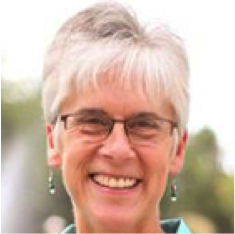 Sara Johnson is the director of Executive Education and a clinical assistant professor at the School of Public and Environmental Affairs. Johnson has been a lecturer for SPEA, where she teaches executive leadership, as well as the Richard M. Fairbanks School of Public Health at IUPUI, where she taught both graduate and undergraduate students and was director of undergraduate programs.