Category

Leadership

How to develop as a nonprofit leader

By Feature, Leadership

By Bridgespan writers |

Many people who are working within the ranks of nonprofit organizations could become great senior nonprofit leaders. However, in part because of budget constraints, few organizations in the sector have formal professional development programs to prepare mid-level managers for senior roles. As a result, most mid-level nonprofit professionals must take responsibility for their own career development.

One way to begin the process is to tap the experience of senior leaders who already have worked their way up within the sector. To that end, we spoke with six senior nonprofit leaders — all of whom have spent much if not all of their careers working in the nonprofit sector — about their career paths and the lessons they learned along the way. We also asked what advice they would give to mid-level managers looking to move into senior nonprofit leadership roles.

Button Text

Leadership transition – Who’s up next?

By Leadership, Sponsor Insight

By Bryan Orander, president, Charitable Advisors

For 15 years, research has warned of the unprecedented number of nonprofit executive directors/CEOs expected to change organizations, retire or leave the sector. In the original Daring to Lead study in 2001, two thirds of nonprofit executive directors did not believe in five years that they would still be with their current organization. Updates to this study in 2006 and 2011 found surprisingly similar results.

Though the recession definitely stalled those predicted leadership changes and retirements, nationally the nonprofit sector has begun to see these predicted changes. Recently, The Boston Globe reported on transitions in the Northeast, and in Central Indiana, every few weeks brings news of another executive who has set a date to move on to his or her next adventure or has given his or her board notice of an upcoming retirement.

Who is replacing those departing long-time executives?

In the past several years through my consulting work with nonprofits to help guide changes of leadership, I have seen these changes firsthand.

People often ask about these CEO/ED transitions. Typically, I approximate statistics based on my recent work; however, I thought it time to take a closer look.

To make the math easier, I took the last 25 leadership transitions and looked at some key factors. These go back approximately five years. The organizations have ranged in size from annual budgets of a few hundred thousand dollars to over $20 million and staff teams from three to more than 500. Most client organizations have been in the $1-10 million range.

Two qualifiers: Charitable Advisors is most often contracted for planned transitions and most of clients did not have internal candidates or potential successors that applied for the ED/CEO role.

Here is a quick snapshot.

Where did the CEO/ED go?

  • 16 retirements = 64 percent
  • 4 board terminations = 16 percent
  • 3 CEOs took another job = 12 percent
  • 2 new organizations, with no previous ED = 8 percent

Was the successor hired for the position an internal or external candidate?

  • 20 external hires = 80 percent
  • 5 internal hire/promotion = 20 percent (seven searches had internal candidates)

What is the background/sector of the successors?

  • 10 program = 40 percent, including two from government
  • 7 fund development/policy = 28 percent
  • 4 CEO/ED from another nonprofit organization = 16 percent
  • 4 corporate sector = 16 percent, three of the four had been

volunteers or board members for the organization that hired them

From these numbers, I think there are a few insights that can be drawn and useful to board members and senior staff looking to future leadership changes.

  • Internal successors are the exception because so few organizations have additional leaders with a broad organizational understanding and skill set. Of the 25 transitions, seven had internal candidates. Of those seven organizations, five selected the internal candidate as the next ED/CEO.
  • An organization’s next CEO/ED has probably not been a CEO before. Confirming national research, like Daring to Lead, most new ED/CEOs are coming from the leadership team of another nonprofit but were not in an ED/CEO role.
  • Few leaders make the jump directly from corporate America without having served as a board member or volunteer. Search committees look at a broad range of candidates, but are often most comfortable with people who fit the traditional nonprofit skill sets and culture.
  • A next leader is increasingly likely to bring a fund development background versus a programmatic background. Traditionally, the leaders of small to mid-sized nonprofits have come from the program ranks because the emphasis was on serving clients well. While that client emphasis continues, nonprofit boards are increasingly concerned with the leader’s ability to attract resources to grow and sustain the organization.

Your plan of action 

Ensuring capable staff leadership is one of a nonprofit board’s most important roles. Whether the reason is retirement, illness, resignation, dismissal or transitions, the change can put your organization and the people you serve at risk.

Here are a few things that staff and board leadership can do over the next month or two, if you haven’t already, in preparation for an eventual transition.

  • Be prepared for the inevitable. In many organizations there is such a reliance on the CEO/ED so that when that person leaves or is terminated, the board feels uncertain about who is in charge and what comes next. A brief emergency succession conversation at an executive committee or board meeting every year is critical.

   Charitable Advisors has developed a template that boards have found useful. For a copy of this easy-to-use emergency succession plan, please email me at: Bryan@CharitableAdvisors.com  

  • Build your staff and management team. Every nonprofit should aspire to grow future leaders. The ideal circumstance is for an organization to have one or two viable internal candidates when it launches its search for a successor. However, most nonprofits are small and have few, if any, managers except the CEO/ED. Even larger nonprofits have a management team composed of specialists in finance, programming, fund development or human resources, and often lack the organizational-wide perspective of the CEO/ED. So you may not have internal candidates without an intentional development effort to broaden individual leadership experience.


  • CEO/ED sets the tone in developing leaders. The current CEO/ED and how he or she works with the staff team sets the stage for the next generation of organizational leadership. A CEO with a controlling style is less likely to develop strong leaders as potential successors either because those people aren’t hired, they leave or they are never groomed for more responsibility. Growing your team prepares for the future and can make the ED/CEO’s job easier by spreading the load.

bryanBryan Orander is founder and president of Charitable Advisors. After 18 years of for-profit leadership in the Fortune 50 business world and a disability-related nonprofit, Bryan joined a large regional accounting and consulting firm. In 2000, he founded Charitable Advisors with the vision of going beyond traditional consulting to become a connector, advocate and problem solver for the nonprofit sector.

Goodwill’s approach to growth: one view

By Feature, Leadership

By Lynn Sygiel, editor, Charitable Advisors |

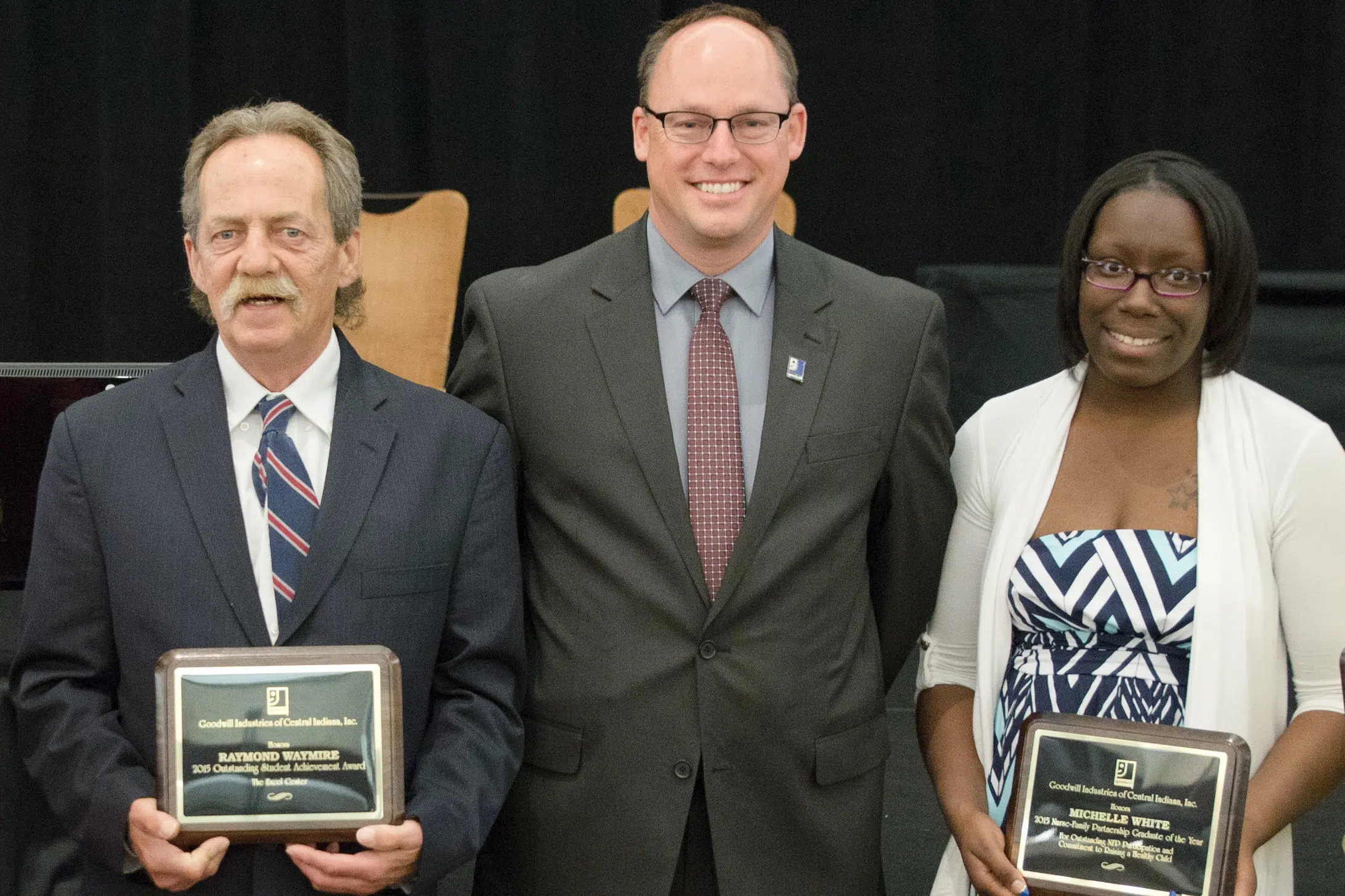
For Kent Kramer, the answer was easy. As a candidate earlier this year for the president’s position at Goodwill of Central Indiana, he was asked to title a chapter in Goodwill’s history book that would describe his future tenure.

Kramer’s answer: Tipping point.

His explanation: “I look at some of the initiatives that we have going on, they’re on the verge, a tipping point. When you have that critical mass of activity, and it hits that tipping point, all of a sudden the impact becomes enormous. And that’s where I feel we are on an education front and definitely on workforce development,” said Kramer.

Goodwill and Kramer understand that balancing growth and scale also means understanding and respecting their complex interplay.

Kramer was hired as vice president of retail in 2002. His task was to grow Goodwill’s retail revenue. But growth for growth’s sake was not the goal. Goodwill’s board saw the additional revenue as a way to boost its mission.

In his first 10 years, Kramer and his team were successful in increasing revenue from the retail side. They boosted the number of stores to 52 from 24 and grew the number of employees at those stores to 2,200 from 700. Since then, new concepts like e-commerce and outlet and boutique stores have been introduced. Goodwill’s Central Indiana staff is now at 3,200, and last year, 30 Goodwill agencies from around the country visited Indianapolis to learn more about retail growth.

But that’s not all that’s grown. Kramer saw the organization’s work with people and families take a more holistic approach. Although Kramer is proud of opening those stores, he sees the broader effect of increased revenue. Goodwill has taken on a larger mission – helping people get to economic self-sufficiency. Two ways that Goodwill plays a significant role in reducing poverty and the array of accompanying social problems is through its Excel Centers and its Nurse-Family Partnership (NFP), both launched in the past decade.

Education has been part of Goodwill’s program portfolio since 2004, when it opened its first charter high school – Indianapolis MET High School. Since its opening, Goodwill has learned many lessons from that venture.

Those lessons spurred the opening in 2010 of the first Excel Center, a dropout recovery charter high school at Goodwill’s headquarters on Michigan Street on the city’s Westside. Designed for students 18 and older to gain a high school diploma, the first school had more of an online approach. Goodwill realized, however, that students needed an adult to coach them and hold them accountable, so the model was modified.

In 2014, Excel enrollment reached 3,000 with 501 graduates.

“We have Goodwill to surround these people. We help place them, we help coach them to success, we help knock down barriers that might still exist, and we stay with them to make sure they’re successful,” said Kramer. “All of our expansion efforts have gone to the Excel Center, and it’s kind of like, it’s on fire, and we want to keep feeding that fire because of the results.

“Let’s say, if only half of them of those come off of public assistance, that’s pretty significant,” Kramer continued.

Now there are 11 Excel Centers in Central Indiana, with two new locations in Noblesville and on the Southside near the University of Indianapolis. It has also licensed three centers through Goodwills in other cities — South Bend, Memphis, Tenn., and Austin, Texas. And in October, the Annie E. Casey Foundation is supporting the growth with a grant to bring 15 Goodwills from around the country to Indianapolis to learn more about the centers.

Continuous improvement is one of Goodwill’s key principles and its boards’ regularly review growth and impact. Goodwill has three boards – general operation, education and foundation. Each board requires that at a one-year anniversary, and then again at two years after an operation is in place that the staff dusts off the original proforma and matches it up with actual results.

“Basically at board meetings, we give a mission impact report. If we have underperforming programs, which we’ve had in the past, and if we’re not getting the impact we need, we’ve made that decision to remove ourselves from it,” Kramer said. “The last thing that we want to do is to take donations from either used-goods donors or cash donors, and invest in something that doesn’t have a mission return or an economic return. Ultimately we look for both.”

Goodwill also is always looking for better ways to analyze data to show how it is changing lives. In an 2013 economic impact assessment for Goodwill, for example, Ball State University found that in its first two years Excel Center graduates showed gains in average annual wages of $4,572.

So it’s not surprising that impact was a critical factor when Goodwill was researching the Nurse-Family Partnership (NFP) as a potential program to bring to Indiana. One of the attractions was that the program collected 2,000 data points for every client it serves and had nearly four decades of evidence to support its effect.

The program, headquartered in Denver, has a holistic approach to working with low-income mothers and their families. Each first-time mother is matched with a registered nurse who has regular contact with the family until the newborn turns 2 years old.

Since Goodwill of Central Indiana and the Indiana State Department of Health launched the program to Indiana in 2011, it has served 600 families. This year with additional support and connections to local Goodwill agencies, NFP announced programs for Lake, Madison, Delaware, Tippecanoe and White counties, and with support from private donors in Indianapolis, it will provide services to mothers living in high-risk zip codes.

But the program offers more than trying to ensure the health of a newborn. As the nurse and mother build trust, the nurse has conversations about family self-sufficiency and how this new mother might provide financial support for her family. Those conversations have led some of the mothers to enroll in the Excel program. Besides a high school diploma, the centers offer specific certifications for jobs like pharmacy technicians, electrical systems technicians, welders and information technology techs.

In order to initiate new programming, the ability to invest is critical. Expanding, according to Kramer, takes a good organizational financial backbone and cash to work with. With foresight 45 years ago, Goodwill established a foundation that allows investment in innovation and provides working capital to incubate ideas.

Growth, as Goodwill has learned, cannot always be achieved with existing staff.

“We had to hire those competencies. Sometimes when you’re growing and you’ve got an opportunity to grow fast, it’s difficult to have 100 percent home-grown talent.

“Goodwill historically has been a very entrepreneurial type organization, so you’ve got to have leaders that embrace that idea and embrace change, and not only embrace it but are change agents themselves. Status quo is a very difficult world to live in if you want to grow,” said Kramer.

Since Kramer was announced as Goodwill’s president, everyone asks him what’s next. For him, it’s not new projects, but moving things in a solid direction.

“We’ve got to be really good at keeping our eye on the ball on all of the three big opportunities — education, retail and Nurse Family Partnership — to make sure we’re efficient and delivering results. The ‘what’s next’ is getting really, really good at moving people to middle skills jobs. We’re doing it, but what’s next is ‘Watch us do it really, really, really good,’” said Kramer. “We haven’t finished. We still have lots of opportunities across our network to continue to grow.”

Working for a nonprofit: opinion

By Feature, Leadership

By Omar Garriott, LinkedIn marketing manager for The New York Times

Several million college seniors are back to school and staring the transition to the working world in the face. Nearly half of those in career-oriented programs like business and engineering say they’ll pursue corporate gigs, presumably the surest path to financial and professional success. Fewer than one in 10 plan to go to work for a nonprofit.

This is part market gap, part perception gap. Both must be addressed, because the nonprofit sector is actually where these new grads are really needed — and where they can develop and contribute the most. When young go-getters choose big paychecks over public service, society suffers. And so does their professional growth.

Button Text

University’s intense training, develops nonprofit leaders

By Leadership, Sponsor Insight

By Michael L. Jackson, director of marketing and communications, Indiana University School of Public and Environmental Affairs in Indianapolis

In the complex world of nonprofit management, today’s leaders must possess a unique set of skills in order to navigate the industry’s challenging landscape. Whether it’s working with board members, leading a group of volunteers, or competing for fundraising dollars, those charged with running the organization need a broad array of skills.

The Executive Education division of the Indiana University School of Public and Environmental Affairs (SPEA) partners with The Fundraising School at the Lilly Family School of Philanthropy to provide leaders with the critical tools needed to run a successful nonprofit. Through the Certificate in Nonprofit Leadership program, the two schools have developed a four-course program that delivers intense training for real-world impact.

“Leadership of nonprofit organizations is pretty unique,” said Sara Johnson, director of Executive Education at SPEA. “One of the things considered when putting this program together was, “What specific skills like developing and assessing a nonprofit board of directors, do these executives need to have in order to lead that type of organization?’”

Classes in the certificate program are offered throughout the year and can be completed in person or online. In-person classes are held over two days (a Friday and Saturday) on the Indiana University-Purdue University Indianapolis campus. Online courses are completed during a four-week period.

The four seminars – Financial Analysis for Nonprofit Leaders, Nonprofit Management for the 21st Century, Program Evaluation for Mission Impact, and Strategic Planning and Nonprofit Leadership – are offered on a rolling basis and do not require prerequisites, giving students the flexibility to begin the program at their convenience.

“While someone could do the course work entirely online, we generally recommend that they complete at least two of the courses in the classroom setting,” Johnson said. “This program brings in participants from all across the country, and that opportunity to network and collaborate face-to-face has a big impact on the experience.”

One of Johnson’s favorite seminars is the strategic planning session where students learn to understand their own management style, which, she says, is vital when trying to develop a nonprofit board of directors.

“CEOs have to develop the acumen for developing their own boards and how to make sure they’re doing a board assessment and doing the things that make good boards,” Johnson said. “Understanding your management style helps you to be more effective with the board. If you go into a strategic planning session and you are aware of your own approach or own belief system, chances are you’ll make better progress and have greater outcomes.”

To learn more about the Certificate in Nonprofit Leadership, contact Sara Johnson or download The Fundraising School’s 2015 course directory.

MichaelLJackson Michael L. Jackson is director of marketing and communications at the Indiana University School of Public and Environmental Affairs (SPEA) at IUPUI. Jackson joined SPEA from the Kelley School of Business at IUPUI after a 20-year newspaper career. He received his MBA in Marketing from Butler University.


At MIT, mastering the science of working from home

By Feature, Leadership

By Rachel Feintzeig, reporter, Wall Street Journal

A group of employees at the Massachusetts Institute of Technology’s business school is experimenting with policies that could usher in a new era of flexible of work.

MIT being MIT, that experiment involves some robots.

A couple of years ago, Peter Hirst, who runs the executive-education arm of MIT’s Sloan School of Management, wondered what might happen if his 35 employees could work wherever, and whenever, they wanted. The Cambridge, Mass., school had long offered flexible work arrangements to those who requested them, but “it had always felt a little like a very special benefit,” Hirst said.

When construction forced his staff to move offices about three-quarters of a mile from the business school’s main buildings in the summer of 2013, Hirst started to question why most employees were required to trek to their desks every day.

Button Text

Managing telecommuters

By Feature, Leadership

By Gabe Duverge, copywriter, Grace College and Theological Seminary

A recent study from the Society for Human Resource Management found 38 percent of employers in the United States allow some of their workers to work from home on a regular basis, up from 23 percent in 2008. This 15 percent increase demonstrates just how quickly telecommuting is taking hold in the work place.

The primary concern for companies when considering telecommuting policies are what the costs and benefits could be. Although high-profile companies like Yahoo are ending the practice in their organization all together, there are still plenty of companies that have found success in remote management. Here are some of the key benefits of telecommuting from employer statistics group.

Button Text

Consider telecommuting from Montana

By Feature, Leadership

By Eric Whitney, reporter, Montana Public Radio

Most local economic development schemes focus on creating jobs. Many offer incentives to startup companies, or try to lure existing companies to relocate.

But a campaign in Montana is turning that on its head. It’s not trying to recruit companies but rather employees to come to the sparsely populated state and telecommute.

David Blackburn works for a financial services firm in Jersey City, N.J. He and his wife both have six-figure incomes, but real estate in the New York City area is so expensive that they have to live kind of far from their jobs.

Button Text

Primer on nonprofit sector buzzwords and jargon

By Feature, Governance, Leadership

By Jodie Shupac, writer, Charity Village

Leveraging funds. Capacity-building. Community-driven action. Enabling populations. Collaboration. Participatory action. Anti-oppression.

Just some examples of a multitude of terms regularly thrown around by professionals in the nonprofit sector, these buzzwords can be reasonably categorized as industry speak, or just plain old jargon.

Nonprofit jargon, like the vernacular of any sector or workplace, can provide a sense of unity and belonging to individuals and organizations working within a particular framework, but language of this sort can also prove imprecise, clichéd or alienating.

So why has certain terminology become so prevalent in the nonprofit sphere, and what impact is it having on both those on the frontlines and the fringes of the sector?

Button Text

Changing language of nonprofits

By Feature, Governance, Leadership

By Louise Lee, reporter, Stanford University Graduate School of Business

Terms like “data” and “framework” are commonly used by science and health organizations. Nonprofits tackling civil and social justice issues refer to “empowerment,” while more business-oriented nonprofits often use the terms “performance” and “impact.”

But new research by Stanford GSB professor Walter W. Powell shows that there is a fourth group that incorporates and recombines the languages of civil society, science, and management, creating a new discourse combining the language and thus the ideas of various kinds of entities.

Button Text