Investing to close America’s racial wealth gap

By Feature

Like many economists who care about American families struggling to make ends meet, I spend a good amount of time thinking about how parents can earn more income to give their children better opportunities and reduce stress in their daily lives. But my real mission is one you hear less about in the debate over income inequality. For families to make their way to a better life, it’s not enough to earn more. They’ve got to keep and grow their earnings, too.

Savings and assets — homes, cars, retirement funds — are launching pads to something better, even as they cushion against today’s inevitable emergencies. But for generations, policies to help families build the savings and assets they need to give their children a better life have created a persistent and widening gap in net worth between white families and African-American and Latino families.

Button Text

Nonprofits can lobby, too

By Feature, Governance

By Lynn Sygiel, editor, Charitable Advisors |

A few eyebrows were raised 2½ years ago when United Way of Central Indiana named Andrew Cullen as its lobbyist. A few nonprofits questioned his appointment, primarily because they thought that nonprofits could not lobby.

And while in fact, nonprofits are allowed to lobby, Cindy Booth of Child Advocates believes that the perception still exists. She’s the executive director of the nonprofit that advocates for abused and neglected children in Marion County.

“I think people, boards and directors, executive directors are generally uninformed about what they can do and worry about the risk of getting in trouble. So they do nothing or they call it educating,” said Booth. Nationally last year, 280 nonprofits spent nearly $36 million lobbying, according to Open Secrets.org, which tracks the lobbying industry.

While there are specific regulations that have been around since 1934, federal tax laws allow every charitable nonprofit to engage in some legislative lobbying activities. Before 1976, IRS rules stated that 501(c) 3 organizations could lose their tax-exempt status if they did more than an “insubstantial” amount of lobbying. Sections 501(h) and 4911 of the Tax Reform Act of 1976, however, established clearer guidelines called the “lobbying‐expenditure test.”

There are, however, spending limits and technicalities that curb nonprofits from spending all of their time and money on legislative lobbying. If a nonprofit spends more than $500 on legislators or more than $1000 on state executives, the lobbyist must register, pay a fee and file reports with the Indiana Lobbying Registration Commission. Nonprofit lobbyists cannot use any organizational resources to support or oppose candidates or political parties.

Cullen said that United Way believes lobbying is part of the organization’s mission.

“I really do feel like I have one of the best jobs in the Statehouse. I get to behave like any other lobbyist, but with no self-interest to promote. My job isn’t to make some rich guy richer, my job is to help poor people get on the path to self-sufficiency. And I feel really honored to have this job,” said Cullen.

Booth said that few nonprofits ever hit the federal maximum, which is 20 percent of a nonprofits’ budget with a cap of $1 million.

So what exactly can Indiana nonprofits do?

During last year’s legislative session, United Way helped launch an effort to provide state funding for 211, a network of eight centers across Indiana that gets annual support from United Way. According to Cullen, 211 had become a victim of its own success. The public viewed it as a place to connect to services, and when the state started advertising it as a method to receive benefits, United Way and others thought it was time to educate state legislators about the service the nonprofit provides.

“In the Marion County’s 911 Center, the dispatchers have a button they push, ‘This is not a 911 problem, it’s a 211 problem, transfer, bam.’ That’s part of their training. Connect2Help 211 was happy to provide that service, but ultimately, had to recognize that if it was an essential government service, the government needed to be part of the solution and support it. It’s unfair to donors to be expected year after year to continue to fund an expansion of a government service,” he said.

[content_box box_type=”normal”]

For more information:

[/content_box]

In advance of the lobbying effort, 211 staff had done a cursory survey of all the funds that support human services in Indiana and determined there is about $300 million in private and philanthropic donations that support human services, and there is about $3 billion in federal, state and local funding.

“So if you’re only playing in the $300 million pool and not trying to effect change in the $3 billion dollar pool, you’re really not serving the citizens as effectively as you should. Nonprofits, in my opinion, have a better handle on the actual needs of Hoosiers, because they are the direct service providers in most cases and should be informing our government how to best spend those dollars,” said Cullen.

Part of Cullen’s work was to help 211 advocates who shared the good work the agency does and help them change the message.

“My experience around and near the legislature told me that that was not a good message. Most of what I did would be to say: ‘Stop talking about how this helps people, start talking about how this helps taxpayers.’ That’s what the legislature of today wants to hear. You know their top priority is not necessarily the old model of traditionally providing welfare services. It’s the new model of raising people out of welfare. And so it was really important that we change the messaging.

“So when we started to connect the dots and prove to the legislature that 211 connects Hoosiers to services that ultimately put them on the path to self-sufficiency, get them off their dependency on government and on the road of leading self-sufficient lives that was a winning argument,” he said.

That doesn’t mean, however, the funding was a slam dunk. While the House supported the initial legislation, the Senate asked tough questions: Was this a good system? Was it efficient? Legislators wanted facts and figures to understand why they should invest taxpayer dollars. The data provided awarded the 211 network $1 million in last year’s two-year budget.

“And it would be my expectation, and certainly my hope, that a million dollars would be the floor going forward for what the state will fund for the 211 network every year. But that being said, you know we cannot take our eye off the ball. We’re going to have to lobby for it every two years, just to make sure.”

Booth says Child Advocates has taken a bit of a different approach.

The Indiana Office of Guardian Ad Litem / Court Appointed Special Advocates, which was started in 1990, certifies and provides training and support to local GAL/CASA programs in 77 Indiana counties. The Indiana office is administered by the Indiana Supreme Court, and as a government office, its director, Leslie Dunn, cannot lobby. At the same time, Marion County’s office was incorporated as Child Advocates, Inc. and became a standalone nonprofit.

The network of programs held a CASA thank-you appreciation day in early March with state legislators. Over 300 volunteers from around the state met with their legislators and shared stories of what happens for individual kids in need of services in legislators’ districts.

“It’s very informational, it’s very one-on-one,” said Booth. “This time, we thanked them for the increase we got last year, and let them know that it wasn’t enough because even with the increase, we still have 5,000 children statewide who are on the waiting list.”

These informational sessions don’t mean there isn’t a overall plan.

“Eight years ago, we determined that we needed more funding at the statewide level, but we realized that legislators had no idea who we were. So we embarked on a relationship-making campaign and truly an educational campaign with the legislators. They had no idea what Guardian Ad Litem was and the general public confused us with Department of Child Services,” said Booth.

The first couple of years were spent talking with legislators about the nonprofit’s work on behalf of neglected and abused children. They held receptions, breakfasts and did different things to help legislators understand how the program benefits children in the child welfare system.

It culminated when Supreme Court Chief Justices Randall Shepard and Loretta Rush needed support for an increased budget for the Supreme Court, part of which would be for CASA programs. The county network enlisted all of its CASAs to talk with legislators and the legislature, and they were able to help make the case.

The network also pays attention to tracking bills that affect the work of Child Advocates/Guardian Ad Litems.

For Booth, it continues to be about building relationships. After an initial meeting with Rep. Susan Brooks, R-Ind., her nonprofit hosted a listening session.

“She asked me to identify a list of juvenile court judges, DCS leaders, the CASA leaders and maybe some service providers. We had about 30 people in the room in early March. She sort of let us just talk about what we were experiencing, the challenges and everything.”

Brooks’ staff took notes, and she asked good questions, Booth said.

“She listened with interest about Child Advocates and what we are doing because she had experience in the field, but she also had the interest in those topics. They talked about having a second listening session and inviting local and Congressional legislators.

“I’m not exactly sure what the follow-up is going to be with that, but I think she came away with a clearer understanding of what is happening in her district. I was quite impressed by that,” said Booth.

What is on the docket for United Way next year?

“Early childhood education. Look out. We’re coming strong in 2017. It’s going to be my biggest project in my life. It’s time that Indiana stops becoming one of only eight states in the nation that doesn’t provide early childhood education for our most vulnerable citizens. The good news is, I think, that legislators see that. I think that most policy makers are coming to that conclusion. The question is just how do we do it in the right way? How do we expand in a way that ultimately leads to the highest potential child outcomes?,” said Cullen.

If Booth were talking with other nonprofits, she suggests several reasons they should lobby — the need to have well-informed legislators in power who are educated by those on the frontlines.

“I think ultimately it benefits your program. All the legislators know is what someone has told them or what they’ve read. And they really need to hear it from someone who is in it every day. It elevates their level of understanding. And we want more well-informed legislators,” Booth said.
Nonprofits’ minimum wage bind

By Feature, Governance

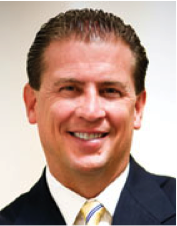
By Jennifer Jones Austin, commentary, Times Union |

Across the nation there is mounting concern about economic inequity. At the heart of the matter of the ever-increasing economic divide are stagnant wages, which have plagued millions of low- and middle-income Americans for decades. But here in New York state we have a real opportunity to do something about this.

Gov. Andrew Cuomo has proposed a $15 minimum wage to be phased in over the next two years for New York City residents and by 2021 for all other New Yorkers. His proposed legislation, the first of its kind put forth by the governor of any state, has the very real potential to increase the financial stability and improve the upward mobility of 3 million New Yorkers. The governor has evidenced his commitment to the minimum wage increase by using his own authority to raise the wages of both state and SUNY employees, but he has not yet moved to include those workers who provide vital human services for the state.

Human services and Medicaid-funded workers employed by nonprofits funded by state government contracts and Medicaid reimbursements deliver mandated services including child welfare, childcare, senior services and supports for the disabled. These workers perform critical roles in our economy and in the communities they serve. However, more than 50 percent of them, more than 400,000, earn less than $15 an hour.

Button Text

Nonprofit ads tap ‘Game of Thrones’ to highlight real-world conflict

By Feature, Fundraising

By Alina Tugend, ShortCuts columnist, The New York Times |

The actors in “Game of Thrones,” the epic fantasy series featuring story lines about civil war and banishment, are using the enormous popularity of their HBO series to raise money for real-life victims of conflict and exile.

Beginning Monday, public service announcements and videos featuring the show’s actors will appear urging support for the International Rescue Committee, a humanitarian relief organization that aids refugees. The ads will appear online exclusively, including on the charity’s microsite, YouTube and social media platforms.

The campaign will run through the series’s sixth season, which begins April 24, with the goal of raising $1 million. The organization is tapping into a significant audience: The trailer for the coming season of “Game of Thrones” was viewed 32 million times within 24 hours of being posted online on Tuesday.

Button Text

Nine nonprofits ask for Zebulon, N.C.’s support

By Feature, Fundraising

By Aaron Moody, reporter, The News & Observer |

Nine nonprofit organizations have submitted applications asking Zebulon leaders to consider them for support as the town prepares its budget for the upcoming fiscal year.

The town has dished out the same amount of funding to the same groups for the past four years: $1,000 each to the Zebulon Chamber of Commerce, Shepherd’s Care Medical Clinic and the East Wake Education Foundation, and $500 to the annual Zebulon Martin Luther King Jr. breakfast. All those groups reapplied for varying levels of support this year.

Representatives of six of the nine applicants made brief presentations on their requests at the March 7 board of commissioners’ meeting.

Button Text

Top nine tips for managing junior boards

By Feature, Governance

By Cynthia Remec, executive director and founder, BoardAssist

Every day BoardAssist is approached by enthusiastic millennials who are eager to be agents of change on a nonprofit board.  Unfortunately many of these terrific candidates are either too young to be considered for a full board seat by our clients, or unable to meet the financial commitment required by our nonprofit clients.

Until recently we had not been able to accommodate these terrific people and their generous desire to give back.  Now we can, with our new Pilot Junior Board Matching Program!

Button Text

A trending fundraising tool: a junior board

By Feature, Governance

By CJ Orr, associate director, Orr Associates |

Six years ago, the phrase “junior board” was understood by only a few. Now, I hear it all the time. I work at a nonprofit consulting firm, Orr Associates, Inc (OAI). OAI works exclusively with nonprofits to help them with their fundraising and development needs. Our nonprofit partners consistently tell us they struggle to engage with millennials. Many of them have been building junior boards to serve as a solution.

Over the past year, I took the time to study the complexities and fundraising interests of the millennial generation. In my research, I identified over 400 nonprofits that have a junior board and spoke with over 70 of them about their junior board. I also serve as a board member on four different junior boards.

Button Text

Boarding call for next-gen leaders

By Feature, Governance

By Anna Pikovsky Auerbach, Moonridge Group COO, Stanford Social Innovation Review |

The millennial generation cares about the state of the world and wants to get involved—so why do so few boards have young members?

A quick search of “millennials on nonprofit boards” yields more than 67,000 search results on Google. Most of the articles that turn up emphasize the value of millennial leadership, and include calls to engage and involve them in the social sector. But reality lags far behind interest and intentions.

One large, national survey in 2012 showed that only 2 percent of board members were under 30, while 43 percent were between 50 and 64. Meanwhile, 70 percent of millennials spent at least an hour volunteering last year, and 84 percent made a charitable donation. More than other living generations, the millennial generation is focused on making a difference, being hands-on, and pursuing what it loves. Data like this makes it clear that millennials care about the state of the world and want to get involved — so why do so few boards have young members?

Button Text

IUPUI Nonprofit Expo: Bringing students and employers together

By Sponsor Insight

By IUPUI School of Public and Environmental Affairs staff |

Now in its sixth year, the IUPUI Nonprofit Expo brings together nonprofit, government and community partners that offer internship, volunteer and job opportunities for IUPUI students and alumni.

This year’s event will take place March 22 from noon to 4 p.m. at the IUPUI Campus Center.

“The Nonprofit Expo at IUPUI is a great way to connect with emerging nonprofit practitioners,” said Alyssa Starr Newerth, the deputy director of Indy Reads. “The students are always very interested in our work and we have made many connections over the years at the expo. We have hired interns and met future and current community partners at this event.”

The expo is a collaborative effort among six IUPUI’s schools. Annually, it is coordinated by the School of Public and Environmental Affairs, IU School of Liberal Arts at IUPUI, IU School of Social Work, the Lilly Family School of Philanthropy, IUPUI Center for Service and Learning and the IU School of Health & Rehabilitation Sciences.

Since the first expo in 2011, the number of exhibiting employers has more than doubled. Last year, more than 70 organizations took part in the expo, and nearly 450 students and alumni attended the event.

[content_box box_type=”normal”]

np-expoLearn more

To learn more about the 2016 IUPUI Nonprofit Expo, click here. Employers can still register for the event for only $85. Interested nonprofit organizations can register for event by contacting Kathleen Hursh, assistant director of Career Services at SPEA, at hurshk@iupui.edu or 317-278-3651 or e-mail Meredith Wade at npexpo@iupui.edu

[/content_box]

“The potential volunteer-turnout-per-minute is really high,” said Susan Norman, regional volunteer services officer for the Indiana Region American Red Cross. “We can go to other exhibits in other places and talk to maybe three people the whole time because of the nature of the event. These folks are there because they want to be involved with organizations like ours. It helps us do targeted marketing and is a great venue for discovering where students’ interests and our needs overlap.”

Norman called the Nonprofit Expo one of the top three events that the organization attends. She says the skills that students and young alumni bring with them to the job allows the Red Cross to use them in a variety of positions. The fact they’re eager to learn and try different things is an added bonus.

“I know the quality of volunteer I’m going to walk away with,” she said. “I know they’re going to be people who are really interested in our mission, and I know they’re going to be fully engaged and active during the time they’re with us.”

In 2013-2014, the IUPUI Center for Service and Learning survey found an estimated 8,570 students, slightly fewer than previous year, contributed 303,061 hours of service to the community.

“We have so many students on this campus who are connected to the mission of nonprofits,” Hursh said. “This is really just a fabulous opportunity for everyone – employers, students and alumni – who are committed to community engagement.”

Added Newerth, “As a (SPEA) alumna, the Nonprofit Expo makes me hopeful and excited about the future of my profession.”

Do you know your full costs and recover them?

By Sponsor Insight

By Jim Simpson, CPA and director, Financial Technologies & Management |

Last year, the Nonprofit Finance Fund in its State of the Nonprofit Sector reported that only seven percent of nonprofits received full project costs from foundations.

Let’s make sure we have the same definition for defining full costs because it is not just expenses. Using the following formula helps to define what denotes full costs: day-to-day operating expenses + reserves + fixed asset additions + debt reduction.

Nonprofits that recover full costs prevent financial crises and interrupted services and enable leaders to stay focused on mission and related outcomes.

Many nonprofit organizations don’t know their full costs and settle for less recovery than full costs.

Button Text