A OneAmerica® survey may help participants understand their personal financial picture

By Sponsor Insight

Best channels to help employees understand their retirement picture

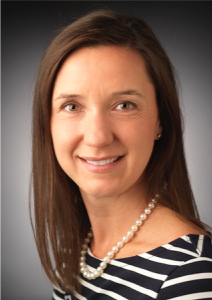
By Melissa Musial, marketing research and data manager, OneAmerica  

As a nationally known record-keeper interested in aiding employers with their employee-retirement-plan objectives, the question of whether retirement plan participants have ample education on financial fundamentals ─ and whether increased education on these topics is needed ─ is foremost on our minds at OneAmerica.®

By financial fundamentals, I mean basic budgeting, credit scores and monitoring and debt management; all cornerstones of personal finance and topics that are instrumental to an effective financial wellness curriculum.

Without ample education, adults are often on their own to understand and navigate the delicate balance of paying off owed debt, living the life they want to live, and setting enough money aside to prosper after their work life is completed.

OneAmerica takes the pulse of participants  frequently, and in 2017-18, it conducted its largest-ever survey of retirement plan participants, including those who work with tax-exempt organizations like yours.

The poll of more than 12,000 respondents[1] showed that participants report the highest knowledge levels on the topics of budgeting, credit and debt monitoring and management (95 percent) which is great news, as it indicates educational efforts focused on these topics are influencing audiences.

But the poll also shows that more than 60 percent of respondents lack knowledge on basic investing, retirement plan features, insurance planning and withdrawal strategies at retirement. Additionally, more than one quarter of survey respondents indicate they are only knowledgeable on two or fewer of nine financial wellness topics ranging from budgeting to college planning to personal taxes and that those who are less knowledgeable are more open to receiving education.

Given these results, there is clearly an opportunity for education that OneAmerica encourages plan sponsors (or the human resources professional at your organization) to embrace, because insight is only good when action follows. The company believes it is important to continue to provide education on topics of budgeting, credit and debt monitoring and management, as survey participants did not appear to be applying their reported knowledge.

Equally as important in an effective financial wellness curriculum is including education on those topics that participants report lower knowledge about and that are often a barrier to full-plan participation — for example, investing and retirement plan features.

While the industry is making it easier for participants to begin preparing for retirement with the use of automatic plan features, without education on investment fundamentals or retirement plan specifics, participants may be under preparing or feel that the automatic features are enough to prepare them for a successful retirement.

Tailoring education for pre-retirees regarding to withdrawal strategies is also critical. Without education on withdrawal strategies, those near or at retirement may continue to work due to a lack of knowledge on how to begin the de-accumulation stage. (To de-accumulate is to take the wealth you’ve acquired during your working years and begin to spend it to fund your lifestyle in retirement.)

This could provide additional concerns for plan sponsors – such as increased benefit costs and struggles to bring in new talent due to lack of attrition.

The survey also provided a very clear direction of participant educational preferences. When asked how they like to receive financial wellness education, 65 percent of respondents indicated that having online resources sent to them was their preferred delivery channel.

Additionally, the OneAmerica survey inquired about the value that participants place on educational resources and found:

  • Web-based tools such as webinars, videos and podcasts were reported the most valuable resource by 42 percent of survey respondents, favored as much by men as women and across all three age ranges, but resonating the strongest among those aged 35 and over, as well as those with higher household income.
  • ‘Real-time chat’ tallies in second, at 15 percent, which resonates more strongly with the 18-to-34 demographic (at 21 percent).
  • More traditional methods – direct mail flyers/postcards (13 percent) and posters and flyers at work (four percent) – rank fourth and sixth respectively.

The survey results clearly show a shift in education trends. Traditional communication channels such as print and posted items in the workplace have less value to participants. Plan sponsors should embrace those mediums that participants prefer when selecting education deliverables, and when creating their retirement plan’s participant education and communication goals.

This survey was the third conducted by OneAmerica in five years, and the insights will be used (as has been done in the past) to assist retirement plan sponsors and HR professionals to work with participants to improve their financial wellness and overcome retirement planning hurdles.

Do you want to know more about the OneAmerica Survey? Download a free infographic and whitepaper at www.oneamerica.com/RSsurvey


Melissa Musial is a 20-year veteran of the retirement industry and currently serves as the Marketing Research and Data Manager at OneAmerica, where she focuses on using data, analytics, industry trends to meet people where they are at in their retirement journey. She was recently named by LIMRA as one of the 10 Rising Stars of Marketing and Communications under 40 in the financial services industry. 


OneAmerica is the marketing name for the companies of OneAmerica. Products issued and underwritten by American United Life Insurance Company® (AUL), a OneAmerica company. Administrative and recordkeeping services provided by McCready and Keene, Inc. or OneAmerica Retirement Services LLC, companies of OneAmerica which are not broker/dealers or investment advisors. Provided content is for overview and informational purposes only and is not intended and should not be relied upon as individualized tax, legal, fiduciary, or investment advice.

# # #

About OneAmerica

A national leader in the insurance and financial services marketplace for more than 140 years, the companies of OneAmerica help customers build and protect their financial futures. OneAmerica offers a variety of products and services to serve the financial needs of their policyholders and customers. These products include retirement plan products and recordkeeping services, individual life insurance, annuities, asset-based long-term care solutions and employee benefit plan products. Products are issued and underwritten by the companies of OneAmerica and distributed through a nationwide network of employees, agents, brokers and other sources who are committed to providing value to our customers. To learn more about our products, services and the companies of OneAmerica, visit OneAmerica.com/companies.                                                                                                                                                                

[1] From Aug. 25, 2017 to Jan. 31, 2018, more than 12,200 OneAmerica retirement plan participants responded to an online poll, sharing their thoughts on financial wellness, education and resource preferences, and potential roadblocks to retirement.


Nonprofits and corporations working collaboratively

By Sponsor Insight

By Abby Rolland, communications projects manager and Genevieve Shaker, Ph.D., associate professor of philanthropic studies, IU Lilly Family School of Philanthropy

Last year, corporations gave over $20.7 billion to nonprofits, an increase of eight percent since the year before (Giving USA 2018).Through gifts of cash and in-kind materials made through corporate-giving programs, as well as grants and gifts by corporate foundations and volunteering opportunities, corporations and their employees continue to engage in philanthropy. The idea of linking a corporation’s philanthropy with its business interests, often referred to as strategic philanthropy, began to take hold in U.S. companies during the 1980s.

There are tremendous opportunities for nonprofits and corporations to work together. They both need each other to be successful – nonprofits need donors, volunteers, and board members from the business community, while corporations need nonprofits as vehicles to partner with to give back to the community.

Corporation employees also benefit from opportunities for collaboration between nonprofits and corporations.

“Being involved with nonprofit organizations and their developments encourages corporate employees to be more innovative, creative, and increase personal growth,” said Casey Ruschman, products and services manager for Indiana, Ohio, and Kentucky at Duke Energy Corporation and a current graduate student at the Lilly Family School of Philanthropy.

Ruschman had a successful nine-year career in the accounting and finance department at Duke Energy in Cincinnati, Ohio when she reached a personal crossroads – stay in that department or work more with the community. When a position managing the Duke Energy Foundation opened, Ruschman saw the perfect opportunity to continue working for the company, while also engaging with communities in Ohio and Kentucky.

During her four years leading the foundation, Ruschman realized that she needed formal education about the philanthropic sector.

“I discovered that in order to do my job to the best of my ability, I needed more tools and better strategies on giving.” Those thoughts, as well as conversations with her boss, led Ruschman to look into online programs in philanthropy and nonprofit management. “This school and its graduate program really stood out to me,” she explained.

Ruschman’s commitment to furthering her education to enhance her knowledge of philanthropy led to her nomination for and acceptance of the Cincinnati Business Courier’s ’Forty under 40’ award.

“I want to be in a career that gives back to the community, and the Lilly Family School of Philanthropy helps practitioners be innovators and leaders who create positive and lasting change.”

Through her time as the Duke Energy Foundation manager, her current role managing the company’s low-income energy efficiency programs in three states, and her service on several nonprofit boards in Cincinnati, Ruschman has worked with nonprofits in multiple different capacities.

“There are many ways for nonprofits to engage and partner with corporations,” she said. Ruschman encourages nonprofits to look into various corporate giving and volunteering programs at corporations in their respective communities.

Key to making a strong first impression is doing your homework.

  • Look into grants, scholarships, or in-kind product delivery that matches the nonprofit’s programs and goals with the corporation’s interests in the community.

“Research various ways that corporations directly give money to nonprofits,” Ruschman said.

  • Determine whether a company has an employee volunteer program.

“We have an internal program where we can see volunteering opportunities in the Greater Cincinnati area. Employees are then able to sign up for these various opportunities during their free time,” she said. “If I’m passionate about a cause, I can get a group of coworkers together and form a volunteer event at a local nonprofit. It’s a great way for employees to participate in established volunteering events or start their own,” she explained.

  • Research matching gift programs.

“Matching gift opportunities provide ways for nonprofits to leverage more dollars. The Duke Energy Foundation will match $1 for $1 up to $5,000 per year for each employee donation to any nonprofit organization,” she said.

  • Research and then ask corporations about other ways they and their employees can give back to the community.

“My company has a program that allows me to track my nonprofit board service or volunteer hours in an internal system where those hours equate to dollars. Then, I receive up to $2,000 a year for volunteer work that I can give back to any nonprofit,” she explained.

“Corporations in the U.S. have a large role in philanthropy. For example, Duke Energy works in seven states, and the Duke Energy Foundation annually provides over $30 million in charitable giving. The company strongly promotes community involvement and giving back,” she said.

“Giving back to local communities gives corporations as a whole a way to create a more positive workplace environment, boost employee engagement, garner positive media coverage, and attract and retain investors.”

Are company employees more likely to participate in philanthropic activities if the corporation promotes charitable giving? Genevieve Shaker, Ph.D., associate professor of philanthropic studies, researches and analyzes workplace-giving campaigns and has found that to be the case.

A research study conducted by Shaker, Dr. Robert Christensen, and Jonathan Bergdoll (2017) found that employer-matching programs encourage giving by employees.

“When employers matched donations, workers appeared more likely to give and to give more money to a cause. About eight percent more people said they donated when they worked for companies that offer this benefit, compared to employees of companies that don’t,” Shaker and colleagues wrote.

“It’s clear that employees at corporations want to give back in some capacity,” she added. “It’s important for nonprofits to ask about these opportunities with their donors, and for corporations to make clear with their employees that user-friendly matching gift opportunities exist,” she finished.

Ruschman agrees, and she encourages nonprofits to focus on mission when discussing matching gifts and other corporative giving and volunteering opportunities with companies.

“Nonprofits that are clear about their mission and their impact in the community are ones that stand out to us. They understand the needs of the community and have concrete solutions, and they partner with other nonprofits, community leaders, government, corporations, and volunteers to achieve their mission,” Ruschman explained.


Ruschman’s advice for nonprofits when working with a corporation 

  • It’s critical for nonprofits to research a corporation’s giving strategies before making contact in order to understand if they are eligible to secure funding. Make a list of the nonprofit’s community partners, philanthropic support, financials, and other volunteering opportunities.
  • Create a plan focused on a program or project that would match the corporation’s ideals and outcomes. The nonprofit should have two or three ideas on ways the corporation can support its work.
  • Meet with the corporation staff person via phone or in-person to discuss the potential relationship.

For Ruschman, her desire to give back has resulted in a career that merged her two passions of business and community service.

“Being a worker and citizen that cares about giving back plays an important role in the culture of a company. I am fortunate to work for a company that is committed to community and service. Personally, my career will always focus on helping people and giving back to better society,” she said.


Abby Rolland is communications project manager for the Indiana University Lilly Family School of Philanthropy at IUPUI and a current student in the master’s degree program.


Genevieve G. Shaker, Ph.D. is associate professor of philanthropic studies at the Indiana University Lilly Family School of Philanthropy at IUPUI. Her research focuses on fundraising, higher education advancement, philanthropy in the workplace, and philanthropy, public good, and faculty work. She is associate editor of the journal Philanthropy & Education.

Helping young people reach their potential

By Feature, Programming

By Lynn Sygiel, editor, Charitable Advisors

Today’s young people are tomorrow’s _______.  It’s a common expression and you can fill in the blank many different ways. It’s an inescapable fact that young people eventually grow up and turn into something.

Today’s adults, as every generation does, hope that transition is a positive one and one that will make the world a better place.

It’s also an accepted premise that many young people need a little help along the way and many nonprofits (and for-profits) are there to lend a hand.

According to the Minneapolis-based National Alliance for Secondary Education and Transition: “Youth development is a process that prepares a young person to meet the challenges of adolescence and adulthood and achieve his or her full potential. Youth development is promoted through activities and experiences that help youth develop social, ethical, emotional, physical, and cognitive competencies.”

In other words, how do you turn young people into successful adults?

Five years ago, an index to measure the youth development in multiple countries was created for the British Commonwealth. The purpose of the Youth Development Index (YDI) is to be able to compare five key areas for young people: education, health, employment, civic participation and political participation.

And as part of this effort, young people were asked for their opinions on the subject. For Eva Maria from New Zealand, youth development “is when, as a young person, you can believe in a future. A real future.”

Clearly, senior staff at Boys & Girls Clubs in Indianapolis would agree with Eva’s assessment. While there have been substantial changes in professionalizing the youth worker field since 1893 when the local club was first established, several things have remained constant.

First and foremost, young people come to the clubs to build relationships. For Maggie Lewis, the organization’s president since May, and LeeAnn Harris, who is senior director of club operations, this focus has been critical to the nonprofit’s longevity.

Research shows that a key factor to promote resilience in youth is the consistent presence of a single caring adult. Harris said that every survey of the views of the clubs’ young people reveals exactly that.

“It’s never, ever been about a program. The number one reason that they come in our doors everyday is because of our staff and the relationships that staff form with young people,” said Harris who has worked for the nonprofit since 1989.

“No matter how appealing technology becomes or how integral it becomes to young people’s success or their day-to-day interactions, no matter whether it’s moving young people toward the workforce or just trying to help them get their homework done, whether it’s a kid who only comes to eat or somebody who comes because they want to be on the robotics group, the only way we successfully serve any of their needs is to have that positive adult mentor relationship,” said Harris.

According to research compiled in the early 1990s by the late psychologist Norman Garmezy that single factor has a significant impact on children living in poverty. But the Boys & Girls Clubs believes it is also about adapting to the needs of young people.

In May, for example, the nonprofit added a new program at its Finish Line Boys & Girls Club on Indianapolis’ Far Eastside. The Pivot Re-engagement Center is a program for 16- to 24-year-olds and is a partnership of the club, Community Alliance of the Far Eastside (CAFE) and other local organizations. Partnering with EmployIndy, the strategy is to move young people toward employment or other options.

About two-thirds of the young people that are served at the club are not in school and are not employed.

Both Harris and Lewis are advocates for young people and think that sometimes adults tend to write them off as lost causes.

“I think we’ve proven time and again, but even recently through our re-engagement center that young people just want opportunities to be successful,” said Harris. “We’ve not had any problems or incidents there.”

She said that the goal for the program that started in May was to register 100 young people, but it’s at 700 and counting.

“These young people have had some bumps along the way and so they’ve come to us to get a better direction and to make the best of themselves,” said Lewis.

It circles back to believing in a future, and according to Harris, that starts in elementary school.

“We’ve seen that even with the school-aged young people that we serve. It’s amazing how, if you’ve never had an opportunity to create a vision for your future outside of what you see in your own community or even if you do have an opportunity to have that vision, hope itself can be knocked out of you before you ever turn 16. We see that all the time, and that’s our job to give them opportunity,” said Harris.

The nonprofit recently received a grant from Finish Line Youth Foundation that matches school-aged young people with employment opportunities at Finish Line stores. It also has a similar grant through Boys & Girls Clubs of America with GAP and Old Navy to support workforce development.

Again it’s about adapting. For several years, at clubs nationally and locally, there was a downturn of the number of teens participating. Many teens were looking for work opportunities. Boys & Girls Clubs saw this as a good way to address the needs of the population it serves and is helping them become a ready workforce.

Another thing that has changed in Indiana is there is now a career path for youth workers. Across the state, there are now education programs, which include certificates, associate degrees and higher education programs to certify and educate youth practitioners.

This year, Indiana is piloting an online program with the Child and Youth Care Certification Board (CYCCB), which is based in Texas. Practitioners in Indiana are able to use an online form to submit applications for Child and Youth Care (CYC) certification.

Practitioners can complete all required paperwork and submit documentation electronically. Over 300 Indiana practitioners, pursuing certification this year, are expected to use the online system, according to Jeananne Reich who is managing the program for Indiana. So far this year, nearly 200 were awarded the certification. Harris estimates that 75 percent of Boys & Girls Club Indiana’s staff are certified.

Lewis said over the 125 years, the facilities have changed from places to swim and play sports to places to obtain basic needs.

“Today, youngsters come to our clubs for basic needs. I cannot stress enough that they are coming for basic needs,” she said.  According to Lewis, poverty is the number one issue where the clubs are located. Annually, the nonprofit serves nearly 7,000 kids at its five facility-based clubs and five school-based sites.

Over half of club members’ households have an income of $25,000 or less, but families are asked to pay $15 for a young person to attend for the school year.  Over 75 percent of the young people are eligible for free or reduced lunch. Last year, it served nearly 300,000 meals and snacks, making it the second largest provider of Second Helpings meals.

In 2001, area schools began hosting after-school clubs. Although those programs are smaller, they are effective, according to Harris, since transportation is not an issue, making attendance more frequent. At these locations it is easier to establish relationships with a child’s teacher. In the city, the loss of community schools makes it more challenging. A given facility can have kids attending 50 different schools.

“There’s been great research done that proves the obvious that the more often a kid attends, the greater the impact you’re able to have. So although it’s a smaller number of kids, we know we have increased impact there because kids are with us almost every day,” said Harris. Second Helpings dinner meals are provided at the school locations, too.

Currently, there are five school sites. Two in IPS — School #44 and Jonathan Jennings — and three in Warren Township — Liberty Park, Raymond Park Middle School and Pleasant Run School. Earlier this year, three school sites closed when a 21st Center Community Learning Center Grant distributed by the Indiana Department of Education was not awarded. Students from George S. Buck (#94) were directed to the new Finish Line Club, which opened in 2016.

Harris and Lewis agree that although the adjectives describing the mission have changed, the basic mission has remained the same. It’s always been about helping young people reach their full potential.

“The part of our mission statement that I think speaks most to youth development is the part that says that we help young people reach their full potential. There are a lot of phrases before and after that — about productive, caring, responsible citizens through this program and that program — but it’s always been helping young people reach their full potential,” said Harris.

After serving as president of the nonprofit, Lewis, who is an elected member and former president of the Indianapolis City-County Council, said that if she were talking to her fellow council members, she would say, “Our youth are banking on us to get this right. They are looking to us for guidance and direction. And while there are a lot of other things happening in our community that take our attention and take our time away, they still need adults to guide and direct them.”

Finding “lemonade” in the new tax law

By Feature

By Lynn Sygiel, editor, Charitable Advisors

When the Tax Cut Jobs Act (TCJA) of 2017 passed Congress in December, many news stories focused on the concerns of nonprofits about the potential impact on individual charitable giving.

Under the new law, the standard deductions increased dramatically to $12,000 for single filers and $24,000 for married couples filing jointly. The increase, coupled with the reduction or elimination of other itemized deductions, raised fears that many taxpayers who previously itemized and claimed charitable deductions, might claim the standard deduction instead and  forgo making donations.

But Professor Russell James III, who teaches graduate courses in charitable giving at Texas Tech University, believes there are other ways to look at the law’s effect that suggest making lemonade out of lemons.

While James knows it will take some time to determine how the law will impact nonprofits’ bottom lines, he said that most articles haven’t told the more complicated story about where nonprofits might focus their energies.

In the past, researchers would estimate, and then wait a couple of years when hard tax data was used to compare reality with their estimates. The problem the law presents is that it is assumed fewer people will itemize, resulting in less hard data.

“Because we’ve lost those itemizers, it’s going to be a crazy long time before we really can be confident about the impact of these policy changes,” said the Department of Personal Financial Planning professor who wrote his dissertation on charitable giving at the University of Missouri.

While nonprofits will have to wait and see for the results for mid-level donors, here’s where the lemonade comes in. James’ advice for development departments is that there are some benefits to the new tax law particularly in the estate-giving and planned-giving space.

“There is a lot of focus on the negative impact for the mid-level donor group. However, these are people who weren’t itemizing last year are not going to be itemizing this year,” James said.

“If we move beyond the mid-level donor and look at the top 10 percent wealth group, this tax act is nothing but bonus after bonus after bonus for charitable giving, and the reality is that money comes from the top 10 percent.”

Hidden in the details of the new law are several changes that actually increase the value of charitable deductions for many of these donors. It is also important to note that some of the biggest tax advantages for donations for this group were left untouched.

James shared several examples.

  • Donating appreciated stocks, bonds, or other assets instead of cash still avoids all capital gains taxes regardless of whether or not a donor itemizes.
  • Donor-advised funds were also left untouched.
  • Donors age 70½ or older are better off donating directly from an IRA.

Beyond the charitable tax benefits unaffected by the new tax law, for other donors, the tax benefits for giving have actually increased.

One of James’ first recommendations is that nonprofits investigate accepting appreciated assets. He just finished a study that analyzed 1 million tax returns from nonprofits from 2010 to 2016. For the first time, a few months ago the IRS released 990s in an electronic and readable format, which simplified complex data analysis.

Essentially those seven years of data indicate which nonprofits have grown their fundraising.

“One of the most important predictors (for increased funds) was whether or not the charity received assets, in particular securities and real estate,” he said.

Just looking at organizations that raised more than $1 million, those that just raised cash increased total fundraising 11 percent. Those organizations that received securities during that time, combined fundraising growth over the same period was 66 percent.

“So you’ve got this massive indicator of fundraising success that is driven by whether or not organizations are raising money from gifts of assets, than just disposable income cash. The power of noncash gifts to predict long-term fundraising growth applies to nonprofit organizations at every fundraising level,” James said.

“The point is, I think organizations would be well-served to use the new tax law as an excuse to convince their donors to start giving assets rather than just disposable income.”

James offers this example:

“Let’s say you own some Apple stock, and it’s gone way up in value. You can, instead of giving cash to your favorite charity, donate that highly appreciated stock that has all that capital gain in it to the charity. If you owned it for more than a year, you get 100 percent tax deduction on that.

“And then you can take that cash that you were going to give them this year, and just buy brand new Apple stock. You haven’t changed your portfolio at all, in terms of how much stock you own, the only difference is you wiped out all that capital gains from your portfolio,” said James.

Gifts of appreciated assets are cheaper because the donor avoids capital gains taxes, James said.  That strategy is more powerful because capital gains tax rates are much higher than last year. The gift isn’t reliant on itemizing, but the advantage is still relevant.

“This is a big win for the donor, but also for the charity. The donor is now thinking about gifts from assets (i.e., ‘the big bucket’) rather than simply gifts from monthly disposable income (i.e., ‘the little bucket’).”

James also suggests that if a donor’s favorite charity doesn’t know how to accept stocks or bonds, the donor can simply gift them to a donor-advised fund and then have a check sent to the charity.

Many nonprofits, he said, are afraid of accepting assets because it’s more work and more hassle.

He argues that that is where a nonprofit can take a seemingly negative and turn it into an advantage by saying, ‘Hey, there’s a way that you can still get tax benefits from your giving. Here’s how we do it — appreciated assets.’

“That actually has long-term positive effects for fundraising of the organization as long as fundraisers aren’t scared to ask for gifts of wealth rather than just gifts of cash.”

And the other change is that there are now donor-advised funds that will accept any kind of valuable property, including items like partial ownership of a racehorse or unharvested crops, providing donors with more options.  A nonprofit can put it in the hands of a fund and after it’s sold, disburse the proceeds to the organization.

For those donors using donor-advised funds, he recommends bunching. Donors should consolidate contributions in one year, so the deductions will exceed the standard and provide an incremental tax benefit. Then the donor writes checks from the donor-advised fund over the years he or she has taken the deduction.

For those 70½ and older, giving from your IRA qualifies as part of your distribution and is better than a deduction. It is not reported as income and the gift counts towards the required minimum IRA distribution. This tax benefit is the same regardless of whether or not the donor is itemizing.

James said it’s important for nonprofits to remember that when the tax rates get higher, the avoidance of paying taxes becomes more valuable.

Project management tools: What’s best for your nonprofit?

By Feature, Technology

By Lynn Sygiel, editor, Charitable Advisors

When Annie Cornett was hired by Bloomington-based Social Legends two years ago, the company tracked its projects by using Excel. Teams used both Microsoft’s OneDrive and Dropbox to share files.

While this system worked really well for a long time, as the company started adding people, it just wasn’t practical.

“From an efficiency standpoint, we really wanted to look at how we could improve tracking all the different tasks that we were doing and be able to maintain records of what was done,” said Cornett, a consultant.

And this company is not alone. Many are looking for project management tools, and the software industry has responded.

With virtual project teams on the rise, and the advent of mobile apps, project management software tools are a burgeoning trend. Earlier this year, several lists offered the top 50 project management tools. Not just the top 10, but the top 50.

The definition of “project-management software” varies widely, and the needs are likely to depend on the project, the team and project-management style. What’s available out there and what tools might support a nonprofit’s project-management needs? So with all these choices, how does a nonprofit or small business decide what is the best fit?

Here are steps that two local nonprofits used or are using to make that decision. Social Legends is a consulting firm and Prosperity Indiana is a membership organization that focuses on community development. Tech Soup, a nonprofit international network of non-governmental organizations (NGOs) that provides technical support and donations and discounted rates on technological tools to nonprofits, also weighed in.

Social Legends

Cornett began with a general online Google search to investigate various systems and reviews of different products. It’s important, she said, to realize that there are people who are doing the comparison work.

Project management services are typically online systems designed for collaboration on projects. These systems allow team members and supervisors to keep an eye on details to complete a project and provide both a big picture of all projects and the nitty-gritty details about work being completed.

One key factor for Social Legends was how user-friendly a system was and how well it would integrate with other programs.

“We didn’t want to spend a lot of time in training, trying to understand a new system, learning all the new bells and whistles. We wanted it to be pretty intuitive. And we kind of just wanted to jump in and run with it pretty quickly.

“We didn’t want to select a system and in a year and a half have to move on to something else because it doesn’t have the capabilities to integrate the way we wanted it to,” she said.

Once Cornett narrowed the selection to four software programs, other staff members jumped in and tried each demo system back-to-back.

“It’s worth exploring from a free trials standpoint. We got in and just played. A lot of companies will give you 30 days for free. You can get in, tool around and see what the different functionalities are and how easy it is to use whether it’s adding a project or adding a task or tracking your time in system.

“So we had to get in the weeds a little bit toward the end and use those different systems, and we really just looked at the different research that had been done and compared the functionalities.

“It’s really intuitive in a lot of ways, but I think a lot of people get scared,” she said.

Staff members also tested some of the online training videos. One or two people blind-tested the system by doing some of the basics. They had no background knowledge.

“It was kind of a test run on our end, too, to see how user-friendly the system was going to be,” she said. “They didn’t have any problem with the basic functionality, adding a project, adding a task, putting your details in, figuring out reminders, checking things off.

“That really was kind of one of the selling points of this system for us,” she said.

Social Legends selected Teamwork Projects, which is cloud-based. For about a year and a half, it has used the smallest office plan, which is $49 a month, and has five users ranging in age from 27 to 42. It has helped align work plans and provide storage space for 40 projects. The company’s information is stored on its website and goes to the cloud, too.

“It allows all of us to work remotely and file share. So if we have a project and we’re working on a job, we can leave the file in the system for the next person. It’s just more efficient,” said Cornett.

And while it has different functions that they don’t use, they determined they could grow into them.

“It’s going to have all these functionalities, but you don’t have to use them all either,” said Cornett. “It allows you to customize it to how your team works, which is what  is really nice about the system.”

Cornett said everything in the tool is centrally located, including tasks, timelines and notes. For the company it has helped to ensure quality control – files don’t get lost between team members and, there’s no confusion on a timeline and all of the current versions of all the files are in the system.”

Another feature is the ability to archive a project.

“We can save all the data, and we can save all the different steps, timelines and all the documents. It’s really helped us to kind of streamline storage as well.”

When Social Legends has needed technical assistance, it has received good responses. Teamwork Projects is always looking to improve and has been responsive to suggestions from its clients.

Social Legends isn’t done investigating the system. Every month, staffers identify an additional feature and determine if it’s a good fit and will improve the quality of their work.

There is another feature that has been a boon to their work with clients – adding an external user to a specific project.

“When we’ve worked with different clients on certain projects, we actually created their project plan in our system and have been able to give them access to it,” Cornett said. “I will say when we have brought outside users into the system, we’ve not had problems with them having usability issues either.”

Although Cornett said they don’t run into many nonprofits that are currently using a project management system, she sees how the ability to add users could be helpful. The system allows adding access, which can be particularly helpful with committee members.

“I can see it being a great tool to help manage those smaller groups that get pulled into those kinds of activities along the way,” Cornett said.

“I could see a lot of nonprofit organizations really liking the ability to track time on various projects and events. When they wonder, ‘How much time am I putting into that? What is the return on the investment?’

“It has the option to do the time tracking and really look at ‘How much time did we spend on something?’ You can do it from your phone. It’s easy to jump into a meeting or when you start work on a project, you can turn the time tracker on really quick and easily. So we’ve done that for a few projects just to see how long this is really taking us,” she said.

The only drawback, Cornett said, is getting used to a new system and a new routine.

“It’s just the switch culturally for us to a new system. You kind of have to retrain your brain, you have to retrain your team a little bit.”

Prosperity Indiana

Jessica Love, executive director at Prosperity Indiana, is currently on the quest to find a project management tool.

“I’m in a nonprofit group and folks talk a lot about project management tools that they have found useful: Monday and Asana,” said Love.

One goal for her is that the software provides a visual snapshot of projects.

While her staff is using ToDo List and it works for some projects, like the organization’s annual conference, it doesn’t provide her a comprehensive look at all that the staffers are challenged with completing, and they don’t use the team function well.

“Although we track indicators and our team members individually keep track of their work plan, we cannot visually see the incremental progress we’re making on our work plan. We can have a sense of it, but I think it will be helpful for us to be able to just pull something up at any moment and see where we are,” she said.

Love has delegated the exploration process to another team member who is researching available software and developing a spreadsheet to share how the tools compare.

“We’re looking at different options. We want to see at any time where we are with projects, and better than just printing reports.”

And while there are reviews and ratings online, the search doesn’t stop there. Some solutions will have all the tasks a team is looking for, while others will only have a few.

Love knows this all too well.

“I also think if it’s not working, don’t keep using it,” she said.

“If you explored it, you thought it was great, you found this awesome system and then it didn’t work for you, you cannot keep making it work. We did that, when we got our new CRM. We did so much research. We talked to all kinds of other associations. We thought we had scoured the research and felt really good about it.

“And then we used the system. And even though it was really painful to have to admit, we completely went to a different CRM.”

One thing that Love wants to be able to do is at any given time know the stage of project so she can support staff members better.

“I try to be encouraging when staff members accomplish something, but I don’t always know. I may encourage them at a time when I have time to and not encourage them on something else that was really awesome because of my own capacity. So my fear is that when I do provide encouragement or recognition of their work, it may feel like a moving target: ‘Oh, she really liked this one.’”

Some reviewers recommend a Gantt chart, a tool that allows a manager at any time to see who is doing what, and how various tasks are related. It helps everyone use available resources more effectively.

“So I think a new tool is going to help us all manage ourselves individually and to give me a better understanding of where staff is with certain things. It will help if we can see it visually. I’m so visual and I know a lot of people are,” Love said.

Her goal is to help her employees balance their work better and also celebrate their accomplishments.

“I’m envisioning that it will help me communicate to them what success looks like for me. That’s one of the things that I personally want to improve,” she said.

In total, the nonprofit will have seven to 10 users with access to a project management tool. Love admits she doesn’t even know what to expect for pricing and what they might be able to eliminate.

Love recognizes that it is important to acknowledge that there is no one perfect system and it’s important to understand that just because it works for somebody else, it may not work for her team and match the nonprofit’s priorities.

“So we’re exploring. There will still be that gut check of not just doing what’s big and flashy. We want to explore and see what works best and stack them against each other before we pick one.”

TechSoup

Nick Mediati is TechSoup’s marketing specialist. For over three decades, the nonprofit based in San Francisco has solicited donations of technological products and then sells them to nonprofits for a nominal fee. This year its philanthropic services and giving programs reached the milestone of benefiting over 1 million NGOs in 236 countries and territories.

“Personally, I am not too attuned to how nonprofits as a whole are using project management tools, but it would not come as a surprise if many organizations weren’t using such tools.” However, he feels there is more interest.

While Mediati personally uses old-school pen and paper lists to track tasks, his department uses Wrike to track team projects and tasks.

“It is a pretty power-packed tool, and I think we’ve only scratched the surface of what it can do. I personally rely heavily on its built-in calendar, which lets you get a visual overview of your upcoming projects and tasks.

“It’s definitely had a learning curve, but it also has made it easier to track down deliverables for projects so we’re not left to track them down in emails, on Slack, or wherever else.

Mediati, too, believes that when selecting a project management tool, it is important to take several for a test drive.

“You often don’t know the pros and cons of a project management tool until you actually dig in and use it, and many — though not all — project management tools provide either limited-time trial versions or stripped-down free versions so you can get an idea of how they work without making a monetary commitment.”

His recommendation is to start out by determining what the organization’s needs are and what are its pain points.

“Depending on your needs, maybe you don’t need a full-fledged project management solution. Consider if a full-fledged, high-powered task management tool would require too much mental overhead to use. As a former colleague once put it, task management shouldn’t be a task unto itself,” he said.

Mediati said another consideration is whether you have a preference to track projects using an online tool like Wrike or Asana, or a traditional piece of software like Microsoft Project, which TechSoup offers.

In the end, he said a lot of it comes down to personal preference and the approach you and your organization take to managing projects and tasks. Ask for staff input, including what they may have used and what they liked or disliked.

Mediati also suggested when considering a tool to ask about nonprofit discounts. One of the services that TechSoup has been able to offer for other products is a reduced rate for registered nonprofits. The company website’s comments space has several nonprofits requesting Monday’s and Asana’s project management tools.

And while not currently offered, TechSoup is currently negotiating with Asana to offer a potential 50 percent discount to qualified nonprofits.

“The biggest challenge can be learning a tool’s limitations and adapting your workflow to them. Pretty much every tool out there has its benefits and drawbacks, so there will be a learning curve.

“I can think of plenty of reasons to use one, but for me personally I would point to the fact that it keeps people accountable. Everyone on the team knows what they’re responsible for and when they need to provide their part of a project,” said Mediati.

Avoiding common costly retirement plan errors

By Sponsor Insight

By Kevin Kidwell, vice president of national tax-exempt sales, OneAmerica®

As an employer, it’s likely gratifying for you to look out for the welfare of your employees, particularly when it comes to helping them build a retirement.

Less enjoyable though may be the administration and compliance of your nonprofit’s retirement plan. As an employer, you have responsibility, however, to work to avoid the common errors and pitfalls that are discovered during Internal Revenue Service (IRS) and Department of Labor (DOL) audits.

Here are my suggestions to avoid them.

Common plan errors

First, ask yourself what you think costs more to remediate — a malpractice suit, or a correction to your retirement plan? Any guesses as to the average cost of correction?

You might be surprised that the costs are nearly identical.  In 2015, the average DOL audited fine was $424,000, and the average malpractice suit was $425,000. [1]  While both costs may seem astronomical, there are ways to prepare and reduce your risk of an audit-plan failure resulting in a fine.

There are two types of government audits that your plan may be exposed to, the first from the IRS and/or the second from the Department of Labor.

The IRS tends to focus on more tax-related issues, such as current deductions or delaying the recognition of income. Also within the IRS’s jurisdiction is regulation compliance particularly that pertain to plan qualifications, including nondiscrimination testing and all limits.

The IRS also looks at plan-document compliance. This includes consistency among all plan documents and operation, compliance with constantly changing plan eligibility regulations and administration.

More recently, the IRS has become concerned with improper investment valuations in cases where an asset is illiquid (so few retirement plan participants and a low volume of activity, and not easily converted into cash) or is not readily valued, which can cause an undervalued or overvalued benefit distribution.[2]

The labor department focus tends to be on audits, ensuring that a plan is maintained for the benefit of the employees. This office is concerned about things such as fees, eligibility and timing of contributions.

Even most plans not subject to the federal law that protects plan participants, known as The Employee Retirement Income Security Act of 1974 (or ERISA), are subject to state law, which contains language that mirrors ERISA and its “prudent expert” rule, which is the highest standard of care possible. It encompasses the standard fiduciary obligations, but in addition requires their application in a manner that an expert in the field would use. In presentations that I make about the “Prudent Expert Standard” and “ERISA” I typically include a lot of legal terms.

My suggestions:

  • Document the plan and processes
  • Follow the provisions of the plan and processes
  • Make sure the fees you are paying for services are reasonable
  • If you aren’t sure or have questions in all of those areas, find an experienced financial professional who can help you

In a nutshell: If Joe Smith has a retirement plan, the intent is to keep the maintenance fees reasonable and ensure that the beneficiary money is invested properly.

It’s worth the effort

Preparing for an audit can be a time-consuming process. You will likely be asked to provide copies of documents, procedures and disclosures without a lot of warning or much time to fulfill the request.  These may include:

  • Plan document and amendments
  • Investment process documentation/Investment Policy Statement
  • Board/committee meeting notes
  • Fee disclosures
  • Effective notice of eligibility/Annual meaningful notice
  • Loan/ Qualified Domestic Relations Order (QDRO) procedures
  • Current 5500 and audit report

A well-designed retirement plan can help to provide meaningful solutions for your employee base.  It also allows you to recruit talented employees and find ways to incentivize through retirement.

When I’ve done presentations on audits, whether tax-exempt or 401(k) audiences, I’ve seen people in the audience cringe. But our strong suggestion is to work with experienced professionals to minimize the potential for the audits ever happening. Planning, preparation and collaboration with retirement professionals can lead to a much less stressful situation down the road.


Kevin Kidwell is vice president of national tax-exempt sales and works to provide ideas, knowledge, and information – both technical and practical – to facilitate improved plan and participant outcomes.

Since joining OneAmerica in 1988, Kevin has held various positions within the Retirement Services division.

Beginning in 2000, his exclusive focus has been on healthcare and tax-exempt organizations.


Disclosures

OneAmerica® is the marketing name for the companies of OneAmerica.

The views and opinions expressed in this material are solely those of the author and do not necessarily reflect the views and opinions of any of the companies of OneAmerica. All information is believed to be from reliable sources; however, we make no representation as to its completeness or accuracy.

Products issued and underwritten by American United Life Insurance Company® (AUL), a OneAmerica company. Administrative and recordkeeping services provided by McCready and Keene, Inc. or OneAmerica Retirement Services LLC, companies of OneAmerica which are not broker/dealers or investment advisors.

Provided content is for overview and informational purposes only and is not intended and should not be relied upon as individualized tax, legal, fiduciary or investment advice.

Registered Representative of and securities offered through OneAmerica Securities, Inc., a Registered Investment Advisor, Member FINRA, SIPC.

Not affiliated with or endorsed by the Social Security Administration, the Centers for Medicare & Medicaid Services, or any governmental agency. 


[1] Source: What is the Bigger Liability-a 401(k) or a Malpractice Suit-By: Mike Haynes, Director, Retirement Plan Services

[2] Source: Audit survival tips for retirement plans By: Tom Swain, FSA, EA, FCA, MAAA, Bryan, Pendleton, Swats & McAllister, LLC (BPS&M)

Student loan forgiveness: With work it could happen

By Feature

By Lynn Sygiel, editor, Charitable Advisors

The topic comes up frequently. Just about every election cycle, candidates talk about the spiraling cost of higher education.

According to 2017-18 figures provided by the nonprofit organization College Board, the average total cost to attend a four-year state college or university is $25,290. The price tag for a private institution is a staggering $50,900.

So what’s a student to do? For many, the answer is borrow and worry about the consequences later.

According to the Federal Reserve, outstanding student loan debt across the United States has grown to $1.5 trillion. That affects about 1 in 4 adults under the age of 30. Those with a bachelor’s degree owe a median of $25,000, according to the Pew Research Center.

Matt Heston is part of this group. He graduated from IU’s School of Public and Environment Affairs (SPEA) in 2015 with a master’s in public affairs (MPA) and a concentration in nonprofit management. He landed a job at the University of Cincinnati Foundation, a nonprofit, but was saddled with student debt from both undergraduate and graduate school.

Heston wasn’t necessarily looking for a lifeline, but it was during grad school that he heard of an innovative, but not-so-well-known federal program that might offer some relief, at least for nonprofit workers such as Heston.

The helping hand was the Public Service Loan Forgiveness (PSLF) program, which originated in 2007 when Congress passed the College Cost Reduction and Access Act. The program is for nonprofit and government employees. The idea is seemingly simple: Work for 10 years in one of those two sectors, make 120 payments based on your income, and then have the rest of your loans forgiven.

In theory, the concept seems sound. In practice, not so much, as Heston and others have found. The PSLF program has a host of confusing and somewhat complicated requirements that are difficult to navigate.

“When I took this job, I recognized that I was working for a nonprofit, and the loan payments that I were making could qualify towards PSLF, but I had not yet signed up for it,” said Heston. After two and a half years of work, and at the urging of his colleagues who were on that track, he applied for the program.

That’s where simplicity ended for Heston.

He found out that working full time for a nonprofit wasn’t the only condition he had to meet. His loan had to be the “right” kind of loan (a direct loan from the government), and he had to be making the “right” kind of payment (a monthly amount based on a percentage of your income).

After graduation and prior to submitting an employer certification form, he had made regular loan payments. But his hopes were dashed when he was rejected because those two-and-a-half year payments were not income-based. Additionally in 2016, he married. His wife, an optometrist, also had student loans. In order to qualify for PSLF, though, not only did he have to change his type of repayments, but his income would be combined with hers, escalating his payments because they would be based on the entire household income.

“To qualify for PSLF, I had to jack up my payments by like another $600 a month. It was just not possible for us to utilize that service. We determined that it’s probably best to slog it through all the way to the end. In the long haul, my savings would have been $3,000 or $4,000,” Heston said.

Laura Mazur also got her degree from SPEA the same year and heard about PSLF from her professors. She had $45,000 in student loans.

While she had been making regular payments that she believed could be applied toward forgiveness, it was at the urging of her brother-in-law that she checked to see if she actually qualified. When a borrower submits an employer certification form, not only do they learn if the job qualifies, but if the loan type and repayment plan is correct.

“I’ve always worked in government, and I know the government qualifies, but what I didn’t realize is that only certain repayment plans qualify. So that’s where I ended up losing a bunch of time. I had made over two years or 23 payments and didn’t end up qualifying because I was on the wrong payment plan,” said Mazur who now lives in Denver. “That was very upsetting.”

Something, too, that she didn’t realize is that you don’t actually apply for forgiveness until you are ready, in other words, all 120 payments are made. In February, she started anew and will now reach her 120 payments in 2028. At that time, according to Mazur, a very small amount will be forgiven.

Of the seven young professionals interviewed for this story, all but one never talked with a loan company staff member that was collecting the payments, but rather did all the research and communication online. The Department of Education contracted several companies, including FedLoan Servicing, but in 2012, assigned all PSLF accounts to FedLoan.

For Mazur, a co-worker who had submitted an employer certification form, helped guide her the second time around, showing her where to find the repayment information. Her monthly payment would increase by $100, and while she mulled participation, she asked her employer to submit the form. Personally, she thinks submitting the form should be a requirement.

“While it’s a lot of paperwork to fill out annually, people will be a lot less annoyed than if they make it through 120 payments and at the end of it, find out that none of those payments qualify,” she suggested.

Another SPEA graduate, Noor Shaikh, also lives in Denver. She has made 24 payments toward her $80,000 debt. If she continues at her current repayment level, she will be forgiven half of it.

“It’s kind of scary especially now that you keep hearing about problems and a little terrifying knowing that I relied on an electronic form to decide the next 10 years of my life,” she said. She would tell all students with loans to talk with their college’s or university’s financial aid office. “They have to have training about this stuff, but I just don’t remember seeking them out when I was in school.”

Extended payment plans. Wrong kind of payments. Employer certification. The requirements are on the Department of Education Federal Student Aid website, but the bottom line appears to be not just “buyer beware,” but “buyer, make sure you do your homework.”

With that in mind, meet Michael Lux, a 2012 graduate of George Washington University Law School, and the self-dubbed Student Loan Sherpa. Since 2013 Lux has blogged and answers questions recent graduates, colleges and others pose about student loan problems. He focuses his efforts on student loan strategy and advocacy.

Lux said when he graduated, his future seemed bleak. He had six straight years of student loans and limited job prospects, which prompted his move to Indiana. His first job was for the Indiana attorney general’s office, and then he worked for the Marion County prosecutor’s office. Both jobs qualified him for PSLF.

Along the way, however, he spent time researching the code of federal regulations to find the answers to student loan questions and saw value in sharing what he was learning.

“At a certain point, it just struck me, ‘This should be information that people easily have access to. You shouldn’t need a law degree to pay off your student loans.’

“It’s a stressful subject for people, and it can be confusing. I try to help people navigate these issues themselves. I’m a firm believer that you don’t need to hire a student loan expert to analyze your particular student loan situation,” said Lux.

From his time at the prosecutor’s office, he has 40 of the 120 payments necessary for PSLF. If he goes back to government work, he’ll pick up where he left off. There is no gap limit. He currently makes a monthly payment, which does not count toward forgiveness.

He agrees with Mazur’s brother-in-law that the best way to track progress is to submit an employer certification form.

“I suggest people do that on a yearly basis and whenever they change employers, so that those records stay up to date. And what that does is say, ‘I’m working for an eligible employer,’ but it also triggers a review of your student loans. It will make sure that your loans are eligible and create a paper trail.

“After one year, you’ve got a record that says, ‘I’ve made 12 payments toward eligibility.’ And the next year you do it, you’ve got your 24. Year after that, and the really important reason is to do it, is if you’re on the wrong repayment plan, or your loans aren’t eligible, those are the things that can be fixed. But the sooner you identify the issue, the sooner you can fix that and start the tally toward 120. That’s why it’s really important.”

While there are other forgiveness programs, he reminds those considering the PSLF of the three main qualifiers: eligible employer, eligible loans and eligible repayment plans.

He believes that in the past few years, the Department of Education has gotten much better at providing information to empower individuals to make the right choices and having a coherent strategy from day one will save you a lot of money.

None of the interviewees for this article personally knew anyone who has hit the 120 mark. That may be because according to the Department of Education, borrowers who met requirements would first see remaining outstanding balances forgiven beginning last October. Despite an estimated 42 million federal student loan borrowers, only 139 have fulfilled the eligibility criteria needed to have their loans forgiven at any time over the next two years.

As of that third quarter of 2017, the latest available data, there are 739,719 borrowers who have submitted one or more approved PSLF employer certification forms. However, fewer than 1,000, according to the Department of Education, will be eligible in 2018 because in the early years of the program there was limited availability of income-based repayment plans.

Five states have filed lawsuits against Navient for not properly informing borrowers. The most recent, California, was filed in June.

Lux said that borrowers are assigned a company from the government, but one of his suggestions to improve the servicing is to have borrowers select their service.

“It would create a real incentive for these servicers to actually provide a quality service. Right now their only incentive is to meet the minimum terms as required by the contract with the government and that’s it,” he said.

Michael Lux suggests several resources: https://studentloansherpa.com/favorite-student-loan-sites/

The right conversations benefits donors and fundraisers

By Sponsor Insight

By Abby Rolland, Content Coordinator, and Andrea Pactor, Interim Director – Women’s Philanthropy Institute, The Lilly Family School of Philanthropy  

You’re a new professional in the nonprofit field. You’re just starting in your career, and you want to learn more.

You’re a seasoned fundraiser, but you continually find ways to sharpen your knowledge about new trends in the field.

As an alumna of the IU Lilly Family School of Philanthropy at IUPUI and a professional fundraiser for three years, Kyla McEntire, was looking for a way to connect with potential donors and educate a broader audience about charitable giving. In her role as the fund manager at The Oaks Academy, an independent school that provides a classical education to a diverse student population, McEntire engages with donors, alumni, and corporate sponsors, supports events and leads stewardship for the development team.

She developed these skills during her time at the Lilly Family School of Philanthropy, when she served as a graduate assistant with the Eli Lilly and Company Foundation and learned about the role of philanthropy from the grantmaker’s perspective.

“Through my experience there, I developed a passion for opening up lines of communication between nonprofits and companies that support them.”

Her commitment to communication, education, and collaboration was recently illustrated with her work to create a conversation space for both nonprofit professionals and everyday givers wanting to engage and learn from individuals working in the field.

“My colleague Sara Fichtner, and I were inspired by a Women’s Philanthropy Institute event last fall, which featured women speakers, and attracted both women and men. We wanted to establish an event series where women would lead the conversations, but encourage both women and men to attend,” McEntire said.

Buoyed by this fall event, McEntire and her colleagues designed a series for the spring and summer that would focus on what philanthropy is and what it can look like.

“I’ve been working to develop opportunities for our female donor base at The Oaks, and an event series seemed like a strong starting point.”

“We used the examples of volunteering with the Junior League or participating in a giving circle, then expanded to show statistics on women in philanthropy nation-wide,” she said. The event included research from the Women’s Philanthropy Institute to provide a broad overview of the power of women in philanthropy today.

“Our second and most recent event “Give Like the Pros Do” was a deeper dive into individual giving for the everyday giver. We know those who are middle class and/or don’t have financial planners or wealth advisors might not have access to the tips and techniques utilized by high-net worth donors. We wanted to remove that barrier.

“The Oaks was built on meaningful gifts of all sizes – you can give intentionally and use tax strategy to leverage your impact, even if you aren’t writing large checks.

“We also marketed the event towards women because as was highlighted by our speakers at the previous events women aren’t always at the table making philanthropic decisions. Hopefully, we’re empowering women to make informed and intentional philanthropic decisions and advocate for giving to the causes they care about.

“Both of the events received positive feedback from those who attended and we’re looking forward to the final event of the three-part series, which will focus on family philanthropy, as well as how donors from The Oaks prioritize their own philanthropy and how they make philanthropic decisions with limited time and resources. We hope to continue the event series with a different theme in 2019,” McEntire explained.

**Note: The third event takes place on Oct. 25 at The Oaks Academy, Middle School at 4:30 p.m. and is open to the public. Register here to attend.

For McEntire these events mattered for both nonprofit professionals and the community as a whole because they stress the importance of creating and sustaining positive relationships, and showed how fundraisers can encourage current and potential donors to continue learning.

She also encourages individuals to look beyond the event itself. “Events aren’t always the answer or a good idea. To evaluate the success of the event, you have to look at the relationship capital it creates with potential donors, rather than the short-term financial cost.

McEntire also takes to heart the idea that fundraising professionals should not diminish their role as relationship builders

After offering this series, here are some suggestions that McEntire offers fundraisers and other nonprofit professionals when designing these types of events:

  • Hosting events adds value to the lives of those attending, and acts as a “safe” entry point to the organization.

“If you love what you hear, and want to get plugged in with us, great! If not, we’re operating on the idea of “philanthropy first,” so we hope you leave with important takeaways no matter what.”

  • Bigger events aren’t always better events.

“These conversation events have been intimate and they allow me and my team to connect on a deeper level with those who attend and also give us better opportunities for follow-up.”

  • Fundraisers can avoid falling into the trap of assumptions.

“We assume that everyone thinks about giving as much as we do, and that’s not the case. As professionals, we should always be interested in learning more about where our donors are coming from, and events help foster that understanding.”

  • Before and after the event, encourage donors to bring up their philanthropic priorities in meetings with financial advisors.

“If their advisor explains that they (the client) have a certain amount to give and asks what organization they want to support, events can keep that organization at the forefront of their mind.”

“As Dr. Tim Seiler at the school says, this profession is one that we should be proud of. When we raise support for The Oaks, it’s an invitation to potential or current donors to invest in something transformative and they know we take their investment seriously,” McEntire said.


Abby Rolland is content coordinator for the Indiana University Lilly Family School of Philanthropy at IUPUI and a current student in the master’s degree program.  

Andrea Pactor, M.A. ’03, is interim director of the Women’s Philanthropy Institute at the Lilly Family School of Philanthropy.


[content_box box_type=”normal”]

To start an event series, McEntire encourages fundraisers to go through these steps.

  • Create a strong proposal for the series, with a thoughtful implementation strategy.
  • Advocate for internal buy-in.
  • Utilize current relationships to recruit expert speakers.
  • Use the event to grow and strengthen relationships through those who: attend, volunteer to speak, and host the event.
[/content_box]

Losing our edge: What could the for-profit’s sectors purpose benefit mean for the nonprofit workforce?

By Sponsor Insight

By Bryan Orander, president, Charitable Advisors  

If you have been part of the nonprofit sector for more than a few years, you have been in conversations about the natural advantage that nonprofits have in attracting purpose-driven staff and volunteers.

In fact, nonprofit board and staff leaders often view this “purpose benefit” as a trade-off to higher compensation.

The blurring of the boundaries between nonprofits and businesses around service delivery has been happening for years with businesses entering niches to deliver government funded services and nonprofits starting businesses or social enterprises to create new funding streams.

A more recent trend is the increased focus that businesses have taken to make the world a better place.

While a cynic can note that some of these declarations and initiatives seem more like engagement and recruiting strategies targeting younger employees, there are also businesses that are taking their roles in contributing to the community seriously, even building their business models around “giving back.”

And what effect might that have on nonprofits? What does it mean if purpose-driven employees can feel they are making a difference by working for a business? Does a business have more to offer in compensation, current technology and career advancement?

As we wrap up the Central Indiana Salary Survey and post to our website on Sept, 5, attracting and retaining quality staff are high on every leaders’ agenda. In a strong economy, where most employees have more options, it is critical that every nonprofit is intentional about connecting employees to its mission, ensuring they feel a sense of accomplishment, and that managers and supervisors are equipped and empowered to create a great workplace.

Learn more about hiring and retention in nonprofits.


Bryan Orander is founder and president of Charitable Advisors. After 18 years of for-profit leadership in the Fortune 50 business world and a disability-related nonprofit, Bryan joined a large regional accounting and consulting firm. In 2000, he founded Charitable Advisors with the vision of going beyond traditional consulting to become a connector, advocate and problem solver for the nonprofit sector.

Mays Family Institute advances deep convictions

By Feature, Fundraising

By Lynn Sygiel, editor, Charitable Advisors

In December of 2014, Bill Mays’ obituary lauded his entrepreneurial savvy and financial skills. Not only had the Indianapolis businessman run successful companies, but he had supported over 100 others by sharing his time, talent and treasures. These weren’t his only accomplishments – he and his wife, Rose, were generous philanthropists who donated to community organizations and educational entities.

So it’s not surprising that when his family and friends sought to honor his legacy and his family’s continued commitment to community and philanthropy, they would seed a project designed to endure.

The name was christened by Indiana University President Michael McRobbie in 2015, and after conversations with Lilly Family School of Philanthropy staff, morphed into the Mays Family Institute of Diverse Philanthropy. And while Lilly Family School’s Dean Amir Pasic didn’t know Mays, together with Mays’ family and Mays’ friend, Lacy Johnson, Pasic shaped the concept and came up with a plan.

“His family and close friend decided that one of the most important pieces of his legacy was his philanthropy, and it should be commemorated and remembered. As they talked to us about memorializing something in his name, it became clear how important diversity and inclusion are in the world of philanthropy,” said Pasic.


[content_box box_type=”normal”]

A Diversity Speakers’ Series will bring nationally prominent speakers to Indianapolis to examine diversity in philanthropy and nonprofit organizations during the 2018-19 academic year. The events are open to the public. Additional speakers information for the spring will be added.

The Mays Institute Speakers Series schedule.

  • Oct. 4, 5:30 p.m., IMA at Newfields, Helene Gayle, CEO, Chicago Community Trust
  • Oct. 30, 5:30 p.m., Indiana Historical Society, Jim Moore, CEO, University of Illinois Foundation
  • Nov. 6, 7 p.m. Spirit and Place Festival, at Shelton Auditorium, Christian Theological Seminary, Race Matters: Faith & Philanthropy in Black Communities. Starsky Wilson, Dr. Brad Braxton and Aimée Laramore
  • Jan. 15, 2019, 5:30 p.m., Central Library, Susan Taylor Batten, CEO, Association of Black Foundation Executives
[/content_box]

Initially, the Mays family and Johnson endowed scholarships for a graduate and undergraduate student. The first Bill Mays Fellowship for a graduate student will be awarded next year and the Lacy Johnson Family Scholarship for an undergraduate will be given out in 2020. Recruiters have already started attending diverse conferences to spread the word, hoping to attract students from underrepresented populations.

Pasic said there are foundations and other association initiatives to boost philanthropy, but saw that the school could have a unique role.

“It quickly became obvious that there was a need and a demand for research and the academic voice to play a role in complementing that effort. There is also the importance of understanding what’s going on more deeply,” said Pasic.

According to Ann Boyd-Stewart, the Lilly School’s assistant dean of development and alumni relations, the team has worked since 2015 to secure operating funds from businesses, leaders in the community and foundations.

After $250,000 was raised for operating expenses, some funds were used to sponsor a diversity summit in 2017. The goal was to listen and learn from scholars and practitioners on what role the Lilly Family School of Philanthropy could play in advancing diversity efforts throughout the philanthropic sector.

The Institute was officially launched last month. Una Osili was named the dean’s fellow and will conduct research studies on various aspects of diversity and philanthropy. The Mays family made it clear that this is an institute focused on historically underrepresented communities and individuals. It will attempt to glean information about donors from these areas – information that is already understood about traditional donors groups.

For Rose Mays, Bill’s widow, the research that the Institute will focus on is exciting because from her perspective as an academic, research findings cannot only shape practice, but have the potential to help those in the field see the power of giving in underrepresented communities. Not only can it help be more sensitive to those characteristics, but help guide practice as well.

“Much of our family’s giving has focused on advocacy, especially advocacy for marginalized groups. The institute’s focus on diversity, equity and inclusion in the philanthropic sector aligns with those values and allows students, faculty and the community to experience an array of insights and perspectives on these issues,” Mays said.

Mays recognizes the value of philanthropic service and with her family, has fostered many educational opportunities. As a retired professor and administrator at IU School of Nursing, she understands how things work in higher education and the value of an institute.

“The Mays Institute Speakers Series and Dr. Osili’s appointment will increase awareness and understanding of robust philanthropy that is an integral part of all diverse communities,” said Mays. “Not only is there value, but there is power. I have seen the Women’s Institute at the School of Philanthropy and how that really helped shine a spotlight on women’s giving.”

The Mays Family Institute joins the Lake Institute on Faith and Giving and Women’s Philanthropy Institute as a Lilly School of Philanthropy program. All three have office space and dedicated employees, and while the Mays Family Institute is the newest, it is expected to grow.

Based on external information gained at the 2017 summit, Pasic said that research is one area where the Lilly School can lead.

“We are a unique voice by the fact that that we don’t represent a particular constituency — we don’t represent foundations, we don’t represent the fundraising profession, we don’t represent the wealthy or the volunteering groups. We are truly independent, so we are a great place to convene and allow people of different perspectives to come and be heard,” said Pasic.

Included in this first-year effort is the Diversity Speakers’ Series that will bring nationally prominent speakers to Indianapolis to examine diversity in philanthropy and nonprofit organizations during the 2018-19 academic year. The events will be open to the public with the first taking place in October.

This academic year, according to Pasic, diversity and inclusion are the major themes with efforts underway to have faculty incorporate more systematically diversity and inclusion into their courses and the school’s curriculum.

“We have one course on race and justice in philanthropy but we also want to make it go across the whole curriculum more broadly. So it’s become one of our priorities to look at for this year and for the future of the school,” said Pasic. “The family’s interest was a wonderful coincidence.”

Boyd-Stewart said a social justice course is a good example. The school offered a graduate and undergraduate course that studied the topic, but faculty suggested there shouldn’t be just one course, but rather the topic should be infused across the curriculum.

“When teaching about writing an RFP, shouldn’t the type of community have an effect on what is written? What if it is responding to a Latino community? It’s made us really step back and think about how we become more welcoming, not just our school, but in our curriculum,” she said.

The initial operating funds have also been used to send students to different conferences, like the Association of Black Foundation Executives.

Moving forward, the focus is to grow the Council of Advisors, the institute’s governing body. Right now, according to Boyd-Stewart, there are nine members with Lacy Johnson chairing the council. The council’s focus is to raise operating support for lectures, student projects and training programs. They also have a five-year goal to create a $5 million endowment to provide funds for a strong support system, which includes hiring an executive director.

For Mays, becoming self-sustaining is important, but learning more about underrepresented populations is critical.

“My hope is that we’ll know more about their giving and be better positioned to meet their needs and hear what their concerns are in pursuing their philanthropic interests,” she said.

“We really want to engage the community, which is very diverse. It may be a challenge, but I think it’s a working challenge,” said Boyd-Stewart. “The conversations that I am having with people about the Mays Institute are very emotional. After all, the definition of philanthropy is love of mankind.”