All Posts By

charitableadvisors

UnderDeveloped: A national study of challenges facing nonprofit fundraising

By Feature, Fundraising

The 2013 study, UnderDeveloped: A National Study of Challenges Facing Nonprofit Fundraising, revealed that many nonprofits are stuck in a vicious cycle that threatens their ability to raise the resources they need to succeed.

A joint project of CompassPoint and the Evelyn and Walter Haas, Jr. Fund, the report found high levels of turnover and lengthy vacancies in development director positions throughout the sector. More significantly, the study reveals deeper issues that contribute to instability in the development director role, including a lack of basic fundraising systems and inadequate attention to fund development among key board and staff leaders.

Button Text

Resetting development: Highlighting the bright spots

By Feature, Fundraising

By Yasya Berezovskiy, associate project director of learning and evaluation, CompassPoint |

What will it take to reset entrenched and ineffective development practices towards a fresher mindset and more effective approach?

Prompted by the widespread fundraising challenges identified in UnderDeveloped: A National Study of Challenges Facing Nonprofit Fundraising (a joint project of CompassPoint and the Evelyn and Walter Haas, Jr. Fund), the Haas, Jr. Fund convened a Resetting Development work group focused on highlighting potential solutions to chronic fundraising challenges.

Underdeveloped‘s findings resonated. Development staff felt validated. Executive directors were motivated to address these issues in their organizations. But how? What’s next? Are there groups who are successfully raising money from individuals in a way that’s personally sustainable for staff and financially sustainable for the organization?

At the heart of the Resetting Development project are these two questions:

  • What can we learn about a “culture of philanthropy” as a way of breaking the vicious cycle of chronic fundraising problems?
  • What can we learn from organizations that are beating the odds? https://www.compasspoint.org/blog/resetting-development-highlighting-bright-spots
Button Text

Managing an endowment

By Sponsor Insight

By VonLehman staff |

Every nonprofit dreams of receiving a large endowment that will keep it financially worry-free in the future and allow it to fulfill its mission with ease.

But, in the real world, endowments also carry serious responsibilities, created by the Uniform Prudent Management of Institutional Funds Act (UPMIFA). When managing endowments, nonprofit leaders must keep the following realities in mind:

An investment policy drives fund management

Every endowment should have a comprehensive investment policy that drives the management of the fund. According to UPMIFA, investment decisions must be made in relation to the nonprofit’s overall resources and purposes. And the endowment investment policy should be different from the policy for other investments of the organization.

“Prudent” investment decisions must consider the entire portfolio and be made as part of an investment strategy with risk and return objectives reasonably suited to the fund and the organization. UPMIFA also permits “only investment costs that are appropriate and reasonable.” (UPMIFA applies only to “true” endowments funded by donors, not “quasi” endowments created by boards.)

The endowment’s objectives should guide its investments and management. For this reason, it’s important not to simply adopt a generic objective but to articulate an objective that reflects the organization’s own circumstances. For many nonprofits, the primary goal is to preserve and grow funds for the organization’s long-term stability while providing a predictable contribution to support current activities. As a living document, the investment policy can change over time as objectives or other factors change.

Asset allocation is key

The investment policy will include an optimal asset allocation. The nonprofit’s investment committee must analyze the risk and return of potential investments (including stocks, bonds and alternative investments such as hedge funds and private equity) to determine the best mix and to obtain the total desired return. To maintain flexibility for responding to changes in the investment environment, it’s best to establish ranges for each asset class instead of set percentages. The investment committee should review performance quarterly and adjust the allocations accordingly.

Your spending policy: A crucial component

The investment policy should include a spending policy for the endowment, setting a percentage that can be spent annually. The spending policy will impact the performance of the fund, as well as its ability to fulfill the donor’s intent.

UPMIFA sets standards for endowment fund spending. It provides that an organization can spend as much of a fund as it determines to be prudent for the “uses, benefits, purposes and duration” for which the fund is established.

UPMIFA’s seven criteria to guide annual spending decisions are: 1) duration and preservation of the endowment, 2) the purposes of the organization and the fund, 3) general economic conditions, 4) effects of inflation/deflation, 5) expected total return from income and appreciation, 6) the organization’s other resources, and 7) the organization’s investment policy.

Unlike its predecessor, the Uniform Management of Institutional Funds Act, UPMIFA allows nonprofits to adopt a “total return” strategy that bases the spending rate on the endowment’s total value (including appreciation) rather than on only income. To ensure reasonably consistent cash flows, many organizations using a total return spending policy apply “smoothing” mechanisms to minimize the effect of market volatility. An organization might, for example, use a three- or five-year rolling average calculation.

Benchmarks gauge performance

The investment policy should include benchmarks for evaluating the performance of investments and managers, too. Performance should be assessed over both full market cycles (seven to ten years) and the shorter time periods that compose them.

An investment committee can meet quarterly to review performance, consider recommendations for changes to the investment strategy and rebalance asset allocation as necessary.

GAAP requires disclosures

Whether or not it’s covered by UPMIFA, every endowment must make certain financial statement disclosures under Generally Accepted Accounting Principles (GAAP), which could mean additional record keeping for your organization. Among these are descriptions of the organization’s endowment spending and investment policies, and of the nature and types of permanent or temporary restrictions on the endowment net assets. You also must report:

  • The governing board’s interpretation of the law(s) underlying the organization’s net asset classification of donor-restricted funds,
  • The composition of the endowment by net asset class at the end of the period, in total and by type of endowment fund, with donor-restricted funds shown separately from board-designated endowment funds, and
  • The aggregate amount of the deficiencies for all donor-restricted endowment funds where the fair value of the assets at the reporting date is less than the level required by donor stipulations or law.

Finally, be sure to include a reconciliation of beginning and ending endowments, in total and by net asset class.

Is it worth it?

Nonprofits are under no obligation to accept endowed gifts, but if they do, then they must be willing to comply with the terms of the donor restrictions and perform the necessary administrative functions, both present and in the future. In order to offset administrative costs, the charity may want to consider requiring a minimum contribution in order to accept an endowed gift or charging an administration fee against the income of the endowment funds (proper disclosure required).

Not just a dream

One of the most important roles of your board of directors is managing your endowment funds. Guided by good stewardship, the endowment will contribute to your nonprofit’s financial health and stability — no longer a dream, but a reality.

Copyright (c) VonLehman & Company Inc. All rights reserved.

Anchors provide foundation for nonprofit planning

By Feature

By Lynn Sygiel, editor, Charitable Advisors

Ask any organization — for-profit or nonprofit — about strategic planning and most will tell you it’s an important part of their operation. After all, what can be wrong about planning for the future?

Nothing, says Fort Wayne-based consultant Mike Stone, as long as it’s done the right way.

Stone, the founder of Impact Strategies Inc., cautions that when it comes to strategic planning, nonprofits should have a different focus than for-profit companies.

There are things that for-profits can do that nonprofits cannot, and being constrained by their social mission is inherently limiting. Nonprofits not only have to find the consumers, but they have to find someone willing to pay for the service to clients.

“They are fundamentally chained there. I think it changes the nature of what strategy is. I think for a long time, it did a disservice because nonprofits tried to use a model that wasn’t appropriate,” said Stone, who has been an adviser to nonprofits for the past 11 years.

“Unfortunately, nonprofits have adopted the processes that weren’t always a good match. There are enough differences fundamentally between the for-profit and the nonprofit world that the wholesale importation of the for-profit model doesn’t work well,” he said.

“It was different when money was flowing in the ’80s. There were still government contracts and nonprofits were popping up to provide services. I think what’s changed is that now we’re moving in the opposite direction. Money’s become much more tight and people are having to return to their core. I’ve seen people start to jettison programs that they took on at the time they made sense. That’s just a luxury I just think we don’t have any more.”

What works, according to Stone, is treating an organization’s strategic direction much like an individual’s vocation, and creating a framework to make decisions.

“You have this notion of who you are as an organization, why you exist, what defines you. When you express that, you pursue a social mission. That’s the essence of what strategy does.”

He learned this lesson when he was working as a career counselor. Prior to Stone’s work advising nonprofits, he spent over a decade working in higher education and then as a program officer and executive director of a community foundation. Stone would tell students that it was crazy to think that a 22-year-old could predict a career path for five years or 20 years in the future, without spending time figuring out what is important. This is much like the advice he gives to nonprofits.

“It’s just as crazy for nonprofits today to anticipate what decisions they are going to make over the next three to five years,” he said.

For the nonprofits he works with, he has developed a unique approach to strategy development to address two key features of the nonprofit environment: uncertainty and unpredictability.

“You learn that sometimes you refine your self image, you say, ‘You know what, I’m better at this than I thought, but what I’m not as good at this as I thought,’ and you adapt. Individual vocation is akin to organizational strategy. “

His approach is to have an organization know what its anchors are and create a decision-making framework with those anchors firmly in mind.

Stone understands it’s hard work. Using his approach, organizations have to define internal anchors and have deep, serious reflective discussions about motivation and identity.

“Understand enough about what the organization really is and then move out from there to evaluate opportunities,” said Stone.

The balloon guy often placed at a car dealership is used to illustrate his point.

“If you think about balloon man, he’s anchored, and he never moves. He claims the spot. You don’t know which way the wind’s going to blow, but you’re going to have to respond, and have got to be anchored somewhere.”

Too often, he said, nonprofits are opportunists and grab the next shiny object or opportunity.

“Let’s start with, OK, who are we? Would that shiny object, if we pursue it, change who we are? Does it enhance who we are? Is it a distraction?”

Stone sees a strategic framework as a living document and separate from a plan. The framework helps define an organization’s limitations.

“Affirm that this is who you are, and this is the best expression of who you are. The external environment has changed, so what an organization needs to do is going to change. That’s the plan, but the framework is still legitimate. That’s why you separate the two,” Stone said.

All kinds of plans — from staff level plans, fundraising plans, board plans – can be attached. Stone said nonprofits are good at planning, that’s never been the problem, but too often have the detail without the vision or without the purpose.

“This goes back to bringing it over from the for-profit side. I think that’s where the confusion is. There’s a strategic direction that’s portrayed in the framework and there are all kinds of action plans that have to be in effect to start moving in that direction. Action plans are going to come and go and become obsolete.

“Your vision or your direction as portrayed in that document, should be pretty durable at any given time and context. The organization’s anchor points can mean something different in 2008 than they meant in 2000. But hopefully, they had integrity and didn’t shift. They just had to react differently because the wind was blowing differently.”

The modern paradox is when you lose strategic focus in an effort to save an organization’s bottom line, the nonprofit risks losing its soul.

“And to me that’s what strategy is. How do we balance the bottom line without losing our soul? It’s hard. It means tough choices.”
Social media: your key to talent

By Sponsor Insight

By Jeremy York, human resources field representative, Synergy PEO services

It is almost impossible to escape the influences of social media in our everyday lives. From Facebook posts, to Instagram photos, to Twitter’s tweets, we are receiving information 24-hours a day. While much of this information relates to individuals’ personal lives, some of it is business-focused reminding you of company news and events, industry trends and best practices.

But, have you ever stopped to consider how social media may benefit your organization or even you as a manager?

The reality is that social media can be your key to identifying and recruiting top talent for your organization. According to a 2016 survey conducted by the Society for Human Resource Management (SHRM), 84 percent of organizations use social media for recruiting. This statistic is up almost 30 percent from 2011.

These organizations utilize sites such as LinkedIn, Facebook and Twitter to reach both active and passive candidates by promoting their unique company culture and job opportunities, ultimately enticing candidates to view their jobs. Because of the wireless and “connected” world we live in, organizations have to use the most appropriate methods and means to engage talent. Given that nearly two-thirds of Americans are active on social media, this media makes the most sense.

So how effective is social media when it comes to recruiting top talent?

The answer is, it is very effective. Jobvite, a U.S. recruiting technology company, recently launched results from its new social recruiting survey indicating that 70 percent of the active workforce credits social media for their jobs. The survey also reports that 73 percent of recruiters/hiring managers have successfully hired candidates through social media outlets. Additionally, 43 percent of job seekers use their mobile device to engage in job-searching activity. This data indicates that social media plays a key role in discovering talent.

So next time your organization has an open job and is looking for its next star employee, don’t forget about how social media can be your key to talent!


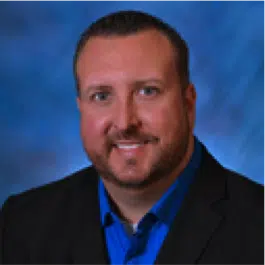
JeremyYork Jeremy York, SPHR, SHRM-SCP, is a Human Resources Field Representative for Synergy PEO Services. He provides strategic and generalist HR support to local nonprofit organization leaders and their staffs. York has over 15 years of human resources experience working as a consultant, director of human resources, and generalist, in the insurance, healthcare, nonprofit, PEO, and other industries.

Six questions to find happiness in your job

By Sponsor Insight

By Stefanie Krievins, coach and founder, The Heart Projects

An expert in leadership development and human behavior, Marshall Goldsmith says we simultaneously need happiness and meaningfulness in our lives in order to be fulfilled.

As nonprofit staff and volunteers, we often have jobs that are meaningful or at least contribute to a worthwhile mission. Happiness requires us to have courage in order to get our own needs met. While we’re busy serving others’ needs, we often put our own happiness at the bottom of our priorities list or allow others’ expectations to define it.

The secret is that only we can define happiness and meaningfulness for ourselves.

In Indiana, according to the most recent figures from Indiana University, our charitable sector is employing nearly 350,000 people, accounting for almost 10 percent of the Hoosier workforce. This is a large number of people working to help and find meaning through some of the most important work in our state.

It would seem that most of us dive into this work wholeheartedly and with noble intention. In fact, when I speak with nonprofit staff and volunteers, and those who want to be in our sector, they consistently say one of three things: “I want to make a difference. I want to leave a legacy. I want to help people.”

Over time, however, we allow work and volunteering to take up too much of our time. We allow others to trample over our boundaries; we trample all over our own boundaries: checking email at 11 p.m., working on Saturday and/or Sunday; routinely working 50 hours a week because we’re saying, “Yes,” to too many projects. While the work is still meaningful, we don’t leave enough time for happiness, and the stress overtakes much of lives.

Learn to say, “Yes,” to yourself.

This very desire to help leaves us putting our own happiness at the bottom of the priority list. Once someone is reaching out for support through coaching, mentoring, or even therapy, they are usually battling one or both of these emotions:

  • Guilt: We feel as if we have betrayed ourselves and those we serve because we’re not bringing our best selves to work. We feel guilty for not loving the work anymore.
  • Blame: We tell ourselves that our bosses, organizations, strategic plan, client, (any external factor) are the cause of stress and unhappiness.

Neither of these are helpful. It is your career and your life, so it must be your responsibility to find your definition of happiness and meaning. No one else can do this work for you. Paradoxically, by finding work that brings you meaning and happiness, you are allowing others to do the same.

As a way to become very clear on what brings meaningfulness and happiness to your career, take a few moments to honestly answer these questions:

  • What are the specific parts of my job that I love?
  • What are the specific parts of my job where I feel overwhelmed and stressed?
  • What is meaningful work? Describe, in detail, ideal work and a mission that you could contribute to.
  • If I could change my job in any way, what would I change?
  • Based on my job now, what changes will I ask for?
  • What’s really stopping me from asking for these changes or making changes myself at my current job?

Those we serve — our clients, members, patients, colleagues, ultimately, the mission — deserve to see you fulfilled and happy. That’s when you’ll complete your best work, have focus and clarity, and make the difference you’re seeking to make.

For another way to think about finding happiness and meaning, read a recent post written by me called, “How to make a difference,” and ask yourself, “What is the work that is mine to do?”


stefanie Stefanie Krievins is the founder and coach for The Heart Projects. Through her website, stefaniekrievins.com, Krievins delivers free resources. She also offers personal leadership development programs and coaching for nonprofit staff, volunteers, social entrepreneurs, and all those who want to connect with work that matters. She has a master’s degree in nonprofit management from SPEA at Indiana University, completed credentialed coaching training from Erickson International, and has more than a decade of employment and volunteering in the charitable sector in Indiana and nationwide.

A proving ground for board service

By Feature, Governance

By Lynn Sygiel, editor, Charitable Advisors

When Forbes magazine published its list of 20 Best Cities For Young Professionals last month, Indianapolis was No. 10.

But Jesamyn Sparks, Shae LeDune and Trevor Bruner would take the description one step further: Indy has a vibrant young professional network. And the three have had a hand in creating it.

Bruner is co-president of the executive committee of Agave, the Eiteljorg Museum’s young professional group. LeDune is an executive committee member. Sparks is president of the Ronald McDonald House’s Young Professional Board, and has assumed other leadership responsibilities during her five years as a volunteer.

While young professional boards are a relatively recent phenomenon, nationally, nonprofits have begun to find opportunities to capture the attention of the 21-to-40-age group.

“I think that nonprofits are really recognizing the value of tapping into a slightly different demographic than traditional boards. It’s really about thinking ahead and keeping the boards fresh,” said Sparks. “It’s great to see organizations around town that are embracing that strategy to start cultivating those board members earlier.”

Sparks credits the Ronald McDonald House with having the foresight to recognize this untapped resource seven years ago. Agave got its start 10 years ago.

LeDune said that educating her age group about Central Indiana nonprofits is key to the organizations’ future. Her former boss, Tom Hoback, who was an Eiteljorg board member, recruited her. Initially, he relied on her for advice about how to get younger people in the museum’s door, but then he realized she would be a great fit for the auxiliary.

LeDune is not alone in her volunteer service. Agave has six people on its executive committee and the Ronald McDonald House engages a 12-member leadership board and 10 additional committee members in volunteer activities.

Other nonprofits, like Goodwill and the Children’s Bureau, have created similar groups, Sparks said. BoardSource, a national organization working to strengthen nonprofit board leadership, has challenged boards to reflect the constituency they serve. Sparks said that has never been an issue at the Ronald McDonald House because typically, individuals come to serve because they have a personal connection.

“That direct experience is a really powerful thing, and I believe that it’s critical for the health and success of an organization to keep everybody focused,” said Sparks. “The mission of what the Young Professionals are trying to do is to support the mission of the House.”

The House has two-year board terms. Agave is less formal and has an organic transition for its leadership. Both boards have bylaws. As presidents, Bruner and Sparks attend their organizations’ board meetings, but leave when the board is in executive session and do not cast votes.

[content_box box_type=”normal”]

Learn more

Ronald McDonald House

Eiteljorg

Indianapolis’s young professional groups

[/content_box]

“So we kind of get an inside look. We get to sit in and see what the museum has planned, and get updates as the year goes along about how those initiatives are going. We can bring that to our board to make sure that whatever we’re doing is in line with what (the museum) needs, so we can complement what they have going on,” said Bruner.

Communication between the young professionals and the nonprofits is supported by staff liaisons who attend all their meetings, take notes and answer questions.

Agave executive committee members must attend their group’s meetings, volunteer for the museum at least five hours annually and be a museum ambassador. They are responsible for setting the strategic direction for their group, plan events, secure sponsors and recruit museum members from their age group. There is not a personal contribution expectation, other than an annual $30 membership fee.

The Ronald McDonald House’s group functions much like a board. There is an expected $50 annual minimum contribution.

“Although when you add in other events, fundraising that’s happening here at the House and campaigns, certainly our board and leadership committee members do tend to give more than just the expected amount. It is certainly not required, but people get excited about the mission of the House, and they connect with the stories,” said Sparks.

Both groups regularly champion the work of their parent organizations to young professionals, using informal informational sessions and the city’s organized professional networks. They are also able to share their groups’ missions at a young professionals’ roundtable group.

But both groups believe the key to involving their generation is getting them through the door.

“We like to invite new members to participate in the quarterly dinners we host for families by bringing a food item, serving families and talking with families. Just physically being in the House is important. To me it is a real hopeful place, and I think sometimes for someone who hasn’t really spent a lot of time there, it can be a surprise. I was surprised when I first started volunteering here years ago,” said Sparks.

One of Agave’s primary activities is recruiting museum members from their age group. Typically, there are 50 to 75 members annually. Bruner, with his co-president Brian Cusimano, added a personal commitment to secure at least five new members unique to their networks.

There is a $30 fee, which includes access to the museum and Agave’s social events.

“Agave tries to educate and engage young professionals in the world of contemporary, Western and Native American art to develop the next generation of Eiteljorg visitors and leadership. I think if we can get new people through the door, then they are going to see the world of the Eiteljorg. There is amazing art and so much more that I think people just don’t realize,” said LeDune.

The Ronald McDonald House’s board plans three fundraising events each year — a trivia night, a bingo event and a Colts viewing party — with all of those funds going directly back to the House. Sparks said she’s proudest of the game room that the group helped fundraise for.

“We’re always available to help whenever the House needs us. And I like to think that we’ve helped to grow that segment of the donor base that maybe previously just scratched the surface,” said Sparks.

Agave offers networking social events in conjunction with new exhibits and scavenger hunts to learn more about the museum. When the museum had the guitars exhibit a few years back, the group did a summer event called Jorgstock with bands and food. This year, they are making changes to keep it fresh.

Both groups are excited about the opportunities to learn from current nonprofit board members.

Agave is actually formalizing its approach and putting a mentorship program in place, pairing each Agave executive committee member with a museum board member.

“I think it’s priceless. There are so many people on the board who have done so much with the museum, but outside that are just successful people. To have a mentor like that, I think is going to be great. I think it will be a big time value proposition for Agave folks. They get direct access to community leaders, and they get to see exactly what goes into board member service,” said Bruner.

The three think there is an opportunity to learn more about governance, how nonprofits function and the ethical responsibilities of board members.

Bruner offers advice for young professionals thinking about service.

“If you are interested in getting involved, I say ‘Dive in.’ If I had to say anything, it would be, ‘Go for it,”’ he said.

A new approach to finding a business partner

By Sponsor Insight

A new approach to finding a business partner

By Paul Ashley, managing director, FirstPerson

The request for proposal, or RFP, is important and for some industries a requirement.

When done thoughtfully, this selection process can be a great experience that leads to meaningful partnerships that endure. It can be an effective question set to learn more about a company; however, it often stops at just that.

I’ve been on the winning and losing side of this process, and as I reflect on how great partnerships are built, even the ones when FirstPerson was not chosen, I see an important theme emerging. When you treat the RFP process like the process you use when hiring talent, great outcomes happen.

Button Text

The risks — and rewards — of reinventing signature events

By Feature

By Susan J. Ragusa, contributing columnist, Inside Philanthropy

There’s a great Bette Davis quote that goes something like, “Old age ain’t no place for sissies.” It puts me in mind of the recently departed month and the image of decrepit Father Time ambling out of the year. Certainly for nonprofits that depend on a year-end fundraising blitz, December has never been for the faint of heart. Nor, for that matter, is January, when the donation tally is complete.

That high-stakes setting informs the success story I have to share. Last year, I was part of a daring December initiative. A nonprofit organization of which I’m a board member, Astor Services for Children and Families, took a popular free event and, for the first time, required a contribution to attend. That’s practically the definition of risk-taking for nonprofits. Yet, the outcome was an event that generated positive buzz and raised a significant amount of money — in fact, more than other signature events in recent years. How it was accomplished may be of value to others — at any time of the year.

Button Text

Revamped Relay for Life

By Feature, Fundraising

By Bruce Barton, staff writer, Los Altos Town Crier

The annual Los Altos Relay For Life fundraiser for the American Cancer Society started with a bang in 2004, with hundreds participating and hundreds of thousands of dollars raised.

But the 24-hour event lost steam after a few years as participants and organizers grew weary of the massive effort and time commitment required. Organizers realized that major changes were needed to keep the event afloat.

Enter Relay 2.0, a revamped event scheduled June 12 at Hillview Park that completely changes the format while keeping the Relay’s overall purpose intact. Instead of a 24-hour marathon, this year’s affair runs 4-9 p.m. Instead of multiple laps, 2.0 will feature a single 2.5-mile lap along streets surrounding the park. Other new elements include a flamingo decoration contest, picnic site judging and a relay, with runners passing a torch. The luminaria – candle-filled bags with memorial messages lining the track – have been replaced by “messages of hope,” in which participants can attach artwork and notes to a decorated chain-link fence.

Button Text