Tag

grant

Can we end homelessness in Indianapolis?: We may be getting closer

By Feature

Community leaders announce plans to build 96 more permanent housing solutions as part of a comprehensive plan to end and prevent homelessness by 2024

by Shari Finnell, editor/writer, Charitable Advisors

The road to homelessness can be complex — with individuals and families experiencing varying factors that can lead to them living on the street, in parks or in vehicles, as outlined in Evicted: Poverty and Profit in the American City. In the Pulitzer Prize-winning book, sociologist Matthew Desmond provides a rare look into the lives of several individuals who failed to avoid homelessness in Milwaukee.

After years of analyzing the homeless population in Indianapolis, city officials and community leaders realize they still don’t have all the answers — but are hopeful that a comprehensive approach that includes a continuum of care, hundreds of new supportive permanent housing units and rental assistance can put them on the path to ending homelessness by 2024, said Chelsea Haring-Cozzi, the executive director of the Coalition for Homelessness Prevention and Intervention.

While many cities have traditionally focused on short- to medium-term solutions that focus on stabilizing housing within a 12- to 24-month time period, the Indianapolis Continuum of Care (CoC), a coalition of public and private organizations and individuals, has shifted the focus on more permanent solutions for homeless people in Indianapolis, Haring-Cozzi said.

As part of that plan, the CoC recently announced plans to build 96 permanent housing solutions with a $37 million grant awarded by the state of Indiana. The Indiana Housing and Community Development Authority (IHCDA) has chosen three supportive housing developments in Indianapolis for this year’s round of Low-Income Housing Tax Credits (LIHTC). The three local developments will create 96 new units of permanent supportive housing for individuals experiencing homelessness in Indianapolis.

The projects include:

  • Hanna Commons, 2800-2910 E. Hanna Ave., Indianapolis, Ind., 46227. Awarded $1.2 million annually for 10 years to provide 50 supportive housing units for individuals experiencing homelessness.
  • St. Lucas Lofts, 2810 E. New York St., Indianapolis, Ind., 46201. Awarded $1.08 million annually for 10 years to provide 50 affordable housing units for youth experiencing homelessness.
  • Compass on Washington Street, 1033 East Washington St., Indianapolis, Ind., 46202, awarded $1.2 million annually for 10 years and $900,000 in Housing Trust Funds to develop 36 supportive housing units for individuals experiencing homelessness.

Construction on all three housing developments is expected to start later this year with an anticipated completion date by the end of 2022. All three developments qualify for Indianapolis Housing Authority vouchers. These projects bring the city of Indianapolis and the CoC closer to its goal of developing 500 new supportive housing units by 2024. Currently, there are 360 supportive housing units under development in the city.

The plan is also focused on preventing homelessness. Haring-Cozzi noted that the pandemic, as of yet, has not contributed to a noticeable uptick in the number of homeless people in Indianapolis as some people had feared.

“When counts were analyzed in January 2021, compared to last January, Indianapolis didn’t see much of a change,” she said. “Even before COVID, Indianapolis was among the few communities nationwide that wasn’t seeing the same type of uptick in homelessness.”

However, the impact of COVID-19 may still need to be realized, she said. The next few months may reveal how if there will be any sustainable fallout caused by the pandemic. “We’re hopeful eviction moratoriums have curbed the impact of the loss of housing and the loss of income, along with people getting rental assistance,” she said.

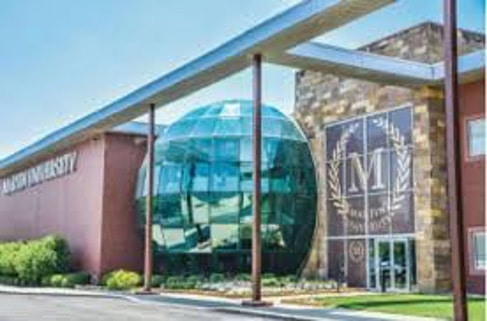
Local university adopts a rural work college model to transform higher education for nontraditional urban students

By Feature

by Shari Finnell, editor/writer, Not for Profit News

The profile of students who attend Martin University is anything but traditional. The average age is 38, and more than half are Millennials. Many are juggling low-wage, part-time jobs and parenting responsibilities as heads of household. And it’s not unusual for them to be carrying student debt after transferring from other colleges, according to Ezell Marrs, vice president for enrollment management for the Near Eastside Indianapolis educational institution.

Those unique circumstances led Martin University to introduce a work college model that has been primarily limited to rural and small-town communities until recent years. Under the work college model, students pursue their degree while making a commitment to work and provide service for the university or university partners.

Martin WORKS, the urban work college established with the assistance of a $1 million Lilly Endowment grant, improves students’ odds of better post-graduation outcomes since they will be paired with companies that provide relevant work experience. “They are not paying tuition as part of this program — and they are getting paid a competitive wage with top-tier corporate employers, in some cases, Fortune 500 companies,” Marrs said. “They will engage in learning and work-related experience that will set them up for full-time employment in more profitable careers.”

In some historic work college models, everyone who works at the campus is a student with the exception of faculty, Marrs said. Over the decades, many have evolved to meet new career demands. Warren Wilson College in Asheville, N.C., for example, was founded in 1894 as the Asheville Farm School to give underserved and, in some cases, previously uneducated young people, more solid job prospects through a low-cost education. In 1967, it became a four-year liberal arts college. Today, Warren Wilson College, which has been touted as a “best buy” by Fiske Guide to Colleges, continues its focus on “learning by doing” through a work program and community engagement.

“The work college model has been around for some time, but It’s a fairly new concept for an urban setting,” Marrs said. “Paul Quinn College in Dallas pioneered the urban work college. We are now pioneering an urban work college for post-traditional students.”

Martin Works, which will accept its first students in the fall of 2021, is centered around three pillars to ensure that its students succeed — academics, relevant employment with corporate partners, and community service, with a focus on serving its surrounding neighborhood in the 46218 zip code, Marrs said.

The program also requires that participants first engage in a summer training session to ensure they are prepared to work in corporate settings, Marrs said. “The Martin WORKS Academy, the preparatory piece that proceeds enrollment, will help students learn the skills and foundational courses that will go into their jobs. When we send a student off to a Fortune 500 company, we will ensure they have basic employability skills, including communication skills and other soft skills.”

The work college model addresses some of the inequities inherent in some traditional internship programs in which students are not paid or underpaid to gain experience in their preferred careers, Marrs said. Historically, that has been a challenging prospect for students who can’t afford to forego a steady paycheck. “I know of a student from Ball State who was working in media and not getting paid,” Marrs said. “His situation allows him to be agreeable to that because he needs the experience. Our students have more responsibilities and need both experience and compensation.”

Another component of the program is designed to equip the students for home ownership through affordable housing provided by community partners that specialize in housing, Marrs said.

Martin Works will ultimately give a student the ability to graduate with better job prospects, and the foundation for a stable life — critical steps to addressing racial and social inequities in the community, Marrs said.

“They will walk across the stage with a resume with relevant work experience, a diploma and a job — and very little or no school loan debt,” he said.

Prospective students interested in the program can apply by visiting Martin University’s site.