Tag

Community development

Want Leaders in Community Development? Develop a New Hiring Strategy

By Feature

By Amandula Anderson, executor director of IFF Indiana Region

It’s easy to stick to the tried-and-true pipeline when hiring for community development roles. But forming connections with people from different industries and generations can make our teams stronger.

Do you ever wonder what the next era in community development looks like? In my 20-plus years in the field, I have been privileged to work with an array of professionals with backgrounds in the arts, architecture, construction, psychology, accounting, and development. What has always intrigued me is that even though we have such diverse backgrounds, we still come together for the greater good: to build parks, housing, and streetscapes, and for community empowerment. As I look out into the field now, I still recognize those same skill sets, yet whenever I see job postings, I see that we typically seek the same type of candidate, and that postings lag for months looking for the “right” person. It makes me wonder if we are holding ourselves back in community development because we aren’t reaching deeper into our communities to find talent.

As a leader who has sought talent at many jobs, I find myself leveling up my search criteria. No longer am I just looking for someone with a nonprofit background. I seek out people who bring a new perspective that will build on the experience of the team. For example, emerging professionals who attend business networking events. They are likely there to build their current careers—but selfishly, I want to show them how much more rewarding the same technical skills can be when used with a community development purpose! Recently I met woman who was a branch manager for a local bank at one of these events. As she asked questions about my role, I could see the lights turned on for her. She later reached out to me about a role that she found interesting at a CDFI, still working with small businesses, but providing technical assistance to help owners become loan-ready. The time and energy she put into underwriting loans is now spent giving advice and support to clients she may have never encountered at her bank.

With this in mind, I am sending a call to action to my fellow leaders to think differently about recruitment. We have to start reaching outside the standard networks of conscientious community leaders to recognize the potential of people who have never been exposed to the true rewards of this field. While this may seem contrary to what you’ve previously been told, I promise it will lead to engaged, passionate, curious teams. Below I outline some key ways to cultivate a diverse, multigenerational team that will be the future of community development.

Create Active Relationships

Perusing your LinkedIn, you are likely to find a few interesting connections. What if you invited one of them to coffee, not with hiring in mind, but just to get to know them? In an interview, we are focused on a set of skills or technical expertise to align with a specific job—but if we just spent time learning what makes someone tick, how much more might we discover? Use your early morning coffees or afternoon teas to engage with someone you might have nothing in common with on the surface. Seek out connections who challenge your thinking about what the “right” age, education, or experience are for community development. Research shows that multigenerational teams have a positive impact on long-term success and growth for a company, but in order to cultivate a multigenerational team you must look outside your circle. Older candidates can bring vast experience from their life and work, complementing the younger generation’s new perspective and ideas.

I once met a young woman in the construction field and asked her to lunch so I could learn more about her. I was looking to fill a new role and took several people out to lunch to learn if they might fit. Her first question to me was, “Why did you think I might be a good person for your role, I’m in construction, not real estate?” Construction IS real estate, but it struck me—if she saw her work through a wider lens, maybe she would be more open to new opportunities that build on her current strengths and challenge her. Sometimes people get caught up in the corporate world, looking for a path to more meaningful work, and it is our duty to guide them. All the talents and skills needed to succeed at a for-profit job—such as being analytical, customer-centered, and organized—are exactly what is needed to succeed in the nonprofit sector. Often folks just need someone already in the field to highlight this.

Level up Job Postings

Oftentimes people can’t see themselves doing the work because the job description has industry talk, specialized educational requirements, or work experience that someone outside the field can’t relate to. Consider adding language such as, “the ideal candidate enjoys helping others” or “seeking candidates that are eager to help create solutions to…” Ask your current team their “why” in this career and use this language to share how a job at your organization can be fulfilling. Rewrite job descriptions to match the actual work and not be hyper-focused on certain degrees or certifications. Call out duties, such as “the opportunity to work one-on-one with a client” or “help us implement a grant to create more homeownership in the community.” Help candidates see themselves in the work. Further, as you seek out candidates, consider posting roles in new places like the local business magazine and young professionals job boards and networking groups.

Be Willing to Coach Up

I’ve often heard people say they don’t want to be a mentor because it takes too much time and effort. The truth is that one mentor cannot be all things to anyone. I have found that the people who have been willing to spend time with me on my journey each hold a special characteristic that I value and want to emulate. It’s a mistake to think of coaching as a job; it can be a fulfilling part of your career. Seeing someone reach a goal they never thought possible gives me so much joy.

I love to see others win! Coaching goes two ways. When I take the time to learn more about an industry or profession, it helps me to see how community development connects to the world around me. Get to know not just the person, but also the work they do. It will make a more compelling case for why they should consider our field when you can make connections and use examples. The lessons you have learned as a professional can’t be taught in a classroom. Share your perspective on what’s happening in the news or your work and life experiences—this helps to build character in both of you and opens you up to different ways of thinking.

Remember, when you bring in someone new to the industry, it typically takes six to 12 months for them to learn what they are supposed to be doing. Every single person on my team has heard me say, “You are where you are supposed to be for the length of time you have been doing this work; here’s where you can focus next.” By providing encouragement and direction, you are being empathetic and building them up. Coaching may not come naturally, which is why investing in tools may help, such as understanding DiSC styles, learning to manage up and down, and the art of deep listening. And lastly, know when to make a quick referral and follow up. There is always someone smarter than you on a specific topic. Share your network.

Keep Engaged Even After Hiring

The work doesn’t end by just bringing in new, diverse talent. Forming a team is one part of the job, but supporting the individuals on that team is another. The community development profession often requires a lot of someone, like grant writing, stakeholder engagement, and assessing financial feasibility. Take explicit efforts to support that individual in succeeding. In practice, this may look like scheduling 30-minute one-on-ones, grabbing coffee or lunch to chat, driving to a meeting or function together, asking them to sit in on a meeting that has nothing to do with their current role so they can see how the overall organization functions, or pairing two people with different skill sets to work together to find solutions. When we strategically open up our world of work, we share in our fulfillment in the work and people are able to envision themselves in it.

Lastly, I think that we can all agree that community development is hard. It takes someone who is willing to mix their passions with technical skills. Have you ever tried to build a capital stack? It’s like making lasagna, only you have to keep running back to the store because you forgot an ingredient. For us to answer real-world problems we need to continuously evolve how we develop solutions in community development. This requires challenging ourselves to seek people with diverse skills and abilities who have a desire to make a difference. It is possible to have a work life that excites you—which this field does for me nearly every day.

This article was original published in Shelterforce.

CAFE: Investing in the community through strategic partnerships

By Sponsor Insight, Uncategorized

by Melanie Priest, director of grants services, Hedges

Collaboration. Relationships. Connections. Alliances. According to Merriam Webster Dictionary, these are all words that are synonymous with partnerships. Strategic community partnerships in the nonprofit sector are the key to success for many reasons including:

  • Achieving greater programmatic impact;
  • Increasing visibility and awareness;
  • Diversifying staff skills and expertise;
  • Improving sustainability; and
  • Attaining additional resources such as increased volunteers and funding

In fact, of 1,192 grant makers surveyed by the Urban Institute, 69 percent reported that they actively encourage collaboration among grantees. Of those respondents, 42 percent indicated they often require partnerships as a condition for funding. Grant makers also indicated that strategic partnerships with clearly defined roles improve cooperation among agencies, leading to greater accountability, capacity building, and better program results (Mission Driven Strategies for Effective Nonprofit Program Development, Candid, 2020).

One Indianapolis nonprofit organization that has emerged as a leader in investing in the community by developing and engaging in strategic partnerships is the Community Alliance of the Far Eastside (CAFE).

CAFE has served as an anchor institution in Indianapolis’ Far Eastside neighborhood for the past 26 years. Guided in the last two years by CEO Kendra Nowell, the organization has widened and deepened its role, moving from a traditional community center to a community leader committed to building the long-term sustainability of the Far Eastside.

Sensing the organization had outgrown its previous vision and mission, CAFE’s board of directors and key staff engaged in a process in 2023 to review, reflect on, and revise its vision, mission, and values statements, concluding with new, adopted statements to guide the organization’s continued impact in the Far Eastside.

Through this process, CAFE casted a vision where the Far Eastside is an “inclusive, thriving, and safe community where people of all ages can live, learn, work, and play with a spirit of caring.” CAFE will achieve this vision through a mission that places a strong emphasis on partnerships. The updated mission is to “elevate quality of life within the Far Eastside by strengthening partnerships, maximizing resources, and empowering residents to achieve their highest potential through increased economic mobility, stability, and self-sufficiency.”

As a result of this new vision and mission, CAFE has leveraged its position as a pillar of the Far Eastside and focused attention on how to best invest and improve the Far Eastside community through partnerships. While CAFE has worked in the past 26 years to diligently to develop community collaborations, the shift to more strategic partnerships that truly advance the neighborhood has become evident in the following ways:

Delivering programs. CAFE collaborates with an array of local community organizations, apartment complexes, schools, and churches to provide direct services for clients in the areas of housing, legal services, immigration services, mentoring, employment readiness and skill building, early childhood education and childcare, health care services, and other basic needs. The number of partners is too long to list and ever evolving to meet clients’ needs however a few examples include Indianapolis Neighborhood Housing Partnership, IndyReads, Pathway Resource Center, Easterseals Crossroads, Indianapolis Neighborhood Resource Center, and the John H. Boner Center. In recent years, CAFE has also partnered with grassroots organizations such as and businesses such as Heart2Heart Counseling, The Ross Foundation, and J. Posley LLC which truly understand the community through lived experiences of the Far Eastside neighborhood and are able to deliver services with a focus on cultural competency.

Sharing space. CAFE partners with community organizations to rent space onsite at its facility. This provides clients with many services under one roof which is valuable in a neighborhood where residents often face transportation barriers. CAFE’s 56,000-square-foot facility houses its own comprehensive services along with programs provided by La Plaza, Family Development Services/Head Start, the Marion County Health Department’s WIC program, Finish Line Boys and Girls Club, the Damien Center, Marion County Sheriff’s Parole services, Indiana Department of Workforce Development’s Work One program, and Warren Township School’s Walker Career Center.

Convening and facilitating: CAFE also convenes and facilitates many groups that exist to advance a variety of community improvements and economic development projects that increase the vitality of the neighborhood. Groups and initiatives like the Far Eastside Community Council, Collective Impact Council, Apartment Managers Roundtable, and the Eastside Neighborhood Action and Community Team hold their meetings at CAFE’s facility and are instrumental in addressing needs related to education, employment access, crime, safety, and food access.

In the past two years, there have been increased opportunities for funding to elevate the quality of life while reducing violence and poverty for vulnerable populations who have experienced inequities for generations. The Central Indiana Community Foundation’s Elevation Grant and the Urban League’s Indianapolis African American Quality of Life Initiative are both opportunities that align with CAFE’s vision, mission, and strategic goals.

These revenue streams have enabled CAFE to embark on enhanced partnerships and invest in the Far Eastside community by working with community-based organizations. To date, CAFE has partnered with and invested in six organizations that have a spectrum of experience, capacity, and readiness to complete the requirements for the grant proposals as well as to manage significant funds. The organizations are Crown Community Development Corporation, The Kween Project, M.O.V.E., New Direction Church, Project Free University, and The Ross Foundation. CAFE worked with these organizations by:

Allocating resources. CAFE’s consultants work closely with the organizations to learn more about their programs, identify programmatic outcomes and impact, and develop budgets. As a result of this information exchange, comprehensive grant proposals are prepared and submitted on behalf of the organizations. The expenses for these services have been covered by CAFE.

Taking fiscal responsibility. Once the grants are awarded, CAFE’s staff works with the organizations on management of the grants. Managing the grants during periods of one or two years requires regular reporting, careful monitoring of how the funds are spent along with gathering the corresponding documentation, and data collection and analysis.

Building capacity. CAFE’s staff and consultants do not do the work for these organizations alone. It is because of true collaborations and significant input and effort from the organizations’ staff members that the partnerships have been a success. The funding has enabled the organizations to hire more staff, provide services to more clients, and make a deeper impact. The organizations have also learned how to manage grant funding. In fact, two of the organizations are now managing grant awards without CAFE as a fiscal agent and another is emerging and aspiring to get to this level.

CAFE’s partnerships with these agencies have provided the funding needed to significantly expand and enhance their programs, build organizational capacity, and achieve greater sustainability. These investments and collaborations are solutions that will contribute to increasing the quality of life and the vitality of the Far Eastside community for years to come.

Melanie Priest is passionate about making Indianapolis a great place to live, having strong connections in the community, and helping nonprofits share their stories of impact. For nearly 25 years, Melanie has worked closely with the Central Indiana philanthropic community to provide creative solutions to complex problems. As Director of Grants Services at Hedges since 2012, Melanie has secured hundreds of grant awards for dozens of Indianapolis nonprofit organizations to ensure they are able to advance their missions.

ICON loan program critical to success of community development project

By Sponsor Insight
Before and after of WIDC project

by Citizens Energy Group

As executive director of West Indianapolis Development Corp. (WIDC), Lisa Laflin considers herself many things, including “dot connector, cat herder, and chainsaw juggler.” Many employees of community development corporations (CDCs) or other nonprofits probably can relate. Working to keep many plates spinning at the same time, Laflin is a passionate voice for affordable housing and the flourishing of neighborhoods served by WIDC.

WIDC has recently completed a housing project through the Investment Collaboration on Neighborhoods (ICON) loan program, an initiative from Citizens Energy Group that makes low-interest loans available to nonprofits and CDCs to facilitate such development projects. The program is designed to help CDCs access the financing they need to undertake important projects that might otherwise be too costly or too difficult to finance through traditional channels.

Laflin and the WIDC team purchased a home in The Valley neighborhood originally built by Habitat for Humanity but which had since undergone foreclosure. Despite being in a flood plain and thus ineligible for certain federal loan programs, WIDC secured a $100,000 loan from ICON to rehab the home and make it available as affordable housing with a 20-year deed restriction.

According to Laflin, the loan process, which took less than half an hour to complete, was the easiest she had ever experienced and faster to process than federal funding, even as WIDC follows federal guidelines on requiring multiple bids for comparison.

She also said the personal connections she developed with Rhonda Harper and Kenya McMillin, ICON program liaisons at Citizens, made the process smooth. “We’ll be able to have the loan fully repaid after the close of the home sale this summer, less than two years after the original agreement,” Laflin said.

Many other CDCs have been able to access low-interest financing through the program in order to undertake important community development projects since the program’s inception in 1995. With alumni projects including housing, community spaces, and arts spaces, the program is particularly valuable for CDCs that are working in underserved communities or tackling particularly challenging projects.

Laflin and WIDC are looking forward to their next ICON project. “I don’t know that I would do anything different with the loan process,” Laflin said. “We’re already planning to use ICON on future projects, and I would recommend it to other CDCs in need of financing — particularly for housing projects. I appreciate the program’s flexibility and efficiency, I am grateful for the staff’s support in making our project a success, and I commend Citizens’ commitment to the community in leveraging their resources to stand up this program.”

About ICON:
The ICON loan program can be a valuable resource for CDCs working to improve the lives of families and individuals through affordable housing and community development projects. The program’s low, simple interest rates make it an attractive financing option for CDCs that struggle to access traditional sources of funding. Previous partners have included Hawthorne Neighborhood; Hearts & Hands of Indiana; Local Initiatives Support Corp. (LISC) Indianapolis; and Mapleton Fall Creek Development Corporation. ICON’s redevelopment efforts are in keeping with the mission of Citizens Energy Group to enhance quality of life and economic development in the communities it serves.

More information is available at: https://info.citizensenergygroup.com/community/icon

Questions can be directed to: ICON@citizensenergygroup.com

Una iglesia local transforma un vecindario desatendido del Este mediante un plan estratégico de desarrollo económico

By Espanol

La Eastern Star Church anuncia el comienzo de la construcción de una instalación de 60,000 pies cuadrados, que forma parte de la segunda fase de su ROCK Initiative

por Shari Finnell, editora/escritora, Not for Profit Newsletter

(To read in English, click here) Translated by LUNA Language Services

Cuando se compara la habitabilidad de un vecindario, es fácil dejarse llevar por las cifras: el índice de criminalidad, las puntuaciones de las escuelas, el valor de las viviendas, las vías peatonales… o las millas hasta la tienda de comestibles más cercana. Es probable que los cazadores de casas comparen cuidadosamente estas calificaciones, sabiendo que pueden repercutir en la calidad de vida de una familia después de la mudanza.

Sin embargo, muchos residentes de algunas de las comunidades más empobrecidas de la ciudad no pueden tomar ese tipo de decisiones. Con un número importante de personas con recursos económicos limitados, mudarse no es una opción.

Jeffrey A. Johnson, Sr., conoce muy de cerca uno de esos vecindarios: la comunidad de Arlington Woods, situada en el código postal 46218, una zona que se ha visto asolada por los altos índices de delincuencia, las elevadas tasas de desempleo, los altos índices de abandono escolar y, más recientemente, un gran número de contagios por COVID-19.

Johnson, que creció en este barrio antes de ir a la universidad, regresó a los 24 años para convertirse en el pastor de la Eastern Star Church (ESC), que tiene tres sedes, incluida la principal en el 5750 E. 30th St., en el corazón de la comunidad 46218.

Bajo el liderazgo de Johnson durante 33 años, la iglesia invirtió continuamente en la comunidad a través de una despensa de alimentos, viviendas asequibles, inversiones financieras en las escuelas locales, ferias de salud, voluntariado, tutoría y otros programas. En 2017, Johnson se unió a los miembros de la ESC para anunciar el lanzamiento de The ROCK Initiative, un plan más completo para invertir en la comunidad. The ROCK Initiative se basa en cuatro pilares: vivienda asequible, comunidad fuerte, educación de calidad y seguridad financiera.

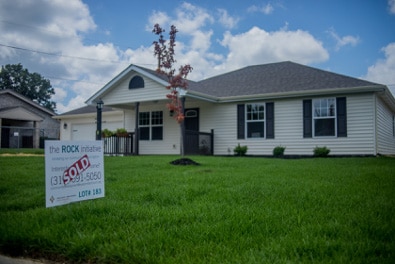
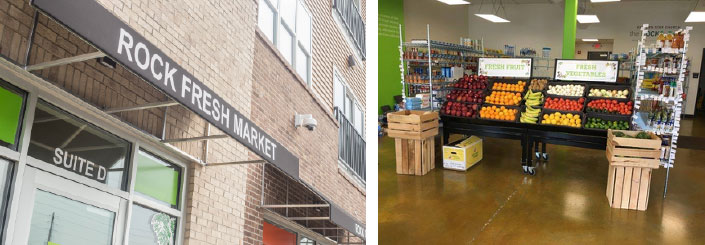
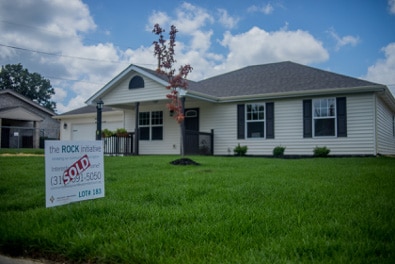
Como parte de la fase I, la iglesia renovó y construyó viviendas unifamiliares, creó un jardín urbano y construyó un complejo multiuso con 25 unidades de apartamentos y espacios comerciales ocupados por una cooperativa de crédito, una tienda de comestibles y proveedores de servicios sociales. La iniciativa recibió el apoyo de numerosos socios de la comunidad, como INHP, Habitat for Humanity, The Mind Trust, Financial Health Federal Credit Union, Community Health y Eskenazi Health.

Hoy anunció otra fase importante en el cumplimiento de su visión de una comunidad transformada: el desarrollo del Centro Comunitario ROCK para niños y jóvenes, y una instalación de 60,000 pies cuadrados que proporcionará a los estudiantes un entorno seguro para estudiar, aprender nuevas habilidades y participar en actividades recreativas y de desarrollo.

Tihesha Henderson, directora de la Sankofa School of Success, antes IPS School 99, dijo que la inversión en los jóvenes del área 46218 será duradera. “A lo largo de los años, la comunidad ha cambiado mucho”, afirmó Henderson, quien también creció en la comunidad. “Muy rápidamente pasó de ser una zona de clase media a una zona improvisada”.

La comunidad, con una población que en su gran mayoría es afroamericana, ha estado desempleada y extremadamente desatendida por mucho tiempo, añadió Henderson.

“No solo hay muchos traumas y mucha pobreza, sino que vemos muchos problemas de salud mental en esta comunidad”, comentó. “También es un desierto cuando se trata de negocios como bancos, tiendas de comestibles y apoyo a la salud mental de nuestras familias. No hay muchos lugares a los que nuestras familias pueden acudir para conseguir un empleo”, dijo. “Así que, cuando se tienen en cuenta todas esas cosas, sabemos que las necesidades de nuestros estudiantes van a ser grandes”.

The ROCK Initiative se ha mostrado prometedora y ha llenado de esperanza a los residentes de esta área, declaró Henderson. “Depende de nosotros eliminar los sistemas de opresión que afectan todos los días a nuestros niños de color, y podemos hacerlo a través de la equidad y los recursos en nuestro vecindario”.

Local church transforms neglected Eastside neighborhood through strategic economic development plan

By Feature

Eastern Star Church announces the groundbreaking of a 60,000-square-foot facility — part of Phase II of its ROCK Initiative

by Shari Finnell, editor/writer, Not for Profit Newsletter

(Para leer en español, haga clic aquí) Translated by LUNA Language Services

When comparing the livability of a neighborhood, it’s easy to quickly get caught up in numbers — crime rate, school scores, home values, walkability scores … or miles to the nearest grocery store. House hunters are likely to carefully compare these ratings, knowing that it can impact the quality of their family’s lives after a move.

However, many residents in some of the city’s most impoverished communities can’t make those types of choices. With a significant number challenged by limited financial resources, moving isn’t an option.

Jeffrey A. Johnson, Sr., is intimately familiar with one of those neighborhoods — the Arlington Woods community, which is located in the 46218 ZIP code — an area that has been blighted by high crime rates, high rates of unemployment, high student dropout rates and, more recently, high rates of COVID-19 infection.

Johnson, who grew up in this neighborhood before going off to college, returned at the age of 24 to become the pastor of Eastern Star Church (ESC), which has three campuses, including its Main Campus at 5750 E. 30th St., in the heart of the 46218 community. Under Johnson’s 33-year leadership, the church continually invested in the community through a food pantry, affordable apartment housing, and financial investments in local schools, health fairs, volunteering, mentoring and other programs.

In 2017, Johnson joined members of ESC in announcing the launch of The ROCK Initiative, a more comprehensive plan for investing in the community. The ROCK Initiative is built on four pillars — affordable housing, strong community, quality education and financial security.

As part of Phase I, the church renovated and built single-family homes, developed an urban garden, and constructed a multi-use complex with 25 apartment units and retail space occupied by a credit union, a grocery store and social service providers. The initiative received support from numerous community partners, including INHP, Habitat for Humanity, The Mind Trust, Financial Health Federal Credit Union, Community Health, and Eskenazi Health.

Today, it announced another major phase in accomplishing its vision for a transformed community — the development of the ROCK Children and Youth Center (RCYC), a 60,000-square-foot facility that will provide students a safe environment to study, learn new skills, and engage in recreational and developmental activities.

During a groundbreaking ceremony, Johnson said The ROCK Initiative was launched to address inequities in the Eastside neighborhood.

“For too long, in this particular area, resources have not come through. We have had to deal with an economic desert, a food desert, an employment desert, and a quality education desert … which is one of the reasons, as led by God, we decided to start the ROCK Initiative,” Johnson said. “The ROCK Initiative allows us to partner up and collaborate with neighborhood, businesses, government and those who have a heart for community to make a difference. And the ROCK Children and Youth Center will help us continue our vision for a strong, safe and vibrant community so that all of our children are able grow and develop in a way God that intended them to.”

Jeff Bennett, Deputy Mayor of Community Development, told those gathered at the groundbreaking that the center represents a much-needed addition for the Eastside neighborhood, which he described as “one of the city’s most under-appreciated and under-recognized areas.”

“When we talk about community development in Indianapolis, it’s important that we recognize the work of our congregations,” said Bennett, citing the church’s investment in the neighborhood. “Eastern Star has led the way for more than 100 years. You recognized and fulfilled critical needs in affordable housing, banking and credit, food access and educational opportunities.”

Brandon Brown, CEO of The Mind Trust, which supported the opening of Rooted School Indianapolis, a high school located on the church’s main campus on East 30th Street, said that the ROCK Initiative can serve as a model for transforming neighborhoods. “With its comprehensive approach to education — with a pre-K to grade 12 continuum as one of the four major pillars, The ROCK Initiative can serve as a model of what’s possible when we think of a multi-faceted approach to uplift a community with education at the core.

“I believe that we will come back in 10 years and see this as a model of racial equity and social justice for our entire city that will serve as a shining example of what’s possible when we come together,” Brown added.

Tihesha Henderson, the Head of School at Sankofa School of Success, formerly IPS School 99, said the investment in youth in the 46218 area will be long lasting. “Over the years, the community has changed greatly,” said Henderson, who also grew up in the community. “It went from a middle-class area to an improvised area very quickly.”

The community, with an overwhelmingly African American population, has been largely unemployed and grossly underserved, Henderson added.

“Not only is there high trauma and high poverty, we see a lot of mental health issues in this community,” she said. “It’s also a desert when it comes to businesses like banks, grocery stores, and mental health support for our families. There are not a lot of places that our families can go to be employed,” she said. “So, when you factor in all of those things, we know that the needs of our students are going to be great.”

The ROCK Initiative has shown promise in giving the residents of this area hope, Henderson said. “It’s up to us to eliminate the systems of oppression that affect our black and brown kids every day, and we can do that through equity and resources in our neighborhood.”