Category

Feature

Why the world needs tri-sector leaders

By Feature, Leadership

By Nick Lovegrove and Matthew Thomas, contributing writers, Harvard Business Review |

The critical challenges society faces — such as water scarcity, access to education, and the rising cost of healthcare — increasingly require the business, government and nonprofit sectors to work together to create lasting solutions. But this is only possible if the senior executives of our leading institutions are what Dominic Barton, Worldwide Managing Director of McKinsey & Company, refers to as “tri-sector athletes” — leaders able to engage and collaborate across all three sectors.

Our research at The InterSector Project shows that these leaders often have prior experiences in each sector and a unique ability to navigate different cultures, align incentives and draw on the particular strengths of a wide range of actors to solve large-scale problems.

Take water scarcity. A potential 40 percent gap between global freshwater demand and supply by 2030 puts billions of lives — and dollars — at stake. And all three sectors have skin in the game. For agri-food and beverage businesses, fresh water is an essential ingredient in their production process. Governments are often the stewards of water and regulate its use. Nonprofits work to ensure access to clean water and conservation of watersheds and the environment.

Button Text

In the ‘reverse Peace Corps,’ future leaders hone skills

By Feature, Leadership

By Frances Stead Sellers, senior writer, The Washington Post |

After the speeches, the presentation of certificates and the photo op come the slightly sophomoric awards you might expect at an eighth-grade graduation. Graduation day at the Washington International School? A fin d’annee fete for Model U.N. students? Or some hug-the-globe gig for junior diplomats that Secretary of State John F. Kerry dreamed up?

No, this is the 15th graduating class of Atlas Service Corps, a Washington-based nonprofit founded in 2006 with the goal of creating a “global network of changemakers.” At a time when terrorist groups win attention for recruiting disillusioned young Westerners to join them, Atlas Corps is acting as a “reverse Peace Corps,” aiming to identify outstanding young nonprofit leaders around the world, and to bring them to serve and share their overseas experience for a year or so in the United States before they return home to apply their new skills. After a recent endorsement from the State Department, the fellowship has attracted as many as 1,000 applicants a month.

Button Text

How to develop as a nonprofit leader

By Feature, Leadership

By Bridgespan writers |

Many people who are working within the ranks of nonprofit organizations could become great senior nonprofit leaders. However, in part because of budget constraints, few organizations in the sector have formal professional development programs to prepare mid-level managers for senior roles. As a result, most mid-level nonprofit professionals must take responsibility for their own career development.

One way to begin the process is to tap the experience of senior leaders who already have worked their way up within the sector. To that end, we spoke with six senior nonprofit leaders — all of whom have spent much if not all of their careers working in the nonprofit sector — about their career paths and the lessons they learned along the way. We also asked what advice they would give to mid-level managers looking to move into senior nonprofit leadership roles.

Button Text

Goodwill’s approach to growth: one view

By Feature, Leadership

By Lynn Sygiel, editor, Charitable Advisors |

For Kent Kramer, the answer was easy. As a candidate earlier this year for the president’s position at Goodwill of Central Indiana, he was asked to title a chapter in Goodwill’s history book that would describe his future tenure.

Kramer’s answer: Tipping point.

His explanation: “I look at some of the initiatives that we have going on, they’re on the verge, a tipping point. When you have that critical mass of activity, and it hits that tipping point, all of a sudden the impact becomes enormous. And that’s where I feel we are on an education front and definitely on workforce development,” said Kramer.

Goodwill and Kramer understand that balancing growth and scale also means understanding and respecting their complex interplay.

Kramer was hired as vice president of retail in 2002. His task was to grow Goodwill’s retail revenue. But growth for growth’s sake was not the goal. Goodwill’s board saw the additional revenue as a way to boost its mission.

In his first 10 years, Kramer and his team were successful in increasing revenue from the retail side. They boosted the number of stores to 52 from 24 and grew the number of employees at those stores to 2,200 from 700. Since then, new concepts like e-commerce and outlet and boutique stores have been introduced. Goodwill’s Central Indiana staff is now at 3,200, and last year, 30 Goodwill agencies from around the country visited Indianapolis to learn more about retail growth.

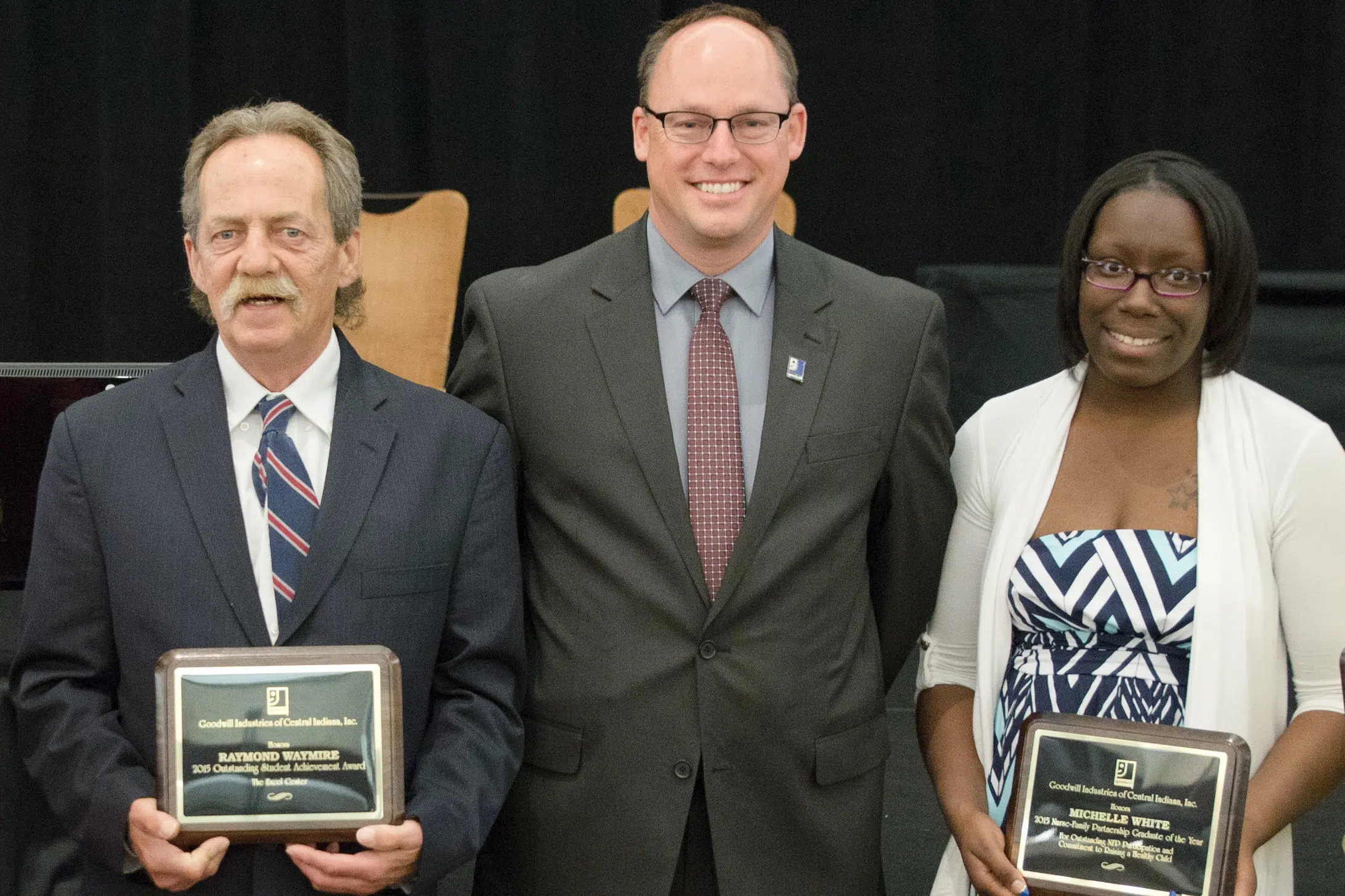
But that’s not all that’s grown. Kramer saw the organization’s work with people and families take a more holistic approach. Although Kramer is proud of opening those stores, he sees the broader effect of increased revenue. Goodwill has taken on a larger mission – helping people get to economic self-sufficiency. Two ways that Goodwill plays a significant role in reducing poverty and the array of accompanying social problems is through its Excel Centers and its Nurse-Family Partnership (NFP), both launched in the past decade.

Education has been part of Goodwill’s program portfolio since 2004, when it opened its first charter high school – Indianapolis MET High School. Since its opening, Goodwill has learned many lessons from that venture.

Those lessons spurred the opening in 2010 of the first Excel Center, a dropout recovery charter high school at Goodwill’s headquarters on Michigan Street on the city’s Westside. Designed for students 18 and older to gain a high school diploma, the first school had more of an online approach. Goodwill realized, however, that students needed an adult to coach them and hold them accountable, so the model was modified.

In 2014, Excel enrollment reached 3,000 with 501 graduates.

“We have Goodwill to surround these people. We help place them, we help coach them to success, we help knock down barriers that might still exist, and we stay with them to make sure they’re successful,” said Kramer. “All of our expansion efforts have gone to the Excel Center, and it’s kind of like, it’s on fire, and we want to keep feeding that fire because of the results.

“Let’s say, if only half of them of those come off of public assistance, that’s pretty significant,” Kramer continued.

Now there are 11 Excel Centers in Central Indiana, with two new locations in Noblesville and on the Southside near the University of Indianapolis. It has also licensed three centers through Goodwills in other cities — South Bend, Memphis, Tenn., and Austin, Texas. And in October, the Annie E. Casey Foundation is supporting the growth with a grant to bring 15 Goodwills from around the country to Indianapolis to learn more about the centers.

Continuous improvement is one of Goodwill’s key principles and its boards’ regularly review growth and impact. Goodwill has three boards – general operation, education and foundation. Each board requires that at a one-year anniversary, and then again at two years after an operation is in place that the staff dusts off the original proforma and matches it up with actual results.

“Basically at board meetings, we give a mission impact report. If we have underperforming programs, which we’ve had in the past, and if we’re not getting the impact we need, we’ve made that decision to remove ourselves from it,” Kramer said. “The last thing that we want to do is to take donations from either used-goods donors or cash donors, and invest in something that doesn’t have a mission return or an economic return. Ultimately we look for both.”

Goodwill also is always looking for better ways to analyze data to show how it is changing lives. In an 2013 economic impact assessment for Goodwill, for example, Ball State University found that in its first two years Excel Center graduates showed gains in average annual wages of $4,572.

So it’s not surprising that impact was a critical factor when Goodwill was researching the Nurse-Family Partnership (NFP) as a potential program to bring to Indiana. One of the attractions was that the program collected 2,000 data points for every client it serves and had nearly four decades of evidence to support its effect.

The program, headquartered in Denver, has a holistic approach to working with low-income mothers and their families. Each first-time mother is matched with a registered nurse who has regular contact with the family until the newborn turns 2 years old.

Since Goodwill of Central Indiana and the Indiana State Department of Health launched the program to Indiana in 2011, it has served 600 families. This year with additional support and connections to local Goodwill agencies, NFP announced programs for Lake, Madison, Delaware, Tippecanoe and White counties, and with support from private donors in Indianapolis, it will provide services to mothers living in high-risk zip codes.

But the program offers more than trying to ensure the health of a newborn. As the nurse and mother build trust, the nurse has conversations about family self-sufficiency and how this new mother might provide financial support for her family. Those conversations have led some of the mothers to enroll in the Excel program. Besides a high school diploma, the centers offer specific certifications for jobs like pharmacy technicians, electrical systems technicians, welders and information technology techs.

In order to initiate new programming, the ability to invest is critical. Expanding, according to Kramer, takes a good organizational financial backbone and cash to work with. With foresight 45 years ago, Goodwill established a foundation that allows investment in innovation and provides working capital to incubate ideas.

Growth, as Goodwill has learned, cannot always be achieved with existing staff.

“We had to hire those competencies. Sometimes when you’re growing and you’ve got an opportunity to grow fast, it’s difficult to have 100 percent home-grown talent.

“Goodwill historically has been a very entrepreneurial type organization, so you’ve got to have leaders that embrace that idea and embrace change, and not only embrace it but are change agents themselves. Status quo is a very difficult world to live in if you want to grow,” said Kramer.

Since Kramer was announced as Goodwill’s president, everyone asks him what’s next. For him, it’s not new projects, but moving things in a solid direction.

“We’ve got to be really good at keeping our eye on the ball on all of the three big opportunities — education, retail and Nurse Family Partnership — to make sure we’re efficient and delivering results. The ‘what’s next’ is getting really, really good at moving people to middle skills jobs. We’re doing it, but what’s next is ‘Watch us do it really, really, really good,’” said Kramer. “We haven’t finished. We still have lots of opportunities across our network to continue to grow.”

Lack of money hampers expansion, study finds

By Feature, Fundraising

By Nicole Wallace, senior writer, The Chronicle of Philanthropy

Nonprofit organizations that want to spread their programs are having a hard time raising the money to expand, according to a new report.

The report is based on a survey of 436 nonprofit leaders, 325 of whom said their organizations were in the process of expanding. Yet only 24 percent of those groups have started fundraising campaigns to finance their planned growth, and those that have are raising an average of only 17 percent of what they say they need to carry out their expansion plans.

Button Text

The doer and the payer: A simple approach to scale

By Feature, Fundraising

By Kevin Starr and Laura Hattendorf, Mulago Foundation, Stanford Social Innovation Review

At the Mulago Foundation, we obsess on the notion of social impact that goes to scale. Since we’re usually willing to pay for lunch, people often come to talk about “going to scale” and “scaling up our work.” Most of the time, the word “growth” would better capture what they have in mind. Growth is a fine thing, but scale is what solves problems, and so scale is what we look for. When we talk about “going to scale,” this is what we mean:

You’ve got a proven model at big scale — the thing you do. Who’s going to replicate — do — it, and who is going to fund that replication?

Button Text

Working for a nonprofit: opinion

By Feature, Leadership

By Omar Garriott, LinkedIn marketing manager for The New York Times

Several million college seniors are back to school and staring the transition to the working world in the face. Nearly half of those in career-oriented programs like business and engineering say they’ll pursue corporate gigs, presumably the surest path to financial and professional success. Fewer than one in 10 plan to go to work for a nonprofit.

This is part market gap, part perception gap. Both must be addressed, because the nonprofit sector is actually where these new grads are really needed — and where they can develop and contribute the most. When young go-getters choose big paychecks over public service, society suffers. And so does their professional growth.

Button Text

Ten nonprofits employees love to work for

By Feature, Programming

By Daily Muse editor

When you work for a nonprofit, you definitely want to be passionate about its cause. But you probably also want to be excited about the office you’re heading to every day.

These nonprofits have the best of both worlds: They’re changing the world in bold, interesting, and inspiring ways, and they’re also amazing places to work, full of passion, smart people, and even cool perks.

Take a peek inside these organizations employees love to work for — then find a great nonprofit gig of your own.

Button Text

How to get a nonprofit job

By Feature, Programming

By Kerry Hannon, contributor, Forbes

When I speak to job seekers over 50 who’ve spent their careers in the business world, they often say they’d love to work at a nonprofit that would let them tap their skills and truly make a difference.

Maybe you are eager to shift out of the corporate world and into the nonprofit sector so you can give back and leave a legacy. Your timing is excellent.

The 2015 Nonprofit Employment Practices Survey by the Nonprofit HR consulting firm found that 50 percent of the 362 nonprofits it queried anticipate creating new positions this year, up from 19 percent in 2009. Hiring is expected to be especially robust among public/social benefit, health, human services and environmental/animal groups.

Button Text

Upcoming conference for local re-entry programs

By Feature, Programming

As a way to connect re-entry programs and service providers, the Marion County Re-entry Coalition is planning a daylong conference on Oct. 22.

The conference is designed to create opportunities for providers and criminal justice agencies to share best practices and resources regarding services for ex-offenders in Indianapolis.

Last October was the group’s fourth annual conference and 300 participants, representing 90 service providers attended.

For more information about this year’s conference, click here.

To register for the 2015 Marion County Conference on Re-entry, click here.

  • WHEN: Oct. 22 from 8:00 a.m. to 4:00 p.m.
  • WHERE: The Caring Place, 2901 N. Post Rd.

Registration is free, but limited to the first 400 people. A complimentary box lunch and light breakfast will be provided to registrants. Please cancel your registration if your plans change and you can no longer attend.

Resource area: You are invited to contribute print or other materials about your program/agency to the resource area. If you plan to bring materials for the resource area, please arrive at by 8 a.m. with your materials and check in at the registration desk.