
Nonprofit startups are just like their counterparts

By Feature, Sustainability

By Sarah E. Needleman, reporter, The Wall Street Journal |

What’s different about building a successful for-profit and nonprofit startup?

Not much, according to Paul Graham, founder of Y Combinator, an elite accelerator program in Mountain View, Calif., that accepted a nonprofit for the first time this month, Watsi.org. “You could never tell there was a nonprofit mixed in,” he said in a phone interview on Friday.

Watsi, a medical crowdfunding platform that launched in August, is among 47 startup businesses in the latest Y Combinator class. Past graduates of the competitive three-month program include DropBox, Reddit and Airbnb.

Mr. Graham began thinking about inviting nonprofits to join Y Combinator about a year ago. “I was talking to a friend who wanted to do a nonprofit project and I realized I was giving exactly the same advice I’d be giving to a startup,” he said.

Button Text

A social entrepreneur transforms nonprofit to profit-making

By Feature, Sustainability

By Esha Chhabra, contributor, The New York Times |

In 2013, The New York Times published a case study about a social entrepreneur, Saul Garlick, discussing what kind of legal structure would be best for his enterprise, ThinkImpact, which encourages entrepreneurship in third-world communities. He fundamentally had three options: continue as a nonprofit, go commercial, or find some sort of hybrid route.

The Times asked three experts which option would be best. Pamela Hartigan, director of the Skoll Center for Social Entrepreneurship at Oxford, who is constantly advising aspiring social entrepreneurs, suggested that Mr. Garlick hop off the “treadmill of donor dependency.” Jonathan Lewis, a lecturer at the University of California, Berkeley, and a social entrepreneur himself, also suggested going commercial. Lastly, Shivani Siroya, an entrepreneur who runs InVenture, a hybrid organization, noted that it was possible to raise revenue even as a nonprofit and thus suggested that ThinkImpact should not dismiss a nonprofit model too quickly.

Many commenters agreed with Ms. Siroya, suggesting that Mr. Garlick use revenue streams as a nonprofit to raise money rather than going purely commercial. Others, however, noted that the nonprofit field is evolving and a profit-making enterprise can be driven by social impact and not the bottom line. Several readers pointed to new legal structures like a benefit corporation or L3C, which incorporate social impact into the core mission of a company. The Times contacted Mr. Garlick for a follow-up conversation, which has been condensed and edited, to see which option he chose.

Button Text

HR outsourcing: How can it work

By Leadership, Sponsor Insight

By Jeremy York, HR field representative, The Synergy Companies | 

Human resource strategy, also referred to as people strategy, is just as important as an organization’s financial, operational, and business development strategies, because a company needs people to achieve its business goals.

Human resources are an integral part of any business, but many times it is one function that falls by the wayside The problem in addressing an organization’s human resource needs often lies in the lack of time, resources or expertise within a company. Many organizations do not have the resources to dedicate a staff member to the HR function, and require employees to assume the tasks. As an add-on, that limits time that can be spent focusing on HR.

Luckily there is a solution — HR outsourcing. HR outsourcing can provide the human resources support and expertise that organizations need to help drive business.

According to the Society for Human Resource Management (SHRM), companies outsource HR in order:

to save money — realizing cost savings through efficiency

to focus on strategy — aligning people with mission, vision, values,

to improve compliance — reducing risks through expertise; and

because there is no in-house HR experience — acquiring an expert to lead the way.

HR outsourcing can also help organizations improve accuracy, increasing quality by lessening workloads and by gaining technology advances that they may not have otherwise been able to afford. All can help the organization drive a better bottom line

The most common outsourced HR functions identified by SHRM include both transactional and strategic tasks such as payroll administration, employee benefit administration, training and development and 401K administrations. These are all tasks that can be time consuming and can require advanced skill to ensure compliance with federal, state and local laws. Many organizations find that outsourcing transactional tasks allows staff to focus on more value-added work that links directly to business goals and objectives while outsourcing strategic tasks allows them to acquire the appropriate expertise to execute HR projects successfully.

Options for HR outsourcing

Several options exist for HR outsourcing, but two of the most common are Professional Employer Organizations (PEO) and HR Consultants. PEOs generally manage all components related to employment and HR (payroll, benefits, tax liability, workers compensation, employee relations, compliance, training/development, etc.) and become the administrative employer or employer of record for employees. PEOs are able to leverage buying power to offer a range of HR services, resources, and employee benefits that small employers may not have the financial capabilities to access. This allows employers to spend more time developing and growing the business without the cumbersome task of managing all of the details of the employment relationship.

HR consultants, on the other hand, take a more “a-la-carte” approach in providing their services. They work with businesses of all sizes and projects of all scopes, both tactical and strategic. Typically HR consultants assist with strategically integrating effective HR processes, programs and practices into daily business operations and usually leave management of HR responsibilities to the client. HR consultants function as a vendor or independent contractor and typically per project or “ad hoc” basis.

Selecting an HR outsourcing option

Determining whether you should select a PEO versus a HR consultant doesn’t have to be a difficult task. Honestly, it’s about what is the right fit for your organization. In order to understand what makes the most sense for your business, you’ll want to first conduct a needs analysis asking such questions as:

  • What are you attempting to gain/achieve by outsourcing the HR function?
  • What does the business need to be more efficient in people management and reduce overall HR administration costs?
  • Are you spending too much time on administrative work rather than high-level, business strategy?

Secondly, you will need to evaluate your current processes and resources understanding the answers to questions like:

  • Do you have HR processes, and if so do they align with best practices?
  • Do you have the in-house HR resources, but lack the expertise for certain projects/tasks?
  • Do you currently have the resources and time to devote to people processes and strategy?

And finally, after reflecting on internal capabilities you will need to determine what work to outsource. Ask yourself:

  • Do you want to outsource all large administrative tasks such as payroll, benefits, workers compensation, 401k, etc.?
  • Is the need to outsource projects on an as needed basis — smaller tasks such as recruitment/ selection, background/reference checks, employee training, compensation reviews etc.?

Going through the process above will assist you in determining what option is right for your business so that you can get the right kind of HR partnership to support goals and objectives.

Because the HR function is fundamental to align your people to your processes, you will want to pay special attention not overlook its impact on the bottom line. Inefficient and ineffective people processes, inexperienced people in skilled roles and noncompliance with legal requirements all have a cost. By ensuring you have a strong HR function in place you can help minimize those costs while simultaneously investing in the business.
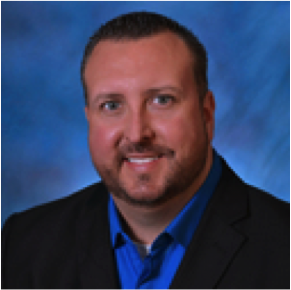
jeremy-yorkJeremy York, SPHR, SHRM-SCP, is a Human Resources field representative for Synergy PEO Services.  He provides strategic and generalist HR support to local nonprofit organization leaders and their staffs. Jeremy has over 15 years of human resources experience working as a consultant, director of human resources, and generalist, in the insurance, healthcare, nonprofit, PEO, and other industries.  Jeremy has a bachelor’s degree from Purdue University in Organizational Leadership and Supervision and a master’s degree from Indiana Wesleyan University in Management. He is the current director of certification for the Indiana State Council of the Society for Human Resource Management (SHRM) and serves on the IndySHRM board of directors as the past president.

Proposed changes to nonprofit financial reporting

By Finance, Governance, Sponsor Insight

By Chris Mennel, audit manager, Alerding CPA Group | 

A new proposed accounting standard could dramatically impact the current financial reporting methods for the more than 1.5 million nonprofits in the United States. Financial reporting in nonprofits was largely affected in 1993 by the issuance of Financial Accounting Standard No. 116 and Standard No. 117 – two standards that accountants and bookkeepers have come to know very well.

These standards created the three classes of net assets that are used today (unrestricted, temporarily restricted and permanently restricted) as well as many other financial statement components that small to large nonprofit organizations deal with on a regular basis.

Although these changes have been in place for over 20 years, many non-accountant board members and others continue to struggle with the concepts behind nonprofit financial statements. In an effort to improve the usability of these documents, the newly proposed accounting standard would:

  • Create two classes of net assets (unrestricted and restricted) instead of the current three;
  • Require the Statement of Cash Flows to be prepared under the direct method of cash flows instead of the indirect method;
  • Require all nonprofits to report expenses by nature and function. Currently, only voluntary health and welfare organizations are required to present a statement of functional expenses;
  • Require certain reclassifications within the Statement of Activities in order to present new operating measures; and
  • Provide additional changes to the current presentation of financial statements.
Button Text

Giving circles and the classroom

By Feature, Fundraising, Programming

Compiled by Lynn Sygiel, editor, Charitable Advisors |

Emily Denton is a teacher, an original Giving Sum member and board member. What she values most about her experience with the giving circle is the exposure to many exemplary nonprofits in Indianapolis. Those connections have made a different in her classroom.

After meeting with VSA Indiana staff on a site visit, she continued the connection. That connection led to her St. Thomas students volunteering for the Arts-for-All event that was held on the lawn of the governor’s residence, a short walk from school. Her students worked side-by-side with VAS teaching artists to support children with disabilities, and met the state’s first lady Karen Pence.

Based on her experiences, she saw the value in replicating what young professionals were doing with her eighth-grade English students. Four years ago, she used the activity as a motivating end-of-the-year project.  

Application in the classroom

“As a writing teacher, I wanted to create an end-of-year project that would engage students in a meaningful way — but also still require writing.

I told my students a little about Giving Sum and my involvement. The students were especially interested in the philanthropic aspect and were surprised that a relatively small group was able to give a $50,000 grant to an organization each year.

The students bought into this project right away, and I think that was in part due to me opening up about my involvement in Giving Sum and the projects that Giving Sum members had made possible.  They were especially interested in the playground we’d built for the children at Coburn Place.

Organizations did not apply; I gave the students a list of nonprofits in our city, explained the request for proposal process that many nonprofits use to fund their programs, and told them they were going to get to create an RFP for the organization of their choice.

Students selected an organization. They did some research individually, and then worked in groups to devise a plan for convincing the class that their nonprofit was most deserving of the grant money. Students spent a week of class time creating presentations with slides to address each requirement of the proposal request. I used a rubric that included all the elements required in the Giving Sum RPF form.

They presented to the class and each student was allowed to vote for one organization, but not his or her own, to receive the grant money.  To add to the real-world element of this project, the students were told that one group’s organization would be chosen to receive an actual $100 grant. I actually provided the $100 grant, not the students and made a one-time donation to our class winner — the American Red Cross of Greater Indianapolis.

Volunteering was not involved, although my hope was that through exposure to these organizations, the students would be inspired to get involved in some of the great services these organizations provide in our city.

Junior high is a great age to be exposed to philanthropic and service organizations. St. Thomas students are required to complete service hours throughout the school year. My hope was that the Giving Sum grant proposal model would expose my students to nonprofits in our city, create a little competition through the request process and provide a real-world writing situation.

It is also a great age to introduce service learning and giving circles.  Students this age have so much to gain by looking beyond themselves and learning about how many people in our own city are in need.  When my students reflect on their time serving others, they often mention how positive and capable the experience made them feel.”

The impact they have on others leaves an impression on them, and they learn more about their own passions through their service. So often teenagers feel that, even if they have great visions, they can’t create real change on their own. Introducing the giving circle model empowers students and demonstrates the larger impact individuals can when they pull their resources for a common goal.”

Engaging a city, building a community

By Feature, Leadership

By Efrem Bycer for The Greater Indianapolis Progress Committee |

Indianapolis has the potential to become one of the most civically engaged cities in America. Currently, Indianapolis ranks 16th, placing it behind many of its peer metros, including Charlotte, Kansas City, Milwaukee, Minneapolis, Nashville and St. Louis. To break into the top 10, Indianapolis may seek to apply successful practices in these cities.

This report aims to identify those replicable practices and provide recommendations for short-term and long-term strategies to improve volunteerism, especially among young professionals.

Young professionals, or Millennials, are a focus of this report because of the key role this generation plays in supplying talent to the region’s leading companies. The youngest generation of the workforce, Millennials are staying single longer and waiting until later in life to have children. On one hand, they have time early in their careers to get engaged in the community. On the other, they are an increasingly mobile generation able to move from one city to another

for professional opportunities or a change of pace. Civic engagement and volunteering play key roles in helping this generation develop an attachment to place, a key indicator of an individual’s likelihood to move. This makes volunteerism an important component of any comprehensive talent attraction and retention strategy.

Button Text

The impact of giving together

By Feature, Fundraising

By IU Lilly Family School of Philanthropy, research study report |

Giving circles are made up of individuals who pool their resources and then decide together where these resources should be distributed. They also include social, educational, and engagement aspects that seem to engage participants in their communities and increase their understanding of philanthropy and community issues.

This research report presents data from a study to understand the impacts of participating in giving circles on members’ philanthropic and civic behavior, knowledge, and attitudes. Philanthropy is defined here as giving money and other resources, including time, to aid individuals, causes, and organizations. Civic describes areas related to government’s roles and responsibilities, political and social values, and engagement in the community and political process. Beyond exploratory research to understand the overall giving circle landscape and motivations of members, and a number of case studies on specific types of giving circles, insufficient research has been done to understand giving circles’ impacts on members.

Button Text

Giving circles’ influence

By Feature, Fundraising

By Dr. Angela Eikenberry and Jessica Bearman, the Center of Philanthropy, University of Nebraska |

Ever since giving circles — groups of individual donors who pool their money and other resources and decide together where these should be distributed — emerged as a philanthropic trend, we have speculated about their impact. Do donors give more or give differently because they are involved in a giving circle? Do they become more engaged and active in their communities? Are they more politically active? Until now, the evidence of giving circles’ impact on donors was mainly qualitative. This study examines, in a more comprehensive and quantitative manner, the impact of giving circles on their members’ giving and civic engagement.

Members of giving circles give more, on average, than donors who are not in giving circles. Although this finding is tempered when income is taken into consideration, giving circle member self-reports and interviews suggest that giving circles cause members to increase their giving. Different activities within the circle also influence giving. For example, donors involved in a circle’s grantmaking decision process give the most overall. When donors are more engaged in a giving circle, are in a giving circle longer, or are in multiple giving circles, their giving is higher.

Button Text

Nonprofits need knowledge of law

By Governance, Sponsor Insight

By Rebecca Trimpe, writer and editor, Office of External Affairs and Alumni Relations at Indiana University Robert H. McKinney School of Law |

The Indiana University Robert H. McKinney School of Law educates most of the state’s lawyers, and many of our alumni are in positions of leadership in the public and private sectors throughout Indiana and across the nation. McKinney alumni hold leadership positions in a variety of nonprofit organizations, including the Center for Leadership Development, USA Funds, Lilly Endowment, Inc., the NAACP, the Central Indiana Community Foundation and Outrun the Sun.

It makes sense that lawyers are in leadership positions in these organizations, according to IU McKinney Professor Robert Katz.

“The legal system informs almost every aspect of the nonprofit sector,” Katz said. He serves as the school’s expert on nonprofit organization law.

“It defines what it means to be a nonprofit organization, sets their parameters and restricts how they engage with for-profit entities, spells out their governance structures, prescribes how its officials must behave, lays out what they must do to obtain and retain tax exemption and other legal advantages and how these various requirements are implemented and enforced.”

According to Katz, IU McKinney’s Master of Jurisprudence degree could provide those who work in the nonprofit sector with a deeper understanding of how the legal system operates, how to ascertain what the law expects them to do, what they must do to stay on the safe side of the law, recognize when they ought to seek legal guidance and converse more fluently with lawyers.

As the law surrounding nonprofits changes, and the way nonprofits conduct their work evolves, knowledge of the law becomes critical for staff and board members alike.

“Nonprofit and tax-exempt law is constantly developing as a result of new legal requirements by legislatures and agencies, rising expectations of the public, and increased scrutiny from state attorneys general, elected officials, and the media,” Katz said. “In recent years, for example, the Internal Revenue Service has revamped the annual report forms that nonprofits must submit to retain tax exempt status and issued new rules restricting the commercial and political activities of nonprofits and the ability of a nonprofit’s insiders to benefit from its operations.”

Those interested in learning more about the M.J. program, and how it can be tailored to fit individual needs, may contact IU McKinney directly.

rebecca-trimpeRebecca Trimpe is the writer and editor of the Office of External Affairs and Alumni Relations at Indiana University Robert H. McKinney School of Law.  She has 26 years of experience as a professional writer.

IU McKinney is located on the Indiana University Purdue University Indianapolis campus. The law school is named for Robert H. McKinney, a distinguished lawyer, businessman and civic leader who received his law degree from IU in 1952. A founding partner at Bose McKinney & Evans LLP, McKinney also served as chairman and CEO of First Indiana Corporation, parent company of First Indiana Bank (now BMO Harris Bank), until his retirement in 2005.

Keys to a master fundraiser’s success

By Feature, Fundraising

by Dan Schipp at Johnson Grossnickle Associates |

During my years at JGA I have had the opportunity to work with several score development officers. When it comes to effectively soliciting gifts, there is one who I would put at the head of the class. This individual wishes to remain anonymous, so I’ll refer to him as “Joe.”

A donor once said of Joe, “He’s not flashy or pushy, but he is persistent and he gets the job done.” Joe, by the way, successfully solicited three seven-figure gifts from this donor . . . for one campaign!

Recently I sat down with Joe for a conversation about how he approaches inviting gifts for his organization and why he feels he has done so well at it.

The first thing Joe said to me was, “You can’t have an ego. You can’t be in it for yourself. The mission of your organization must be primary.” I heard the words of Hank Rosso, the founder of The Fund Raising School, echo in Joe’s response: “When you are knocking at the door of the prospective donor, you have to kick your ego aside and let your cause – its mission, vision, and values – walk into that home.”

Button Text