Students embrace opportunity to move forward

By Feature

By Lynn Sygiel, editor, Charitable Advisors

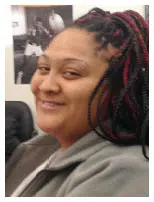
yb_cooperBritany Cooper dropped out of school at 18, and learned about YouthBuild from her cousin. He heard about the program to finish high school from his mom who picked up a flier. Inspired, Cooper called the same day to get into the program.

While the majority of students in this program are definitely male, this mom with a 7-year-old has about a month before she reaches her goal to be a carpenter and make a better life for herself and her daughter.

I went to Broad Ripple, and then I dropped out ’cause I had a kid. I was 18 when I had my child.

Since then I’ve been working off and on. I wasn’t doing nothing, and I was like, ‘I got to do something ’cause my child cannot see me doing nothing.’

And so I was like, ‘This is an opportunity for me to change my life,’ so I took that step. Thank God that I’m here and I’m just trying to do something that I’ve been wanting for all my life. I’m changing my life around. I teach my daughter the way to success is to take the opportunity.

I changed when I came here: I was shy, I never talked. It’s hard, but it’s a process that you got to go through just to get something.

I’ve been here four months, and I’m reaching my goals. Math is my skill. I love math.

I have a friend. He wants to get his GED. I say, ‘It’s the best place to go.’ We talk about it and I say, ‘Are you sure you want to do this? It’s a process, but it’s worth everything that you would be working for toward your goals.’

At YouthBuild, the staff is good people. They never let you down for nothing. They continue to help you get your goals, sit with you and let you be. And if you want to go to college, they’ll help you do that, too. It’s a lot of things they can help you with. Anything that you want to do, they’ll help you find it.

It’s a good program that people don’t even know about. These are opportunities, but it’s just an opportunity, if you want to do it. It’s awesome.


yb_ledezma Originally from Chicago, Chantell Ledezma, 22, spent most of her early life in Milwaukee. But after she was expelled while also being pregnant, she didn’t go back and finish high school.

Now with a 4-year-old daughter and back in school, she wants to be a surgical assistant. Ledezma has been at YouthBuild Indy for three months.

“I was a good girl. I don’t know if I was mad inside or if I was mad at the world. Teachers told me if I keep on getting suspended, I would be expelled. I was like, ‘Mommy will kill me.’

Then one day a girl was trying to fight me outside the school. I was like six months pregnant, and I was trying to ignore her. I was trying so hard to ignore her. But she said something, and I put my book down and just charged at her. I was on suspension for a couple of days, and then the principal was like, ‘We’re going to expel you.’ I just had one more year left and I dropped out.

I was 17 when I had my baby. I wasn’t interested in going back, and then I moved here, and I didn’t know nobody.

My sister was telling me about this program. I went to talk to the lady and had to make a decision between two programs. Something about the YouthBuild flier popped out at me. I called them and made an appointment. Me and my sister came in, and I got accepted, and I’ve just been here ever since.

At YouthBuild, they care about you and really help with all your problems. Feeling, talking, anyway they can help. On top of everything I’ve been through, I can always talk to one of the teachers. They’ll listen to you, and they’ll help you. If you don’t have something, like I didn’t have white shirts when I first came here, they helped me get the white shirts.

I’ve got three tests left. They try to make it interesting. The science class, I’m like, ‘OK, now I understand it. How it’s supposed to be done now.’ At first I didn’t know anything about science, and all that, so now I’m getting the hang of learning it, and how to remember it.


yb_keyoTyler Keno, 22, wants to be a role model for his two daughters, ages 4 and 2.

After life on the streets and trouble with the law, Keno spent time in Terre Haute and then left the state for Georgia.

Back in Indiana now and on house arrest, he is working to get his education. He’s been at YouthBuild for three months.

With another child on the way, his plan is to pass his tests, and then get certified to be a welder.

I was this young, hot-headed kid. I started skipping at eighth grade and had caught me a case when I was 14, a juvenile and still going to Harshman Middle School.

I dropped out and then spent time at Gibault in Terre Haute. When I got out of there, I went to Georgia and went to day school down there. That’s where my whole life changed and I had dreams and everything. I met the rapper Gucci Mane. I met Rick Ross, all of them. They were really going to work in my favor when I got off of probation down in Georgia.

I was in Georgia for eight months and finished my eighth grade year. I was about to go to high school, and I ended up coming back here.

Before I came to YouthBuild to be honest with you, I was on the streets doing what I do. As soon as I came here, it made me do a 360. When I got locked up, got caught with that $15,000 and all that dope, and I was sitting there for the two months till I got bonded out, sitting there like, ‘Man, I could do better.’ I had my third child on the way. I could be better than this, man. I’m not this type of cat. I don’t want my girls dating anyone like me. I don’t want that for my children. I know I’m trying to do the right thing, change my life, better myself for my children.

I’m currently on house arrest and found out about YouthBuild through this other resource, PACE. My counselor told me about it.

I didn’t take the tests yet. I feel like I need to get more learning and skills before I take the test. I’ve been here three months, it’s probably going to take me like five or six months to finish the program.

If you want change, start with yourself. That’s how I look at it, man.


yb_edmondArmani Edmond, 19, grew up in Indianapolis on the city’s Eastside. He has two siblings — one older, one younger – and a supportive mom.

Edmond was on the path to graduate from high school until math got in his way. He says it was the best thing that happened to him.

Now, a YouthBuild Indy employee, he had two job offers when he finished his education earlier this year.

I actually came from Arlington High School. I was there for about five years, when it was a middle school and high school. I made it up until I didn’t pass my End of Course Assessment (ECA) math exam. Math was always my worst subject. Never was good at it.

I found out on Friday before graduation that I wasn’t going to receive a waiver for that portion of the ECA, so didn’t really know what to do. I already ordered my cap and gown. I was really upset for a while, kind of laid around for a little bit, didn’t want to talk to anybody, was angry, mad at the world.

A flier had got passed down for YouthBuild. I didn’t want to hear it at first, but my mother encouraged me to try it. So, she said, ‘Let’s call.’ I scheduled a time to meet. My mom was really supportive.

I set up an interview and went through the interview process. I was invited to Mental Toughness, and I pretty much tackled it.

At the time, it was right down the street. It was walking distance, and I used to walk here every day.

I don’t come from much. A lot of people who come here, they don’t have much growing up. We bonded as a family, especially our group ’cause we were a smaller group. We really took it seriously. It was unique for us, and it made us learn a lot about each other and our roles.

Not graduating from high school was probably the best thing that happened to me. When people hear that, they don’t really believe it. But that is the best thing that ever happened to me. Honestly, if I had graduated, I wouldn’t have known what to do. I came here and I went up four grade levels of math in a short time, math was actually my second highest GED test score. Math is my favorite subject now.

Here we talk about deeper things than just academics. You know academics are the most important thing, but we like to get to the root of certain issues with different people, so we can approach class differently. In high school, that’s not really done too much. You know you’re given the book work, but if you don’t want to be there, you’re not going to learn.

YouthBuild Indy offers hands-on education

By Feature, Programming

By Lynn Sygiel, editor, Charitable Advisors

The refrain is a familiar one, and young people hear it all the time: “Study hard, go to college, get a good job.” For many students, it’s great advice. In a competitive marketplace, a good education is vital.

Rodney Bussell, program director at YouthBuild Indy, is all for studying hard and getting a good job. But going to college? Bussell says it’s not for everyone.

“Somehow, somewhere, you need to get certified in something,” said Bussell, who has a background in youth work and has been in charge of YouthBuild Indy since 2015. “If you’re better at using your hands, let’s get you in an apprenticeship program. If you’re not that classroom person who will sit in the class for the next four or five years all day long and write papers, if that’s not you, it’s OK. It’s not a bad thing.”

At YouthBuild Indy, a nonprofit on the city’s Eastside near 25th Street and Keystone Avenue, low-income young people receive construction and trades training while working to earn a High School Equivalency Diploma. The program began in Harlem in New York City in 1978, and a decade later, its founder took it national.

yb_20160519_142831 The Marion County program, around for eight years, is open to the county’s high school dropouts ages 18 to 24 who are drug-free. It is managed by EmployIndy, funded by the U.S. Department of Labor, and has had more than 350 young adults complete the program.

Chantell Ledezma, 22; Tyler Keno, 22; Britney Cooper, 25, are currently enrolled in the program, and Armani Edmond, 19, who finished in the spring, is now a staff member. These four enrolled to earn their equivalency diploma and construction training, but it has provided them with much more than that.

“Yes, it is about the education, but staff care about your feelings, too. That’s why I like coming here. It’s not just the money or the education, I just feel like they help with a lot,” said Keno, who has been with the program for three months.

For Cooper, the program is her chance to make a change and have a better life.

“My goals are to build myself, have a career and look into the future. We all motivate each other every day. It’s the place to come to,” she said. Cooper dropped out of school at 18 to take care of her daughter.

Bussell said the program provides stability and a sense of family for these young adults.

“You create trust for them. A lot of them don’t have a family structure that a lot of us may have grown up in. So a lot of times, we build trust, let them see that we’re there for them and they haven’t seen before. They’re kind of in that traumatic lifestyle.

“We help them see the big picture and outline their goals and aspirations: How do you choose? Do you want to go to college? Do you want to do construction? Do you want to go into another field? How are we going to help you get there?”

YouthBuild Indy opened in 2008 at the John Hope Academy on 16th Street. It’s now on the third floor of 37 Place, a multigenerational community center in the Martindale-Brightwood neighborhood. Because of its location, the organization lacks some visibility. Potential students don’t just walk in the front door.

Part of Edmond’s job is to get the word out through social media, meetings with area school guidance counselors and billboards around the city. In the past, students found the program through fliers, the courts, referrals from other programs and word of mouth.

“We’ve been trying to pump it up because the numbers are kind of lower than we’d like them to be. We really are trying to market it. A lot of people are trying to figure out what we do or say, ‘I never heard of you,’” said Bussell. “We’ve had some decent foot traffic, we still would like to have more. Armani does a great job of getting out in the community, doing a lot of fairs and trying to make people aware of the program.”

On Bussell’s wish list is a different location that would include a carpentry shop with classrooms. Both city officials and other businesses have reached out to offer projects for students, and having an onsite shop would allow students to work on these projects with staff supervision.

The program targets Marion County students because of the county’s high poverty and dropout rates and emphasizes certain ZIP codes.

Potential students have to show proof of low income — food stamps, Medicaid or a check stub, if they are working. Staff expects that students are drug free, but they are not regularly tested.

Even if a student meets all the criteria, he or she must be interviewed and invited to a two-week mental toughness boot camp. During this time, the student is not enrolled in the program, but both the staff and students are charged with determining if the program is the right fit. Students under consideration must arrive at 8:30 every morning sharp, wear a white shirt and khakis, and only after completing the boot camp, are asked to make a commitment.

“It’s basically like tryouts for a sports team or anything like that. It’s basically seeing who wants it bad enough,” said Edmond. “After completing that two-week process, they will have a class graduation. Right after that, they’ll come back up, and we’ll have a meeting to see who made the cut, who wanted it bad enough and who will be accepted into the program.”

Edmond also works with students, talking and helping them through every day. “I’ve been through it, and just being that person they can relate to and give them tips and tell them to keep pushing forward up to their graduation point.”

Once enrolled, grant funds help provide students with gas cards or bus passes and a weekly attendance stipend. Students get $75 a week during an education week and $100 during a construction week.

Besides Bussell, the program has three case managers, a recruiter, three to four teachers and a construction manager. Troy Turner from Turner Construction teaches safety courses and manages the construction work and Marian University oversees the education portion.

Most students spend a week in the classroom and then rotate to a construction site or learn about basic Occupational Safety and Health Administration, engineering, electrical or construction certifications. Students also learn the expectations and responsibilities of the workplace through the JAG program, which also helps them work on resumes and take part in mock interviews.

With Turner’s guidance 73 percent of the students have completed their National Construction Certification, which is nationally recognized and issued by the National Center for Construction, Education and Research (NCCER). Often the construction work focuses on Indy’s abandoned houses. The Community Development Corporation purchases these homes and then contracts with Turner Construction, which guarantees that these will be training houses for YouthBuild.

Students just completed houses on Capitol and Graceland avenues and Oxford Street and now are working on Kenwood and Leland streets.

“Giving them NCCER, they have a basic fundamental foundation of what construction is, and it’s a good certification to have. Our students move ahead of the bunch. They come in to a job interview with a high school equivalency and NCCER. We have a young man who got a job right away. He said, ‘I got NCCER,’ and he walked out of a job fair with two jobs,” said Bussell.

Through partnerships with organizations such as IndyPendence Job Corps, Bussell is looking to grow the trade options to include CNA or IT training.

“We can expand on it, but the foundation is always going to be construction,” said Bussell.

Can students come back? “Once at YouthBuild, always at YouthBuild,” is a saying that is espoused by staff.

“When young people graduate, we don’t just cut them lose. We have a year follow-up. We’ll make sure they have jobs, and if not, we’ll try to get them back to find one. We celebrate 30 days, 60 days, 90 days job-holding accomplishments.”

YouthBuild partners with or holds occasional hiring fairs.

“I will contact some of my alumni and ask, ‘Are you working?’ If you are working and you are satisfied OK, if not, let’s get you in here,” Bussell said.

YouthBuild Indy places 68 percent of its participants in further education programs or employment and has an 81 percent diploma/certification rate.

Would Cooper, Keno, Ledezma and Edmond recommend the program to friends and family?

Ledezma says if they really want to go back to school, this is the place to be.

“If it was one of my friends, like my homeboys, I’d be like, ‘Bro, you trying to bury yourself. Like come up to the place where I’m at.’ This might be weird, but everyone wants the money, and I’d be like, ‘They pay you, too. Get you some money, get your education,’” said Keno.

Discover another way to manage time using seven steps

By Sponsor Insight

By Stefanie Krievins, coach and founder, The Heart Projects

One of the great equalizers among humans is that weekly we all have a total of 168 hours. From the CEO to the receptionist to the HR director to the development director to the case manager, it’s the same number.

As 2016 approaches its end, each of us has a choice as to how to spend those hours and how to meet end-of-year goals. We can either ….

  1. Create a productive focus by actively managing time, calendar, work priorities and interactions with colleagues; or
  2. Allow being overwhelmed and bad stress to overtake mood and communication style, leaving us with a tendency to try to multi-task and take on too much work.

Admittedly, most of us are somewhere in between. There is a way to have more of the first option, however, and that means learning the seven disciplines of productivity.

However, productivity is more complex than just time management.

Many people think they can just manage their time better in order to get all of their work done. Time management is just one important aspect of productivity.

The HR director who manages her time well will keep a scheduled one-hour meeting to one hour. The HR director who manages her productivity will ask:

  • What needs to be accomplished in this meeting?
  • Do we need a meeting?
  • If so, can it be completed in a 30-minute walking meeting, instead of just sitting in the conference room?
  • Who are the critical people who must be there to make the best decisions?
  • Since this topic is of strategic importance, what’s the best morning block of time to book so we can all bring our sharpest thinking?
  • What will be removed from our workload or pushed out until the next quarter if we’re adding work to our plates? Let’s add this to the agenda.

Find the focus you need to hit your goals through these seven disciplines.

Productivity combines these seven disciplines that lead to having more impact:

  1. Focus: Your mental and physical focus are on one thing attime and you manage your relationships, calendar and physical space to make that happen.
  2. Impactful work criteria: You ask a series of questions to ensure you’re doing work that is meaningful to you and your role within the organization.
  3. Presence: You’re self aware and in the moment.
  4. Time management: You’re realistic with your time and create flexibility in your day for the unexpected.
  5. Energy management: You tackle the work that requires the most thought and creativity in the morning. You also take small breaks, drink plenty of water, and eat well throughout the day so you don’t create the afternoon slump.
  6. Decline others’ expectations and priorities: You say, ‘No,’ more than you say, ‘Yes’ because you have focus.
  7. Priority setting: Chances are you have multiple items on your to-do list right now. They’re not all urgent or important. When you manage your priorities you’re able to rank them based on their level of importance and urgency.

Focus is essential because there will always be more need than resources in this nonprofit work.

Focus allows the first choice to be goals and then meet them while feeling in control, successful and less stressed. A lack of focus causes too many goals, the addition of new goals throughout the year and then disappointment from a lack of success.

Ultimately work suffers because of this lack of focus: poor work products, missed deadlines, “forgotten” tasks, poor communication, etc.

Your job isn’t to do it all. Instead, it is ALWAYS to do the work that matters. Instead of trying to do it all, have it all, be it all, having focus creates productivity. This means taking radical personal responsibility for time, emotions and so much more.

These seven disciplines can have a profound effect on your work and ability to end 2016 knowing that everything was accomplished given the resources available. Don’t let this year end without really focusing in on what truly matters. Next year will begin even stronger because of it!


stefanie Stefanie Krievins is the founder and coach for The Heart Projects. She offers training and coaching for individuals and forward-thinking organizations. Programs include executive coaching, life/career coaching (especially for nonprofit staff or those who want to have a nonprofit career), strategic-plan execution and the Problem Solvers School.

Three Chicago nonprofit organizations to receive investments totaling nearly $3 million

By Feature, Programming

By Mary L. Datcher, senior staff writer, Chicago Defender

Chicago Beyond announced the winners of its first-ever innovation challenge and will present three nonprofits with investments that total nearly $3 million overall. Launched by Chicago Beyond in April, the GO Innovate challenge sought early-stage ideas that offer innovative programming in two areas: Supporting College Matriculation and Graduation; and Reengaging Youth in Work and School.

For each winning organization, Chicago Beyond is also funding a research partnership with the University of Chicago’s Urban Labs to evaluate the impact of each investment. Every investment recipient has worked with Chicago Beyond and Urban Labs to develop a unique research question that will allow detailed study of the program and better understanding of what works, in order to positively impact a greater number of young Chicagoans and increase the field of knowledge in these topic areas.

More than 200 organizations applied for the first innovation challenge. Applications were reviewed by the Chicago Beyond team and finalists were selected by two independent selection committees which were formed for each topic area.

“Our first innovation challenge brought out some of the best and most innovative ideas in programming to help our city’s youth succeed in school and in life,” Chicago Beyond Managing Director, Liz Dozier, said. “There is no shortage of passion for and commitment to the young people of Chicago. We are grateful for the opportunity to present these three organizations with investments to not only reach more young Chicagoans immediately, but to learn from and share our research outcomes in order to have a greater impact on the future of our youth nationwide.”

Read moreButton Text

MacArthur, Chicago Community Trust create low-interest loan program for nonprofits

By Feature

By Lisa Bertagnoli, reporter, Crain’s

Chicago Community Trust and the John D. and Catherine T. MacArthur Foundation earlier this year introduced what they say is a win-win for Chicago’s philanthropic community: A way for charitably minded investors to participate in a local social-impact fund and a way for area nonprofits and social-enterprise companies to access $100 million in long-term, low-interest loans.

The program, called Benefit Chicago, is unique in the country and is the city’s most ambitious social-impact investing tool to date, said Julia Stasch, president of MacArthur Foundation. “It is the first-of-its-kind collaboration among a community foundation and global private foundation with a deep commitment to its hometown,” Stasch said.

It is designed to meet what research has shown to be a $100 million need for capital over the next five years among area nonprofits and social-enterprise companies. It will also satisfy investors’ desire to make investments with “meaningful social, economic and environmental impact,” the release announcing Benefit Chicago said.

The program is set up for an initial 15-year run. If successful, it could be emulated in other cities, Stasch said. The fund could also increase beyond $100 million. “It would be good to not see the unmet gap that we’re seeing today,” Stasch said.

Button Text

STEM education: in-school and out-of-school working together

By Feature, Programming

By Lynn Sygiel, editor, Charitable Advisors

Paul Ainslie and Bob Abrams have followed similar career paths. Both have had lengthy careers in the corporate sector – Ainslie at automotive-supplier Delphi and Abrams at engine-maker Cummins and other small businesses.

But that’s not all they have in common. Both now work for nonprofit organizations and each is charged with advancing science, technology, engineering and math – or STEM, for short. Abrams is Indiana’s Afterschool Network STEM coordinator and Ainslie is the managing director of I-STEM based at Purdue University.

Abrams and Ainslie are working together, helping to marry in-school and out-of-school STEM efforts. Both see limitless opportunities to expand and build upon in-school learning through flexible and engaging out-of-school programming and by connecting programs to community resources.

“The extension is to connect in-school and out-of-school STEM teachers, so that there is consistency. If they’re going to do a lesson in physical science in the STEM science class, there may be an after-school program that would align to that,” said Ainslie.

In the 21st century, many have rallied around STEM education, citing students’ need for greater scientific and technological literacy to function in today’s society and economy. Corporate leaders have worried about where the next generation of workers will come from with too few students seeing these disciplines as springboards for their careers.

Abrams and Ainslie say there is plenty of is exemplary STEM curriculum, but typically, the after-school approach has been more ad hoc, and they want to change that.

“So we’re doing that connecting by saying, ‘Let’s extend the learning on this science STEM topic to the after-school space,’” said Ainslie.

“What we’re trying to do is say to schools and after-school programs, ‘OK, this is working well in school, what can you do with the out-of-school program?” said Abrams.

What the duo has found in their travels around the state are willing communities, but what’s lacking are models. Their strategy is simple: Find programs doing that and share them as demonstration sites.

So far they have identified two programs, although they believe there are more out there.

Warren Township and Columbus each have an elementary school that has repurposed a computer lab as a STEM lab, and has a dedicated STEM resource person. Much like art, music and physical education, students rotate throughout the school day. Both see the potential of repurposing the STEM labs for after-school programming and connecting the in-school and out-of-school teachers.

“In Warren, the school is Liberty Park Elementary. It’s a Project Lead the Way-based STEM center and PLW did the training for that instructor. That’s the model. If you go with a strong curriculum, then training is part of it, too. And that’s got to be a key thing,” said Ainslie.

In the Columbus school district, according to Abrams, there is one school right now with plans to expand to others. The school uses a California-based program called Iridescent, which is an initiative that incorporates the cooperation of scientists and engineering experts as mentors.

“So Cummins in Columbus sends people in to lead particular exercises, but there is a dedicated teacher in that school who has gone through the training and leads that program,” he said.

Corporations are interested in supporting these types of efforts.

Ainslie has been working with Eli Lilly and Company and its Science Coaches program, which has 85 professionals, working in classrooms, primarily K-8. He said there is interest from Rolls Royce, Roche and Cummins, too. It’s an opportunity to get STEM professionals into the classroom to provide expertise without an impact on school budgets.

“There are a number of corporate partners that are interested in helping out, but they see the recent landscape being random acts of STEM. They’re good individual activities, but sustainability is questionable. So if we can demonstrate a sustainable, self-generating structure that works, I think we have something that people will invest in,” said Abrams.

Both Abrams and Ainslie provide professional development for educators. While schools already have academic standards, the Indiana Afterschool Network has developed specialty standards in multiple areas, including STEM. Indiana’s 38 standards serve as a framework for after-school programs. An online strengths-based self-assessment tool, it helps K-12 after-school programs rate their performances.

“Indiana has actually been recognized as a leader in out-of-school standards, including the STEM standards. Indiana was the first to focus on specific topics, and the STEM standards have become sort of the standard for the country,” said Ainslie.

What both acknowledged, however, is that there is a lot of variability in the focus on STEM and the quality of the STEM programs.

Since 2013, the Indiana Afterschool Network (IAN) has been collecting data through self-reporting. In its online mapping database, 992 programs are now registered, and of those, 44 percent offered STEM programming. IAN estimates that the current database represents about a third of the programs statewide.

While both provide professional development, Abrams said after-school is challenging for multiple reasons, specifically staffing.

“It doesn’t pay much, there is high turnover, and it doesn’t have an accreditation process. So finding people who are interested, motivated, skillful and being able to retain them is a real challenge,” he said.

“It gets into how well-prepared are the educators who are running the STEM programs. Are they just doing ‘gee-whiz’ activities that they learned on YouTube or are they actually talking about learning, and checking for student understanding?” said Ainslie.

Having the materials is good, but educators need to be prepared to assess learning and still make it fun. It’s the difference between having just an experience and having a quality STEM experience. Both want students both in- and out-of-school programs to have full discussions about their STEM experiences, which includes explaining what they observed, discussing what they learned and how they might do it differently.

“That sort of full discussion that we try to encourage educators and teachers to have doesn’t always happen in after-school. Sometimes it’s making a volcano, ‘Wasn’t that cool? What do we do tomorrow?’ It’s not the complete quality science experience that we want kids to have,” said Ainslie.

Both realize, too, that time spent in after-school programs is short. Programs must make time for snacks, homework and physical activity.

And the number of Hoosiers enrolled in after-school is only 11 percent with the majority on the elementary school level.

So they have a plan.

Warren Township school district educators have been providing feedback and believe it is better to have focused, time-limited activities, like a space camp for three weeks.

“We feel if there are focused short-period activities, like a weeklong Makerspace programming and it’s publicized, it may introduce more families to after-school opportunities that they aren’t aware of,” said Abrams. “Makerspace staff will come to the site and parents can make sure their kids are there.

“If you schedule STEM every day from 4 p.m. to 5 p.m., half the people are gone by 4:45, except for a couple who stay until 6 p.m.,” said Abrams.

There are also programs such as IndianaFirst robotics, STEM Scouts and coding activities that are gaining momentum because they’re viewed more like camps.

For someone thinking about starting an after-school STEM program, Abrams and Ainslie have some advice. Find resources partners, schools and business that want to be partners. Define the skills and curriculum and how you will train teachers. Recognize what you’ve got to start with, what can you build on, so you don’t have to start from scratch. Find people who are interested, motivated and skillful.

“It’s a three-legged stool. I mean, it’s in-school, out-of-school and community partnerships,” said Ainslie.

Indiana legislation to watch: After-school funding bill

By Feature, Programming

By Lynn Sygiel, editor, Charitable Advisors

Last year, 11 percent of Indiana young people took part in after-school programming. That is below the national average of 18 percent.

While before- and after-school programs serve nearly 45,000 Indiana children each day, they often operate with limited and patchwork funding from diverse public and private sources.

But that may be changing.

In the 2016 legislative session, Sen. Dennis Kruse, R-Auburn, authored Senate Bill 251, the Out-of-School Learning Fund, to create a fund to give schools grants to pay for programs before and after school and create an advisory board to make recommendations about the fund to the Indiana Department of Education.

The bill was sponsored by Rep. Robert Behning, R-Indianapolis, Rep. Vernon Smith, D-Gary, and Rep. Woody Burton, R-Whiteland.

The bill passed both chambers and was signed by Gov. Mike Pence. It established an out-of-school learning advisory board for a three-year period. The advisory board is required to make an initial report on existing programs and recommends policies, procedures, funding levels and eligibility criteria to the General Assembly before Nov. 1.

“The after-school topic got on the agenda last year in the legislature, and the education committee under the guidance of Senator Dennis Kruse for the first time said, ‘Hey, let’s take a look at after-school education,’” said Bob Abrams, Indiana’s After-School Network STEM coordinator.

“Where it’s going to lead in this budget year, I don’t know, but for the first time, it was discussed,” said Abrams. “There are states around the country – Oregon, California and Maryland — where after-school programming is a line item in their state budget.”

“I’d say that for the initial foray into the legislature, it went really well,” said Paul Ainslie, managing director of I-STEM based at Purdue University.

“It isn’t just STEM. In fact most of it is really safety and security for kids after school. We don’t have that many kids in after-school programs, and quite frankly, there’s a lot of kids at risk because of that during that 3 to 6 p.m. after-school time.

“So I think that’s part of what’s being recognized,” he said.

STEM programs

By Feature, Programming

Here is information about four programs that have grown in participation in Indiana for after-school students.

IndianaFIRST, a nonprofit founded in 2001, is a growing robotics program in the state for K-12 students. This year at the high school level there are plans for three district competitions, with a final pool of 32 state finalists competing at the 2017 Indiana State Championship at Huntington North High School.

Contact: Renee Becker-Blau, executive director
http://www.indianafirst.org/

STEM Scouts, a national pilot program from the Boy Scouts of America, is focused on fun ways for girls and boys in grades 3-12, to learn more about science, technology, engineering and mathematics. STEM Scouts offers a scouting experience with less emphasis on the outdoors. There are labs around the state.

Contact: 317-813-7125
Address: 7125 Fall Creek Road North, Indianapolis, IN 46256 Email: stemscoutsindy@scouting.org
https://stemscouts.org/find-a-lab/council/1/indianapolis/#labs

1st Makerspace: A program just gaining traction. Begun in 2015, it connects formal and informal learning by providing hands-on “making” opportunities to enrich and add value to education in the STEM areas.

Contact: Kim Brand, president
Address: 1010 E. Michigan St.; Indianapolis, IN 46202
http://www.1stmakerspace.com/for-educators

CoderDojo: CoderDojo Indiana (CDI) is a regional partnership formed by the TechPoint Foundation for Youth, the CoderDojo Foundation, and coding clubs throughout the state. Initial funding for this program was provided through a partnership with Eleven Fifty Academy. CDI focuses both on helping to grow new CoderDojo sites as well as strengthening existing ones.

Contact: Courtney Lambert, CoderDojo State Coordinator
Address: 5255 Winthrop Ave. #150; Indianapolis, IN 46220
https://www.techpointyouth.org/coderdojo/

Five steps to overcoming high employee turnover

By Sponsor Insight

By Matt Jarzynski, vice president of human resources, Synergy

Employee turnover presents a complex challenge to any organization. The reasons behind it are vast and the consequences are significant. And when you’re in the HR hot seat, it’s your job to face the terminations, resignations and retirements before they risk affecting your company’s productivity, morale and bottom line.

But if the rate at which people are leaving is on the rise, you’re also faced with the challenge of overcoming high employee turnover.

Getting behind the stats

If you’re like most companies, we’re guessing you have a fairly straightforward ratio percentage that represents turnover. Average ratios vary wildly from industry to industry, but you should have a handle on what works best for you and your organization. The problem is, once that ratio gets uncomfortably high, a simple statistic isn’t going to give you enough information to be able to resolve it.

The first step to overcoming high employee turnover is to understand why that turnover exists in the first place, and the only way to do that is by digging into the details. Behind that straightforward turnover ratio, can you determine what fractions represent different types of resignation or terminations? Is there a trend behind which department people are leaving from the most? Are people leaving for personal reasons like spousal relocation or family matters? Or are they quitting because they’re burned out or suffering in a toxic work environment?

The answers to these questions depend upon asking people why they’re leaving. From there, you can begin to determine the larger problem at hand and exactly how you can resolve it. Because we can’t easily prepare for scenarios outside our control, the following steps make the assumption that people are leaving because of a problem you can actively influence.

Hiring more effectively

Sometimes resolving high employee turnover starts back at square one, with your hiring process. Bad hires can quickly lead to high turnover rates, whether in the space of just a few days or weeks or even months. The occasional bad hire is fairly inevitable, but if you notice a series of them, the problem likely goes deeper.

It may be that someone was hired too quickly because of an urgent opening, or that steps were skipped like reference checks or a full onboarding process. Or it might have been that the job description didn’t accurately describe the position and responsibilities the person was hired for. Or cultural fit might have been neglected, hiring someone with only a view of their technical skills.

Nailing down an effective recruitment strategy and hiring process can help you mitigate the risks and costs of high turnover down the line.

Continue reading: http://mysynergy.com/2016/05/10/overcoming-high-employee-turnover/

matt-synergy Matt Jarzynski has over 25 years of experience in human resources management and joined Synergy in 2002 after holding similar positions with two Chicago insurance brokerage companies. He served as vice president of human resources at Near North Insurance and as regional vice president of human resources for the Marsh & McLennan Companies, the world’s largest insurance broker. A native of Chicago, he began his human resources management career at Reliance Insurance, a national property and casualty insurance operation in Philadelphia. A graduate of DePaul University in Chicago with a dual major Bachelor of Arts degree in management and psychology, Jarzynski also holds the certification of senior professional in human resources (SPHR).

Presidential campaigns and philanthropy

By Sponsor Insight

By Bill Stanczykiewicz, director of The Fund Raising School, Indiana University Lilly Family School of Philanthropy

As Election Day approaches, nonprofit leaders might be worrying that the big money donated to the presidential campaigns will lead to smaller results in their nonprofits’ next fundraising campaigns.

That’s understandable since, according to American National Election Studies, 40 percent of Americans contribute to political candidates, parties or PACs. As the primary season concluded in mid-June, the Center for Responsive Politics reported that nearly $1.3 billion had been raised by individual candidates and super PACs to support various presidential contenders. This already is more than half of the total spent in 2012 by President Obama and Republican contender Mitt Romney, who raised and expended nearly $2.4 billion on their campaigns.

While these dollar amounts are substantial, campaign account receipts are subpar when compared with Americans’ philanthropic activity. According to Giving USA 2016, $373.25 billion was donated to nonprofits in 2015. Of that total, nearly $265 billion was provided by individuals.

In addition, an analysis of data of political and charitable gifts between the years 2000 and 2010 conducted by the Indiana University Lilly Family School of Philanthropy for Giving USA Foundation’s Spotlight revealed that “charitable giving constitutes 98 percent or more of all charitable and political giving combined.”

The report concluded, “Despite the increase in political donations in recent years, charitable giving by American donors far exceeds the total amount political organizations receive from political donors of all kinds.”

Importantly, while donor motivations vary, research and data indicate that most people do not reduce their charitable giving in favor of political contributions in a presidential or any other election year.

“I think that’s exactly right,” said Diana Aviv, chief executive officer of Feeding America, who serves as a visiting fellow at the Lilly Family School of Philanthropy.

Aviv added, “Generally speaking, people compartmentalize. For politics, they’re going to give so much, and for their regular philanthropy they’re going to give so much. If there’s a disaster or a crisis, they’ll give something else.”

That is why the Lilly Family School of Philanthropy advises simply: “Organizations should continue to ask for donations, even in election years.”

In fact, Giving USA data reveal that charitable giving increased – even after adjusting for inflation – in seven of the last eight presidential election years. The only exception: 2008, which was the beginning of the Great Recession.

Characteristics of political campaign contributors

While financial support for presidential or other political campaigns does not appear to decrease donations to charity, fundraisers can still benefit from knowing about the typical characteristics of political donors as they conduct fund development research and prepare for meetings with prospective donors.

For example, the Lilly Family School of Philanthropy’s report notes that households are more likely to contribute to a candidate for elected office or to a political party as the residents become older, have higher levels of education, are retired and have higher after-tax income. Households with children under the age of 18 are less likely to financially support a political campaign.

Interestingly, geography matters. Residents in Midwestern and Western regions of the United States are more likely to give money to a political candidate or cause, while people who live in rural areas are less likely to donate politically.

Gender distinctions also are evident. For example, a listing of the 2012 presidential campaign donations of $200 or more by the Center for Responsive Politics reveals that 62 percent of the donors were men who contributed 65 percent of the campaign cash.

And yet the data on individual donors also serve as a reminder of how the number of contributors to political campaigns is relatively very small when compared with philanthropy. Just under 550,000 individuals donated at least $200 to either Obama or Romney or their various supporting parties and organizations. Meanwhile, the latest wave of the Lilly Family School of Philanthropy’s Philanthropy Panel Study shows that 59.7 percent of Americans – in a nation of more than 300 million people – make charitable gifts each year. In fact, more Americans give than vote.

Perhaps you’ve arrived for a meeting with a prospective donor and discovered that she has a yard sign for a political candidate on her front lawn. Or maybe you’ve concluded a donor meeting and in the parking lot you see a bumper sticker for the donor’s favorite candidate on his car.

Fret not. Even if those signs reflect financial support for the candidate, research shows that political contributions do not detract from charitable giving. So keep asking!


bill-lillyschool Bill Stanczykiewicz is director of The Fund Raising School at the Indiana University Lilly Family School of Philanthropy. He previously served as president and CEO of the Indiana Youth Institute.

A version of this article appeared in The Chronicle of Philanthropy.

The Fund Raising School:  https://philanthropy.iupui.edu/professional-development/fundraisingschool/index.html

Indiana University Lilly Family School of Philanthropy: https://philanthropy.iupui.edu/