Monthly Archives

March 2016

Advice from an award-winning fundraiser

By Sponsor Insight

By Patrick M. Rooney, associate dean |

Barbara Coury didn’t get into fundraising for accolades, but she’s receiving them anyway.

American Red Cross President Gail McGovern recently presented the national organization’s Presidential Award for Excellence — the highest honor a Red Cross employee or unit can receive — to Coury, chief development officer for the Indiana Region, and her development team.

It’s a well-deserved award. During the past fiscal year, Indiana was third in the nation in total dollars raised against its goal, exceeding the target by 124 percent.

What’s the key to their success?

“The Red Cross has increased its emphasis on reaching out to major donors in addition to the vital support we receive from smaller gifts,” Coury says. “In Indiana, we focus on engaging with individual donors and self-accountability. Each fundraiser reports weekly on several key metrics, including the number of visits with donors.”

Those visits are paramount.

“Fundraising is about the donor, what they value, what they want to accomplish, and where that overlaps with the organization’s mission and values,” she says.

Which is why a fundraising career intrigued Coury in the first place. Originally a research scientist, she found that socially isolating. A friend’s role as a major gift officer at Purdue University appealed to her.

“To go out and interact, tell people about your organization and engage them — I thought that was important,” says Coury.

She became a development officer at Purdue’s Krannert School of Management and came credentialed as a Certified Fund Raising Executive. Following development leadership roles for St. Richard’s School and the Community Health Network Foundation, she joined the Red Cross in 2012.

“I love the Red Cross and its mission. We have services for the military, blood donation, volunteer opportunities, training and more. There’s something for everybody. And the staff and the volunteers care so much. They just want to help someone on their worst day, to make it better.”

What works

Coury shares some of the wisdom garnered during her career:

  • Focus on visits. Get out of your office and see people.
  • Educate donors about your mission and your work. People know the Red Cross for major natural disaster relief, but don’t realize it responds to three home fires in Central Indiana every day.
  • Engage your board in fundraising and help them succeed. This extends your reach and you need their circles of influence. That’s where the magic happens. Executives complain that their boards don’t fundraise, but nonprofits often don’t equip them. Staff them and specify what you need them to do. Provide an elevator speech, tell them whom to call, trust them and hold them accountable. When they succeed, they will feel great about it.
  • Celebrate successes. It’s rewarding and it builds confidence.

Coury encourages fellow nonprofit professionals to continue learning, as she has. She earned her Master of Arts in Philanthropic Studies degree through the IU Lilly Family School of Philanthropy’s Executive M.A. program and a Certificate in Fund Raising Management from The Fund Raising School there.

“The executive program’s liberal arts approach to understanding the philanthropic sector is invaluable.

“It gives you not just the skills to help, but an understanding of how and why to help, and it provides the most academically rigorous education,” says Coury. “The people I’ve referred to the program have found it changes the way they think and their life goals.”


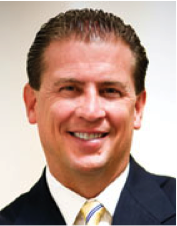
patrick-rooneyPatrick M. Rooney, Ph.D., is associate dean for academic affairs and research at the Indiana University Lilly Family School of Philanthropy at IUPUI.

[content_box box_type=”normal”]Thinking about continuing your education? Learn more about the Executive Master’s Degree in Philanthropic Studies and check out professional development opportunities offered by The Fund Raising School.[/content_box]

Communicating data to drive change

By Feature, Leadership

By Patrick McCarthy, president and CEO, and Lisa Hamilton, vice president of external affairs, Annie E. Casey Foundation |

Kids can’t vote. They can’t buy ads on television. They can’t form a political action committee to get what they need. They can’t speak up for themselves, and as a result they often disappear from the crowded list of political priorities competing for attention. To combat this invisibility, the Annie E. Casey Foundation has been building a project known as KIDS COUNT for more than a quarter century.

KIDS COUNT began in 1990 as a single product: a national data book comparing 10 indicators on children (including infant mortality, education expenditures, and the teenage employment rate) across the United States. The theory behind the book was that if we created an accurate, comprehensive picture of what children need, change would follow. With its ranking of outcomes by state, the foundation hoped to draw attention from the media, as well as from local, state, and national policymakers, by capitalizing on the human impulse to compete.

Learn how the Annie E. Casey Foundation has leveraged the power of information and communication to drive public investment in children and their families.

Button Text

From project to platform: the evolution of KIDS COUNT

By Feature, Leadership

By the Annie E. Casey Foundation |

This report tells the story of how a single data book documenting child well-being measures turned into a mission-critical vehicle for the Foundation in building bipartisan support for proven practice solutions and policy change. The report includes data and research insights that the Foundation gained from decades of investing in a program that turned into a keystone for shaping and amplifying policy on a broad scale.

Button Text

Investing to close America’s racial wealth gap

By Feature

Like many economists who care about American families struggling to make ends meet, I spend a good amount of time thinking about how parents can earn more income to give their children better opportunities and reduce stress in their daily lives. But my real mission is one you hear less about in the debate over income inequality. For families to make their way to a better life, it’s not enough to earn more. They’ve got to keep and grow their earnings, too.

Savings and assets — homes, cars, retirement funds — are launching pads to something better, even as they cushion against today’s inevitable emergencies. But for generations, policies to help families build the savings and assets they need to give their children a better life have created a persistent and widening gap in net worth between white families and African-American and Latino families.

Button Text

Nonprofits can lobby, too

By Feature, Governance

By Lynn Sygiel, editor, Charitable Advisors |

A few eyebrows were raised 2½ years ago when United Way of Central Indiana named Andrew Cullen as its lobbyist. A few nonprofits questioned his appointment, primarily because they thought that nonprofits could not lobby.

And while in fact, nonprofits are allowed to lobby, Cindy Booth of Child Advocates believes that the perception still exists. She’s the executive director of the nonprofit that advocates for abused and neglected children in Marion County.

“I think people, boards and directors, executive directors are generally uninformed about what they can do and worry about the risk of getting in trouble. So they do nothing or they call it educating,” said Booth. Nationally last year, 280 nonprofits spent nearly $36 million lobbying, according to Open Secrets.org, which tracks the lobbying industry.

While there are specific regulations that have been around since 1934, federal tax laws allow every charitable nonprofit to engage in some legislative lobbying activities. Before 1976, IRS rules stated that 501(c) 3 organizations could lose their tax-exempt status if they did more than an “insubstantial” amount of lobbying. Sections 501(h) and 4911 of the Tax Reform Act of 1976, however, established clearer guidelines called the “lobbying‐expenditure test.”

There are, however, spending limits and technicalities that curb nonprofits from spending all of their time and money on legislative lobbying. If a nonprofit spends more than $500 on legislators or more than $1000 on state executives, the lobbyist must register, pay a fee and file reports with the Indiana Lobbying Registration Commission. Nonprofit lobbyists cannot use any organizational resources to support or oppose candidates or political parties.

Cullen said that United Way believes lobbying is part of the organization’s mission.

“I really do feel like I have one of the best jobs in the Statehouse. I get to behave like any other lobbyist, but with no self-interest to promote. My job isn’t to make some rich guy richer, my job is to help poor people get on the path to self-sufficiency. And I feel really honored to have this job,” said Cullen.

Booth said that few nonprofits ever hit the federal maximum, which is 20 percent of a nonprofits’ budget with a cap of $1 million.

So what exactly can Indiana nonprofits do?

During last year’s legislative session, United Way helped launch an effort to provide state funding for 211, a network of eight centers across Indiana that gets annual support from United Way. According to Cullen, 211 had become a victim of its own success. The public viewed it as a place to connect to services, and when the state started advertising it as a method to receive benefits, United Way and others thought it was time to educate state legislators about the service the nonprofit provides.

“In the Marion County’s 911 Center, the dispatchers have a button they push, ‘This is not a 911 problem, it’s a 211 problem, transfer, bam.’ That’s part of their training. Connect2Help 211 was happy to provide that service, but ultimately, had to recognize that if it was an essential government service, the government needed to be part of the solution and support it. It’s unfair to donors to be expected year after year to continue to fund an expansion of a government service,” he said.

[content_box box_type=”normal”]

For more information:

[/content_box]

In advance of the lobbying effort, 211 staff had done a cursory survey of all the funds that support human services in Indiana and determined there is about $300 million in private and philanthropic donations that support human services, and there is about $3 billion in federal, state and local funding.

“So if you’re only playing in the $300 million pool and not trying to effect change in the $3 billion dollar pool, you’re really not serving the citizens as effectively as you should. Nonprofits, in my opinion, have a better handle on the actual needs of Hoosiers, because they are the direct service providers in most cases and should be informing our government how to best spend those dollars,” said Cullen.

Part of Cullen’s work was to help 211 advocates who shared the good work the agency does and help them change the message.

“My experience around and near the legislature told me that that was not a good message. Most of what I did would be to say: ‘Stop talking about how this helps people, start talking about how this helps taxpayers.’ That’s what the legislature of today wants to hear. You know their top priority is not necessarily the old model of traditionally providing welfare services. It’s the new model of raising people out of welfare. And so it was really important that we change the messaging.

“So when we started to connect the dots and prove to the legislature that 211 connects Hoosiers to services that ultimately put them on the path to self-sufficiency, get them off their dependency on government and on the road of leading self-sufficient lives that was a winning argument,” he said.

That doesn’t mean, however, the funding was a slam dunk. While the House supported the initial legislation, the Senate asked tough questions: Was this a good system? Was it efficient? Legislators wanted facts and figures to understand why they should invest taxpayer dollars. The data provided awarded the 211 network $1 million in last year’s two-year budget.

“And it would be my expectation, and certainly my hope, that a million dollars would be the floor going forward for what the state will fund for the 211 network every year. But that being said, you know we cannot take our eye off the ball. We’re going to have to lobby for it every two years, just to make sure.”

Booth says Child Advocates has taken a bit of a different approach.

The Indiana Office of Guardian Ad Litem / Court Appointed Special Advocates, which was started in 1990, certifies and provides training and support to local GAL/CASA programs in 77 Indiana counties. The Indiana office is administered by the Indiana Supreme Court, and as a government office, its director, Leslie Dunn, cannot lobby. At the same time, Marion County’s office was incorporated as Child Advocates, Inc. and became a standalone nonprofit.

The network of programs held a CASA thank-you appreciation day in early March with state legislators. Over 300 volunteers from around the state met with their legislators and shared stories of what happens for individual kids in need of services in legislators’ districts.

“It’s very informational, it’s very one-on-one,” said Booth. “This time, we thanked them for the increase we got last year, and let them know that it wasn’t enough because even with the increase, we still have 5,000 children statewide who are on the waiting list.”

These informational sessions don’t mean there isn’t a overall plan.

“Eight years ago, we determined that we needed more funding at the statewide level, but we realized that legislators had no idea who we were. So we embarked on a relationship-making campaign and truly an educational campaign with the legislators. They had no idea what Guardian Ad Litem was and the general public confused us with Department of Child Services,” said Booth.

The first couple of years were spent talking with legislators about the nonprofit’s work on behalf of neglected and abused children. They held receptions, breakfasts and did different things to help legislators understand how the program benefits children in the child welfare system.

It culminated when Supreme Court Chief Justices Randall Shepard and Loretta Rush needed support for an increased budget for the Supreme Court, part of which would be for CASA programs. The county network enlisted all of its CASAs to talk with legislators and the legislature, and they were able to help make the case.

The network also pays attention to tracking bills that affect the work of Child Advocates/Guardian Ad Litems.

For Booth, it continues to be about building relationships. After an initial meeting with Rep. Susan Brooks, R-Ind., her nonprofit hosted a listening session.

“She asked me to identify a list of juvenile court judges, DCS leaders, the CASA leaders and maybe some service providers. We had about 30 people in the room in early March. She sort of let us just talk about what we were experiencing, the challenges and everything.”

Brooks’ staff took notes, and she asked good questions, Booth said.

“She listened with interest about Child Advocates and what we are doing because she had experience in the field, but she also had the interest in those topics. They talked about having a second listening session and inviting local and Congressional legislators.

“I’m not exactly sure what the follow-up is going to be with that, but I think she came away with a clearer understanding of what is happening in her district. I was quite impressed by that,” said Booth.

What is on the docket for United Way next year?

“Early childhood education. Look out. We’re coming strong in 2017. It’s going to be my biggest project in my life. It’s time that Indiana stops becoming one of only eight states in the nation that doesn’t provide early childhood education for our most vulnerable citizens. The good news is, I think, that legislators see that. I think that most policy makers are coming to that conclusion. The question is just how do we do it in the right way? How do we expand in a way that ultimately leads to the highest potential child outcomes?,” said Cullen.

If Booth were talking with other nonprofits, she suggests several reasons they should lobby — the need to have well-informed legislators in power who are educated by those on the frontlines.

“I think ultimately it benefits your program. All the legislators know is what someone has told them or what they’ve read. And they really need to hear it from someone who is in it every day. It elevates their level of understanding. And we want more well-informed legislators,” Booth said.
Nonprofits’ minimum wage bind

By Feature, Governance

By Jennifer Jones Austin, commentary, Times Union |

Across the nation there is mounting concern about economic inequity. At the heart of the matter of the ever-increasing economic divide are stagnant wages, which have plagued millions of low- and middle-income Americans for decades. But here in New York state we have a real opportunity to do something about this.

Gov. Andrew Cuomo has proposed a $15 minimum wage to be phased in over the next two years for New York City residents and by 2021 for all other New Yorkers. His proposed legislation, the first of its kind put forth by the governor of any state, has the very real potential to increase the financial stability and improve the upward mobility of 3 million New Yorkers. The governor has evidenced his commitment to the minimum wage increase by using his own authority to raise the wages of both state and SUNY employees, but he has not yet moved to include those workers who provide vital human services for the state.

Human services and Medicaid-funded workers employed by nonprofits funded by state government contracts and Medicaid reimbursements deliver mandated services including child welfare, childcare, senior services and supports for the disabled. These workers perform critical roles in our economy and in the communities they serve. However, more than 50 percent of them, more than 400,000, earn less than $15 an hour.

Button Text

Nonprofit ads tap ‘Game of Thrones’ to highlight real-world conflict

By Feature, Fundraising

By Alina Tugend, ShortCuts columnist, The New York Times |

The actors in “Game of Thrones,” the epic fantasy series featuring story lines about civil war and banishment, are using the enormous popularity of their HBO series to raise money for real-life victims of conflict and exile.

Beginning Monday, public service announcements and videos featuring the show’s actors will appear urging support for the International Rescue Committee, a humanitarian relief organization that aids refugees. The ads will appear online exclusively, including on the charity’s microsite, YouTube and social media platforms.

The campaign will run through the series’s sixth season, which begins April 24, with the goal of raising $1 million. The organization is tapping into a significant audience: The trailer for the coming season of “Game of Thrones” was viewed 32 million times within 24 hours of being posted online on Tuesday.

Button Text

Nine nonprofits ask for Zebulon, N.C.’s support

By Feature, Fundraising

By Aaron Moody, reporter, The News & Observer |

Nine nonprofit organizations have submitted applications asking Zebulon leaders to consider them for support as the town prepares its budget for the upcoming fiscal year.

The town has dished out the same amount of funding to the same groups for the past four years: $1,000 each to the Zebulon Chamber of Commerce, Shepherd’s Care Medical Clinic and the East Wake Education Foundation, and $500 to the annual Zebulon Martin Luther King Jr. breakfast. All those groups reapplied for varying levels of support this year.

Representatives of six of the nine applicants made brief presentations on their requests at the March 7 board of commissioners’ meeting.

Button Text

Top nine tips for managing junior boards

By Feature, Governance

By Cynthia Remec, executive director and founder, BoardAssist

Every day BoardAssist is approached by enthusiastic millennials who are eager to be agents of change on a nonprofit board.  Unfortunately many of these terrific candidates are either too young to be considered for a full board seat by our clients, or unable to meet the financial commitment required by our nonprofit clients.

Until recently we had not been able to accommodate these terrific people and their generous desire to give back.  Now we can, with our new Pilot Junior Board Matching Program!

Button Text

A trending fundraising tool: a junior board

By Feature, Governance

By CJ Orr, associate director, Orr Associates |

Six years ago, the phrase “junior board” was understood by only a few. Now, I hear it all the time. I work at a nonprofit consulting firm, Orr Associates, Inc (OAI). OAI works exclusively with nonprofits to help them with their fundraising and development needs. Our nonprofit partners consistently tell us they struggle to engage with millennials. Many of them have been building junior boards to serve as a solution.

Over the past year, I took the time to study the complexities and fundraising interests of the millennial generation. In my research, I identified over 400 nonprofits that have a junior board and spoke with over 70 of them about their junior board. I also serve as a board member on four different junior boards.

Button Text