
Tag

church

Una iglesia local transforma un vecindario desatendido del Este mediante un plan estratégico de desarrollo económico

By Espanol

La Eastern Star Church anuncia el comienzo de la construcción de una instalación de 60,000 pies cuadrados, que forma parte de la segunda fase de su ROCK Initiative

por Shari Finnell, editora/escritora, Not for Profit Newsletter

(To read in English, click here) Translated by LUNA Language Services

Cuando se compara la habitabilidad de un vecindario, es fácil dejarse llevar por las cifras: el índice de criminalidad, las puntuaciones de las escuelas, el valor de las viviendas, las vías peatonales… o las millas hasta la tienda de comestibles más cercana. Es probable que los cazadores de casas comparen cuidadosamente estas calificaciones, sabiendo que pueden repercutir en la calidad de vida de una familia después de la mudanza.

Sin embargo, muchos residentes de algunas de las comunidades más empobrecidas de la ciudad no pueden tomar ese tipo de decisiones. Con un número importante de personas con recursos económicos limitados, mudarse no es una opción.

Jeffrey A. Johnson, Sr., conoce muy de cerca uno de esos vecindarios: la comunidad de Arlington Woods, situada en el código postal 46218, una zona que se ha visto asolada por los altos índices de delincuencia, las elevadas tasas de desempleo, los altos índices de abandono escolar y, más recientemente, un gran número de contagios por COVID-19.

Johnson, que creció en este barrio antes de ir a la universidad, regresó a los 24 años para convertirse en el pastor de la Eastern Star Church (ESC), que tiene tres sedes, incluida la principal en el 5750 E. 30th St., en el corazón de la comunidad 46218.

Bajo el liderazgo de Johnson durante 33 años, la iglesia invirtió continuamente en la comunidad a través de una despensa de alimentos, viviendas asequibles, inversiones financieras en las escuelas locales, ferias de salud, voluntariado, tutoría y otros programas. En 2017, Johnson se unió a los miembros de la ESC para anunciar el lanzamiento de The ROCK Initiative, un plan más completo para invertir en la comunidad. The ROCK Initiative se basa en cuatro pilares: vivienda asequible, comunidad fuerte, educación de calidad y seguridad financiera.

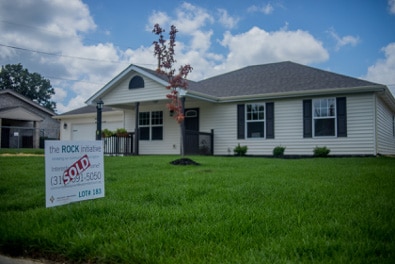
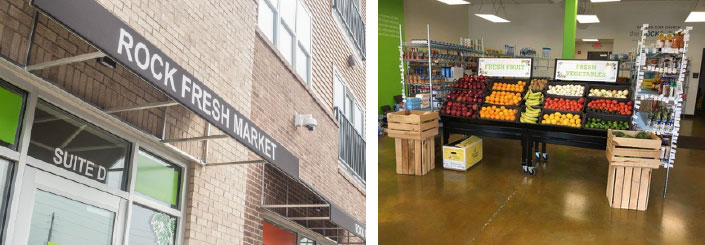
Como parte de la fase I, la iglesia renovó y construyó viviendas unifamiliares, creó un jardín urbano y construyó un complejo multiuso con 25 unidades de apartamentos y espacios comerciales ocupados por una cooperativa de crédito, una tienda de comestibles y proveedores de servicios sociales. La iniciativa recibió el apoyo de numerosos socios de la comunidad, como INHP, Habitat for Humanity, The Mind Trust, Financial Health Federal Credit Union, Community Health y Eskenazi Health.
Hoy anunció otra fase importante en el cumplimiento de su visión de una comunidad transformada: el desarrollo del Centro Comunitario ROCK para niños y jóvenes, y una instalación de 60,000 pies cuadrados que proporcionará a los estudiantes un entorno seguro para estudiar, aprender nuevas habilidades y participar en actividades recreativas y de desarrollo.

Tihesha Henderson, directora de la Sankofa School of Success, antes IPS School 99, dijo que la inversión en los jóvenes del área 46218 será duradera. “A lo largo de los años, la comunidad ha cambiado mucho”, afirmó Henderson, quien también creció en la comunidad. “Muy rápidamente pasó de ser una zona de clase media a una zona improvisada”.
La comunidad, con una población que en su gran mayoría es afroamericana, ha estado desempleada y extremadamente desatendida por mucho tiempo, añadió Henderson.

“No solo hay muchos traumas y mucha pobreza, sino que vemos muchos problemas de salud mental en esta comunidad”, comentó. “También es un desierto cuando se trata de negocios como bancos, tiendas de comestibles y apoyo a la salud mental de nuestras familias. No hay muchos lugares a los que nuestras familias pueden acudir para conseguir un empleo”, dijo. “Así que, cuando se tienen en cuenta todas esas cosas, sabemos que las necesidades de nuestros estudiantes van a ser grandes”.

The ROCK Initiative se ha mostrado prometedora y ha llenado de esperanza a los residentes de esta área, declaró Henderson. “Depende de nosotros eliminar los sistemas de opresión que afectan todos los días a nuestros niños de color, y podemos hacerlo a través de la equidad y los recursos en nuestro vecindario”.
Local church transforms neglected Eastside neighborhood through strategic economic development plan

By Feature

Eastern Star Church announces the groundbreaking of a 60,000-square-foot facility — part of Phase II of its ROCK Initiative

by Shari Finnell, editor/writer, Not for Profit Newsletter

(Para leer en español, haga clic aquí) Translated by LUNA Language Services

When comparing the livability of a neighborhood, it’s easy to quickly get caught up in numbers — crime rate, school scores, home values, walkability scores … or miles to the nearest grocery store. House hunters are likely to carefully compare these ratings, knowing that it can impact the quality of their family’s lives after a move.

However, many residents in some of the city’s most impoverished communities can’t make those types of choices. With a significant number challenged by limited financial resources, moving isn’t an option.

Jeffrey A. Johnson, Sr., is intimately familiar with one of those neighborhoods — the Arlington Woods community, which is located in the 46218 ZIP code — an area that has been blighted by high crime rates, high rates of unemployment, high student dropout rates and, more recently, high rates of COVID-19 infection.

Johnson, who grew up in this neighborhood before going off to college, returned at the age of 24 to become the pastor of Eastern Star Church (ESC), which has three campuses, including its Main Campus at 5750 E. 30th St., in the heart of the 46218 community. Under Johnson’s 33-year leadership, the church continually invested in the community through a food pantry, affordable apartment housing, and financial investments in local schools, health fairs, volunteering, mentoring and other programs.

In 2017, Johnson joined members of ESC in announcing the launch of The ROCK Initiative, a more comprehensive plan for investing in the community. The ROCK Initiative is built on four pillars — affordable housing, strong community, quality education and financial security.

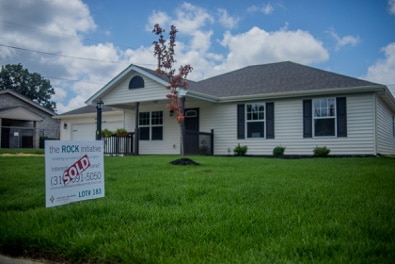
As part of Phase I, the church renovated and built single-family homes, developed an urban garden, and constructed a multi-use complex with 25 apartment units and retail space occupied by a credit union, a grocery store and social service providers. The initiative received support from numerous community partners, including INHP, Habitat for Humanity, The Mind Trust, Financial Health Federal Credit Union, Community Health, and Eskenazi Health.

Today, it announced another major phase in accomplishing its vision for a transformed community — the development of the ROCK Children and Youth Center (RCYC), a 60,000-square-foot facility that will provide students a safe environment to study, learn new skills, and engage in recreational and developmental activities.

During a groundbreaking ceremony, Johnson said The ROCK Initiative was launched to address inequities in the Eastside neighborhood.

“For too long, in this particular area, resources have not come through. We have had to deal with an economic desert, a food desert, an employment desert, and a quality education desert … which is one of the reasons, as led by God, we decided to start the ROCK Initiative,” Johnson said. “The ROCK Initiative allows us to partner up and collaborate with neighborhood, businesses, government and those who have a heart for community to make a difference. And the ROCK Children and Youth Center will help us continue our vision for a strong, safe and vibrant community so that all of our children are able grow and develop in a way God that intended them to.”

Jeff Bennett, Deputy Mayor of Community Development, told those gathered at the groundbreaking that the center represents a much-needed addition for the Eastside neighborhood, which he described as “one of the city’s most under-appreciated and under-recognized areas.”

“When we talk about community development in Indianapolis, it’s important that we recognize the work of our congregations,” said Bennett, citing the church’s investment in the neighborhood. “Eastern Star has led the way for more than 100 years. You recognized and fulfilled critical needs in affordable housing, banking and credit, food access and educational opportunities.”

Brandon Brown, CEO of The Mind Trust, which supported the opening of Rooted School Indianapolis, a high school located on the church’s main campus on East 30th Street, said that the ROCK Initiative can serve as a model for transforming neighborhoods. “With its comprehensive approach to education — with a pre-K to grade 12 continuum as one of the four major pillars, The ROCK Initiative can serve as a model of what’s possible when we think of a multi-faceted approach to uplift a community with education at the core.

“I believe that we will come back in 10 years and see this as a model of racial equity and social justice for our entire city that will serve as a shining example of what’s possible when we come together,” Brown added.

Tihesha Henderson, the Head of School at Sankofa School of Success, formerly IPS School 99, said the investment in youth in the 46218 area will be long lasting. “Over the years, the community has changed greatly,” said Henderson, who also grew up in the community. “It went from a middle-class area to an improvised area very quickly.”

The community, with an overwhelmingly African American population, has been largely unemployed and grossly underserved, Henderson added.

“Not only is there high trauma and high poverty, we see a lot of mental health issues in this community,” she said. “It’s also a desert when it comes to businesses like banks, grocery stores, and mental health support for our families. There are not a lot of places that our families can go to be employed,” she said. “So, when you factor in all of those things, we know that the needs of our students are going to be great.”

The ROCK Initiative has shown promise in giving the residents of this area hope, Henderson said. “It’s up to us to eliminate the systems of oppression that affect our black and brown kids every day, and we can do that through equity and resources in our neighborhood.”